 info@gorillatrekkinginafrica.com
Filming the Pare Mountains in Tanzania
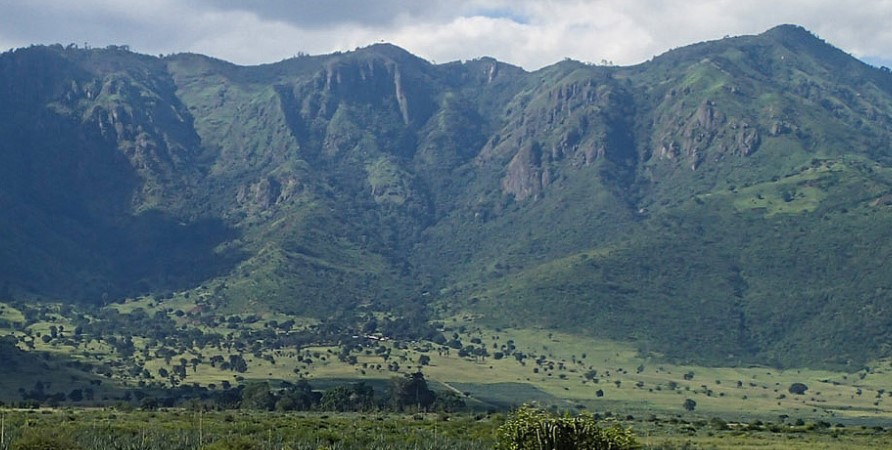
Filming the Pare Mountains in Tanzania, The Pale Mountains are remarkable and breathtaking, situated in the Kilimanjaro region, approximately 150 kilometers south of Moshi Town. The Pare Mountains provide exceptional safari experiences due to their allure and the breathtaking vistas they offer to holidaymakers and adventurers. During your exploration of the South Pare Mountain, you will encounter some of Tanzania’s concealed gems, especially in the remote areas, and you will marvel at how the homesteads are affixed to the steep, handcrafted terraces, inviting curiosity from visitors.
The mountains, from the adjacent farms, seem bleak and forsaken; but, once ascending the slopes, one uncovers one of Africa’s most distinctive vistas. Amidst substantial desolate boulders lie diminutive verdant waterways where ranchers have constructed remarkable stone terraces.
The Pare Mountains are home to the Pare, the most traditional tribe in northeastern Tanzania. The Pare’s seclusion from other tribes has fostered a robust and unique culture and identity. While traditional knowledge of plants and their applications is swiftly vanishing in other regions, the Pare have preserved a significant portion of their expertise and are renowned across northern Tanzania for the efficacy of their healers and for witchcraft. Witches, referred to as ndewa in Kipare, are consistently linked to extensive botanical knowledge amassed over ages. Numerous indigenous forests in the mountains have been conserved owing to the enduring Pare culture, despite elevated human population densities, as the Pare perceive the forests as sacred sites protected by the spirits of their ancestors.
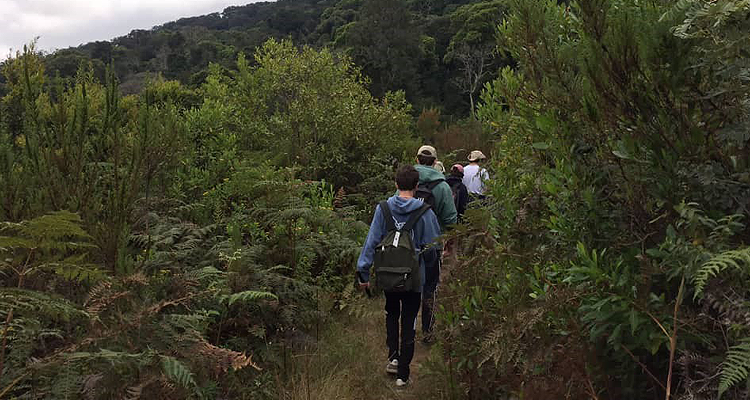
Hikers ascending Shengena Peak in the Pare Mountains of Tanzania
What to film in the Pare Mountains in Tanzania?
Filming in the Pare Mountains will enable the capture of one of Africa’s most distinctive sceneries. The Pare Mountains seem desolate and uninhabited from the adjacent plains; nonetheless, ascending the slopes reveals one of Africa’s most exquisite landscapes. At the summit lies the Chome forest reserve, a lush tropical forest teeming with several unique trees and species. Minor verdant river valleys featuring remarkable stone terraces are situated amidst vast barren boulders.
Documenting the historic Christian churches and mosques: An other noteworthy location for filming is the Mapera viewpoint atop Mapera Hill, designated to symbolize the harmony between the local Catholic and Protestant communities. During clear skies, the viewpoint serves as a tranquil locale for villagers to submit petitions, offering spectacular vistas of Mount Kilimanjaro, the Mbaga Hills, and the Mkomazi Game Reserve. Full-day excursions can be organized to adjacent villages to observe households employing traditional brewing methods or to undertake extended hikes through pristine forests such as Shengena Forest.
Camp beneath the stars and rise to ascend and document Shengena Peak, the pinnacle of the Pare and Usambara Mountains at 2,463 meters above sea level. Explore new springs and observe hordes of colobus monkeys, while relishing breathtaking vistas of Same and Lushoto.
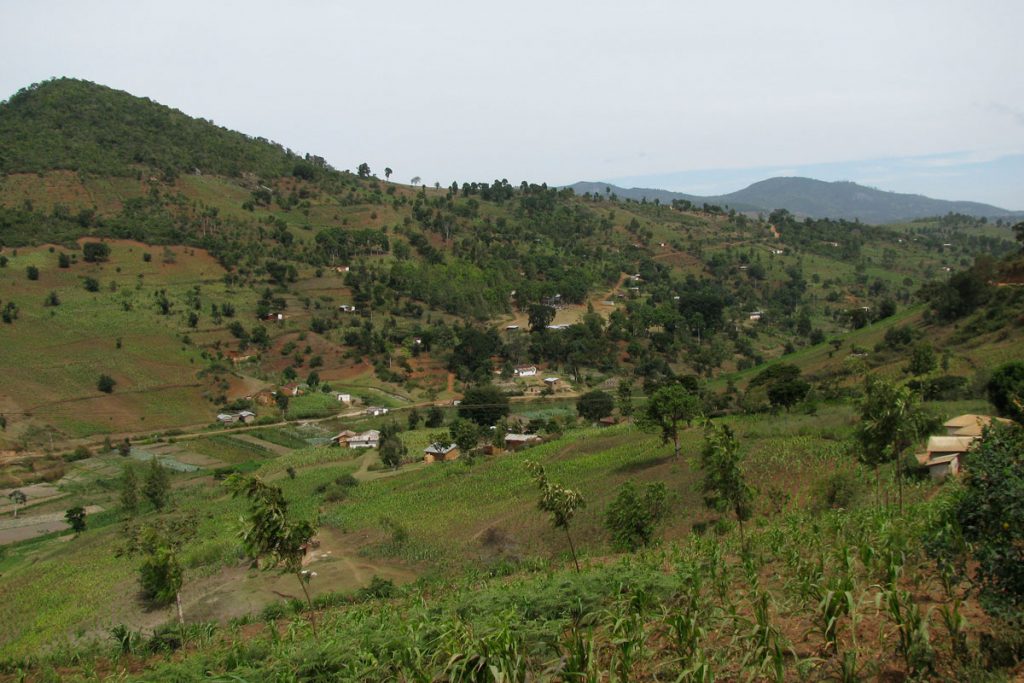
The neighboring communities in the Pare Mountains, some of the most secluded locations in Northern Tanzania, are noteworthy filming subjects, as the inhabitants have preserved their traditional Pare culture over time. Filming activities in the southern region of the Pare Mountains, including a trek through the Chome forest reserve, a tropical forest spanning over 100 square kilometers, are other captivating pursuits. A trek to Shengena Peak, the apex of the Pare and Usambara mountain ranges. An examination of the Pare culture, encompassing ancient narratives and traditional dances. An examination of various village development initiatives (irrigation, soil protection, and afforestation)
Filming in the Southern Pare Mountains can be seamlessly integrated with filming in the adjacent Mkomanzi Game Reserve, which provides game drives and walking safaris to observe diverse species. A trek through the Pare Mountains enables the documentation of indigenous settlements and picturesque woodlands while also investigating a relatively uncharted region of Tanzania.
Filming and recording in the southern region of the Pare Mountains can be seamlessly integrated with shooting in the adjacent Mkomanzi Game Reserve, where game drives and walking safaris are undertaken to observe diverse species. A trek over the Pare Mountains enables you to get footage of adjacent cities and picturesque wilderness, while also discovering a lesser-explored region of Tanzania.
What do you need to film in the Pare Mountains of Tanzania, Tanzania?
Requirement 1: Filming permits and their costs.
A filming authorization is required to shoot in the Pare Mountains of Tanzania. Individuals wishing to shoot in Tanzania must obtain filming permissions from the Tanzania shoot Censorship Board and the Department of Antiquities within the Ministry of Natural Resources and Tourism.
Upon obtaining this filming permit, you may proceed to film the Pare Mountains of Tanzania. Securing a filming permit in Tanzania can be costly and time-intensive; thus, travelers should ensure they make early reservations with us to initiate the permit acquisition process promptly. Ensure that you complete all application forms for filming with the aid of your local Tanzania production business film fixer. This is the prerequisite step that must be undertaken before to any other actions. Upon completing the application procedures, ensure that you send the forms to your esteemed local Tanzania Consulate. This will expedite and finalize your application procedure. Subsequently, following this exercise, you will be required to return your original documents to your film fixer in Tanzania to complete the process with the Tanzanian authorities.
Filming permits are valid for a duration of three months only. It is advisable to allocate ample time to complete this operation. For those with limited time, an expedited permit is available, albeit at significantly increased costs. The fee for a regular permit is $1,000. Film crew personnel requiring a last-minute filming permission in Tanzania will incur a fee of $3,000 each. Kindly reach out to Marriott Safaris Africa , as we can assist in obtaining the filming permit necessary for your production in Tanzania.
Requirement 2: Other Permission and Filming Fees for filming in the Pare Mountains of Tanzania
Once you obtain the filming permit, which is essential for filming in Tanzania, be aware that further permissions may be required to reach the Pare Mountains for filming.
Additional licenses you may want include authorization for filming within the protected region or national park, particularly for drone operations, as well as for those interested in nocturnal filming safaris in Tanzania. Numerous regulations govern visitors or individuals interested in filming in Tanzania; therefore, it is essential to engage a qualified film fixer with substantial credentials to ensure compliance with legal requirements. Kindly note that you are responsible for the lodging expenses, immigration fees, film fixers’ charges, and the transportation of the car to the Pare Mountains in Tanzania.
Requirement 3: A 4×4 vehicle is necessary for filming in the Pare Mountains of Tanzania.
By entrusting Marriott Safaris Africa as your film fixer, you will have the option to get a robust vehicle for transporting team members to the Kilimanjaro region in Tanzania for filming in the Pare Mountains. We provide vehicles according to our clients’ preferences and budget, as well as the filming area, which may influence the type of vehicle required. Due to the terrain’s characteristics, which may necessitate extensive travel, we respectfully encourage you to reserve our tailored services.
The daily cost per vehicle ranges from $200 to $250, encompassing both fuel and driver expenses. Our 4×4 safari van is offered for a daily rate of $200. Upon your inquiry, we will ensure that all costs are accounted for and thereafter provide you with the comprehensive price. All of our vehicles are staffed with drivers who serve as local fixers, many of whom having traversed practically every region of Tanzania, thus possessing intimate knowledge of local conditions and the ability to furnish essential information and address any on-site issues. In Tanzania, they act as intermediaries between you and our office. Please reach out to us for any film fixers in Tanzania. We are accessible 24 hours a day to provide you with all information regarding filming in the Pare Mountains of Tanzania.
Transportation of filming equipment and customs procedures
Should you select Tanzania as your recording locale, it is highly probable that you will need to transport film equipment. The most effective approach for air freight shipment is to accompany the cargo on your aircraft. The alternative is to transport it as “unaccompanied” cargo by airship. The final approach incurs more costs, and the hardware may experience delays in customs at the port of entry. The temporary importation of film equipment in Tanzania is regulated by a bond system. You may retain the full worth of the hardware with the Tanzanian government for the duration of the filming. You may request a reduction on the cash market value of this bond. Film studios may compensate a freight agent or specialist with a non-refundable fee of 10% of the total equipment cost in return for utilizing their bond. This is a more concise and less intricate cycle.
The best time for filming in the Pare Mountains of Tanzania
Filming in the Pare Mountains of Tanzania is a year-round endeavor, with optimal periods occurring in December and from June to October. Currently, the climatic conditions are arid, enhancing the quality of filming operations significantly. The optimal period for filming in the Pare Mountains of Tanzania occurs during the dry season, spanning from June to December. Filming during the rainy season is chaotic, and I would recommend considering filming in dry conditions instead. The rainy season is linked to the verdant hues of nature due to the rejuvenation of flora, which occasionally transforms filmmaking into an all-day or year-round endeavor. The rainy season disrupts the production team, particularly from March to May and November. Consequently, filming in the Pare Mountains is appropriate from December to February and subsequently from June to October, as these periods are rather arid relative to March to May and November.
Where to stay during filming in the Pare Mountains of Tanzania
Numerous hotel resorts are available in and near the Pare Mountains of Tanzania, allowing guests interested in filming in this region to select from budget, midrange, or premium options. The resorts where you will reside during filming in the Pare Mountains include Alison Lodge, Elephants Motel, Nafue Lodge, and Makoko Guest House, among others.
Accessing the Pare Mountains in Tanzania for Filming
The Pare Mountains are situated in the northeastern region of Tanzania. They undoubtedly pertain to the Kilimanjaro region and are situated adjacent to the more renowned Usambara Mountains. This area of the district is often overlooked by tourists due to its limited accessibility. If you inquire, this is indeed an unusual objective! In contrast, the Pare Mountains are not inferior in grandeur to the Usambara Mountains; they are exceptionally lush and verdant. The Pare Mountains are approximately a 3- to 4-hour drive from Arusha and Kilimanjaro.
What are the reasons for selecting Marriott Safaris for your filmmaking safari in Tanzania?
Marriott Safaris Africa is a prominent tourism firm headquartered in Uganda, operating in East African nations including Kenya, Uganda, Tanzania, South Sudan, the Democratic Republic of Congo, Rwanda, Burundi, Ethiopia, and South Africa. We possess over a decade of expertise supporting shooting and production firms, especially those focused on nature-related wildlife, landscapes, and African culture. We provide services including securing filming permits, clearing filming equipment, reserving accommodations, and coordinating transportation for filming enterprises, all in the most expedient manner possible. Additional wildlife tours are offered in all the aforementioned countries, including gorilla excursions in Rwanda, Uganda, and the Democratic Republic of Congo. Consequently, you should not hesitate to select us as your film fixers in East Africa.