 info@gorillatrekkinginafrica.com

What is special about Tarangire National Park?
What is special about Tarangire National Park , Tarangire National Park is one of Tanzania’s most captivating yet underrated wildlife destinations. Located in the Manyara Region of northern Tanzania, it covers approximately 2,850 square kilometres of diverse savannah wilderness. Named after the Tarangire River that flows through its heart, the park is renowned for its spectacular concentration of elephants, ancient baobab trees, and remarkable year-round wildlife viewing. While it often plays second fiddle to the more famous Serengeti and Ngorongoro Crater, discerning safari-goers increasingly recognise Tarangire as one of East Africa’s finest parks.
Established as a national park in 1970, Tarangire is managed by the Tanzania National Parks Authority (TANAPA). The park forms a critical part of the Tarangire-Manyara ecosystem, an interconnected network of game reserves, wildlife management areas, and national parks that together support one of the largest seasonal wildlife migrations in Africa.
Geography and Landscape
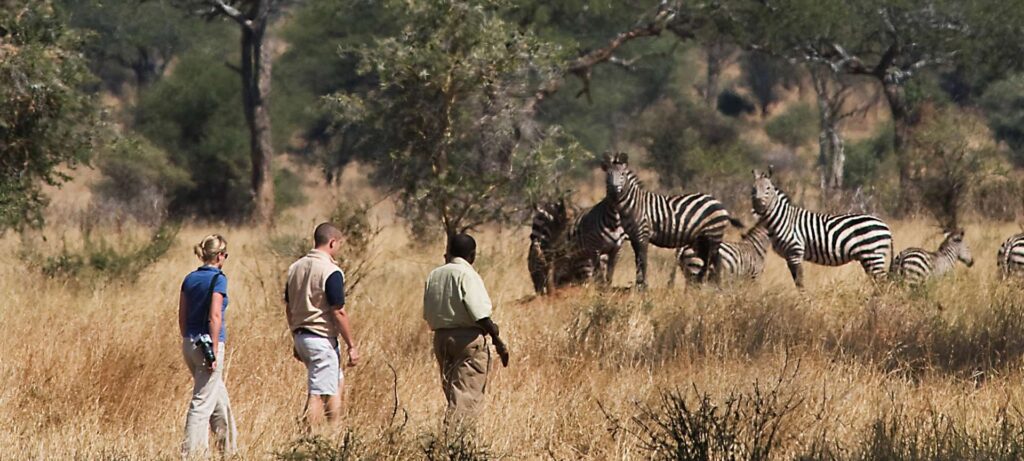
Tarangire is situated in a semi-arid valley dominated by the Tarangire River, which cuts through the park from south to north before emptying into Lake Burunge. The landscape is a stunning mosaic of riverine woodland, open savannah grassland, swamps, and rock kopjes — ancient granite outcroppings that have shaped the terrain over millions of years.
The Iconic Baobab Trees
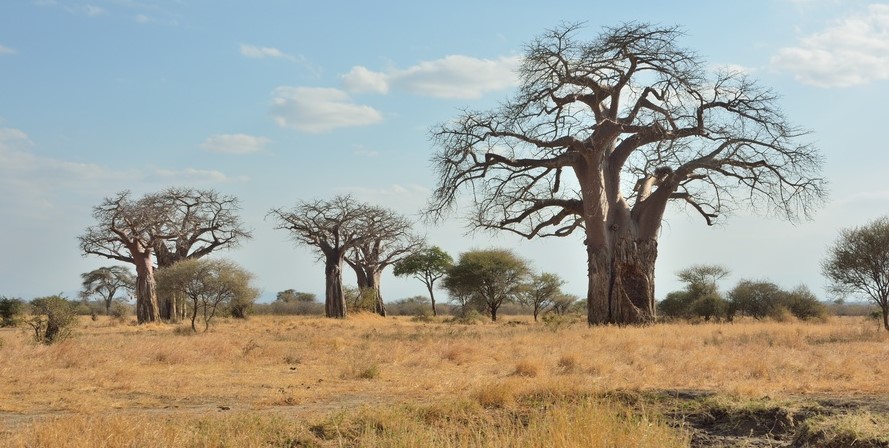
Perhaps the most visually distinctive feature of Tarangire is its extraordinary density of ancient baobab trees (Adansonia digitata). These colossal, primordial giants — some estimated to be over 1,000 years old — dominate the landscape and give the park a prehistoric, otherworldly atmosphere. Standing up to 30 metres tall with trunks reaching 10 metres in diameter, the baobabs store hundreds of litres of water in their swollen trunks, making them vital resources for wildlife during the dry season. Photographers and artists consider Tarangire’s baobab-dotted hills among the most dramatic backdrops in all of Africa.
The Tarangire River
The lifeblood of the park, the Tarangire River, is a permanent water source that attracts enormous concentrations of wildlife during the dry season (June to October). As the surrounding water sources dry up, animals from across the wider ecosystem converge on the river’s banks, creating wildlife spectacles that rival — and in some respects surpass — those of the Serengeti. Elephants wade and splash in the river, hippos lounge in its pools, and hundreds of other species congregate along its verdant fringes.
Wildlife — What Makes Tarangire Truly Special
Tarangire supports an extraordinary diversity of wildlife year-round, with populations of mammals, birds, and reptiles that few parks can match. It is consistently cited by professional guides as one of the finest all-round wildlife destinations in Tanzania.
Elephants — Africa’s Largest Elephant Herds
Tarangire is famous above all else for its elephants. During the dry season, the park hosts one of the highest concentrations of African elephants (Loxodonta africana) anywhere on the continent. Herds of 200 to 300 individuals are a common sight near the river, and the total elephant population within the ecosystem numbers several thousand. Visitors witness extraordinary behaviour — family units of all ages bathing, playing, and socialising in scenes of remarkable intimacy. Unlike in some other parks, Tarangire’s elephants are often very relaxed around vehicles, allowing exceptionally close observation.
The Big Five and Large Mammals
Tarangire offers reliable sightings of four of the Big Five. Lions are present in healthy numbers and are frequently encountered hunting on the open plains. Leopards inhabit the riverine forests and rocky kopjes, where they are sometimes spotted resting on branches. Buffalo herds roam the grasslands in their thousands during the dry season. African wild dogs (painted wolves) — one of Africa’s most endangered and charismatic predators — have been sighted in the park with increasing frequency in recent years. Cheetahs, though less common, are also present. The park’s rhinoceros population was unfortunately poached to extinction, making it the only missing member of the Big Five.
Other Notable Mammals
Beyond the headline species, Tarangire supports an impressive cast of supporting wildlife:
- Fringe-eared oryx — a charismatic, large antelope highly adapted to arid conditions
- Greater kudu with their spectacular spiralling horns
- Gerenuk — the long-necked antelope that browses standing upright on its hind legs
- Eland, the world’s largest antelope
- Wildebeest, zebra, impala, Grant’s gazelle, and Thomson’s gazelle
- Olive baboon and vervet monkey troops
- Spotted and striped hyena
- Porcupine, aardvark, and pangolin (rarely seen nocturnal species)
- Python and monitor lizard
Birdlife — A Birder’s Paradise
With over 550 recorded bird species, Tarangire is consistently ranked among the top birdwatching destinations in Africa. The park’s varied habitats — from dry acacia woodland to riverine forest and seasonal swamps — support an astonishing avian diversity. Birders can expect to encounter:
- Kori bustard — the world’s heaviest flying bird
- Secretary bird stalking through the grasslands
- Martial eagle, bateleur, and numerous other raptors
- Lilac-breasted roller — one of Africa’s most colourful birds
- Yellow-collared lovebird — endemic to Tanzania
- Ashy starling — a Tarangire specialty rarely found elsewhere
- Hundreds of migratory species visiting between November and April
- Ground hornbill, straw-tailed whydah, and the spectacular Von der Decken’s hornbill
Seasons and When to Visit
Dry Season (June to October) — Peak Wildlife Viewing
This is undisputedly the best time to visit Tarangire. As water sources outside the park dry up, wildlife from across the broader ecosystem — including enormous herds of wildebeest, zebra, buffalo, and elephants — pour into the park to access the Tarangire River. Game viewing density during these months is phenomenal and is among the finest in Africa. Vegetation thins out, making animals easier to spot, and the iconic baobabs stand in dramatic silhouette against clear blue skies. Dust and heat intensify toward October, but wildlife concentrations remain extraordinary.
Short Rains (November to December)
The short rains bring a transformation as the landscape flushes green almost overnight. Migratory birds arrive in vast numbers, newborn animals appear across the plains, and the dramatic skies create stunning photographic opportunities. Many wildlife herds begin dispersing as water becomes available elsewhere, but Tarangire still offers excellent game viewing with far fewer visitors than during peak season.
Long Rains (March to May)
The heavy rainy season brings lush, verdant conditions but also thick vegetation that can make wildlife spotting more challenging. Some tracks become impassable and a small number of camps close. However, this is a magical time for birders, wildflower enthusiasts, and those seeking solitude — visitor numbers drop significantly and the park feels wild and untamed. Rain often falls in afternoon showers, leaving mornings clear and surprisingly productive for game drives.
Green Season (January to February)
January and February offer a pleasant middle ground — vegetation is lush, baby animals are abundant, and visitor numbers are lower than peak season. Excellent value for those on a budget, and increasingly popular with photographers who prize the verdant scenery and dramatic cloud formations.
Unique Experiences and Activities
Game Drives
Game drives are the cornerstone of the Tarangire experience. Both morning and afternoon drives along the riverine circuit deliver consistently exceptional wildlife sightings. The Silale Swamp area in the southern sector is a particular highlight, where enormous herds of buffalo, elephant, and a remarkable diversity of wildlife congregate around permanent water. Night game drives, offered by some operators with special permits, reveal nocturnal species such as lion hunts, hyena clans, porcupines, and the elusive aardvark.
Walking Safaris
Tarangire is one of the best parks in Tanzania for guided walking safaris, combining the thrill of being on foot in wilderness with expert interpretation of the bush. Professional guides lead small groups through the landscape, reading tracks, discussing medicinal plants, and revealing the micro-world of the savannah that game drive vehicles inevitably overlook. Walks range from gentle nature strolls near camps to more immersive multi-day wilderness walks in the less-visited southern sector.
Fly Camping
For the truly adventurous, mobile fly camping — sleeping under the stars in the wilderness on fold-out beds with nothing but a campfire and the sounds of the African night — is offered by select operators in Tarangire. This immersive experience, with lion and hyena potentially prowling nearby, represents one of Africa’s most visceral and unforgettable wildlife encounters.
Cultural Visits
The park is surrounded by the traditional lands of the Maasai and Barbaig (Datoga) peoples. Many lodges offer guided visits to Maasai bomas (villages), where guests learn about traditional customs, participate in beadwork, and witness dances. The broader Tarangire ecosystem also contains Hadzabe hunter-gatherer communities — among the last hunter-gatherers in Africa — who offer extraordinarily illuminating visits illustrating a way of life essentially unchanged for tens of thousands of years.
Hot Air Balloon Safaris
While less well-known than Serengeti balloon safaris, some operators offer hot air balloon flights over Tarangire, providing a breathtaking aerial perspective over the baobab-studded landscape and the wildlife herds below, typically followed by a champagne bush breakfast.
The Tarangire-Manyara Ecosystem
Tarangire does not exist in isolation. It is the anchor of a vast interconnected ecosystem spanning over 20,000 square kilometres that includes Lake Manyara National Park, Manyara Ranch, Burunge Wildlife Management Area, Lolkisale Wildlife Management Area, and several other protected areas and private conservancies.
This ecosystem supports one of the longest and least-publicised wildlife migrations in Africa. In the wet season, many of Tarangire’s resident species — particularly wildebeest and zebra — disperse widely across the broader landscape before returning to the park as the dry season intensifies. Protecting the movement corridors that connect these areas is a major conservation priority for Tanzania.
Conservation Significance
Tarangire plays a critical role in elephant conservation. The park’s elephant population forms part of a meta-population that ranges across the broader ecosystem, and elephants regularly move between Tarangire, Manyara, and adjacent community and private lands. This cross-boundary movement highlights the importance of landscape-level conservation approaches beyond park boundaries.
The park also serves as a stronghold for several species that face significant pressure elsewhere, including African wild dog, cheetah, and the increasingly threatened fringe-eared oryx. Conservation NGOs including the African Wildlife Foundation and the Tarangire Elephant Project have operated long-term research and community engagement programmes in and around the park.
Community-based conservation around Tarangire has made considerable strides in recent decades. Wildlife Management Areas bordering the park allow local Maasai communities to benefit economically from wildlife tourism while providing buffer zones that expand the effective protected area and reduce human-wildlife conflict.
Accommodation Options
Tarangire offers accommodation to suit every style and budget, from affordable public campsites to some of Tanzania’s most exclusive luxury tented camps.
Luxury Tented Camps
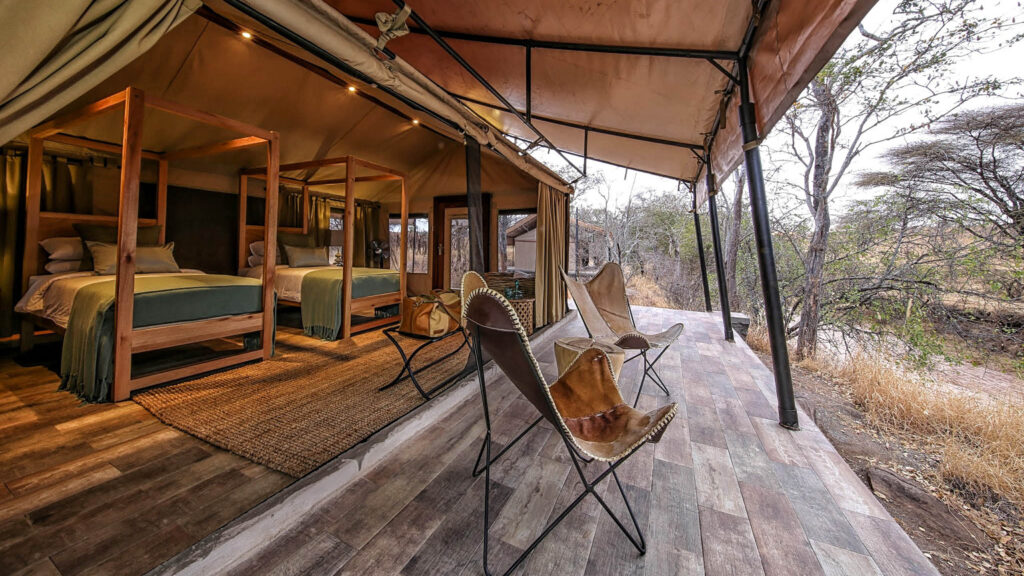
Several world-class tented camps are located within or adjacent to the park, offering the quintessential safari experience: spacious canvas suites with en-suite bathrooms, elegant furnishings, plunge pools, and exceptional food — all within sight and sound of the African wilderness. Notable options include Tarangire Treetops, Oliver’s Camp, and Chem Chem Safari Lodge.
Mid-Range Lodges and Camps
A solid selection of comfortable mid-range lodges and permanent tented camps offer excellent value, good food, and reliable guiding. Many are positioned along the ridge above the Tarangire River with panoramic views. Tarangire Safari Lodge and Tarangire Sopa Lodge are long-established favourites.
Budget and Public Campsites
TANAPA operates public campsites within the park at very affordable rates, popular with budget travellers and self-drive visitors. Basic facilities are provided, including toilets and water points. Bringing all food and equipment is essential. A small number of budget tented camps also operate in the vicinity of the park.
Practical Information for Visitors
Getting There
Tarangire National Park is located approximately 120 kilometres southwest of Arusha, Tanzania’s main safari hub, and is readily accessible by road (approximately 2–3 hours’ drive) or by light aircraft. The park is a natural addition to any northern Tanzania safari circuit including the Serengeti, Ngorongoro Crater, and Lake Manyara. Several airstrips within and adjacent to the park serve scheduled charter flights from Arusha, Kilimanjaro, and other destinations.
Park Fees and Entry
Tarangire is administered by the Tanzania National Parks Authority (TANAPA). Entrance fees apply per person per day for non-residents, with separate fees for vehicles. All fees are subject to change and should be confirmed with TANAPA or your tour operator prior to travel. Payment is made at the park gate and can be made by cash or card.
What to Pack
- Neutral-coloured safari clothing (khaki, olive, beige — avoid white and bright colours)
- Lightweight layers for cool mornings and evenings
- Good quality sunglasses, sunscreen, and a wide-brimmed hat
- Insect repellent — especially important during the green season
- Binoculars — essential for wildlife and bird viewing
- Camera with telephoto lens and extra batteries and memory cards
- Dust-proof bag or camera cover for dry season visits
- Personal medications and a basic first aid kit
Health and Safety
Malaria is present in the Tarangire area. Visitors are strongly advised to consult a travel health doctor prior to travel and to take appropriate antimalarial prophylaxis. Yellow fever vaccination requirements should also be checked. The nearest quality medical facilities are in Arusha. Travel insurance that includes medical evacuation is strongly recommended for all visitors to remote wildlife areas.
Conclusion
Tarangire National Park is a destination of extraordinary richness and diversity — a place where ancient baobab trees stand sentinel over one of Africa’s most spectacular concentrations of wildlife, where the Tarangire River draws thousands of elephants in a drama that unfolds fresh each dry season, and where over 550 species of birds fill the air with sound and colour. It is a park that rewards those who venture beyond the well-worn circuit, offering wildlife experiences of remarkable intimacy and authenticity.
Whether you come for the legendary elephant herds, the otherworldly baobab landscape, the outstanding birding, or simply the sense of space and wildness that is increasingly rare in the modern world, Tarangire will not disappoint. It is, quite simply, one of Africa’s finest national parks — and one of Tanzania’s most treasured natural wonders.