 info@gorillatrekkinginafrica.com

What’s TANAPA? Tanzania National Parks Authority
Tanzania National Parks, widely known by its acronym TANAPA, is a government authority established to protect and manage Tanzania’s diverse and irreplaceable national park estate. As the custodian of some of Africa’s most celebrated wilderness areas, TANAPA plays a foundational role in preserving biodiversity, enabling world-class wildlife tourism, and contributing to the socio-economic development of local communities and the nation at large.
Tanzania is globally recognized as one of the most biodiverse countries on earth. Its national parks encompass sweeping savannahs, ancient volcanic highlands, pristine marine ecosystems, and dense montane forests — all of which fall under TANAPA’s stewardship. Understanding TANAPA means understanding not only an institution but the very framework through which Tanzania’s natural capital is managed, protected, and shared with the world.

Historical Background and Establishment
The origins of national park management in Tanzania date back to the colonial era. In 1940, during British rule over Tanganyika, the Serengeti National Park was gazetted, becoming one of the earliest formally protected areas in sub-Saharan Africa. This was followed by the establishment of additional parks in subsequent decades, reflecting growing recognition of Tanzania’s extraordinary wildlife heritage.
Following Tanganyika’s independence in 1961 and the subsequent formation of the United Republic of Tanzania in 1964, the newly independent government moved to formalise and strengthen wildlife conservation structures. TANAPA was established through the National Parks Ordinance (Cap. 412) and later reinforced by the National Parks Act, creating a statutory body charged with managing the country’s national parks in perpetuity.
Over the decades, TANAPA has evolved from a relatively small conservation body into a sophisticated organisation managing vast territories, employing thousands of rangers and staff, and operating as a key driver of Tanzania’s tourism economy.

Mandate and Legal Framework
TANAPA derives its authority from Tanzanian national legislation, principally the National Parks Act. Under this framework, TANAPA’s core mandate includes:
- Protecting flora, fauna, and physical features within national parks from poaching, encroachment, and degradation.
- Regulating and promoting tourism activities within national parks in a sustainable manner.
- Conducting and supporting scientific research related to wildlife and ecosystems.
- Engaging and benefiting local communities living adjacent to national parks.
- Generating revenue to fund conservation operations and contribute to national development.
- Collaborating with international conservation bodies, governments, and non-governmental organisations.
TANAPA operates under the Ministry responsible for Natural Resources and Tourism and is governed by a Board of Directors appointed by the Government. Day-to-day operations are led by a Director General supported by a team of senior managers across departments such as Conservation, Tourism, Finance, Community Development, and Administration.
National Parks Under TANAPA Management
TANAPA currently manages 22 national parks, covering a combined area of over 57,000 square kilometres — approximately 6% of Tanzania’s total land area. These parks span diverse ecological zones and are home to an extraordinary range of plant and animal species.
4.1 Iconic Northern Circuit Parks
The Northern Circuit is Tanzania’s most visited tourism zone, anchored by world-famous parks:
- Serengeti National Park — UNESCO World Heritage Site and home to the Great Migration, widely considered the greatest wildlife spectacle on earth. Covering approximately 14,763 km², it supports over 2 million wildebeest, zebra, and gazelle in their annual migration cycle.
- Kilimanjaro National Park — Encompassing Africa’s highest peak, Mount Kilimanjaro (5,895 m), this park protects the mountain’s unique montane forests and glacial environments. It draws both mountaineers and wildlife enthusiasts.
- Arusha National Park — A compact yet ecologically rich park near Arusha city, featuring Mount Meru, Momella Lakes, and populations of colobus monkeys, flamingos, and other wildlife.
- Tarangire National Park — Renowned for its enormous elephant herds and iconic baobab-studded landscapes along the Tarangire River, which acts as a dry-season refuge for wildlife.
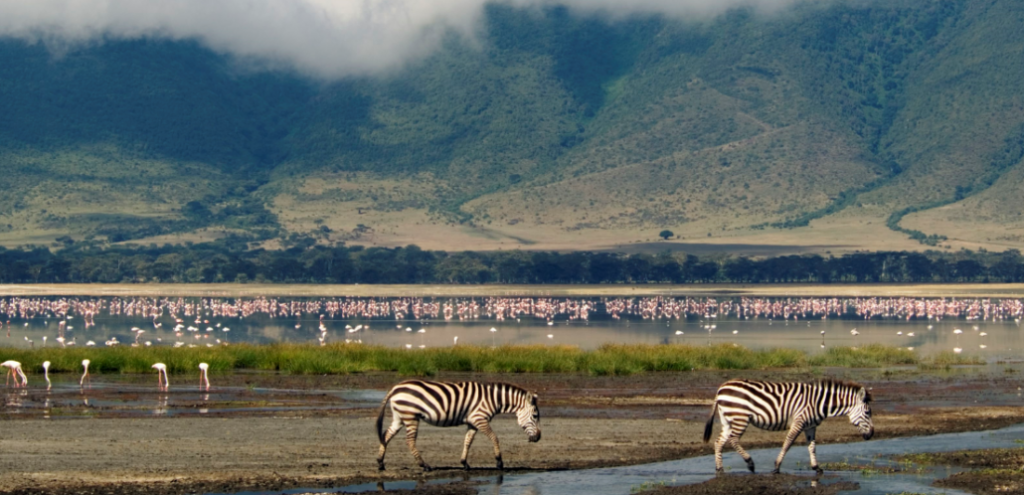
- Lake Manyara National Park — Famous for its tree-climbing lions, vast flamingo flocks on the alkaline lake, and lush groundwater forests at the base of the Great Rift Valley escarpment.
4.2 Southern Circuit Parks
The Southern Circuit offers a more remote and exclusive safari experience:
- Ruaha National Park — Tanzania’s largest national park (covering over 20,000 km²), known for its high lion densities, large elephant populations, wild dogs, and the Great Ruaha River ecosystem.
- Mikumi National Park — Easily accessible from Dar es Salaam, Mikumi is often described as a ‘mini Serengeti’ and serves as an important buffer zone for the Selous ecosystem.
- Udzungwa Mountains National Park — A biodiversity hotspot protecting the ancient Eastern Arc Mountains, with numerous endemic bird species and primates found nowhere else on earth.
- Kitulo National Park — Often called the ‘Serengeti of Flowers,’ this highland plateau park in the Southern Highlands is famed for its spectacular orchid blooms and montane grasslands.
- Katavi National Park — One of Tanzania’s most remote and least visited parks, offering truly wild and undisturbed safari experiences amid vast floodplains teeming with hippos and crocodiles.
4.3 Coastal and Marine Parks
Tanzania’s Indian Ocean coastline and islands are protected by several coastal parks:
- Saadani National Park — Africa’s only national park where the bush meets the beach, featuring savannah wildlife, coastal forests, and rich marine biodiversity along a pristine Indian Ocean shoreline.
- Gombe Stream National Park — Tanzania’s smallest national park, world-renowned as the site where Dr. Jane Goodall conducted her pioneering chimpanzee research beginning in 1960.
- Mahale Mountains National Park — A remote park on the shores of Lake Tanganyika, protecting a large population of wild chimpanzees and offering one of Africa’s finest primate experiences.
TANAPA’s Conservation Role
Conservation is the cornerstone of TANAPA’s existence. The organization deploys a multi-pronged approach to wildlife protection that combines law enforcement, scientific research, habitat management, and international collaboration.
Anti-Poaching and Law Enforcement
TANAPA employs thousands of park rangers who patrol national park boundaries and interiors around the clock to combat poaching, illegal logging, and encroachment. The organization has invested heavily in modern surveillance tools, including aerial patrols, camera traps, and GPS tracking systems. Anti-poaching units work in close coordination with the Tanzania Wildlife Management Authority (TAWA) and international bodies such as INTERPOL and the Convention on International Trade in Endangered Species (CITES) to intercept wildlife trafficking networks.
Ecological Research and Monitoring
TANAPA maintains active research programmes in collaboration with Tanzanian universities, international research institutions, and independent scientists. These programmes monitor wildlife population dynamics, track migration patterns, assess habitat health, and study the effects of climate change on Tanzania’s ecosystems. Data generated informs park management decisions and contributes to global wildlife science.
Human-Wildlife Conflict Mitigation
One of the most persistent challenges TANAPA faces is managing conflict between wildlife and communities living along park boundaries. Elephants raiding crops, lions preying on livestock, and hippos damaging fields are recurring issues. TANAPA addresses these through community outreach programmes, physical deterrents such as beehive fences and chilli pepper barriers, early warning systems, and compensation schemes for affected farmers. These measures seek to build tolerance for wildlife among communities that bear the direct costs of living alongside large animals.
Tourism Management and Revenue Generation
Tourism is both TANAPA’s primary source of income and one of Tanzania’s most important economic sectors. TANAPA manages visitor access to its parks through a system of entrance fees, concession agreements with tour operators, and accommodation licensing. Revenue collected is reinvested into park management, staff welfare, infrastructure development, and community benefit sharing.
Tanzania’s national parks collectively receive hundreds of thousands of international tourists annually, generating hundreds of millions of US dollars in foreign exchange earnings. The Serengeti alone attracts over 300,000 visitors per year, making it one of Africa’s premier safari destinations. TANAPA has worked to diversify tourism products beyond the classic game drive, promoting walking safaris, balloon flights, cultural tourism, and bird-watching to broaden visitor appeal.
The Ngorongoro Conservation Area — though managed by the separate Ngorongoro Conservation Area Authority (NCAA) — works closely with TANAPA in the broader Northern Circuit tourism framework. Together, these areas form the backbone of Tanzania’s wildlife tourism offering.
Community Development and Social Responsibility
TANAPA recognises that long-term conservation success depends fundamentally on the goodwill and active participation of communities living adjacent to national parks. To this end, the authority operates a structured Community Conservation Service (CCS) programme that channels a proportion of park revenues to surrounding communities.
Community benefits funded by TANAPA include:
- Construction and rehabilitation of schools, classrooms, and school libraries in villages bordering parks.
- Building and equipping health clinics and dispensaries to improve community healthcare access.
- Construction of water wells and water supply infrastructure in water-scarce communities.
- Support for local small enterprises and income-generating projects.
- Environmental education programmers for schoolchildren and community members.
- Employment and skills training opportunities for residents of park-adjacent communities.
This investment in community welfare is a deliberate strategy to foster local pride in natural heritage and reduce incentives for poaching or encroachment. TANAPA’s philosophy holds that people who benefit materially from wildlife conservation will become its most effective protectors.
Key Challenges Facing TANAPA
Despite its successes, TANAPA operates in an environment of significant and evolving challenges:
Poaching and Wildlife Trafficking
Illegal hunting of elephants for ivory and rhinos for horn remains a serious threat, driven by demand from overseas black markets. While Tanzania has made significant strides in reducing elephant poaching — elephant populations have rebounded substantially since the crises of the 2000s and early 2010s — vigilance remains essential. Organised criminal networks involved in wildlife trafficking are sophisticated and well-resourced, requiring TANAPA to continually upgrade its detection and interdiction capabilities.
Land Encroachment and Population Pressure
Tanzania’s rapidly growing human population exerts increasing pressure on land surrounding national parks. Agricultural expansion, pastoralism, and the growth of settlements near park boundaries create conditions for habitat fragmentation and increased human-wildlife conflict. Maintaining the ecological integrity of wildlife corridors connecting protected areas is a growing priority for TANAPA.
Climate Change
Shifts in rainfall patterns, prolonged droughts, and rising temperatures are already affecting Tanzania’s ecosystems. The glaciers of Kilimanjaro are in dramatic retreat, grass phenology in the Serengeti is changing, and freshwater availability in several parks is becoming less predictable. TANAPA must integrate climate adaptation strategies into long-term park management planning to safeguard ecosystems and the wildlife that depends on them.
Funding Constraints
While tourism revenues fund a significant proportion of TANAPA’s operations, the organization also depends on government allocations and donor support. Economic shocks — such as those caused by the global COVID-19 pandemic, which severely curtailed tourism — can dramatically reduce income and strain operational capacity. Diversifying funding sources and building financial resilience are ongoing institutional priorities.
International Partnerships and Recognition
TANAPA maintains an extensive network of international partnerships with conservation organisations, foreign governments, and multilateral institutions. Key partners include the World Wildlife Fund (WWF), the African Wildlife Foundation (AWF), the Wildlife Conservation Society (WCS), the Frankfurt Zoological Society, and various development banks and bilateral donors.
Several of Tanzania’s national parks carry UNESCO World Heritage Site designation, reflecting their outstanding universal value. The Serengeti-Ngorongoro ecosystem is among the world’s most celebrated conservation landscapes. TANAPA also cooperates with neighbouring countries — particularly Kenya — on transboundary conservation initiatives, recognising that wildlife does not observe political borders.
Tanzania is a signatory to major international wildlife conventions, including CITES, the Convention on Biological Diversity (CBD), and the Ramsar Convention on Wetlands. TANAPA’s work directly supports Tanzania’s obligations under these agreements.
Future Outlook and Strategic Direction
TANAPA’s strategic vision for the coming decades is centred on three interconnected pillars: enhanced conservation effectiveness, sustainable and inclusive tourism growth, and deeper community integration.
On the conservation front, TANAPA is investing in advanced ranger training, expanded wildlife monitoring technologies, and stronger collaboration with law enforcement agencies to combat poaching networks. The authority is also expanding its network of wildlife corridors to allow seasonal migration between protected areas.
In terms of tourism, TANAPA aims to position Tanzania’s parks as year-round, multi-activity destinations. Investments in park infrastructure — including roads, visitor centres, and digital booking systems — are underway across multiple parks. Efforts to develop lesser-known parks such as Katavi, Mahale, and Kitulo aim to reduce visitor pressure on flagship destinations and spread tourism benefits more evenly across Tanzania.
Community engagement will continue to evolve, with TANAPA seeking to move beyond benefit-sharing toward genuine co-management arrangements that give local communities a meaningful voice in how adjacent protected areas are governed. This approach is increasingly recognized internationally as essential to achieving durable conservation outcomes.
Conclusion
TANAPA stands as one of Africa’s most important wildlife conservation institutions. Through more than six decades of operation, it has preserved ecosystems of global significance, protected species ranging from the African elephant to the endangered African wild dog, and helped make Tanzania one of the world’s foremost safari destinations.
The challenges ahead — poaching, climate change, population growth, and funding constraints — are formidable, but TANAPA enters this future with significant institutional experience, a committed workforce, and the backing of both the Tanzanian government and the international conservation community.
Ultimately, TANAPA’s mission is not simply about protecting animals and landscapes — it is about ensuring that Tanzania’s natural heritage endures for the benefit of current and future generations of Tanzanians and people across the globe who treasure wild places.