 info@gorillatrekkinginafrica.com

Tanzania National Parks
Tanzania National Parks, Tanzania stands as one of Africa’s most extraordinary safari destinations, home to an unrivalled concentration of wildlife, diverse ecosystems, and some of the continent’s most iconic landscapes. Stretching across East Africa, Tanzania protects more than 38% of its total land area within a vast network of national parks, game reserves, conservation areas, and marine parks — making it one of the most ecologically significant countries on Earth.
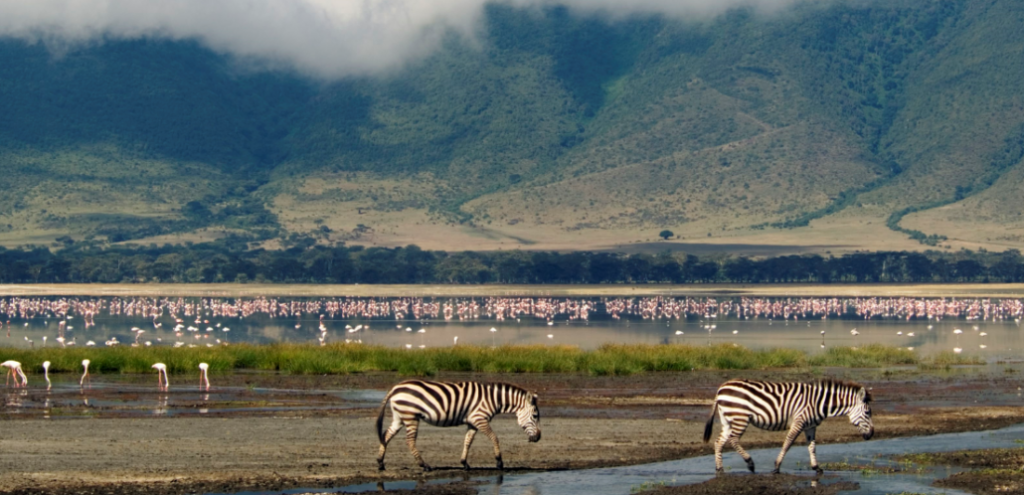
The country’s 22 national parks form the crown jewels of this conservation estate, encompassing ancient volcanic craters, sweeping savannah plains, primeval rainforests, remote alpine moorlands, and pristine coastal environments. From the world-famous Serengeti — scene of the greatest wildlife spectacle on the planet — to the mysterious volcanic world of Ol Doinyo Lengai, Tanzania’s parks offer experiences that are simply unmatched anywhere else.
Tanzania is also the custodian of Africa’s highest peak, Mount Kilimanjaro, and its largest lake, Lake Victoria. Both fall within or border national park boundaries, underscoring the country’s remarkable geographical diversity. Whether you seek the thrill of watching a lion pride at dawn, the privilege of trekking with mountain gorillas, the serenity of a dhow cruise along the Rufiji River, or the challenge of summiting Kilimanjaro’s glaciated peak, Tanzania’s parks deliver experiences that stay with visitors for a lifetime.
This guide provides an in-depth look at Tanzania’s major national parks — their geography, wildlife, ecosystems, visitor infrastructure, best seasons, and the unique experiences each offers.
1. Serengeti National Park
Often described as the most celebrated wildlife destination on Earth, the Serengeti needs little introduction. Covering approximately 14,763 square kilometres of rolling savannah, open grassland, acacia woodland, and riverine forest in northern Tanzania, this UNESCO World Heritage Site and International Biosphere Reserve is the stage for one of nature’s greatest dramas: the annual Great Migration.
Overview
- Location: Mara and Simiyu Regions, northern Tanzania
- Area: 14,763 km²
- Established: 1951 (National Park); 1929 (Game Reserve)
- UNESCO Status: World Heritage Site (1981)
- Nearest Town: Arusha (~335 km) and Musoma (~100 km)
- Best Time to Visit: Year-round; Great Migration peaks vary by season
The Great Migration
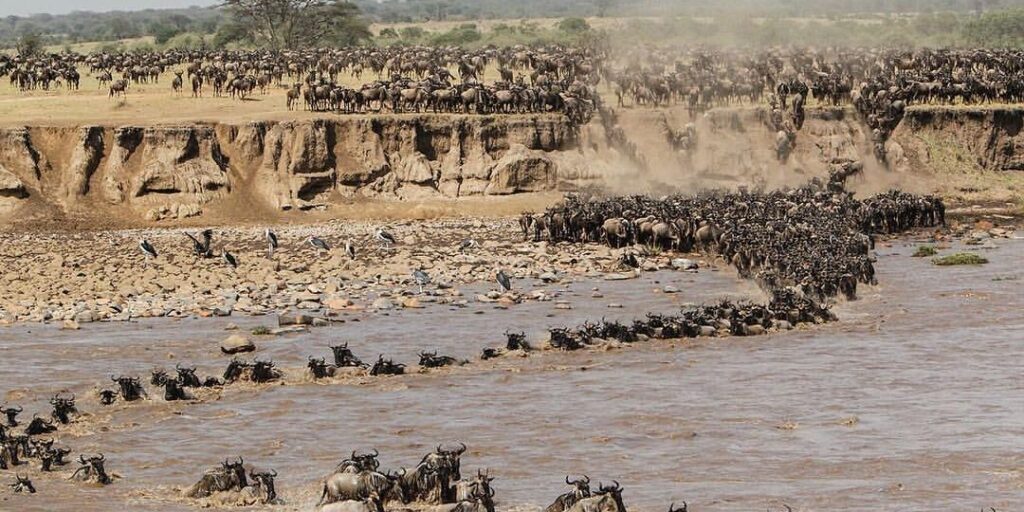
The Serengeti’s most extraordinary phenomenon is the annual Great Migration — the largest overland movement of animals on the planet. More than 1.5 million wildebeest, 250,000 zebra, and 350,000 gazelle move in a continuous, clockwise circuit across the Serengeti-Mara ecosystem in search of fresh grass and water.
The migration follows a broadly predictable seasonal pattern, though exact timings vary with rainfall:
- January–March: Calving season on the southern short-grass plains around Ndutu. Up to 8,000 wildebeest calves are born daily, attracting predators in enormous numbers.
- April–May: Herds begin moving northwest as the long rains arrive, crossing the central Seronera valley.
- June–July: The herds gather north of the Grumeti River, often resulting in dramatic Grumeti River crossings.
- July–October: The peak drama unfolds at the Mara River crossings as herds attempt to reach the Masai Mara in Kenya and return south — a spectacle involving thousands of crocodiles and intense predator action.
- November–December: Herds return south through the eastern Serengeti as the short rains trigger fresh grass growth.
Wildlife
Beyond the migration, the Serengeti supports one of Africa’s densest concentrations of large predators. The park is home to approximately 3,000 lions — one of the largest populations in Africa — along with more than 1,000 leopards, hundreds of cheetahs, and large packs of African wild dog. Spotted hyena clans numbering in the dozens are a common sight, and black-backed and side-striped jackals patrol the plains.
The park’s elephant population, once decimated by poaching, has recovered significantly and now numbers in the thousands. Buffalo herds of several hundred animals are a regular feature of the Seronera Valley, while giraffe, eland, topi, kongoni, impala, waterbuck, steinbok, and Grant’s and Thomson’s gazelle add richness to the wildlife tapestry. The Serengeti also shelters three of Africa’s Big Five — lion, leopard, and buffalo — with elephant and rhinoceros completing the group in neighbouring areas.
Landscapes and Ecosystems
The Serengeti is far more than a uniform grassland. It encompasses several distinct ecological zones, each with its own character and wildlife:
- Southern short-grass plains: Flat, open, and seemingly endless — ideal for cheetah hunts and wildebeest calving.
- Seronera Valley: The ‘heart’ of the Serengeti, watered by the Seronera River and offering year-round wildlife viewing. Classic acacia country.
- Western Corridor: Bounded by the Grumeti River, this region offers some of the most dramatic predator-prey interactions during the migration.
- Northern Serengeti: The most remote and pristine zone, offering uncrowded safari experiences and connecting to Kenya’s Masai Mara.
- Kopjes: Ancient granite outcrops scattered across the plains, serving as lookout points for leopards and lions, shelters for hyraxes, and sunning spots for lizards and monitor lizards.
Birdlife
The Serengeti is outstanding for birding, with more than 500 species recorded. Highlights include ostriches strutting the open plains, secretarybirds stalking through grass, raptors including martial and bateleur eagles, vultures congregating at kills, and an array of colourful rollers, kingfishers, bee-eaters, sunbirds, and starlings. The kopjes host Verreaux’s eagle-owls, while the Grumeti River supports grey-headed kingfishers and pel’s fishing owls.
Practical Information
- Access: Fly-in via Seronera, Grumeti, Kogatende, or Ndutu airstrips. Road access from Arusha via the Ngorongoro Crater is 7–9 hours.
- Accommodation: The Serengeti offers the full range, from ultra-luxury lodges and permanent tented camps to public campsites and mobile migration camps.
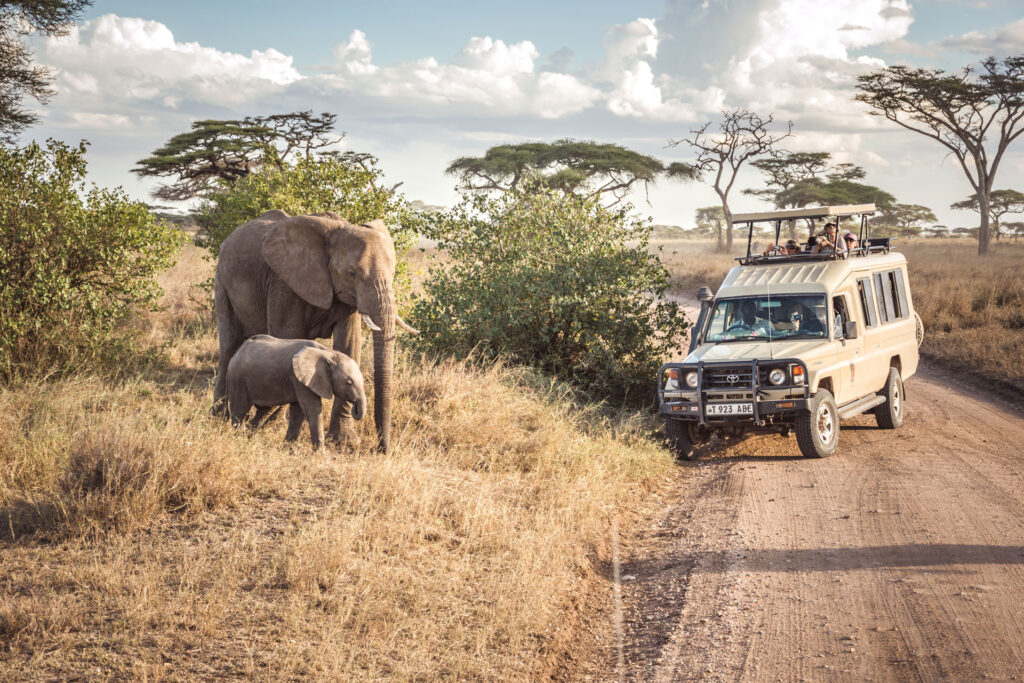
- Activities: Game drives (open vehicle, day and night), balloon safaris over the plains at dawn, walking safaris in some areas, and cultural visits to Maasai villages.
- Fees: Standard Tanzania national park fees apply. Balloon safaris are an additional cost (approximately USD 600 per person).
2. Ngorongoro Conservation Area
The Ngorongoro Conservation Area (NCA) is one of the most visited and celebrated natural areas in Africa — and with good reason. At its heart lies the Ngorongoro Crater, the world’s largest intact volcanic caldera, which shelters a staggering concentration of wildlife within its 260 square kilometre bowl. But the NCA is far more than the crater; it is also a UNESCO World Heritage Site, a working Maasai pastoralist area, and home to extraordinary palaeontological sites that have transformed our understanding of human prehistory.
Overview
- Location: Arusha Region, northern Tanzania
- Area: 8,292 km² (Conservation Area)
- Crater Area: 260 km² (crater floor)
- Established: 1959
- UNESCO Status: World Heritage Site (1979); Biosphere Reserve
- Nearest Town: Arusha (~180 km)
The Crater
The Ngorongoro Crater formed approximately 2–3 million years ago when a massive volcano collapsed inward after erupting. Today, its walls rise 400–610 metres above the crater floor, creating a natural enclosure that traps — and nurtures — an extraordinary diversity of wildlife. Remarkably, most animals within the crater are resident year-round, unlike the migratory species of the Serengeti.
The crater floor is dominated by short-grass plains, a soda lake (Lake Magadi), swamps, and patches of acacia woodland. Hippo pools are a highlight of the Mandusi swamp area, while the fever tree forest at Lerai provides shelter for large elephant bulls. The crater supports approximately 25,000 large mammals, including one of Africa’s densest populations of lion and the last viable black rhinoceros population in northern Tanzania.
Wildlife
The Ngorongoro Crater offers a genuine Big Five experience — lion, leopard, elephant, buffalo, and black rhinoceros can all be seen within the crater, often on a single game drive. The rhino population, though small (fewer than 30 individuals), represents one of Tanzania’s conservation success stories.
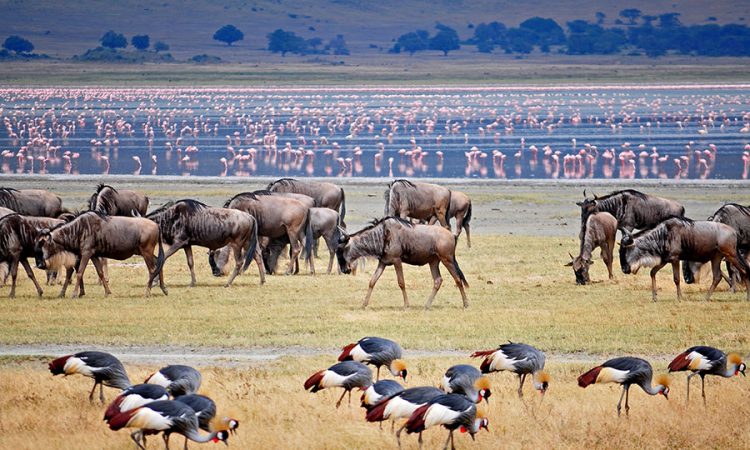
Large lion prides roam the grasslands, often visible at kills. Spotted hyenas are extremely numerous and are the crater’s primary predator by biomass. Jackals trot through the grass, while cheetah sightings, though rarer than on the Serengeti, do occur. Wildebeest, zebra, and buffalo graze in large herds, and flamingoes frequently gather on Lake Magadi’s alkaline shores.
Olduvai Gorge and Laetoli
The NCA is also of immense palaeontological significance. Olduvai Gorge — often called the ‘Cradle of Mankind’ — lies within the conservation area and has yielded fossil remains of early hominins, including Homo habilis and Australopithecus, dating back nearly 2 million years. A museum at the gorge provides interpretive context and is a fascinating addition to any crater visit.
Laetoli, also within the NCA, preserves the fossilized footprints of Australopithecus afarensis — dating back 3.6 million years — and representing the oldest known evidence of bipedal walking by a human ancestor.
Practical Information
- Access: Road access from Arusha is approximately 3 hours. A 4WD vehicle is required for descent into the crater.
- Accommodation: Several luxury lodges perch on the crater rim, offering dramatic views. Budget options are available outside the conservation area.
- Regulations: Vehicles must leave the crater by 6:00 pm daily. Picnic lunches within the crater are permitted at designated sites only.
- Maasai: The NCA is unique in being a multiple-use area where Maasai pastoralists live alongside wildlife. Cultural visits and interactions are possible.
3. Tarangire National Park
Tarangire is the ‘elephant park’ — a landscape of immense baobab trees, seasonal swamps, and the life-giving Tarangire River that draws extraordinary concentrations of elephants, especially during the dry season. Often bypassed by visitors rushing between Arusha, the Ngorongoro, and the Serengeti, Tarangire rewards those who stop with one of northern Tanzania’s most authentic bush experiences.
Overview
- Location: Manyara Region, northern Tanzania
- Area: 2,850 km²
- Established: 1970
- Nearest Town: Arusha (~120 km)
- Best Time to Visit: June–October (dry season; peak elephant concentrations)
Elephants and Wildlife
Tarangire supports one of Tanzania’s largest elephant populations, with herds numbering in the hundreds converging on the Tarangire River during the dry months of June to October. The park is known for its multi-generational family groups and offers opportunities to observe elephant social behaviour at close quarters.
Beyond elephants, Tarangire is exceptional for large lion prides, leopards, African wild dogs, cheetahs, and black-and-white colobus monkeys in the riverine forests. Buffalo herds of several hundred animals are common in the swamp areas, while the park’s high oryx, fringe-eared oryx, and greater kudu populations set it apart from other northern parks.
Baobab Landscape
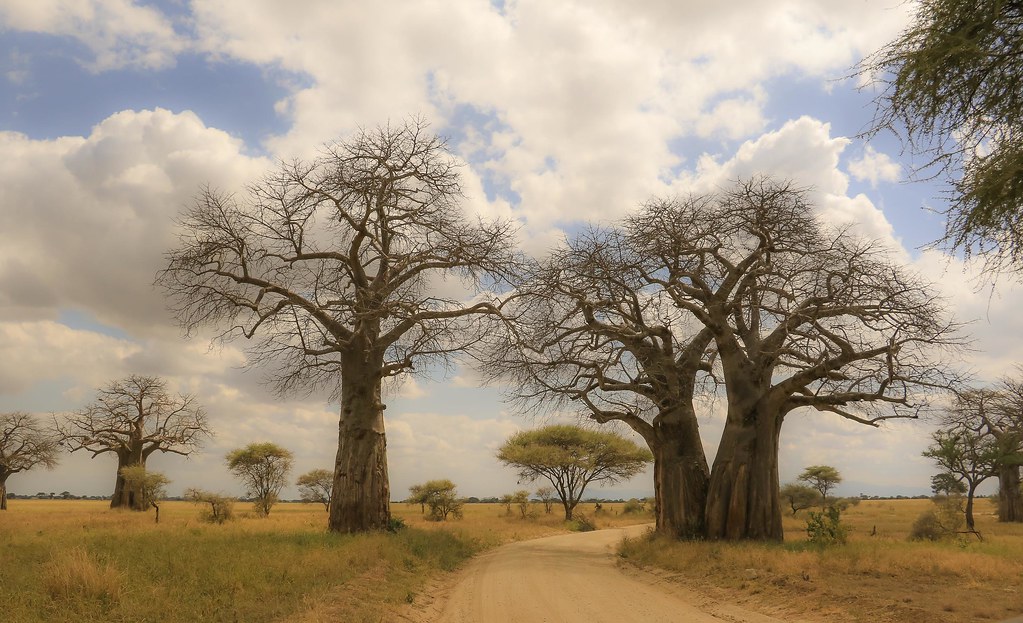
The landscape of Tarangire is among the most visually striking in Tanzania. Enormous ancient baobab trees — some believed to be over 1,000 years old — dominate the ridges and valleys, creating an otherworldly silhouette against the sunset sky. The silty Tarangire River, lined with yellow fever acacias and date palms, winds through the park and serves as a magnet for virtually all wildlife during the dry season.
Birdlife
Tarangire is one of Tanzania’s premier birding destinations, with more than 550 recorded species — more than the entire British Isles. Yellow-collared lovebirds and ashy starlings are Tarangire specialities, while the park is also outstanding for raptors, hornbills, vultures, and bee-eaters. Birdwatching walks along the river at dawn are particularly rewarding.
4. Lake Manyara National Park
Lake Manyara National Park is small in size but outsized in wildlife experience. Famous worldwide for its tree-climbing lions — a behaviour rarely seen elsewhere — the park also offers an astonishing diversity of habitats compressed into a narrow strip between the western wall of the Great Rift Valley escarpment and the alkaline waters of Lake Manyara.
Overview
- Location: Manyara Region, northern Tanzania
- Area: 648 km² (of which ~230 km² is lake)
- Established: 1960
- Nearest Town: Mto wa Mbu (gateway village); Arusha (~126 km)
- Best Time to Visit: Year-round; flamingoes most numerous July–October
Tree-Climbing Lions
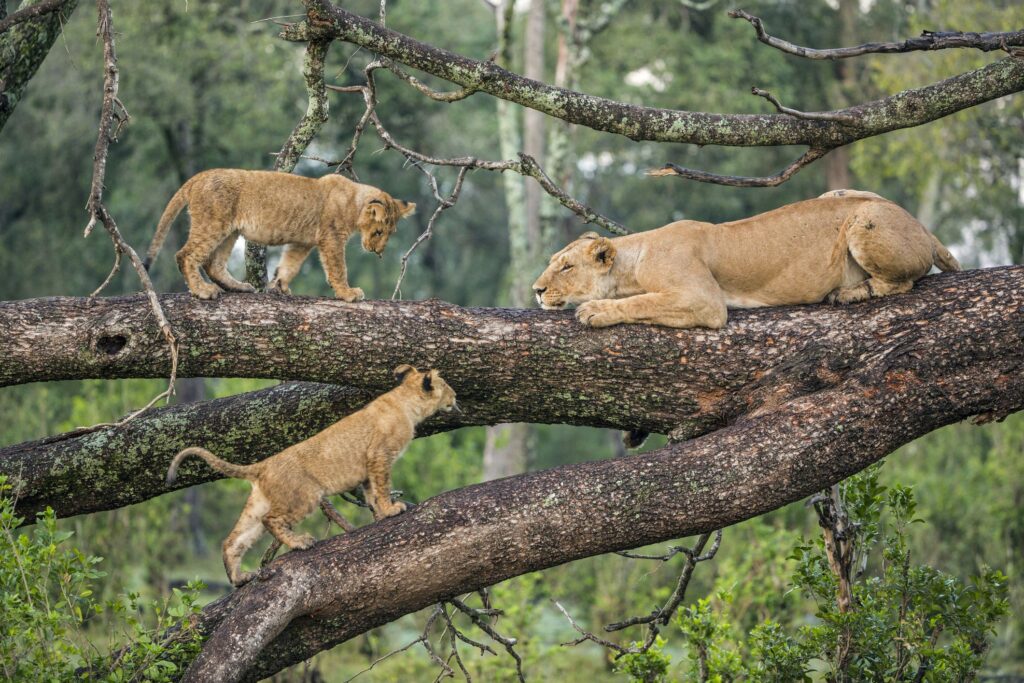
Manyara’s lions have developed the unusual habit of lounging in the branches of acacia and sausage trees, a behaviour documented since the early 20th century and unique to a handful of locations worldwide. The exact reason for this is debated — escaping ground-level insects, enjoying a breeze, or simply a learned behaviour passed down through generations — but the sight of a lion sprawled across a branch at eye level from a game vehicle is unforgettable.
Wildlife and Habitats
The park’s habitats include groundwater forest (with its own endemic populations of blue monkeys, bushbuck, and forest birds), acacia woodland, open floodplains, and the lake itself. Large elephant herds roam the forest and woodland, while hippos are almost always visible in the hippo pools near the Simba River. Giraffe, wildebeest, zebra, impala, and buffalo are all present in good numbers.
The lake is the park’s centrepiece for birdlife. Up to two million lesser flamingoes gather on its alkaline margins at peak times, creating one of Africa’s greatest avian spectacles. Pelicans, storks, herons, spoonbills, and a remarkable array of wading birds further enrich the waterbird assemblage.
5. Ruaha National Park
Tanzania’s largest national park and one of Africa’s great wilderness areas, Ruaha is still largely unknown to the mainstream safari circuit — making it one of the continent’s most extraordinary off-the-beaten-path destinations. Encompassing more than 20,000 square kilometres of remote, rugged landscape in southern Tanzania, Ruaha offers an uncrowded, raw, and deeply authentic wilderness experience.
Overview
- Location: Iringa Region, south-central Tanzania
- Area: 20,226 km² (Tanzania’s largest national park)
- Established: 1964
- Nearest Town: Iringa (~130 km)
- Best Time to Visit: June–October (dry season)
Wildlife
Ruaha supports one of Africa’s largest lion populations and is particularly famous for huge, battle-scarred prides with individuals that are far more relaxed around vehicles than in busier parks. Leopard sightings are frequent, cheetahs patrol the open plains, and Ruaha is one of Tanzania’s best parks for African wild dog — the endangered painted wolf.
The park’s elephant population, once severely depleted by poaching, has recovered to over 10,000 animals — the largest concentration in East Africa. Ruaha also harbours rare and unusual antelope species more characteristic of southern Africa, including roan, sable, greater kudu, and eland.
Landscape
The Great Ruaha River is the park’s defining feature — a permanent waterway that sustains enormous concentrations of wildlife in the dry season. Rocky ridges, miombo woodland, baobab-dotted plains, and seasonal sand rivers create a landscape of extraordinary drama. Ruaha’s remoteness means visitor numbers remain low, allowing for private, undisturbed wildlife encounters.
6. Nyerere National Park (Selous Game Reserve)
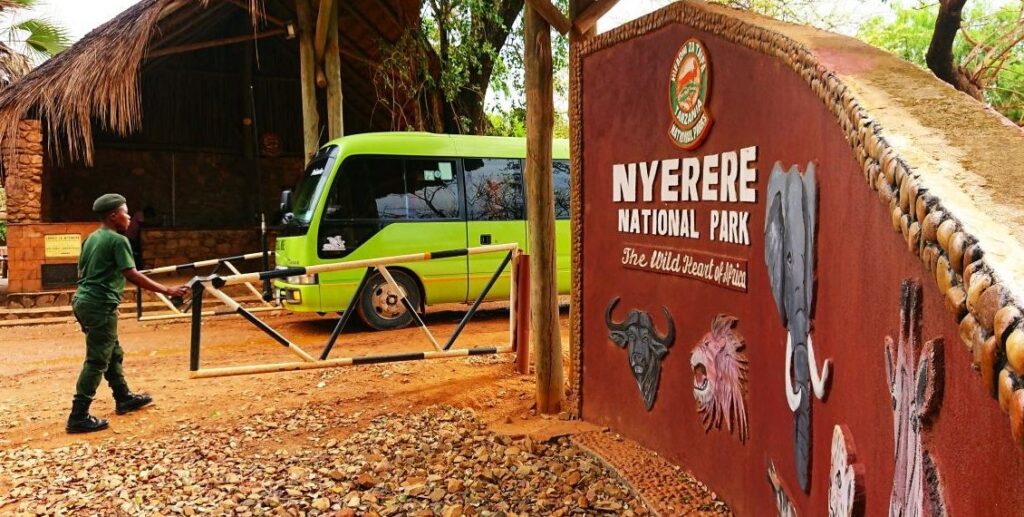
The area now known as Nyerere National Park (formerly part of the vast Selous Game Reserve, renamed in honour of Tanzania’s founding father Julius Nyerere) is Africa’s largest protected area south of the Sahara. Its northern sector, encompassing the Rufiji River and its vast floodplains, delta channels, and ox-bow lakes, was gazetted as a national park in 2019 and now forms one of Africa’s premier safari destinations.
Overview
Location: Lindi, Morogoro, and Coast Regions, southern Tanzania
Area: ~30,893 km² (national park sector)
Established: 2019 (as National Park); 1922 (as Game Reserve)
UNESCO Status: World Heritage Site (Selous ecosystem)
Best Time to Visit: June–October
The Rufiji River
The Rufiji is the heart and soul of Nyerere. Tanzania’s largest river winds through the park in a series of oxbow lakes, channels, palm-fringed banks, and vast floodplains, supporting extraordinary concentrations of hippos, crocodiles, and waterbirds. Boat safaris on the Rufiji — gliding silently past basking crocodiles and pod after pod of hippos, with fish eagles calling overhead — offer a safari experience unlike anything available in the northern parks.
Wildlife
Nyerere/Selous supports Africa’s largest hippopotamus and crocodile populations. Elephant numbers, once the highest in Africa before catastrophic poaching in the 1970s and 1980s, have recovered significantly and now stand at around 15,000. Wild dog packs are a prized sighting, and the park supports good numbers of lion, leopard, and cheetah. The endangered African wild dog is particularly well represented.
Activities
- Boat safaris on the Rufiji River — one of Tanzania’s most distinctive safari activities
- Walking safaris with armed rangers — some of Africa’s best
- Traditional fly-camping on the sand banks of the Rufiji
- Game drives across vast, open wilderness with few other vehicles
- Sport fishing (in designated areas)
7. Kilimanjaro National Park
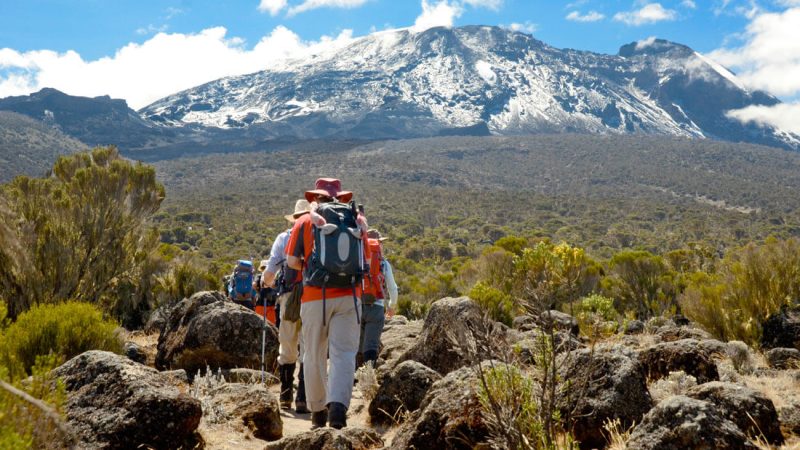
Kilimanjaro National Park protects the slopes and summit of Africa’s highest mountain — Mount Kilimanjaro — which at 5,895 metres above sea level is also the world’s highest free-standing mountain. A UNESCO World Heritage Site, Kilimanjaro is one of the world’s great trekking destinations and one of the highest peaks accessible to non-technical climbers.
Overview
- Location: Kilimanjaro Region, northeastern Tanzania
- Area: 1,688 km²
- Established: 1973
- Summit Elevation: 5,895 m (Uhuru Peak, Kibo)
- UNESCO Status: World Heritage Site (1987)
- Nearest Town: Moshi (~40 km from Marangu Gate)
The Mountain
Kilimanjaro is a dormant stratovolcano with three distinct cones: Kibo (the highest and home to Uhuru Peak), Mawenzi (5,149 m), and Shira (3,962 m). Kibo’s summit is capped by an ancient caldera containing the remnants of glaciers that are retreating rapidly due to climate change. Scientists estimate that Kilimanjaro’s ice fields have shrunk by more than 85% since 1912 and may disappear entirely within decades.
The mountain traverses five distinct ecological zones as climbers ascend: cultivated lower slopes, montane rainforest, heath and moorland, alpine desert, and the arctic summit zone. This vertical ecosystem diversity means that a Kilimanjaro climb encompasses environments equivalent to a journey from the tropics to the poles.
Trekking Routes
Six established routes lead to Uhuru Peak, each offering different distances, gradients, scenery, and levels of traffic:
- Marangu Route (‘Coca-Cola Route’): The most popular and only route with hut accommodation. Shortest ascent (5–6 days). Lower acclimatisation time means lower summit success rates.
- Machame Route (‘Whiskey Route’): The most scenic and popular non-hut route. Excellent acclimatisation profile. 6–7 days. Highly recommended.
- Lemosho Route: Widely considered the most beautiful route. Begins from the west for excellent acclimatisation. 7–8 days. Relatively uncrowded.
- Rongai Route: The only route approaching from the north (Kenyan border side). Drier and often less crowded. 6–7 days.
- Northern Circuit: The longest route (9–10 days), circumnavigating the mountain for maximum acclimatisation and exceptional scenery. Highest summit success rate.
- Umbwe Route: The steepest and most direct route. Very challenging and only recommended for experienced trekkers.
Wildlife on Kilimanjaro
The montane rainforest belt supports an impressive array of wildlife, including Abbot’s duiker (an endangered forest antelope found almost nowhere else), black-and-white colobus monkeys, blue monkeys, African buffaloes, elephants, bushpigs, and leopards. The forest birds include the endemic Kilimanjaro white-eye and a variety of sunbirds, hornbills, and turacos.
8. Gombe Stream & Mahale Mountains National Parks
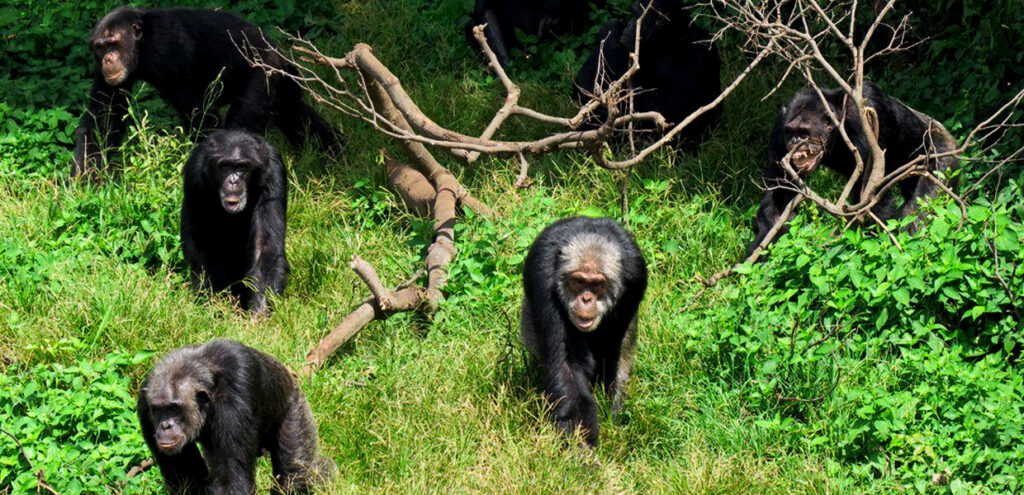
On the eastern shores of Lake Tanganyika — the world’s second-deepest lake — lie two extraordinary national parks famous for one unique experience: trekking through dense forest to sit with habituated communities of wild chimpanzees. Gombe Stream is where Jane Goodall began her landmark primatology research in 1960; Mahale Mountains protects the world’s largest known wild chimpanzee community.
Gombe Stream National Park
- Location: Kigoma Region, western Tanzania
- Area: 52 km² (Tanzania’s smallest national park)
- Established: 1968
Gombe is tiny — just 52 square kilometres — but globally significant. It was here that Jane Goodall’s research overturned assumptions about the boundary between humans and animals, documenting for the first time that chimpanzees make and use tools. The chimpanzee communities at Gombe remain among the most extensively studied wild animal populations on Earth.
Visiting Gombe means trekking through steep, forested valleys along the lake shore until rangers locate the chimpanzee group. Once found, visitors spend up to one hour in close proximity — a profoundly moving experience. Gombe also supports olive baboons, red colobus monkeys, red-tailed monkeys, bushpigs, and bushbuck. Lake Tanganyika’s crystalline waters offer excellent snorkelling and swimming.
Mahale Mountains National Park
- Location: Kigoma Region, western Tanzania
- Area: 1,613 km²
- Established: 1985
Mahale is remote — there are no roads; access is by boat or light aircraft — which makes it one of Africa’s most exclusive and sought-after destinations. The Mahale chimpanzee community numbers around 60 individuals and has been studied since the 1960s. The backdrop is magnificent: the Mahale Mountains rise steeply from the lake to over 2,400 metres, blanketed in dense forest that gives way to bamboo and alpine moorland at higher elevations.
Beyond chimpanzees, Mahale supports a remarkable diversity of wildlife: over 1,000 hippopotami in the lake, olive baboons, red colobus, red-tailed monkeys, lion, leopard, buffalo, bushbuck, and over 200 bird species. The lake provides spectacular sport fishing, snorkelling, and kayaking.
9. Arusha National Park
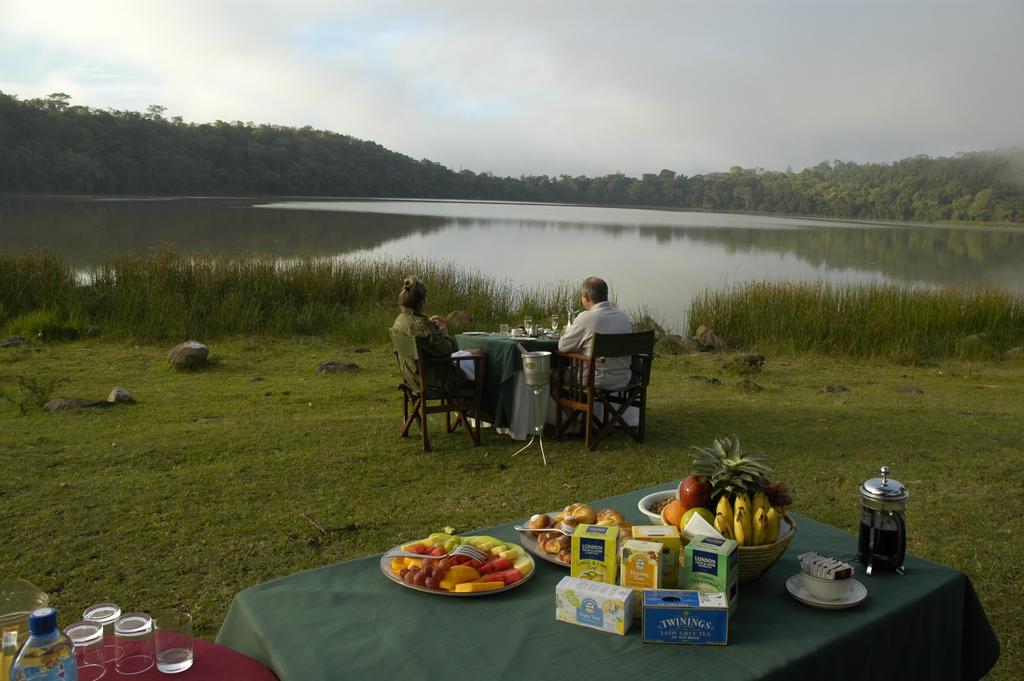
Compact but ecologically diverse, Arusha National Park lies just 35 kilometres east of Arusha city, making it the most accessible national park for visitors arriving at Kilimanjaro International Airport. The park encompasses the dramatic Mount Meru (4,566 m — Africa’s fifth-highest peak), the scenic Ngurdoto Crater, and the alkaline Momella Lakes.
Overview
- Location: Arusha Region, northern Tanzania
- Area: 552 km²
- Established: 1960
- Nearest Town: Arusha (35 km)
Mount Meru
Mount Meru is a rewarding and significantly less crowded alternative to Kilimanjaro. The four-day climb ascends through forest, heath and moorland, and an almost lunar crater rim. The final ascent along the knife-edge ridge to Meru’s Socialist Peak (4,566 m) is exhilarating, and on clear days the views of Kilimanjaro dominating the horizon are extraordinary. As with Kilimanjaro, armed park rangers must accompany all trekkers.
Wildlife and Activities
Arusha supports giraffe, zebra, buffalo, hippos (in the Momella Lakes), warthog, Kirk’s dik-dik, mongoose, and a large variety of primates including black-and-white colobus and blue monkeys. Big cats are present but rarely seen. The park is particularly renowned for walking safaris and canoeing on the Momella Lakes.
10. Katavi National Park
Katavi is one of Tanzania’s most remote and least-visited national parks — and for that reason, one of its most rewarding for adventurous travellers. Located in western Tanzania near the shores of Lake Tanganyika, Katavi offers an experience of raw, unmediated African wilderness that is increasingly rare on the continent.
Overview
- Location: Katavi Region, western Tanzania
- Area: 4,471 km²
- Established: 1974
- Nearest Town: Mpanda (~40 km)
- Best Time to Visit: June–October
Wildlife
In the dry season, Katavi’s Katuma River and seasonal floodplains concentrate wildlife in astonishing numbers. Hippo pools containing hundreds of individuals packed tightly together are among the most dramatic wildlife spectacles in Africa. Buffalo herds of several thousand animals cross the plains in vast columns, while lion prides and crocodile populations benefit from the dry-season concentration of prey.
Katavi’s lion prides are famous for their size — groups of 20–30 individuals have been recorded. Elephant herds are large, leopards are regularly sighted, and the park supports significant populations of topi, puku, reedbuck, and roan antelope. African wild dog packs also roam the park.
Best Time to Visit Tanzania’s National Parks
Tanzania’s climate is broadly divided into dry and wet seasons, and the best time to visit varies by park and the type of experience sought.
Dry Season (June – October)
The dry season is generally considered the best overall time for wildlife viewing across Tanzania. Animals concentrate around permanent water sources, vegetation thins out, and the absence of rain makes roads more accessible. This is also the peak of the Serengeti’s northern migration and the best season for Ruaha, Katavi, Nyerere, and Tarangire.
Short Dry Season (January – February)
The brief dry period between the short and long rains is excellent for the Serengeti’s southern plains, particularly the calving season at Ndutu (January–February). This is arguably the best time to witness predator-prey interactions in the entire Serengeti ecosystem.
Wet Season (March – May; November – December)
The long rains (March–May) make some parks difficult to access but bring lush, green landscapes and far fewer tourists. Birdlife is at its peak during the wet season, and the scenery is extraordinarily beautiful. Ngorongoro and northern Tanzania parks remain accessible year-round. Kilimanjaro is climbable in all months, though summit success rates are lower during the wettest months.
Practical Travel Information
Entry Requirements
- Visa: Most nationalities require a tourist visa. East African Tourist Visa available for combined Tanzania/Kenya/Uganda travel.
- Yellow Fever: Vaccination certificate required if arriving from or transiting through a yellow fever endemic country.
- Passport: Valid for at least 6 months beyond travel dates.
Park Fees and Conservation Levies
Tanzania National Parks (TANAPA) charges entry fees for all national parks. Fees are charged in USD and vary by park and category. Major parks such as Serengeti and Ngorongoro carry higher fees. All payments are processed electronically through the park’s digital system. Ngorongoro Conservation Area levies a separate conservation fee.
Getting Around
- Fly-in safaris: Light aircraft connecting Arusha, Zanzibar, and airstrips within the parks are the fastest option for remote parks.
- Road safaris: Self-drive is possible in some parks with a reliable 4WD, but guided safaris in well-equipped vehicles are strongly recommended for most visitors.
- Combination safaris: Many visitors combine a northern circuit safari (Serengeti/Ngorongoro/Tarangire/Manyara) with time on Zanzibar.
Health and Safety
- Malaria: Prophylaxis recommended for all park areas. Use insect repellent and sleep under a net.
- Water: Drink bottled or purified water only. Lodges provide safe drinking water.
- Wildlife safety: Always follow ranger and guide instructions around wildlife. Never exit a vehicle unless authorised.
- Travel insurance: Comprehensive travel insurance including medical evacuation cover is essential.
Responsible Tourism and Conservation
Tanzania’s national parks face ongoing challenges from poaching, habitat encroachment, climate change, and the impacts of tourism itself. Visitors can support conservation by choosing responsible operators, paying all official park fees, respecting wildlife viewing guidelines (maintaining distance, not using flash photography, staying on designated tracks), and supporting community-based tourism initiatives that benefit local people living adjacent to parks.
Many of Tanzania’s most respected safari operators channel a proportion of their profits into conservation and community projects. Choosing operators with demonstrable conservation credentials makes a tangible difference.
Conclusion
Tanzania’s national parks represent one of humanity’s greatest conservation legacies — a vast, interconnected web of protected landscapes that safeguards biodiversity of global importance while providing life-sustaining resources for millions of people. From the thundering migration herds of the Serengeti to the intimate forests of Gombe, from the glaciated heights of Kilimanjaro to the hippo-crowded channels of Nyerere, these parks offer experiences that are not merely spectacular but genuinely transformative.
A visit to Tanzania’s parks is far more than a holiday. It is an encounter with something ancient, elemental, and irreplaceable — a reminder of what the world looked like before human activity altered it beyond recognition, and a powerful argument for why protecting what remains is one of our generation’s most urgent responsibilities.
Whether you spend a week on the northern circuit or a month travelling between remote wilderness areas, Tanzania’s national parks will leave an indelible mark. Plan carefully, travel responsibly, and prepare to be humbled by the scale and beauty of the natural world.