 info@gorillatrekkinginafrica.com

What Animals Are in Mikumi National Park?
What Animals Are in Mikumi National Park, From tree-climbing lions to over 400 bird species — the full picture of who lives in Mikumi.
| AT A GLANCE | |
| Big Five present | Lion, leopard, elephant, buffalo (rhino extirpated, reintroduction proposed) |
| Large herbivores | Elephant, buffalo, giraffe, zebra, wildebeest, eland, hippo |
| Notable antelope | Greater kudu, sable antelope, Lichtenstein’s hartebeest, impala |
| Predators | Lion (including tree-climbing individuals), leopard, spotted hyena, jackal, rare wild dog |
| Primates | Yellow baboon, vervet monkey, plus several other species across the wider ecosystem |
| Birds | 400+ recorded species, resident and migratory |
Mikumi National Park, Tanzania’s fourth-largest park and a key gateway to the wider Selous–Nyerere ecosystem, is known for delivering a genuinely big-game safari experience within a few hours of Dar es Salaam. Its open Mkata Floodplain, mixed acacia and miombo woodland, and network of waterholes support a wildlife community that, while smaller in pure numbers than the northern circuit parks, covers nearly every category of East African savannah animal — elephants and big cats, plains herbivores, rare antelope, primates, river-dwelling hippos and crocodiles, and a remarkable diversity of birds.
Visitors are often surprised by how much they see in a short visit. Four of the Big Five are present and regularly sighted; only the rhino, lost to poaching in the 1990s, is currently missing, with park authorities having signalled long-term plans for reintroduction.
Big Cats and Predators
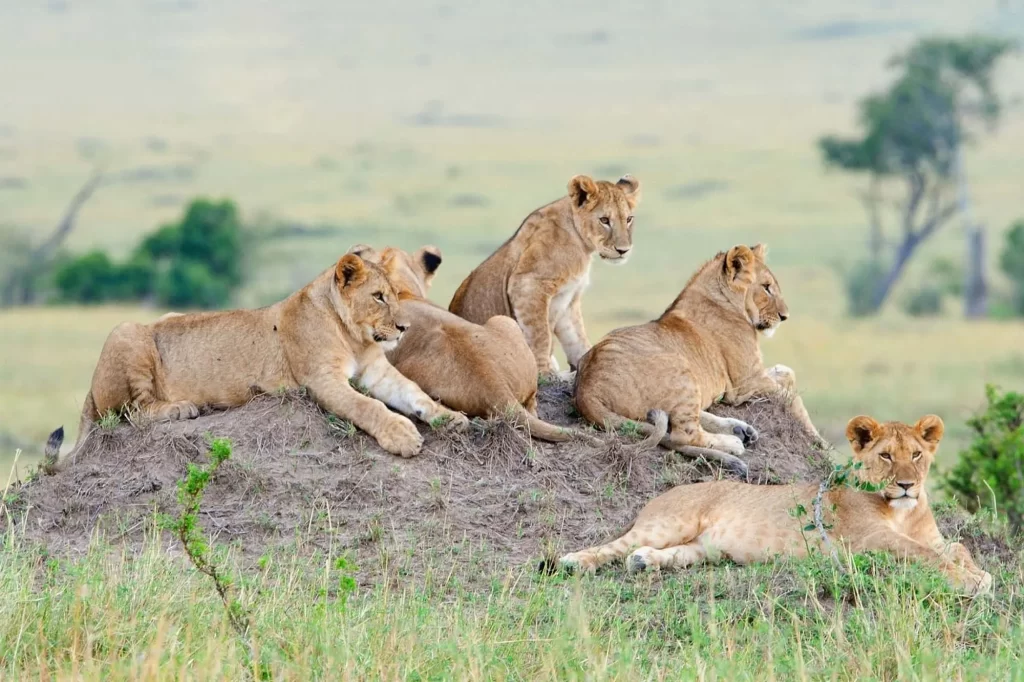
Lion are Mikumi’s most reliably seen predator, found across the open plains and, in a smaller and much-prized population, among the trees — a behaviour usually associated with Lake Manyara but seen here too, particularly in the northern and southern sectors. Leopard are present but elusive, more often picked up by an experienced guide than spotted independently. Spotted hyena and jackal are commonly encountered, especially on night drives, while African wild dog turn up only occasionally and are considered one of the park’s rarer rewards. Cheetah sightings are uncommon enough that most guides treat them as a bonus rather than an expectation.
| Predator | Status in Park | Where to Look |
| Lion | Common; resident prides | Mkata Floodplain; occasional tree-climbing individuals |
| Leopard | Present, rarely seen | Riverine woodland and rocky kopjes |
| Spotted hyena | Common | Plains and waterholes, especially at night |
| Jackal | Common | Open grassland |
| African wild dog | Rare, occasional sightings | Wider park, unpredictable |
| Cheetah | Very rare to absent | Open plains, if present |
Elephants and Buffalo
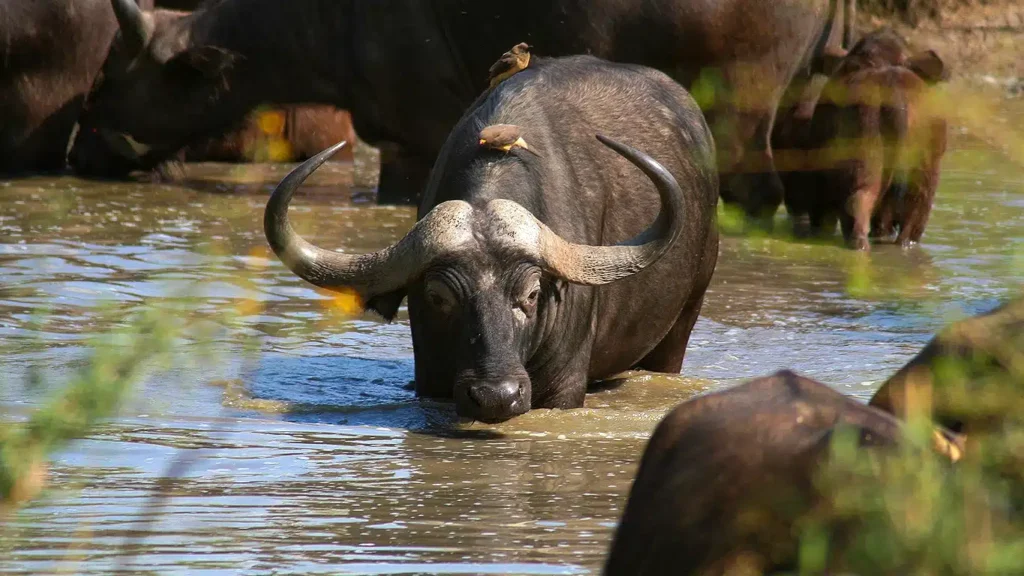
Mikumi holds one of Tanzania’s denser elephant populations relative to its size, with herds especially conspicuous around the Mkata River and its waterholes during the dry season. Numbers swell further in December and January, after the short rains, when elephants move into the park from the neighbouring Selous/Nyerere ecosystem. Cape (African) buffalo are equally common, typically encountered in large mixed-age herds grazing the floodplain or gathered at water in the heat of the day.
Giraffe, Zebra and Plains Herbivores
Giraffe in Mikumi belong to a population that biologists consider transitional between the Masai and reticulated subspecies, and they are frequently seen browsing the acacia stands that fringe the Mkata River. Burchell’s zebra and blue wildebeest move across the open grassland in sizeable herds, often alongside impala, while common eland — the world’s largest antelope — make Mikumi one of the better Tanzanian parks for a reliable sighting.
Rarer and Specialist Antelope
Away from the main floodplain, Mikumi’s miombo woodland and the Vuma Hills shelter a set of antelope species that are harder to find but well worth the effort: greater kudu, with their long spiral horns; sable antelope, striking in black and white; and the localized Lichtenstein’s hartebeest, an unusual species seen in relatively few Tanzanian parks. These animals favour wooded, hillier terrain rather than open grassland, so sightings usually depend on a guide who knows their specific haunts.
| Good to Know
Mikumi is one of the more dependable parks in Tanzania for spotting eland, sable antelope, and Lichtenstein’s hartebeest — species that are scarce or absent in the busier northern circuit parks. The dry season (June–October) concentrates almost all large mammals around the Mkata River and the park’s waterholes, making it the strongest period for general game viewing. |
Hippos, Crocodiles and Aquatic Wildlife
Two artificial pools a few kilometres from the main gate, known collectively as the Hippo Pool, hold a resident population of hippopotamus that draws steady crowds of visitors and an accompanying cast of waterbirds. Nile crocodile are present in the Mkata River and its pools, often seen basking at the water’s edge alongside grazing herds that come down to drink.
Primates and Smaller Mammals
Yellow baboon are abundant throughout the park and have been the subject of long-running scientific study, while vervet monkey are also common in wooded areas. Warthog are a frequent and easy sighting on most drives. Smaller and more secretive mammals — bushbabies, mongoose species, and the occasional civet or genet on night drives — round out Mikumi’s mammal list, alongside reptiles such as monitor lizard, python, and several chameleon species.
Birdlife
With more than 400 recorded species, Mikumi ranks among Tanzania’s best birding parks. Raptors such as the bateleur, martial eagle, and African fish eagle hunt over the plains and river, while marabou stork, open-billed stork, and other waterbirds gather at the Hippo Pool. The lilac-breasted roller and yellow-throated longclaw are among the most photographed species, and migratory birds from Europe and northern Africa boost numbers further between November and April.
| Bird Group | Examples | Best Place to See |
| Raptors | Bateleur, martial eagle, African fish eagle, vultures | Open plains, riverine trees |
| Waterbirds | Open-billed stork, marabou stork, herons | Hippo Pool, Mkata River |
| Savannah birds | Lilac-breasted roller, yellow-throated longclaw, hornbills | Acacia woodland, roadside perches |
| Ground birds | Black-bellied bustard, guinea fowl, francolin | Grassland edges |
| Migrants (Nov–Apr) | Various Eurasian migrants | Throughout the park |
Quick Reference: Animals by Habitat
| HABITAT | TYPICAL WILDLIFE |
| Mkata Floodplain | Elephant, buffalo, zebra, wildebeest, giraffe, lion, impala |
| Hippo Pool & waterholes | Hippopotamus, crocodile, waterbirds, elephant, buffalo |
| Miombo woodland & Vuma Hills | Greater kudu, sable antelope, Lichtenstein’s hartebeest, leopard |
| Riverine acacia stands | Giraffe, baboon, vervet monkey, raptors |
| Southern, less-accessible sector | Elephant, lion (including tree-climbing), limited visitor access |
| In Short
Mikumi delivers four of the Big Five, dependable sightings of eland and other specialist antelope, easy hippo and crocodile viewing, and exceptional birdlife — all within easy reach of Dar es Salaam. For the richest mix of species in the shortest time, focus game drives on the Mkata Floodplain and the Hippo Pool during the dry season, then add a guided walk or detour into the Vuma Hills for the harder-to-find antelope. |