 info@gorillatrekkinginafrica.com

Does Mikumi National Park Have Lions?
Yes — And Some of Them Climb Trees
What to know about lion sightings, behaviour, and the best places to look in Tanzania’s most accessible safari park
| QUICK ANSWER | |
| Lions present? | Yes — lions are resident throughout Mikumi National Park |
| Tree-climbing behaviour? | Yes — regularly observed, especially on acacia trees |
| Best viewing areas | Mkata Floodplain (day) and the southern miombo woodlands |
| Best time to see them | Morning and late-afternoon game drives, dry season (Jun – Oct) |
| Night drives | Recommended for nocturnal “land” lion activity and hunting behaviour |
| Sighting odds vs. Lake Manyara | Generally considered higher in Mikumi for tree-climbing lions |
The Short Answer
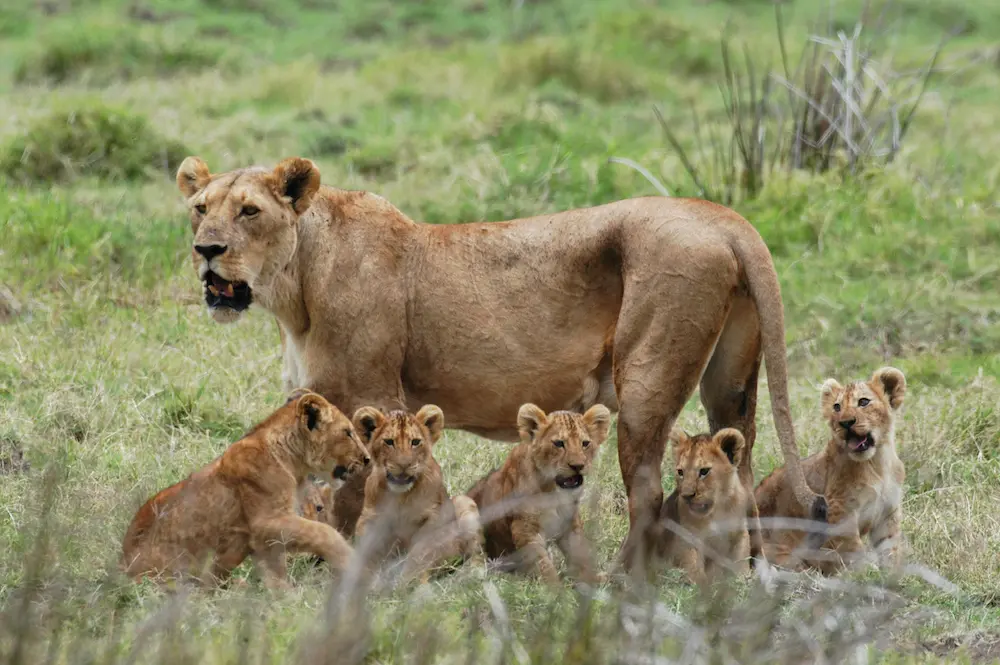
Yes. Mikumi National Park has a healthy resident population of lions, and they are one of the park’s signature attractions. Lions occur across both the northern Mkata Floodplain and the wilder southern half of the park, and Mikumi is widely regarded by guides and operators as one of the more reliable places in Tanzania to combine lion sightings with the rare spectacle of lions resting in trees.
Mikumi forms part of the wider Selous/Nyerere ecosystem, one of the largest protected wildlife areas in Africa, and lions move relatively freely within this network of linked habitats. While sightings are never guaranteed on any single game drive, multi-day visitors have a good chance of encountering lions at some point during their stay.
Tree-Climbing Lions: Mikumi’s Signature Sighting
Mikumi is known locally and among safari guides for its tree-climbing lions — individuals that haul themselves up into the branches of acacia trees and rest there during the heat of the day. This behaviour is rare in lions generally and is most famously associated with Lake Manyara National Park, but many guides and tour operators report that the odds of seeing it in Mikumi are just as good, if not better, than in Manyara.
The exact reasons lions climb trees are debated — theories include escaping biting flies and ground heat, gaining a vantage point over the floodplain, or simply individual habit passed within a pride — but in Mikumi the behaviour is most often seen on the scattered acacia trees of the Mkata Floodplain in the north, and to a lesser extent in the southern sector, where poorer road access makes sightings harder to come by.
| Two Kinds of Lion Sightings in Mikumi
Tree-climbing lions — best looked for during the day, particularly on morning and afternoon game drives, when lions seek shade and a raised vantage point in acacia branches. Ground (“land”) lions — more active at night, when their superior low-light vision gives them an advantage while hunting; night game drives offer the best chance of seeing this natural behaviour. |
Where in the Park to Look
Most lion sightings happen in and around the Mkata Floodplain, the open savannah in Mikumi’s northern sector. The combination of short grass, scattered acacia and baobab trees, and a high concentration of prey species — zebra, wildebeest, impala, buffalo, and eland — makes this the most productive area for both day and night lion encounters, and it is also where the bulk of the park’s game-viewing road network is concentrated.
Lions are also present in the southern, miombo-woodland half of the park, but this area has far poorer road access and sees relatively few visitors, so sightings there are less commonly reported. Guides note that lions and elephants are sometimes seen even from the Tanzania–Zambia Highway itself as it cuts through the park, particularly at night or in the fading light of dusk.
Lions Among Mikumi’s Big Game
Mikumi is home to four of the traditional “Big Five” — lion, leopard, elephant, and buffalo — with only rhino absent (rhino sightings have occasionally been claimed but are unconfirmed). Lions share the park with spotted hyena, leopard, jackal, and occasional African wild dog as the principal predators, all of which prey on the abundant herbivore populations of the Mkata Floodplain.
- Lions are most often spotted resting on termite mounds, in tree branches, or near waterholes during the day.
- Prey species supporting Mikumi’s lion population include zebra, wildebeest, buffalo, impala, and eland — the world’s largest antelope, for which Mikumi is a noted stronghold.
- Leopards, also present, are shyer and harder to spot, but experienced guides know individual territories and can improve the odds considerably.
Best Time and Way to See Them
| ACTIVITY | WHY IT HELPS |
| Dry-season game drives (Jun – Oct) | Thinner vegetation and animals concentrated near water make lions easier to spot. |
| Morning / late-afternoon drives | Best window for tree-climbing behaviour, as lions seek shade or a vantage point. |
| Night game drives | Lions are more active hunters after dark; offers a different, more dynamic kind of sighting. |
| Guided walking safaris | Not for close lion encounters, but rangers can show fresh tracks and signs near the floodplain. |
Tips for Better Lion Sightings
- Book both a day game drive and a night drive if your itinerary allows — each reveals different lion behaviour.
- Travel with an experienced local guide; many know specific acacia trees and territories favoured by resident prides.
- Visit during the dry season (June to October) for the clearest views and highest concentration of game near the Mkata River.
- Keep scanning tree branches and termite mounds on the floodplain, not just open ground — that’s where tree-climbing lions are usually found.
- Be patient: lions, like most predators, are most active at dawn, dusk, and through the night, so plan drives around these windows where possible.
| In Short
Mikumi National Park does have lions — a resident population found across both its northern floodplain and southern woodlands. Its tree-climbing lions are a particular highlight, with sighting odds that compare favorably to Lake Manyara, Tanzania’s better-known home of this rare behaviour. For the best chance of a sighting, combine a dry-season visit with both day and night game drives across the Mkata Floodplain. |