 info@gorillatrekkinginafrica.com

The Mkata River
The Mkata River, A complete guide to the river that defines southern Tanzania’s most accessible big-game safari
| AT A GLANCE | |
| Location | Mikumi National Park, Morogoro Region, Tanzania |
| River system | Mkata River, draining the Mkata Floodplain (northern sector) |
| Best viewing season | Dry season, June – October |
| Distance from Dar es Salaam | Approx. 280 km / 4–5 hours by road |
| Signature wildlife | Elephant, buffalo, lion, hippo, giraffe, zebra, crocodile |
| Nearby feature | Hippo Pool, on a tributary of the Mkata River |
River That Shapes a Park
Mikumi National Park is often called the “Serengeti of the South,” and much of that reputation rests on a single watercourse: the Mkata River. Flowing through the park’s northern sector, the river feeds the broad, grass-covered Mkata Floodplain, the open savannah that forms the heart of almost every Mikumi safari. Where the Serengeti’s plains are shaped by volcanic soils and seasonal migration, Mikumi’s plains are shaped by water — specifically, by the Mkata and the alluvial basin it has built up over centuries of flooding and silt deposition.
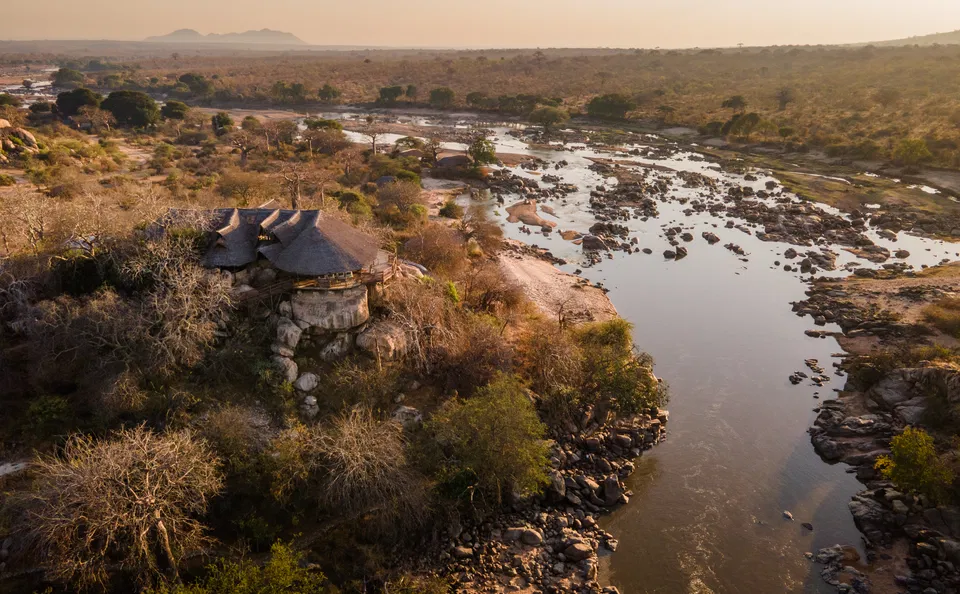
The northern half of the park, drained by the Mkata, is dotted with acacia, baobab, tamarind, and stands of borassus palm rising out of open grassland. It is this landscape — wide horizons, scattered trees, herds visible from a kilometre away — that gives Mikumi its Serengeti-like character, and it is the reason the vast majority of game drives in the park stay close to the river basin rather than venturing into the denser, hillier country to the south.
Geography and the Floodplain
The main 60-kilometre tourist road circuit runs directly through the Mkata Floodplain, threading between open grassland, acacia woodland, and patches of black hardwood and borassus palm. The basin sits within a wider bowl partly enclosed by mountains — the Rubeho range to the west and the Uluguru range to the northeast — which provide a dramatic backdrop to game drives and contribute to the runoff that keeps the Mkata flowing.
Roughly 80% of Mikumi’s total area lies south of the Tanzam Highway, in country that is wilder, less visited, and largely off-limits without a well-equipped expedition vehicle. Almost all standard safari activity, by contrast, is concentrated north of the highway, in the Mkata basin — a practical detail worth knowing when planning a visit, since it explains why the floodplain feels busier with vehicles even though the park as a whole is one of Tanzania’s least crowded.
Wildlife Along the River
During the dry season, the Mkata becomes the single most important resource in the park, and wildlife responds accordingly. Elephants and buffalo move toward its banks in large numbers to drink, wallow, and feed on the seasonal fruit of tamarind trees growing along the watercourse. Herds of zebra, wildebeest, impala, and giraffe graze the surrounding floodplain, while greater kudu, sable antelope, and Lichtenstein’s hartebeest favour the wooded fringes just back from the water.
Predators follow the herds. Lions — including Mikumi’s well-known tree-climbing individuals — are regularly seen resting along the riverbanks or staking out water access points, and leopard, spotted hyena, and the occasional pack of African wild dog also frequent the area. Hippos and crocodiles are present in the river itself and concentrate further at the artificial Hippo Pool nearby, one of the park’s most popular and reliable wildlife stops.
Why the Dry Season Matters HereBetween June and October, surface water elsewhere in the park dries up, funnelling animals toward the Mkata and its remaining pools. Thinner vegetation during these months also makes sightings along the riverbanks far easier than in the wet season’s tall grass. This is the period guides recommend for the best concentration of elephant, buffalo, and predator activity near the water. |
Birdlife on the Floodplain
The Mkata Floodplain and its associated wetlands support a large share of Mikumi’s recorded bird species — more than 400 in total, including residents and seasonal migrants. Waterbirds and waders gather along the riverbanks and at seasonal pools, while raptors such as the bateleur and martial eagle hunt over the open grassland. Lilac-breasted rollers, yellow-throated longclaws, and a variety of hornbills and kingfishers are commonly spotted on game drives that follow the river road, making the area a worthwhile stop for birders even outside peak game-viewing months.
Best Time to Visit
| SEASON | WHAT TO EXPECT |
| Dry season (Jun – Oct) | Best wildlife viewing; thin vegetation; large herds and predators concentrate near the Mkata River; cooler, sunnier weather. |
| Wet season (Nov – May) | Lush green floodplain; harder game viewing due to tall grass; excellent for migratory birds; river levels rise. |
Activities Around the River
Game Drives
Morning, day, and night game drives along the Mkata Floodplain road network are the primary way visitors experience the river. Guides typically pause at known waterholes and river bends, where patience often rewards visitors with sightings of elephant, buffalo, and resting predators.
Guided Walking Safaris
- Conducted on designated trails (including routes near Kikoboga and Vuma Hills) with an armed ranger and experienced guide.
- Offers a closer, on-foot perspective of riverine vegetation, tracks, and birdlife not always visible from a vehicle.
- Available only during the dry season and restricted to adult visitors.
Hippo Pool Visit
A short drive from the main river circuit, the Hippo Pool is fed by the same watershed as the Mkata and offers close, stationary viewing of hippos and crocodiles — a popular complement to a river-focused game drive.
Getting There
Mikumi National Park is reached most commonly by road from Dar es Salaam, a journey of roughly four to five hours along the Tanzam Highway, which bisects the park itself. Travellers coming from Dodoma or Ruaha National Park should allow around six hours. Scheduled domestic flights also connect Mikumi’s Kikoboga airstrip with Dar es Salaam, Selous/Nyerere, Zanzibar, and Ruaha, offering a faster alternative for time-limited itineraries.
Because the main highway runs directly through the park, Mikumi is unusual in that visitors can glimpse wildlife from the road itself before even entering for a formal game drive — though the Mkata Floodplain circuit north of the highway remains the area where most planned game viewing takes place.
Where to Stay
Accommodation near the Mkata River ranges from comfortable mid-range lodges to simple campsites, with several properties positioned specifically for floodplain access or elevated views over the river basin.
- Mikumi Wildlife Camp — panoramic views over the Mkata Floodplain.
- Stanley’s Kopje — perched on a rocky outcrop with sweeping vistas of the river basin.
- Vuma Hills properties — slightly elevated, away from the busiest stretch of the highway.
- Budget campsites — available near the park entrance for self-drive and overland travellers.
Practical Tips
- Time game drives for early morning or late afternoon, when animals are most active near the water.
- Carry binoculars — the open floodplain rewards long-distance spotting more than dense-bush parks do.
- Combine a Mkata Floodplain drive with a stop at the Hippo Pool for a fuller picture of the river system.
- In the wet season, confirm road conditions in advance, as low-lying floodplain tracks can become difficult after heavy rain.
- Mikumi pairs well with onward travel to Ruaha National Park or a coastal extension to Dar es Salaam or Zanzibar.
| In Short
The Mkata River is the single feature that makes Mikumi National Park work as a safari destination — it shapes the landscape, concentrates the wildlife, and defines where almost every visitor spends their time. Visit in the dry season for the richest wildlife viewing, and build time into any itinerary for both a floodplain game drive and a stop at the Hippo Pool. |