 info@gorillatrekkinginafrica.com

Tarangire National Park Weather by Month: A Complete Climate Guide for Planning Your Tanzania Safari
Tarangire National Park Weather by Month, Tarangire National Park, in northern Tanzania’s safari circuit, has a tropical wet-and-dry climate that shapes everything from game viewing conditions to landscape colour throughout the year. Understanding how temperature, rainfall, and sunshine shift month by month is one of the most useful things a traveller can do before booking a safari here. This guide breaks down Tarangire’s weather season by season and month by month, so you can match your trip dates to the experience you want — whether that’s dense herds at shrinking waterholes or a lush, birdlife-rich green season.
Tarangire’s Two Main Seasons
Tarangire’s year splits broadly into a long dry season and a wet season that itself has two distinct rainfall peaks:
- Dry season (June to October): Little to no rain, clear skies, and cooler nights early in the period warming toward October. Vegetation thins out and animals concentrate around the Tarangire River, making this the classic wildlife-viewing window.
- Wet season (November to May): Split into the “short rains” (November–December) and the “long rains” (March–May), with a brief drier lull around January and February. Expect afternoon showers rather than all-day downpours, dramatic skies, and a landscape that turns vivid green.
| Quick Tip: Best Time to Visit
June through October is widely considered the best window for game drives, as low rainfall concentrates wildlife near permanent water and roads stay easy to navigate. March through May brings the heaviest rain and is the quietest period for tourism, but it rewards visitors with lush scenery, dramatic light, and excellent birdwatching. |
Tarangire Weather by Month – At a Glance
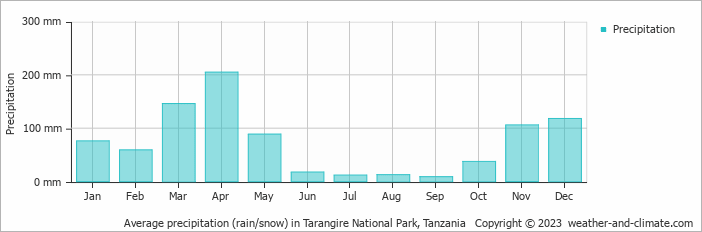
The table below summarises long-term monthly averages for Tarangire National Park. Figures are approximate — actual conditions vary year to year — but they reflect the general pattern travellers can expect.
| Month | Avg. High | Avg. Low | Rainfall (mm) | Rain Days | Sunshine (hrs/day) |
| January | 29°C | 17°C | 85 mm | 13 | 8 |
| February | 30°C | 17°C | 97 mm | 11 | 8 |
| March | 29°C | 17°C | 130 mm | 15 | 8 |
| April | 27°C | 18°C | 166 mm | 19 | 6 |
| May | 25°C | 16°C | 46 mm | 12 | 6 |
| June | 24°C | 14°C | 5 mm | 4 | 7 |
| July | 24°C | 13°C | 0 mm | 2 | 8 |
| August | 25°C | 14°C | 2 mm | 2 | 8 |
| September | 28°C | 15°C | 9 mm | 2 | 9 |
| October | 29°C | 16°C | 20 mm | 5 | 9 |
| November | 29°C | 17°C | 71 mm | 11 | 8 |
| December | 29°C | 17°C | 99 mm | 15 | 8 |
Note: averages are compiled from long-term climate records and may differ slightly between data sources, particularly for total monthly rainfall.
January – February: The Short Dry Spell
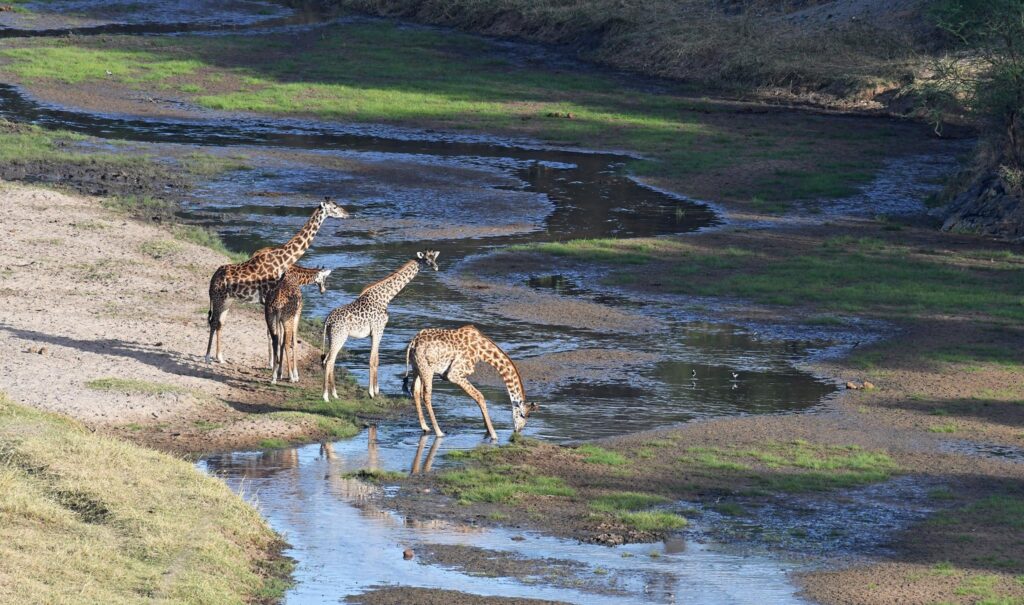
After the short rains taper off, January and February bring a brief lull in rainfall, warm days around 29–30°C, and increasingly green scenery left over from the November-December showers. Nights are mild, typically 16–17°C. This period offers a useful middle ground: drier roads than the long-rains months, but without the dust and crowds of peak dry season.
March – May: The Long Rains
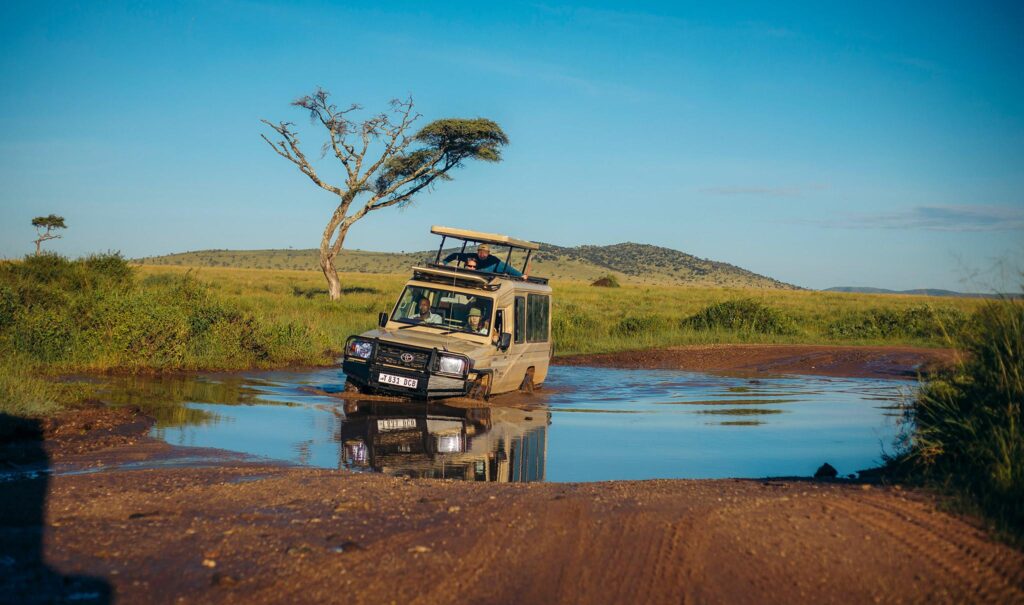
This is Tarangire’s wettest stretch. Rainfall builds through March, peaks in April (the wettest month of the year, with rain on most days), and begins easing by May. Showers tend to arrive in afternoon bursts rather than lasting all day, but roads can become muddy and some lodges close for maintenance. Daytime highs cool slightly to the mid-to-high 20s°C, and overcast skies are common. This is the off-season for tourism, which means lower rates, fewer vehicles at sightings, and excellent conditions for migratory birds and photography.
| Packing Tip for the Long Rains
Bring a waterproof jacket, quick-dry layers, and protection for camera gear. A 4×4 with good clearance is essential, and some park roads may be temporarily impassable after heavy storms. |
June – August: The Heart of the Dry Season
Rainfall drops to almost nothing from June onward, with July and August typically recording no measurable rain at all. Daytime temperatures cool to the mid-20s°C, while nights are the coldest of the year, often falling to 13–15°C — cool enough to want a fleece on early morning game drives. Skies are clear and sunny, vegetation thins, and animals gather increasingly around the Tarangire River and its waterholes, making this a favourite stretch for wildlife photography.
September – October: Peak Dry Season
September is typically the driest month of the year, with rainfall and rain days both at their lowest. Temperatures begin climbing again, reaching the high 20s°C by October as the park dries out further. Wildlife concentrations around remaining water sources are at their most dramatic in this window, and it remains one of the most popular times for safaris before the short rains return.
November – December: The Short Rains
The short rains arrive in November, breaking the dry season’s dust with afternoon storms that green up the landscape relatively quickly. Rainfall increases through December, though it remains lighter and less prolonged than the April peak. Daytime temperatures hold steady around 29°C. This period is a good compromise for travelers who want fewer crowds and lower prices without committing to the heaviest rains of March and April.
Choosing When to Visit
- For classic dry-season game viewing with concentrated herds: June to October.
- For lush scenery, migratory birds, and lower prices: March to May (long rains) or November to December (short rains).
- For a balance of green landscapes and manageable rainfall: January to February.
- For the coolest nights, pack warm layers for early morning drives in June, July, and August.
| Final Tip
Whatever month you travel, Tarangire’s weather rarely becomes uncomfortable — even rainy-season showers are typically short afternoon bursts rather than all-day downpours. Build flexibility into your itinerary, choose a vehicle suited to the season, and pack layers for the temperature swing between midday heat and early-morning chill. |