 info@gorillatrekkinginafrica.com

The Great Ruaha River
The Great Ruaha River is one of Tanzania’s most significant and storied waterways. Stretching over 900 kilometres from its headwaters in the Southern Highlands to its confluence with the Rufiji River near the Indian Ocean coast, the Great Ruaha is more than just a river — it is the beating heart of an entire ecosystem, a cultural landmark, and an economic lifeline for millions of Tanzanians.
Rising from the Kipengere Range and the Mbeya plateau in southwestern Tanzania, the river carves its way through some of East Africa’s most spectacular landscapes. It flows through the Usangu wetlands, past the dramatic Ruaha Gorge, and eventually into the vast floodplains of the Selous Game Reserve before joining the mighty Rufiji. Along its course, it sustains one of Africa’s greatest concentrations of wildlife, provides irrigation for large-scale agriculture, and supports the livelihoods of pastoral communities that have depended on its waters for generations.
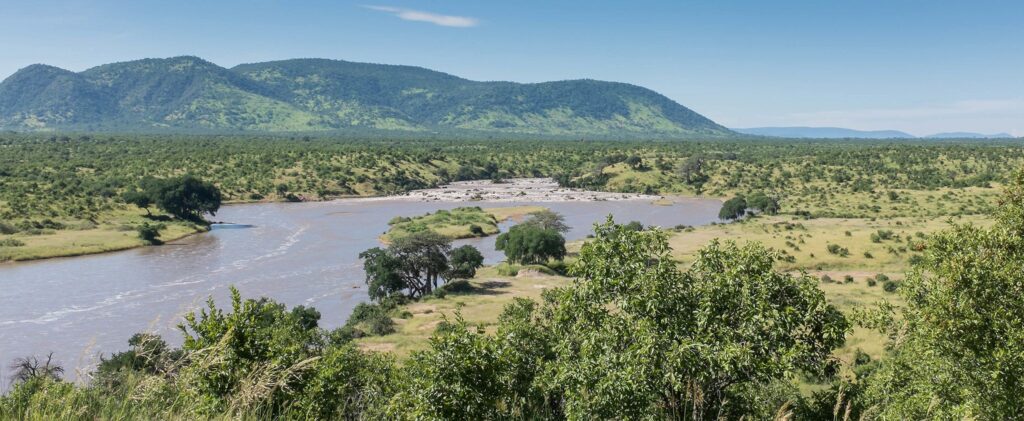
In recent decades, however, the Great Ruaha has faced mounting pressures. Changing land use patterns, agricultural expansion, climate variability, and growing human populations have placed unprecedented stress on its flows. The river’s plight has drawn international attention, making it both a conservation priority and a symbol of the broader challenges facing freshwater systems across Africa.
Geography and Physical Characteristics
Course and Length
The Great Ruaha begins its journey in the Kipengere Range, which lies at elevations exceeding 2,700 metres above sea level in the Iringa and Mbeya regions. From these highland catchments, numerous tributary streams converge to form the Little Ruaha, which itself eventually merges with outflows from the Usangu catchment to give rise to the Great Ruaha proper.
The river’s total length — encompassing both the Great and Little Ruaha — exceeds 900 kilometres, making it one of the longest rivers in Tanzania. It drains a catchment area of approximately 84,000 square kilometres, encompassing highland areas, vast plains, and lowland forests. This diverse catchment means the river experiences dramatic fluctuations in flow between wet and dry seasons.
The Usangu Flats
One of the most distinctive features of the Great Ruaha’s hydrological system is the Usangu Flats — a vast, flat-bottomed basin in the upper catchment that once served as a seasonal wetland of enormous ecological importance. The Usangu wetlands historically acted as a natural sponge, absorbing water during the wet season and releasing it slowly during the dry months, thereby sustaining river flows throughout the year.
The Usangu Flats cover an area of roughly 20,000 square kilometres and support a complex mosaic of seasonal swamps, grasslands, and woodlands. They have been recognized as a Ramsar Wetland of International Importance, underscoring their global significance for biodiversity and hydrological function. However, large-scale irrigation development within the flats — particularly for rice cultivation — has fundamentally altered their ability to regulate water flows into the Great Ruaha.
The Ruaha Gorge
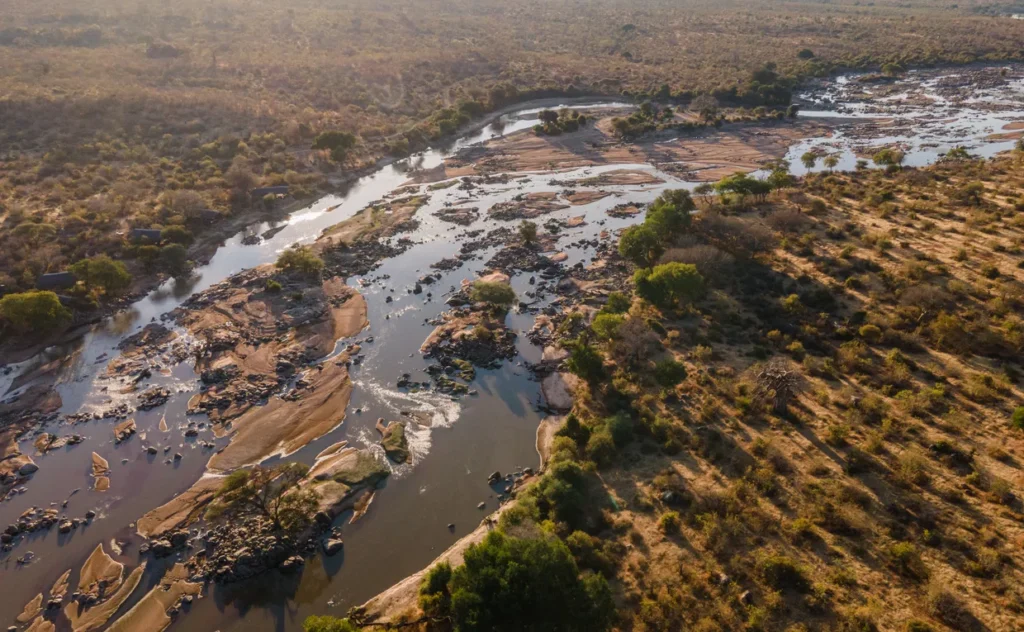
Downstream of the Usangu Flats, the river enters the dramatic Ruaha Gorge, where it cuts through ancient basement rock to create one of Tanzania’s most spectacular landscapes. The gorge is characterised by towering cliffs, rapids, and deep pools that provide critical dry-season refuges for fish and aquatic life. The surrounding escarpment supports miombo woodland and patches of riverine forest, adding to the area’s ecological richness.
The Selous and Lower Ruaha
Beyond the gorge, the Great Ruaha enters the lowlands and eventually flows through the Selous Game Reserve — one of the largest protected areas in the world and a UNESCO World Heritage Site. Here the river widens into broad, meandering channels flanked by palm-lined banks, floodplain grasslands, and dense riverine thickets. It is in this lower reaches that the river attains its most iconic character, supporting extraordinary concentrations of wildlife before finally joining the Rufiji approximately 600 kilometres from the coast.
Ecological Significance
Ruaha National Park — A Wildlife Stronghold
The Great Ruaha River is perhaps best known as the defining feature of Ruaha National Park, established in 1964 and expanded significantly in 2008 when it absorbed the former Rungwa Game Reserve. At approximately 20,226 square kilometres, Ruaha is Tanzania’s largest national park and one of the most important wildlife sanctuaries in Africa.
The river serves as the lifeblood of the park. During Tanzania’s long dry season, from June to October, the Great Ruaha shrinks to a series of pools and channels that concentrate wildlife along its banks in extraordinary densities. Elephants come in herds of hundreds to drink and wallow. Hippos crowd into the remaining pools. Buffalo, zebra, wildebeest, and antelope gather at the water’s edge in spectacular assemblages rarely witnessed elsewhere on the continent.
Wildlife Diversity
Ruaha National Park’s position at the meeting point of East and Southern African ecosystems gives it a remarkable diversity of flora and fauna. Species associated with both regions occur here side by side, creating an unusually rich ecological community:
- Elephants: Ruaha supports one of Tanzania’s largest elephant populations, with estimates suggesting over 12,000–15,000 individuals — a critical stronghold for this species given poaching pressures elsewhere.
- Lions: The park is home to approximately 10% of Africa’s lion population, making it one of the most important lion conservation areas on the continent. Several large, well-studied prides have been monitored by researchers for decades.
- African Wild Dogs (Painted Dogs): Among the most endangered carnivores in Africa, wild dogs reach notable densities in Ruaha, which supports one of the continent’s most important populations.
- Leopards and Cheetahs: Both species are well represented, with leopards particularly abundant along the river’s rocky gorges and cheetahs found on the open plains.
- Hippos and Crocodiles: The river’s pools support large aggregations of hippos and Nile crocodiles, which play vital roles in nutrient cycling and aquatic food webs.
- Birdlife: Over 570 species of birds have been recorded in Ruaha, including numerous raptors, migratory waders, and riverine specialists. The area is an Important Bird Area (IBA) of global significance.
- Fish: The river system supports over 50 species of freshwater fish, including several endemic and commercially important species. Tiger fish, catfish, and yellow fish are among the most prominent.
Vegetation Zones
The catchment of the Great Ruaha encompasses a remarkable diversity of vegetation types, each contributing to the overall ecological integrity of the system:
- Miombo Woodland: The dominant vegetation type across much of the upland catchment, miombo is characterised by Brachystegia and Julbernardia trees. It provides critical habitat for numerous specialist bird and mammal species.
- Riverine Forest: Dense forest strips along the river banks contain a diverse assemblage of tree species, many with buttressed roots adapted to seasonal flooding. These forests are critical for watershed protection and bank stabilisation.
- Baobab Savanna: In the drier lowland areas, iconic baobab trees (Adansonia digitata) punctuate open grasslands, creating a classic East African landscape of extraordinary beauty.
- Floodplain Grasslands: Seasonal flooding creates nutrient-rich grasslands that attract vast herds of grazing animals during the wet season.
- Mbuga (Seasonally Flooded Grasslands): Black cotton soil grasslands that flood during the rains and crack and dry during the dry season, supporting specialised plant communities and grazing animals.
Hydrology and Water Resources
Seasonal Flow Patterns
The Great Ruaha is a seasonal river with dramatic fluctuations in flow between wet and dry seasons. Annual rainfall in the catchment varies from over 1,800 mm in the highlands to less than 500 mm in the lowland areas. The main rainy season runs from November to April, with peak flows typically occurring in March and April. During this period, the river can rise many metres above its dry-season level, flooding extensive areas of floodplain and recharging shallow aquifers.
The dry season, from June to November, sees flows diminish dramatically. In recent decades, reduced flows have become a critical concern: the river now regularly stops flowing entirely at certain points in the mid-reaches during severe dry years — a phenomenon that was virtually unknown before the 1990s. This cessation of flow has devastating consequences for wildlife, fish populations, and downstream water users.
Water Use and Competition
The Great Ruaha catchment supports a wide range of water-dependent activities that compete for finite resources:
- Irrigated Agriculture: Large-scale rice cultivation in the Usangu Flats is the single largest consumer of water in the upper catchment. Tens of thousands of farmers divert water for paddy rice cultivation, and much of this water is consumed through evapotranspiration and never returns to the river.
- Hydroelectric Power: The Mtera and Kidatu hydroelectric dams on the Ruaha-Rufiji system are critical to Tanzania’s national electricity supply. Reduced river flows have dramatically reduced the generating capacity of these facilities, with severe economic consequences.
- Pastoral Grazing: Large numbers of Maasai and Barabaig cattle herders bring their livestock to the Usangu Flats during the dry season, adding pressure on water resources and vegetation.
- Domestic Water Supply: Communities throughout the catchment, including the growing cities of Iringa and Mbeya, rely on the river and its tributaries for domestic water supplies.
- Wildlife and Conservation: The integrity of Ruaha National Park and surrounding protected areas is entirely dependent on maintaining adequate dry-season flows in the Great Ruaha.
The Flow Crisis
The convergence of expanding agriculture, growing human populations, and climate variability has produced what conservationists describe as a flow crisis in the Great Ruaha. Studies have documented a dramatic reduction in dry-season flows since the 1970s, with the river ceasing to flow at the park boundary for extended periods during severe dry years.
The consequences of reduced flows are far-reaching: fish populations crash when pools become isolated and oxygen-depleted; wildlife congregations are disrupted; hippo populations decline; crocodiles become stressed; and the riparian vegetation that depends on regular flooding begins to degrade. The hydroelectric dams, starved of water, operate at reduced capacity, contributing to national power shortages.
Conservation Challenges and Initiatives
Protected Area Management
Ruaha National Park is managed by the Tanzania National Parks Authority (TANAPA). Adjoining protected areas — including the Usangu Game Reserve, Rungwa Game Reserve, and Kizigo Game Reserve — together with the national park form a vast conservation block of over 45,000 square kilometres.
Despite the size of this protected area network, wildlife faces significant threats including poaching (particularly for ivory and bushmeat), habitat loss on the boundaries, and the overriding threat of reduced water flows. Anti-poaching efforts have been substantially strengthened in recent years, with aerial surveillance and community engagement programmes showing measurable results in reducing elephant poaching.
The Ihefu Wetland Restoration
One of the most significant conservation interventions in the Great Ruaha catchment was the Ihefu Wetland restoration programme, initiated in 2006. The Ihefu is a critical component of the Usangu wetland system and was heavily impacted by illegal settlements and livestock grazing within the Usangu Game Reserve.
The Tanzanian government, supported by conservation organisations and donor agencies, undertook a controversial but ultimately successful programme to relocate communities and remove livestock from within the protected area. Early results showed a measurable improvement in dry-season flows into the Great Ruaha, demonstrating that restoration of upstream wetland systems could have direct positive effects on downstream river flows.
Community-Based Conservation
Recognition that the long-term conservation of the Great Ruaha depends on the engagement of local communities has led to the development of several innovative community-based initiatives:
- Wildlife Management Areas (WMAs): These community-controlled conservation areas on the periphery of Ruaha National Park allow villages to benefit economically from wildlife-based tourism while taking responsibility for wildlife management and anti-poaching.
- Integrated Water Resource Management: Programmes working with farmers in the Usangu Flats to improve irrigation efficiency, reduce water abstraction, and adopt water-saving rice varieties have shown promising results.
- Environmental Education: Schools and community groups throughout the catchment participate in environmental education programmes that build awareness of the river’s ecological importance and the consequences of unsustainable water use.
- Ecotourism Revenue Sharing: Mechanisms have been developed to share tourism revenues from Ruaha National Park with neighbouring communities, creating positive incentives for conservation.
Climate Change Implications
Climate projections for East Africa suggest that the Great Ruaha catchment will experience increased rainfall variability, with more intense wet seasons and more severe dry seasons. More frequent and prolonged droughts are expected to exacerbate the existing flow crisis, while extreme rainfall events may increase flood risk and erosion in the catchment.
These projections underscore the urgency of building resilience into the river system through catchment restoration, improved water management, and the maintenance of functioning wetland systems that can buffer against hydrological extremes.
Cultural and Historical Significance
Indigenous Communities
The Great Ruaha River and its catchment have been home to diverse human communities for thousands of years. The Hehe people, centred on the highland areas around Iringa, have a particularly deep historical connection to the river. The Hehe kingdom reached the height of its power in the late 19th century under Chief Mkwawa, who led fierce resistance against German colonial forces.
The Sangu people of the Usangu Flats developed sophisticated systems of seasonal water management adapted to the wetland environment. The Barabaig and Datoga pastoral peoples have traditionally brought their cattle to the Usangu Flats during the dry season, following ancient migratory patterns that are now increasingly in conflict with modern conservation imperatives.
Colonial History
The Great Ruaha region featured prominently in the history of German East Africa (Tanganyika). The resistance of Chief Mkwawa of the Hehe to German colonial expansion resulted in prolonged conflict in the 1890s. Mkwawa, whose kingdom was centred near Iringa overlooking the Ruaha catchment, became a legendary figure of African resistance. After years of guerrilla warfare, he committed suicide in 1898 rather than surrender. His skull was taken to Germany and eventually repatriated to Tanzania in 1954, where it is now housed in the Mkwawa Museum in Kalenga.
The River in Modern Tanzanian Life
For modern Tanzanians, the Great Ruaha represents both economic opportunity and cultural identity. For farmers in the Usangu Flats, it is the source of water that determines whether the rice harvest succeeds or fails. For pastoral communities, it is the dry-season lifeline for their cattle. For fisherfolk, it provides protein and income. For the growing urban populations of Iringa and Mbeya, it is the ultimate source of municipal water.
The river also occupies an important place in Tanzanian national consciousness as part of the country’s extraordinary natural heritage — a heritage that includes the Serengeti, Ngorongoro, and Kilimanjaro. Ruaha National Park, sustained by the river, is increasingly promoted as one of Africa’s premier wildlife destinations, offering a more authentic and less crowded alternative to the famous northern circuit parks.
Tourism and Recreation
Safari Tourism
Ruaha National Park, through which the Great Ruaha flows, has emerged as one of Tanzania’s most important safari destinations. Its relative remoteness — the park is located roughly 625 kilometres from Dar es Salaam — has historically limited visitor numbers compared to the northern circuit parks, but this isolation is increasingly viewed as an asset rather than a disadvantage. The park offers a genuine wilderness experience, with fewer vehicles and more intimate wildlife encounters than the more heavily visited parks of the north.
Dry-season game viewing along the river is the park’s signature attraction. The concentration of wildlife at the river’s remaining pools during July through October provides some of the most spectacular wildlife viewing experiences available anywhere in Africa. Lion sightings are almost guaranteed; elephant encounters are frequent and often extraordinarily close; wild dog sightings, while never certain, are more likely here than almost anywhere else in Tanzania.
Accommodation and Access
A range of accommodation options exists within and around Ruaha National Park, from simple tented camps to luxury lodges. The most atmospheric camps are located directly on or overlooking the river, providing 24-hour wildlife activity at the water’s edge. Regular charter flights connect the park to Dar es Salaam, Zanzibar, and other Tanzania destinations, making it accessible without the need for a lengthy drive.
Walking Safaris and Fly Camping
Ruaha is one of the few Tanzanian parks with a well-developed walking safari tradition. Guided walks led by experienced rangers allow visitors to explore the bush on foot — to examine tracks, insects, plants, and smaller creatures that a vehicle-based safari overlooks. Fly camping — spending nights in a temporary camp away from the main lodge — offers an immersive wilderness experience that connects visitors directly with the sights, sounds, and smells of the African bush.
Fishing
Sport fishing, particularly for tiger fish (Hydrocynus vittatus), is a popular activity on the Great Ruaha. Tiger fish are renowned for their aggressive fighting ability and spectacular acrobatics when hooked, making them one of Africa’s most prized freshwater game fish. Fishing excursions can be arranged from several camps in and around the park. All fishing is catch-and-release, reflecting the park’s conservation ethic.
Threats and the Path Forward
Summary of Key Threats
The Great Ruaha River system faces a complex and interrelated set of threats that challenge its long-term ecological integrity:
- Reduced dry-season flows due to upstream water abstraction for irrigated agriculture
- Wetland degradation in the Usangu Flats reducing natural water storage and release
- Climate change increasing hydrological variability and drought frequency
- Poaching of elephants, lions, and other wildlife for ivory, trophies, and bushmeat
- Human-wildlife conflict on the boundaries of the protected area network
- Unsustainable charcoal production causing deforestation in the catchment
- Invasive plant species, particularly water hyacinth, affecting water quality and aquatic habitats
- Overfishing and destructive fishing practices in unprotected stretches of the river
Reasons for Hope
Despite these challenges, there are genuine reasons for optimism about the future of the Great Ruaha. The Tanzanian government has demonstrated political will to protect the river system, as evidenced by the Ihefu wetland restoration programme and the expansion of Ruaha National Park. International conservation organisations — including WWF, the Frankfurt Zoological Society, and the Wildlife Conservation Society — maintain long-term programmes in the catchment. Tourism revenues provide economic incentives for conservation that were absent a generation ago.
Perhaps most importantly, growing awareness among local communities of the link between healthy river flows and their own wellbeing is creating a constituency for conservation from within the catchment itself. Farmers who have experienced the consequences of reduced water availability for their own crops, communities that have seen their domestic water supplies threatened, and pastoralists who have watched dry-season grazing areas shrink are increasingly engaged partners in efforts to restore and protect the river.
The Way Forward
The long-term future of the Great Ruaha depends on addressing the fundamental tension between the water needs of the river ecosystem and the legitimate development aspirations of the millions of people who live in its catchment. This requires:
- Integrated catchment management that recognises the river as a shared resource requiring coordinated governance across administrative boundaries
- Investment in more efficient irrigation technology and water-saving agricultural practices that can maintain agricultural productivity while reducing water abstraction
- Continued restoration and protection of the Usangu wetlands as a natural water storage and regulation system
- Strengthening of protected area management and anti-poaching capacity
- Development of sustainable community livelihoods that are compatible with river conservation
- Research and monitoring to build understanding of hydrological dynamics, wildlife populations, and the effectiveness of conservation interventions
- Regional and international cooperation on climate change adaptation to build resilience into the river system
Conclusion
The Great Ruaha River is one of Africa’s most remarkable natural features — a river of extraordinary ecological richness, cultural depth, and economic importance. It sustains one of the continent’s greatest wildlife sanctuaries, supports the livelihoods of millions of people, and generates hydroelectric power that lights Tanzanian homes and businesses. It flows through landscapes of breathtaking beauty, from the cool highlands of the Mbeya plateau to the vast, sun-scorched plains of Ruaha National Park and the dense lowland forests of the Selous.
Like many of the world’s great rivers, the Great Ruaha faces a moment of reckoning. The pressures of a growing population, expanding agriculture, and a changing climate are testing the resilience of a system that has sustained life for millennia. The choices made in the coming decades — about how much water is abstracted from the upper catchment, how the Usangu wetlands are managed, how wildlife is protected and communities are engaged — will determine whether this magnificent river continues to fulfil its ecological and cultural role for future generations.
The story of the Great Ruaha is ultimately a story about the relationship between people and nature — about whether modern societies can find ways to meet human needs without destroying the natural systems on which all life depends. It is a story that resonates far beyond Tanzania’s borders, offering lessons and insights that speak to universal challenges of conservation, development, and sustainability. The river endures. The question is whether humanity’s stewardship will prove worthy of this inheritance.
QUICK FACTS: THE GREAT RUAHA RIVER
- Total length: ~900 kilometres
- Catchment area: ~84,000 square kilometres
- Ruaha National Park area: 20,226 square kilometres (Tanzania’s largest national park)
- Key conservation status: Ramsar Wetland (Usangu Flats); UNESCO World Heritage Site (Selous)
- Elephant population in Ruaha: Estimated 12,000–15,000 individuals
- Bird species recorded: Over 570
- Fish species: Over 50 freshwater species
- Main dry season: June to November
- Main rainy season: November to April
- Regional hydroelectric dams: Mtera and Kidatu on the Ruaha-Rufiji system