 info@gorillatrekkinginafrica.com

Photographing Gorillas
Despite some skepticism over the ethics of gorilla trekking, witnessing these remarkable monkeys in their natural habitat is an experience one should undertake at least once in a lifetime. Gorilla tourism is the sole dependable method for generating financial resources for their preservation and conservation. Abandoning them in the wild exposes them to poachers, pet traffickers, and those seeking to invade their natural environment. Gorilla tracking entails trekking into the depths of Africa’s jungles to locate the primates. Locating them is assured, as a team of advanced trackers is dispatched in advance to determine their precise location. The guides photographing gorillas and rangers accompanying tourists will maintain continual communication with the advance trackers to determine the optimal route to go. Upon locating the gorillas, the Rangers will assess their demeanor prior to permitting you to commence photography and videography.
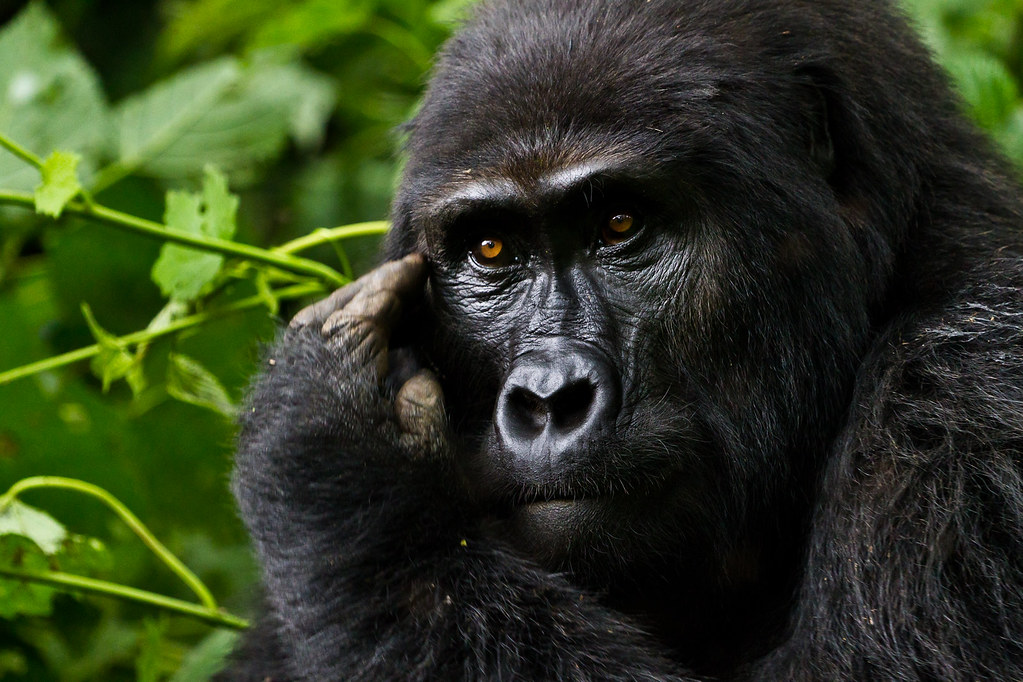
The prospect of photographing gorillas excites every tourist when booking a tour. Gorillas are among our nearest cousins. Merely 1,000 mountain gorillas continue to inhabit the woods of Bwindi, Mgahinga, Virunga, and Volcanoes National Park. Consequently, it is essential to capture high-quality photographs of the primates for sharing with friends, relatives, and the global audience via various social media platforms. Professional photographers and film crew members may find our articles on gorilla filming and drone usage during gorilla trekking beneficial.
Photographing gorillas in Uganda and Rwanda
To photograph gorillas, one must first ascertain their location. We anticipate that you have been allocated to an appropriate and engaging gorilla group for tracking. Uganda has around 17 habituated gorilla groups, Rwanda has 10, and Congo has 8. Every gorilla group is unique and possesses a distinct composition of individuals. Some possess a greater number of individual gorillas, an increased quantity of silverbacks, a higher prevalence of breastfeeding mothers, and a larger population of newborns. It is essential to inform your tour company of your preferences to facilitate the arrangement for tracking a gorilla troop of your selection. Tracking a selected group has become more challenging due to the allocation of gorilla groups based on the age and overall fitness of the trackers. Nonetheless, prominent tour operators can nonetheless guarantee a more extensive family experience or a more manageable excursion.
Techniques for photographing gorillas
Photographing gorillas can be straightforward, complex, or even exasperating, contingent upon the group’s location and the surrounding landscape. The tropical rains, dense trees, and consequent poor light conditions may be a challenge for novice photographers. It is noteworthy that gorillas, particularly adults, are often reticent primates and hence do not sustain prolonged direct eye contact. Improvisation and a high-quality camera will be necessary to capture a range of face expressions. While the primary aim of many travelers is to capture clear photographs of the gorillas from various perspectives, it is as essential to take the time to observe and appreciate the remarkable experience.
It is imperative to refrain from using flash when photographing gorillas, as detailed in our articles regarding gorilla trekking regulations and charging behavior. Gorillas typically exhibit discomfort towards flash photography, which may provoke irritation or, in unfortunate circumstances, aggressive behavior.
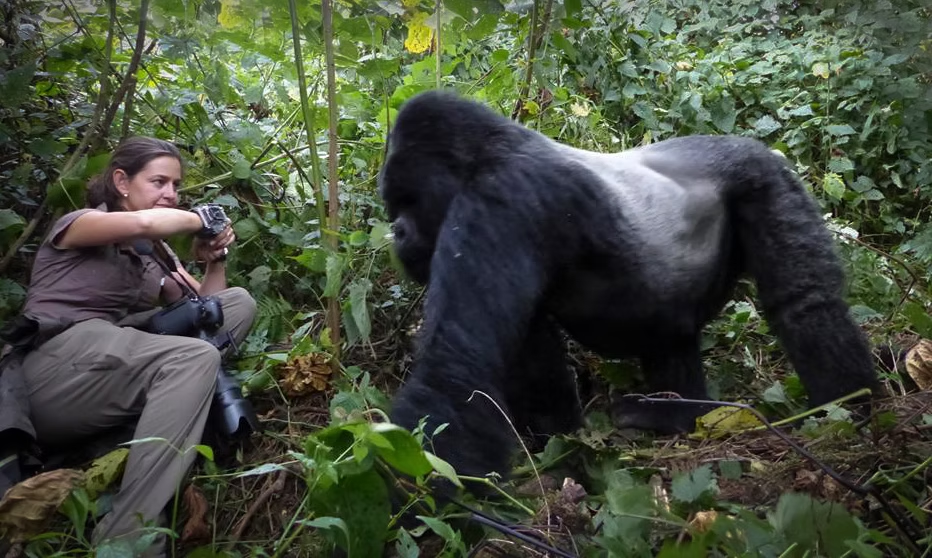
Consider the following factors while organizing a gorilla photography safari:
Terrain and Vegetation:
Gorillas inhabit deep forests and occasionally mountainous terrains. While endeavoring to picture a family, you may encounter numerous distractions such as foliage, tree branches, and vines. Certain mountain gorilla tribes inhabit regions of elevated altitude. This is especially pertinent if you intend to engage in gorilla trekking in the Volcanoes National Park of Rwanda and Mgahinga National Park in Uganda. It is essential to position yourself effectively to minimize distractions.
Equipment and protective gear:
Considering the adverse conditions in the forest, it is essential to be adequately equipped. Tropical woods see precipitation even in the dry season. Consequently, it is imperative to secure protection for your cameras and associated equipment. A waterproof bag will be beneficial in safeguarding your cameras from potential damage. Additionally, ensure you carry a enough supply of memory cards and batteries for the camera.
Telephoto Zoom Lens:
The conditions under which you will encounter the primates cannot be anticipated. Gorillas may relocate as they forage. A telephoto lens enables the capture of photographs of gorillas from a considerable distance. Lenses ranging from 200mm to 300mm are adequate for close-distance photography; however, we recommend those in the 400mm range to achieve optimal photos irrespective of the distance to the monkeys. For unconventional or distinctive photography, consider X-factor Lenses. X-factor lenses are favored by professional photographers seeking to capture striking photographs for sale or online sharing.
How to Photograph Gorillas in Uganda: Consider Utilizing Burst Mode.
This is particularly crucial for capturing facial expressions in adult gorillas. The facial expression of a gorilla alters rapidly, often within seconds. To achieve optimal photographs, it is necessary to capture multiple images simultaneously. The camera must be configured accurately to achieve optimal photos. Mountain gorillas are substantial animals characterized by their black coats. The verdant surroundings and black attire may obscure light emitted from certain cameras if not properly calibrated. Adjust your camera settings appropriately to prevent overexposure.
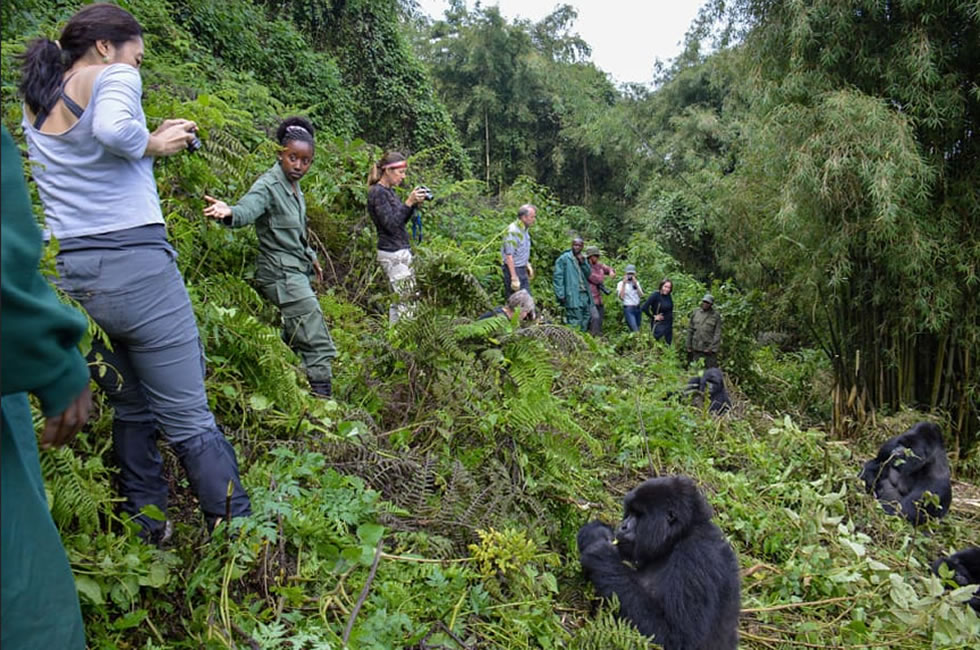
Consider Shooting on burst mode
This will be useful if the initial one malfunctions for whatever reason. Ensure that the secondary camera is of a distinct type to provide two disparate lenses with varying final outputs for comparison.
Camera Weight:
Whenever feasible, utilize a lightweight camera for travel. Gorilla tracking may need from 2 to 6 hours, contingent upon the proximity of the gorilla family being observed. Do not be concerned if you possess exceptionally weighty cameras. All gorilla parks employ porters who assist guests in carrying heavy baggage and equipment for a nominal cost of approximately $15 per person.
Additional factors to contemplate when organizing a gorilla photography trip
When photographing mountain gorillas, it is essential to adhere to the directives provided by park guides. Adhere to the gorilla trekking regulations, including maintaining a minimum distance of 7 meters, refraining from extended direct eye contact, and positioning yourself taller than the primates when they approach.
Be aware that if you choose the regular gorilla trekking option, you will have an only one hour to photograph the gorillas. To extend your time with the primates, you must choose for the pricier gorilla habituation experience, which allows guests to view the primates for four hours. The gorilla habituation experience is just available in Bwindi Impenetrable National Park, Uganda. The gorilla habituation experience in Bwindi has one disadvantage. You would be monitoring gorilla groups that are not completely acclimated. Approaching too closely may prove more challenging without notifying the primates.
Mountain gorillas are docile animals and more amenable to photography than other large monkeys. They have less mobility than chimpanzees and tend to remain still for extended periods while foraging in the wild. Habituated mountain gorillas permit closer proximity than most monkeys. Nevertheless, it is essential to maintain a distance of approximately 7 meters from the nearest gorilla when photographing them in Rwanda. This may prove exceedingly challenging to do in the presence of the gorillas. They may approach you, complicating efforts to maintain distance.
Remember to include a raincoat and durable hiking boots to navigate the unpredictable terrain. Recall that you will be locating the primates within a deep rainforest. Travel during the arid seasons, if possible. The arid seasons occur from December to March and from June to early October. These are the major travel seasons in East and Central Africa. It is imperative to reserve your gorilla tour as soon as possible, as this period coincides with the peak of visitor activity for safaris in Africa.