 info@gorillatrekkinginafrica.com

Which is better, Serengeti or Ngorongoro?
Which is better, Serengeti or Ngorongoro?, Serengeti National Park and the Ngorongoro Conservation Area sit side by side in northern Tanzania, and together they form the heart of most safari itineraries in the country. Travelers planning a trip often face the same question: if time or budget only allows for one, which is better? The honest answer is that they are not really competitors. They are different experiences that happen to share a border, and the right choice depends on how much time is available, what kind of wildlife encounter is wanted, and how the rest of the itinerary is shaped.
Serengeti National Park: The Endless Plains
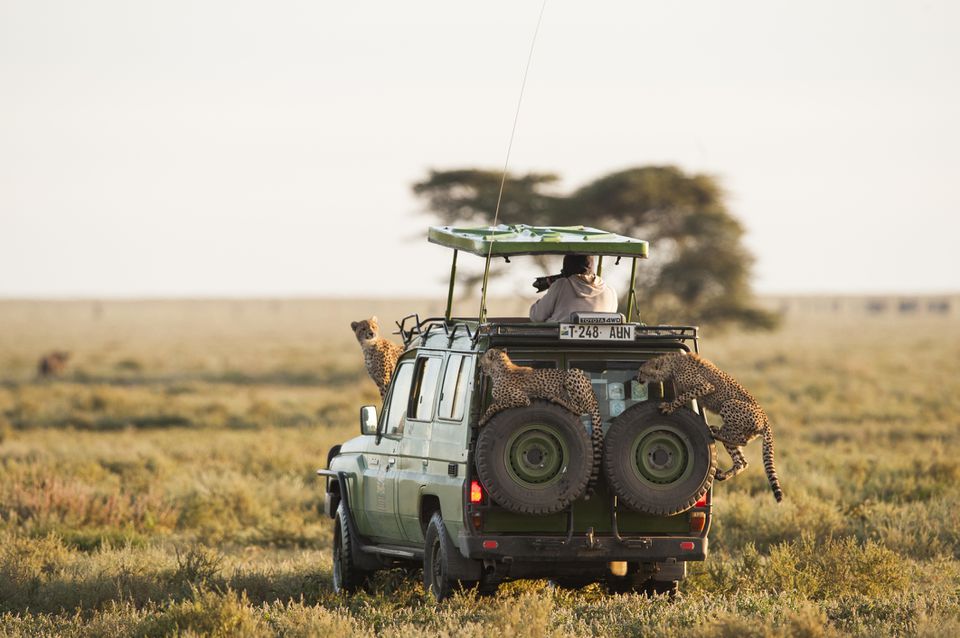
The Serengeti is Tanzania’s most famous park, and for good reason. Its name comes from the Maasai word for “endless plains,” and that description still fits. The park stretches across roughly 14,750 square kilometers of grassland, woodland, and riverine forest, making it one of the largest protected ecosystems in Africa.
The park’s biggest draw is the Great Migration, in which more than two million wildebeest, zebra, and gazelle move in a continuous loop in search of fresh grazing and water. Depending on the season, this brings travelers face to face with mass river crossings, predator ambushes, or newborn calves on the southern plains. Outside of the migration, the Serengeti offers consistently strong game viewing year-round, including healthy populations of lion, leopard, cheetah, elephant, and buffalo, although black rhino sightings are rare.
What makes the Serengeti stand out
- Vast, varied terrain that supports multiple ecosystems within one park
- The single best location in the world to witness the Great Migration
- Room to spread out, with far less vehicle congestion than the crater
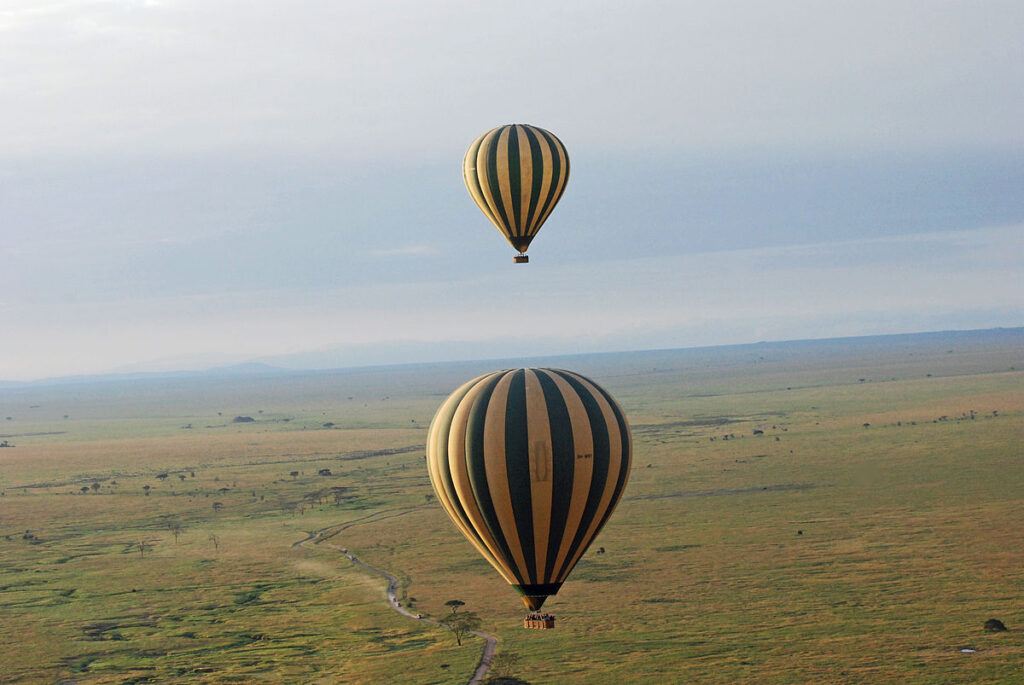
- Options for hot air balloon safaris and walking safaris in some areas
- Long stays reward visitors with sightings other parks cannot match
Ngorongoro Conservation Area: The Crater Bowl
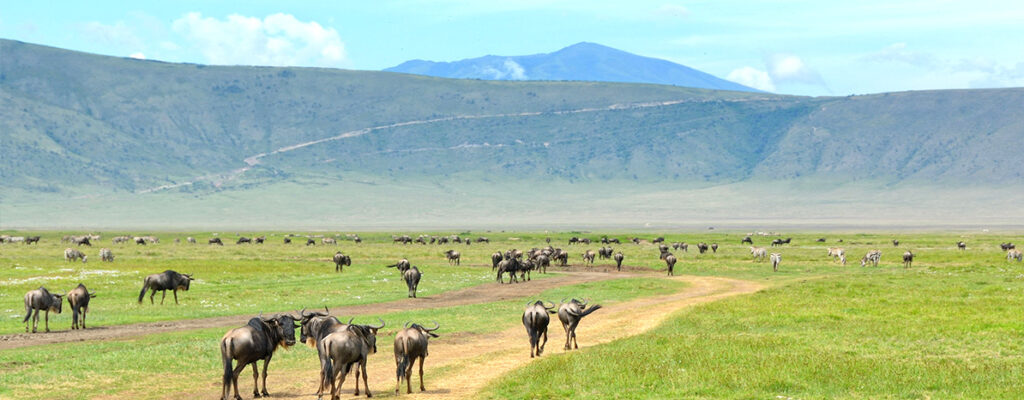
Ngorongoro is built around a single extraordinary feature: a collapsed volcanic caldera roughly 19 kilometers across, with walls rising 600 meters above the crater floor. That floor, fed by permanent water sources, holds one of the highest concentrations of wildlife anywhere on the continent, packed into an area small enough to explore thoroughly in a single day.
Because the crater’s water and grass are reliable year-round, animals do not migrate out of it the way they do elsewhere. This makes Ngorongoro one of the most dependable places in Africa to see the Big Five in a short visit, including the black rhino, which is increasingly hard to find elsewhere in Tanzania. The conservation area is also home to Maasai communities who maintain grazing rights on the crater rim, adding a cultural dimension that the Serengeti does not offer.
What makes Ngorongoro stand out
- Extraordinary wildlife density within a compact, easily explored area
- One of the most reliable places in Tanzania to see black rhino
- Dramatic scenery, with the crater rim, forest, and floor in one setting
- Strong results even on a short visit, ideal for tight itineraries
- Opportunities to visit Maasai communities living on the crater rim
Side-by-Side Comparison
| Factor | Serengeti National Park | Ngorongoro Conservation Area |
| Size | 14,750 sq km of open plains | 8,300 sq km, dominated by the crater |
| Signature draw | The Great Migration of wildebeest and zebra | The Ngorongoro Crater, a dense wildlife bowl |
| Wildlife density | High but spread across vast plains | Extremely high and concentrated in the crater floor |
| Big Five chances | Very good, though rhino sightings are rare | Among the best in Africa, including black rhino |
| Scenery | Endless golden savannah and acacia plains | Dramatic crater walls, forest, and a crater floor |
| Best time to visit | December to July for the migration route | Year-round, since wildlife stays in the crater |
| Crowding | Spacious, though migration river crossings draw crowds | Can feel busy, as all vehicles funnel onto the crater floor |
| Typical stay length | 3 to 5 days to explore different areas | 1 to 2 days, usually a single crater descent |
| Cost | Moderate to high, with a wide range of camps | High, driven by conservation and crater descent fees |
| Best for | Migration sightings, walking safaris, ballooning | Guaranteed sightings in a short time, Maasai culture |
Which One Should You Choose?
For travelers who can only fit one destination into their trip, the decision usually comes down to time and priorities.
Choose Ngorongoro if:
- Time is limited and a single, high-impact game drive is the priority
- Seeing a black rhino is a must-have on the trip
- Dramatic landscape and crater scenery matter as much as the animals
- The itinerary already includes the Serengeti or another migration park
Choose the Serengeti if:
- There are at least three days available to explore properly
- Witnessing the Great Migration is the main goal of the trip
- A sense of space and fewer vehicles at sightings is preferred
- Activities like ballooning or walking safaris are of interest
The Best Answer: Visit Both
Most classic northern Tanzania circuits do not force a choice at all. Because Ngorongoro sits along the main road between Arusha and the Serengeti, it works naturally as a one- or two-night stop on the way in or out, often paired with a descent into the crater for a single unforgettable game drive. The remaining days of the trip can then be spent deeper in the Serengeti, where the pace slows down and the plains have room to deliver their own version of an extraordinary safari.
Rather than asking which park is better, it is more useful to ask what each one is for. Ngorongoro delivers concentrated, reliable wildlife viewing in a striking setting and rewards even a short visit. The Serengeti rewards time, offering a wilder, larger-scale experience built around the rhythm of the migration. Together, they cover nearly everything a Tanzania safari has to offer.