 info@gorillatrekkinginafrica.com

What Makes Serengeti National Park Famous
What Makes Serengeti National Park Famous, Few places on Earth carry the weight of expectation that the Serengeti does. Long before travelers ever set foot on its grasslands, the name itself conjures images of thundering wildebeest herds, golden light over endless plains, and lions surveying their kingdom from rocky outcrops. Located in northern Tanzania and forming the core of the larger Serengeti ecosystem, Serengeti National Park is not just one of Africa’s premier safari destinations — it is, by most measures, the wildlife capital of the world.
What Is Serengeti National Park Famous For?
Ask any safari veteran what makes the Serengeti special, and the same themes come up again and again: scale, spectacle, and sheer concentration of wildlife. Here is what truly sets this park apart.
1. The Great Wildebeest Migration
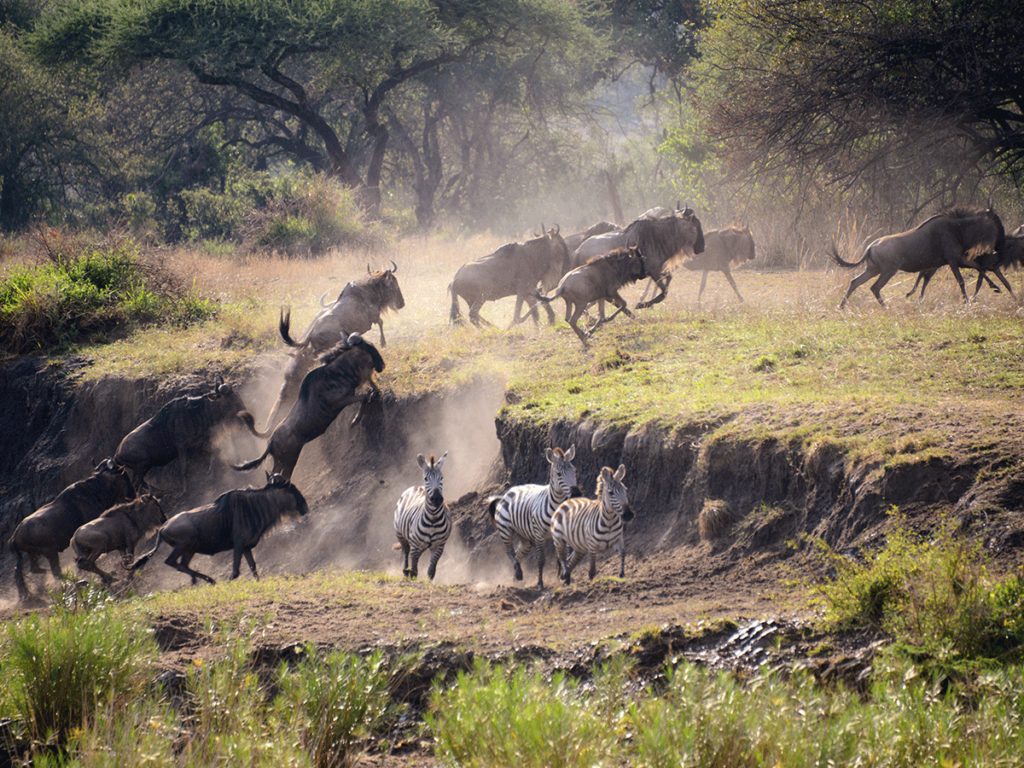
The Serengeti’s single most famous attraction is the Great Migration — widely regarded as the greatest wildlife spectacle on the planet. Each year, roughly 1.5 million wildebeest, alongside hundreds of thousands of zebras, gazelles, and eland, move in a continuous clockwise loop across the Serengeti-Mara ecosystem, chasing the rains and fresh grazing. The cycle includes dramatic calving in the southern plains (January–March), the build-up to the Grumeti River crossings in the Western Corridor (May–June), and the legendary, crocodile-infested Mara River crossings in the north (July–October), before the herds turn south again to complete the circle.
2. Unrivaled Predator Density
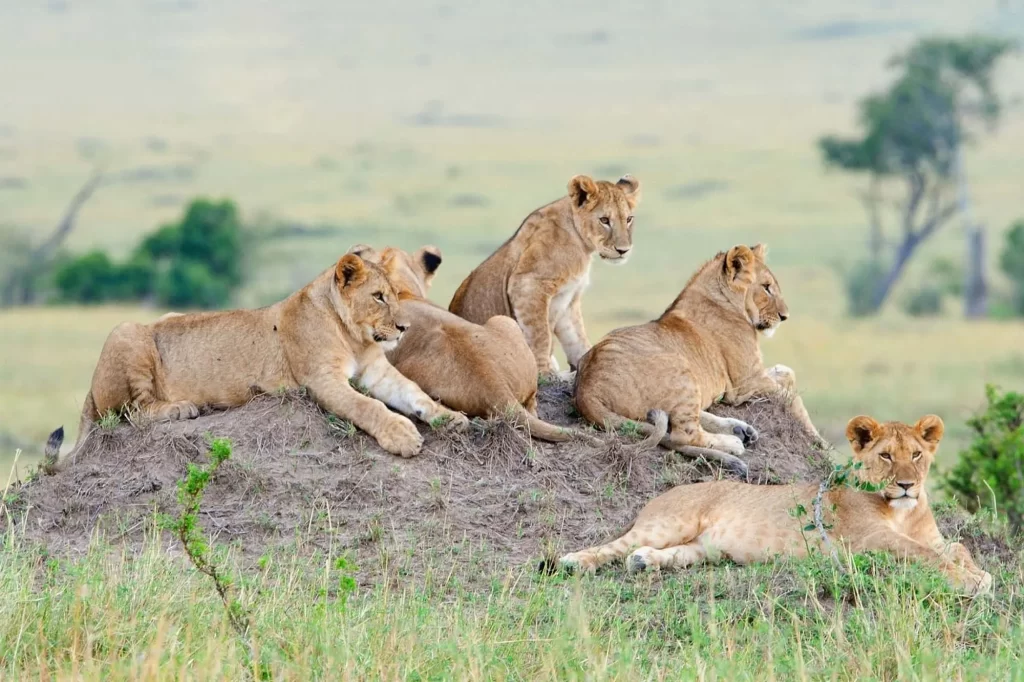
The Serengeti supports Africa’s largest lion population, with prides regularly seen lounging on kopjes — the granite outcrops scattered across the plains. The park is also home to healthy numbers of leopard, cheetah, and spotted hyena, making it one of the most reliable places anywhere to witness predator-prey drama unfold in real time.
3. The ‘Endless Plains’ Landscape
The name Serengeti is widely believed to derive from the Maasai phrase for ‘the place where the land runs on forever.’ The southern Serengeti delivers exactly that: vast, treeless short-grass plains stretching to the horizon, punctuated only by ancient granite kopjes that serve as natural lookout points for predators and superb vantage points for photographers.
4. UNESCO World Heritage Status
Serengeti National Park was designated a UNESCO World Heritage Site in 1981, recognized both for hosting the largest unaltered terrestrial animal migration on Earth and for its exceptional biodiversity, spanning riverine forests, swamps, woodlands, and grasslands.
5. A Birthplace of Modern Conservation
The Serengeti gained international fame following Bernhard Grzimek’s 1959 book and documentary Serengeti Shall Not Die, which helped shape global wildlife conservation movements. The park later became a center for pioneering ecological research, including George Schaller’s landmark studies of lion behavior and predator-prey dynamics.
Quick Facts: Serengeti National Park
|
Key Areas to Explore
- Seronera Valley — the wildlife-rich heart of the park, good for year-round game viewing and home to the visitor center
- Southern Serengeti / Ndutu area — short-grass plains famous for the wildebeest calving season
- Western Corridor — riverine forests along the Grumeti River, known for resident hippo and crocodile populations
- Northern Serengeti / Kogatende — the stage for the dramatic Mara River crossings
Why It Belongs on Every Safari Itinerary
Beyond the migration, the Serengeti rewards visitors with classic Big Five sightings, hot air balloon safaris drifting over the plains at sunrise, and some of the most dramatic open-sky photography opportunities in Africa. Paired with neighboring Ngorongoro Crater and Tarangire National Park, it forms the backbone of Tanzania’s legendary northern safari circuit — a combination that consistently ranks among the finest wildlife experiences on the continent.