 info@gorillatrekkinginafrica.com

Luxury Tented Camps in Tarangire National Park
Luxury Tented Camps in Tarangire National Park, Tarangire National Park, located in Tanzania’s Manyara Region, is one of East Africa’s most captivating yet underrated safari destinations. Covering approximately 2,850 square kilometres, it is renowned for its extraordinary elephant population — among the largest concentrations on the continent — its ancient baobab trees that punctuate the golden savannah, and the life-giving Tarangire River that draws remarkable wildlife during the dry season. Here, in this dramatic landscape of swamps, riverine forest, and open plains, a new era of accommodation has taken root: the luxury tented camp.
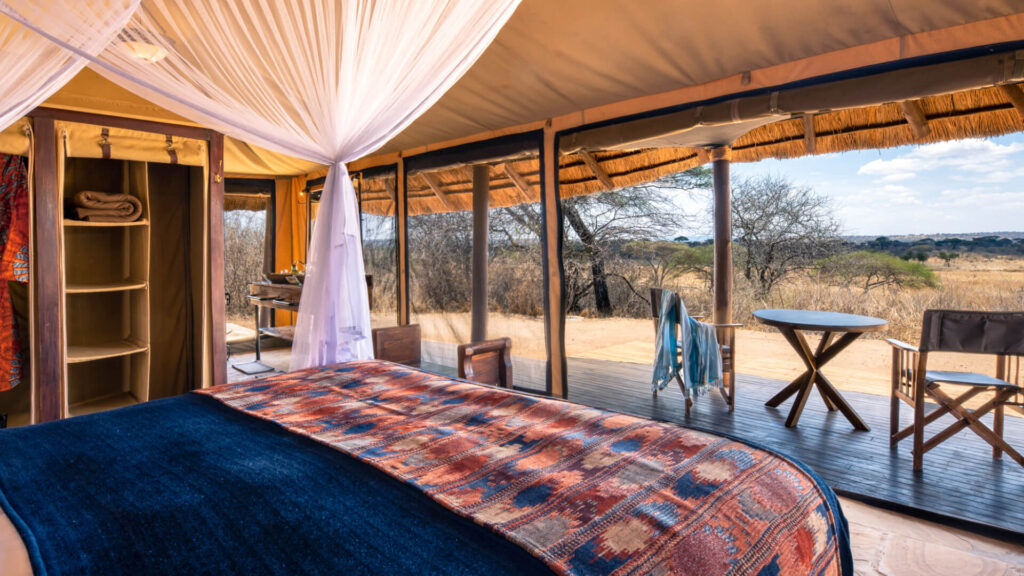
Luxury tented camps represent the pinnacle of the classic African safari experience — marrying the intimacy and romance of sleeping under canvas with world-class hospitality, gourmet cuisine, and exceptional guiding. Unlike lodges, tented camps place guests directly within the sounds, smells, and rhythms of the wilderness. The rustling of elephants at a nearby waterhole, the distant roar of a lion, the chorus of frogs along the Tarangire River — all form part of a deeply immersive experience that no solid-walled hotel can replicate.
This guide explores the finest luxury tented camps operating in and around Tarangire National Park, examining what makes each unique, what guests can expect in terms of accommodation, cuisine, game viewing, sustainability, and overall experience — providing everything a discerning traveller needs to choose the perfect safari base.
Why Tarangire National Park?
While the Serengeti and Ngorongoro Crater often dominate safari itineraries, Tarangire offers a compelling alternative — and for many experienced travellers, an even more rewarding one. The park’s seasonal dynamics are extraordinary: during Tanzania’s dry season (June to October), the Tarangire River becomes the only permanent water source for hundreds of kilometres, drawing massive herds of elephant, buffalo, zebra, wildebeest, impala, and giraffe into its valley. The result is wildlife viewing of staggering density and diversity.
Key wildlife highlights include:
- Elephants: Tarangire hosts one of Africa’s largest elephant populations, with herds of 200 or more routinely sighted during the dry season.
- Tree-climbing lions: Though less famous than those in Lake Manyara, Tarangire’s lions are frequently observed resting in acacia and sausage trees.
- Rare species: The park is one of the few places in Tanzania where fringe-eared oryx, gerenuk, and greater kudu can be reliably spotted.
- Exceptional birdlife: Over 550 bird species have been recorded, making Tarangire a world-class birding destination.
- Ancient baobab trees: These iconic trees, some thousands of years old, create a landscape unlike any other in the Northern Circuit.
- Off-the-beaten-track wilderness: The park’s southern sectors see virtually no other tourist traffic, offering a profoundly private safari experience.
The park’s relative quietude compared to the Serengeti also means that game drives feel remarkably exclusive. Luxury camps here offer a genuine sense of solitude and privilege — the feeling of having Africa entirely to oneself.
What is a Luxury Tented Camp?
The luxury tented camp is a distinctly African invention, evolving from the mobile hunting camps of the early twentieth century into today’s extraordinary semi-permanent or mobile safari structures. A modern luxury tented camp combines the adventure of camping with amenities that rival — and frequently surpass — those of five-star hotels.
Standard features of a luxury tented camp include:
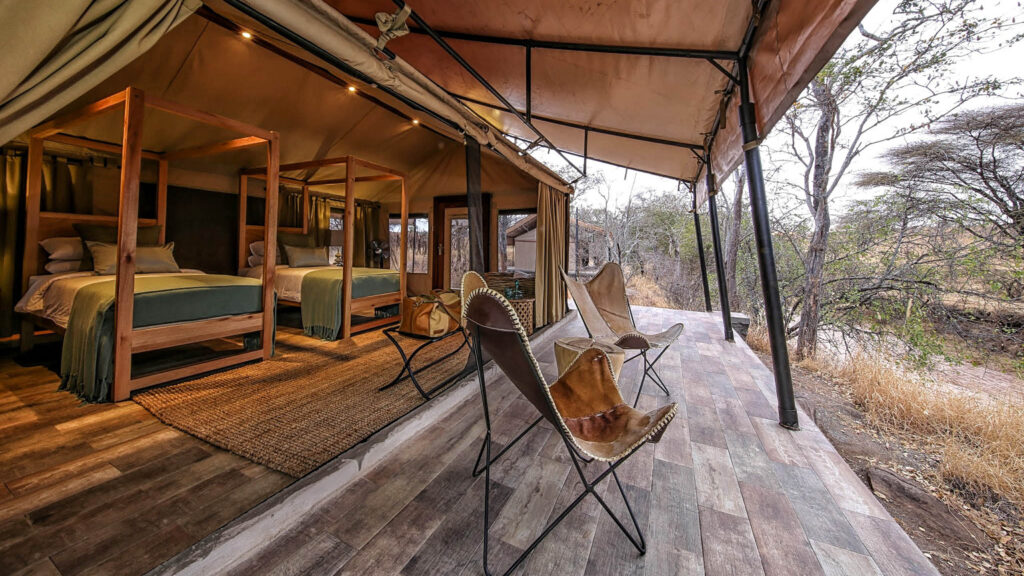
- Spacious canvas tents on raised wooden or stone platforms, typically ranging from 40 to 80 square metres.
- King or twin beds dressed with fine linen, plush mattresses, and ambient lighting.
- En-suite bathrooms with flushing toilets, hot-water showers (often outdoor bush showers), and premium toiletries.
- Private verandahs or decks overlooking waterholes, rivers, or open plains.
- Electricity (solar-powered), charging facilities, and Wi-Fi (varying by camp).
- Climate control through fans, heating, and architectural airflow design.
- Dedicated butler or steward service for each tent.
- Gourmet dining served in open-sided mess tents, around campfires, or under the stars.
- Fully stocked bars with fine wines, spirits, and bespoke cocktails.
The defining quality of these camps is the canvas wall itself — it is what maintains the connection between guest and wilderness. When the sun sets and the sounds of the African night fill the air, the thin membrane of canvas between a sleeping guest and the vast, ancient world outside is not a compromise but a privilege.
Notable Luxury Tented Camps in Tarangire
1. Oliver’s Camp
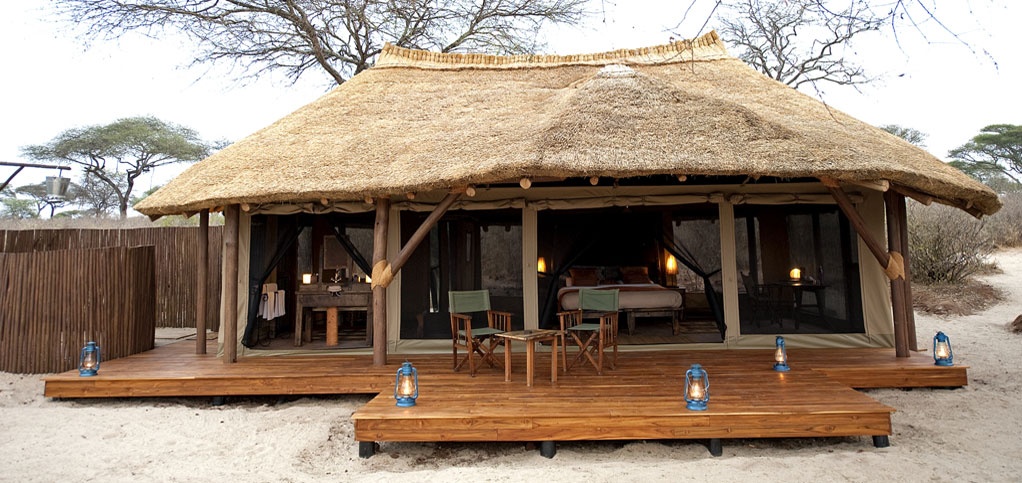
Situated in a remote private concession on the eastern edge of Tarangire National Park, Oliver’s Camp is widely considered one of the finest small camps in Africa. With just ten classic safari tents, it offers an exceptionally intimate experience guided by some of the most skilled naturalists operating anywhere on the continent.
Accommodation:
Each tent features a four-poster bed, en-suite bathroom with flush toilet and hot shower, and a private veranda looking out over a dramatic dry-season landscape of acacia woodland and rocky outcrops. Interiors blend traditional safari aesthetic with contemporary comfort — sisal rugs, wooden furniture, and quality cotton linen.
Unique Offering:
Oliver’s Camp is particularly celebrated for its walking safaris and fly-camping expeditions — multi-day wilderness walks where guests sleep under the stars in remote, minimalist fly camps. This is as close to the original spirit of African exploration as a modern traveller can get. The camp’s private concession of 150,000 acres means walks encounter no other tourists, and the guides’ knowledge of animal behaviour, tracks, and ecology is unmatched.
2. Little Oliver’s
Little Oliver’s is the exclusive-use sibling property to Oliver’s Camp, designed for private groups or families who wish to have an entire camp to themselves. The camp is available for sole occupancy and accommodates up to eight guests in four classic tents.
The Experience:
Guests enjoy the complete run of the camp and its team — dedicated guide, cook, and camp staff — creating a profoundly personalised safari. Activities, meal times, and daily rhythms are tailored entirely to the group’s preferences. For families travelling with children, or groups of friends seeking absolute privacy, Little Oliver’s is an extraordinary choice.
3. Tarangire Treetops
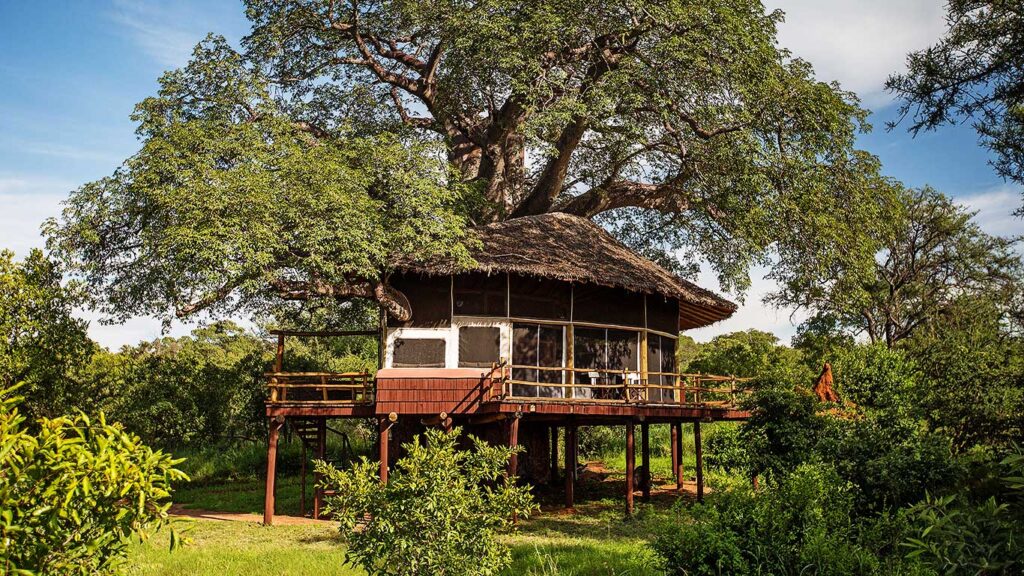
Tarangire Treetops offers one of the most visually spectacular settings of any camp in Tanzania. Built literally into and around ancient baobab and marula trees in a private conservancy bordering the national park, the camp’s giant tree tents are an architectural marvel — each structure incorporates living trees as central pillars, creating rooms that feel as though they have grown organically from the land itself.
Accommodation:
The camp features twenty oversized tents — up to 120 square metres each — built on elevated platforms. Each tent has a kingsize bed, a claw-foot bath, an indoor and outdoor shower, and a private terrace from which elephants can frequently be observed moving through the surrounding woodland. Interiors draw on Maasai and Swahili design traditions with rich textiles, handcrafted furniture, and warm lighting.
Dining:
The dining area is set around a vast ancient baobab, creating a natural amphitheatre for candlelit dinners. Cuisine is contemporary international with strong East African influences — fresh catch, slow-roasted meats, tropical fruits, and Tanzanian coffee.
4. Sanctuary Swala
Sanctuary Swala is an intimate, award-winning camp situated in a remote part of the Tarangire ecosystem, set beside a permanent waterhole that attracts extraordinary concentrations of wildlife. The camp takes its name from the Swahili word for Grant’s gazelle, which roam freely through the camp grounds.
Accommodation:
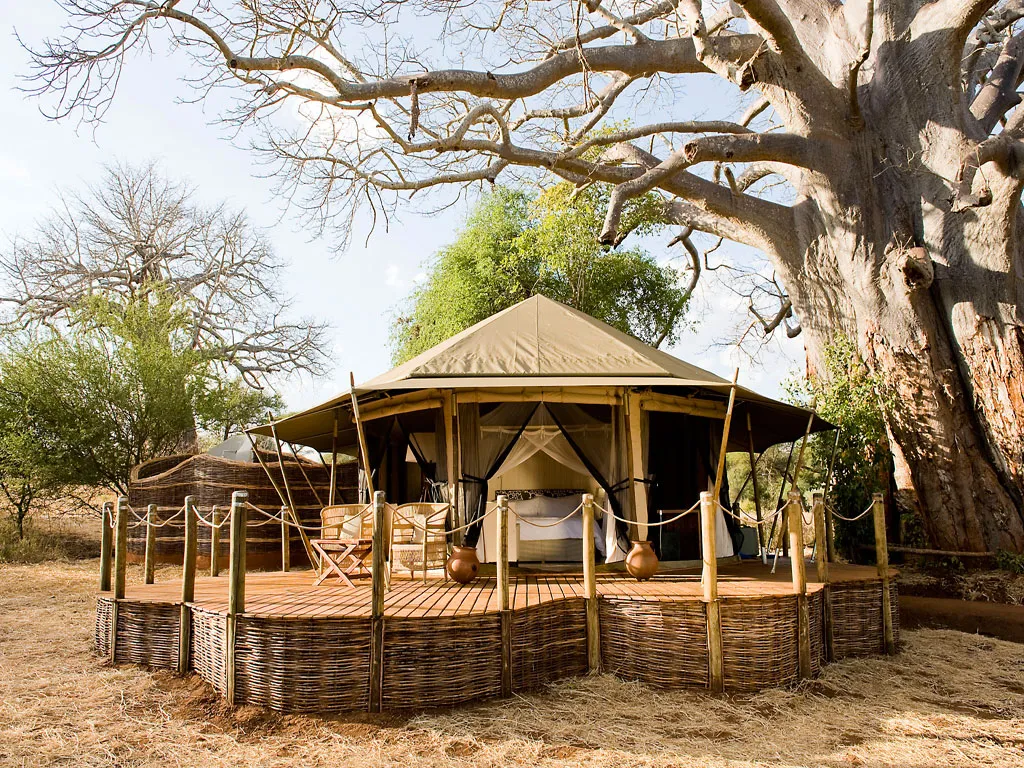
Swala has just nine classic safari tents, each elevated on wooden platforms and connected to the main camp by raised walkways. The tents are beautifully appointed with kingsize beds, en-suite bathrooms, and private terraces with direct views over the waterhole. In the evenings, it is entirely common to observe elephant, buffalo, and predators drinking within metres of the camp’s boundary.
Conservation:
Sanctuary Retreats, which operates Swala, is deeply committed to conservation and community development. A portion of revenue supports the Tarangire Wildlife Research Institute and local Maasai community projects, including education and anti-poaching initiatives. Guests are offered the opportunity to engage directly with these programmes through guided community visits.
5. Tarangire Sopa Lodge Tented Suites
Occupying a commanding hilltop position within Tarangire National Park, Sopa’s tented suites deliver a harmonious blend of panoramic vistas and classic safari comfort. The vantage point provides sweeping views across the Tarangire River valley and the elephant-filled plains below.
Facilities:
The tented suites feature spacious interiors with handcrafted wooden furniture, quality bedding, and ensuite bathrooms. The lodge’s main facilities include a swimming pool, spa, and a large dining room serving buffet meals with a mix of international and East African dishes. The communal areas are designed to make the most of the spectacular sunset views over the valley.
6. Nimali Tarangire
Nimali Tarangire is a small, stylish camp situated in a private area bordering the national park. With only eight tents, it offers an exclusive and genuinely personal safari. The camp is particularly praised for the exceptional quality of its guiding, its relaxed atmosphere, and its strong connections with the local Maasai community.
Design Philosophy:
Nimali’s tents are among the most beautifully designed in the region — large canvas structures with wooden floors, Persian-style rugs, antique-inspired furnishings, and romantic mood lighting. The main camp area features a cosy library, a firepit for evening gatherings, and a plunge pool positioned to maximise wildlife sightings at a nearby waterhole.
Activities at Luxury Tented Camps
Tarangire’s luxury camps offer a rich roster of activities designed to engage guests at every level of interest, from those seeking adrenaline to those desiring slow, contemplative immersion in the wilderness.
Game Drives
The cornerstone of any Tarangire safari, game drives are conducted in customised open 4×4 vehicles, typically departing at dawn and in the late afternoon to make the most of peak wildlife activity periods. Most luxury camps offer a maximum of six guests per vehicle, ensuring a personalised experience. Night drives, available in private conservancies outside the national park, offer the extraordinary spectacle of Tarangire after dark — leopard, aardvark, bush baby, and porcupine routinely encountered.
Walking Safaris
Walking safaris remain one of Africa’s most transformative experiences, reducing the world to the immediate — a dung beetle rolling its ball, lion pugmarks pressed deep in dust, the sharp scent of elephant drifting on the breeze. Licensed walking guides from camps like Oliver’s have decades of experience and bring an encyclopaedic knowledge of flora, fauna, and ecology. Walks range from two-hour morning excursions to multi-day wilderness expeditions.
Fly-Camping
Several camps, most notably Oliver’s, offer fly-camping — spending one or more nights at a remote, minimalist bush camp deep in the wilderness. Guests sleep on stretchers under mosquito nets, with a campfire as the only light source and the African sky as their ceiling. It is widely described by guests as among the most profound experiences of their lives.
Hot Air Balloon Safaris
Hot air balloon flights over Tarangire provide a breathtaking bird’s-eye perspective of the park’s landscape — herds of elephant spread across the plains below, the glittering ribbon of the Tarangire River, and the ancient baobabs casting long morning shadows. Flights are followed by a champagne breakfast in the bush.

Cultural Visits
The Maasai people have lived alongside Tarangire’s wildlife for generations, and visits to nearby Maasai villages are a profoundly enriching addition to any camp stay. Guests can observe traditional ceremonies, learn about pastoralist land management practices, visit local schools supported by camp conservation funds, and engage directly with community members. The best camps facilitate these visits with sensitivity and genuine community partnership — ensuring benefits flow directly to local people.
Birdwatching
With over 550 recorded species, Tarangire is one of Tanzania’s premier birdwatching destinations. Specialist birding guides at most luxury camps can help guests find sought-after species such as the ashy starling, yellow-collared lovebird, martial eagle, kori bustard, and the spectacular lilac-breasted roller. Birding walks and drives can be tailored to the specific interests and skill level of guests.
Cuisine and Dining
Dining at a luxury tented camp in Tarangire is itself a central part of the experience. Meals are prepared by skilled chefs who balance international culinary sophistication with the flavours and ingredients of East Africa.
Breakfast is typically served al fresco, often as a bush breakfast delivered to a dramatic location in the field following an early morning game drive. Think freshly squeezed papaya juice, eggs cooked to order over a portable gas flame, warm bread, tropical fruits, and strong Tanzanian coffee as a herd of elephant passes in the background.
Lunch is usually a relaxed, lighter affair served at camp during the midday rest period. Dinner, the social heart of the safari day, is often a candlelit affair under the stars or around a communal campfire, with multiple courses, a well-curated wine list, and the sounds of the African night as accompaniment.
Most camps cater in full for vegetarian, vegan, halal, and other dietary requirements — guests should communicate their needs at the time of booking. Many camps also offer private dining experiences: romantic dinners in the bush, sundowner cocktails at scenic viewpoints, or private picnics on a riverbank.
Sustainability and Conservation
The finest luxury tented camps in Tarangire understand that their existence is inextricably linked to the health of the ecosystems and communities they inhabit. Conservation and responsible tourism are not marketing afterthoughts but operational imperatives.
Leading sustainability practices among Tarangire’s best camps include:
- Solar power and battery storage: The majority of luxury camps now operate entirely or predominantly on solar energy, eliminating the need for diesel generators and dramatically reducing carbon footprints.
- Water conservation: Efficient borehole systems, water recycling for garden irrigation, and guest education around water usage are standard practice.
- Plastic-free operations: Single-use plastics have been eliminated from virtually all high-end camps, replaced by reusable glass bottles, biodegradable packaging, and filtered water stations.
- Community employment and training: Camps are committed to hiring locally, providing training and career development for staff from surrounding villages and Maasai communities.
- Anti-poaching support: Many camps contribute financially and logistically to wildlife protection in their concession areas and the surrounding national park.
- Conservation levies: Premium camps include a per-night conservation fee in their rates, the proceeds of which fund wildlife research, habitat restoration, and community development projects.
- Low-density, high-impact tourism: By deliberately limiting tent numbers, luxury camps ensure minimal environmental footprint and maximum benefit per guest.
For the thoughtful traveller, choosing a camp with genuine environmental and social credentials is one of the most meaningful ways to ensure that the wildlife of Tarangire — and the communities who live alongside it — have a prosperous and protected future.
Best Time to Visit
Tarangire National Park offers rewarding wildlife viewing year-round, but the character of the experience changes significantly with the seasons. Understanding these rhythms helps travellers choose the visit timing best aligned with their interests.
Dry Season (June to October):
This is the peak season for wildlife concentration. As water sources across the ecosystem dry up, animals gather in massive numbers along the Tarangire River. Elephant herds of several hundred are common. Vegetation is dry and sparse, making animals easier to spot. Nights and early mornings can be cold (10–15°C), but daytime temperatures are comfortable (25–30°C). This period represents the best all-round safari experience in Tarangire and is when premium camps are at their busiest — and most expensive.
Wet Season (November to May):
The wet season transforms Tarangire into a lush green paradise. Calving season (November to January) sees thousands of newborn wildebeest, zebra, and impala, and consequently excellent predator activity. Birdwatching reaches its peak as migratory species arrive. Some camps offer substantial rate reductions during this period. The short rains (November to December) and long rains (March to May) can make some roads challenging, but experienced guides navigate these conditions with ease.
Shoulder Seasons (January–February and June):
January and February offer a quieter, more affordable experience with good wildlife viewing and excellent birding. June marks the transition to the dry season, with rising wildlife concentrations and fewer visitors than July to October. These shoulder months often represent excellent value and an enjoyable balance of conditions.
How to Choose the Right Camp
With several extraordinary options available, choosing between Tarangire’s luxury tented camps is a pleasurable challenge. The following considerations can help narrow the choice:
Group size and privacy:
Smaller camps (four to ten tents) offer maximum intimacy and personalised service. Larger camps with twenty or more tents provide more amenities such as pools and spas. For groups or families seeking total exclusivity, an exclusive-use camp such as Little Oliver’s is the ideal choice.
Activity preferences:
For walking safaris and fly-camping, Oliver’s Camp is the benchmark. For an emphasis on community and conservation engagement, Sanctuary Swala stands out. For unparalleled architectural setting, Tarangire Treetops is extraordinary. For flexible game drive programmes and a sociable atmosphere, Nimali Tarangire and Tarangire Sopa are excellent.
Budget:
Rates at the finest camps range from approximately $600 to $1,500 or more per person per night, typically on a fully inclusive basis covering accommodation, all meals, beverages, and standard game activities. Fly-camping, balloon safaris, and community visits may carry additional charges. Travelling in the wet season or shoulder period can offer savings of 30–50% on high-season rates.
Conservation values:
For travellers whose primary motivation includes making a genuine conservation contribution, all the camps mentioned in this guide have strong credentials — but Oliver’s Camp and Sanctuary Swala are frequently cited by conservationists as among Tanzania’s most impactful operations.
Practical Information for Visitors
Getting There
Tarangire National Park is approximately 120 kilometres southwest of Arusha in northern Tanzania. Most visitors arrive at Kilimanjaro International Airport (JRO) or Arusha Airport (ARK). From Arusha, Tarangire is a 2–3 hour drive via the Makuyuni junction on the main Arusha–Dodoma highway. Many luxury camps are also accessible by light aircraft via Tarangire’s small airstrips, with scheduled and charter flights available from Arusha and from other northern circuit parks including the Serengeti and Ngorongoro.
Health and Safety
Tarangire is a malaria-risk area. Visitors should consult a travel health professional well in advance of their trip regarding anti-malarial prophylaxis and other vaccinations. All luxury camps take mosquito prevention seriously, providing treated nets, repellents, and conducting regular pest management. Medical evacuation insurance is strongly recommended — all reputable camps maintain connections with AMREF Flying Doctors or equivalent emergency medical services.
What to Pack
- Lightweight, neutral-coloured clothing (khaki, olive, tan, grey) for game drives and walks.
- Warm layer for early morning drives and evenings (particularly June to August).
- Comfortable walking shoes or boots for walking safaris.
- Wide-brimmed sun hat and high-SPF sunscreen.
- Quality binoculars — essential for birdwatching and distant wildlife observation.
- Camera equipment with spare batteries and memory cards.
- Personal medications and a basic first aid kit.
- A reusable water bottle — all camps provide filtered water for refilling.
Conclusion
A stay at a luxury tented camp in Tarangire National Park is not merely a holiday — it is a transformative encounter with one of the world’s last great wilderness landscapes. In these ancient elephant highways, beneath these enormous baobab skies, the distance between modern human life and the raw, unmediated world of wild Africa is reduced to almost nothing.
The camps described in this guide represent the finest expression of what safari hospitality can be: deeply comfortable, impeccably guided, beautifully designed, and firmly rooted in the belief that responsible tourism is the most powerful tool available for the long-term conservation of Africa’s wildlife.
Whether you arrive seeking the spectacle of vast elephant herds, the quiet revelation of a walking safari, the architectural wonder of a tree tent, or simply the profound stillness of a Tanzanian night sky, Tarangire’s luxury tented camps stand ready to deliver — and almost certainly to exceed — your expectations.