 info@gorillatrekkinginafrica.com

Facts About Colobus Monkeys
Facts About Colobus Monkeys, Colobus monkeys are a type of primates that lack thumbs, unlike chimpanzees, baboons, gorillas, and other apes. The term ‘colobus’ derives from Greek, signifying ‘mutilated’. The colobus monkeys exhibit the appearance of having deformed thumbs. The absence of these thumbs allows them to effortlessly grasp tree branches.
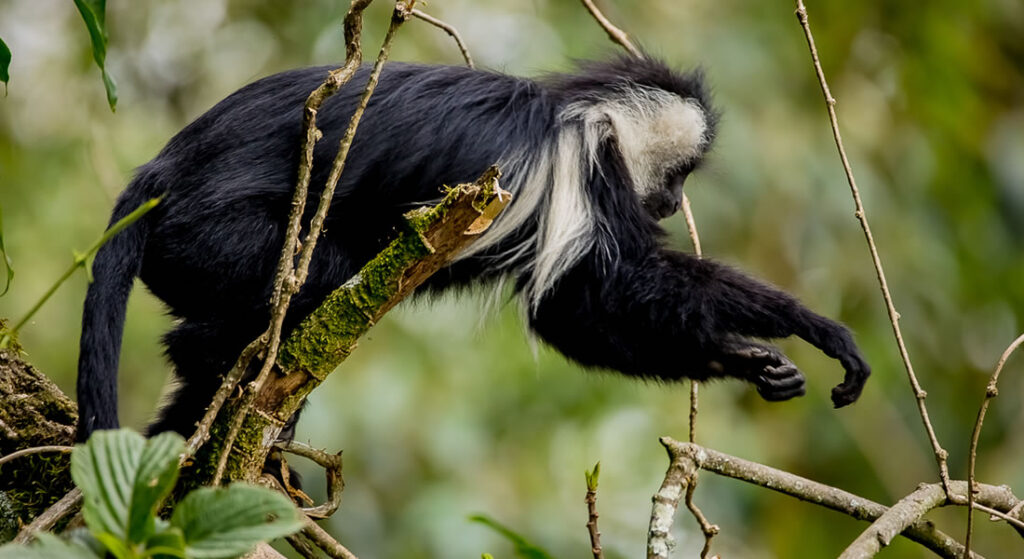
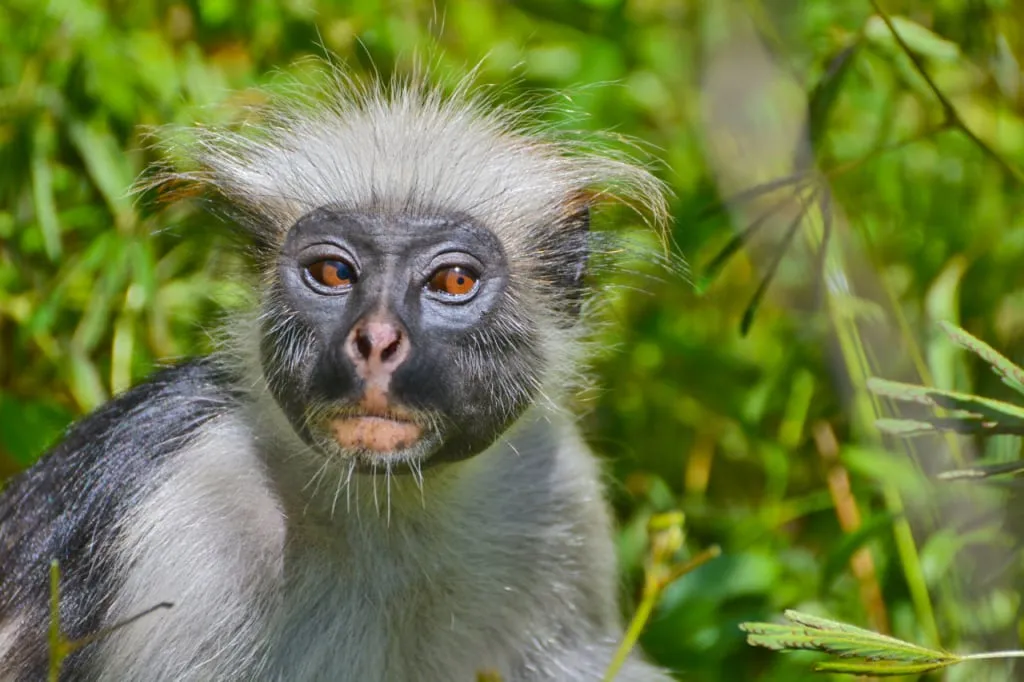
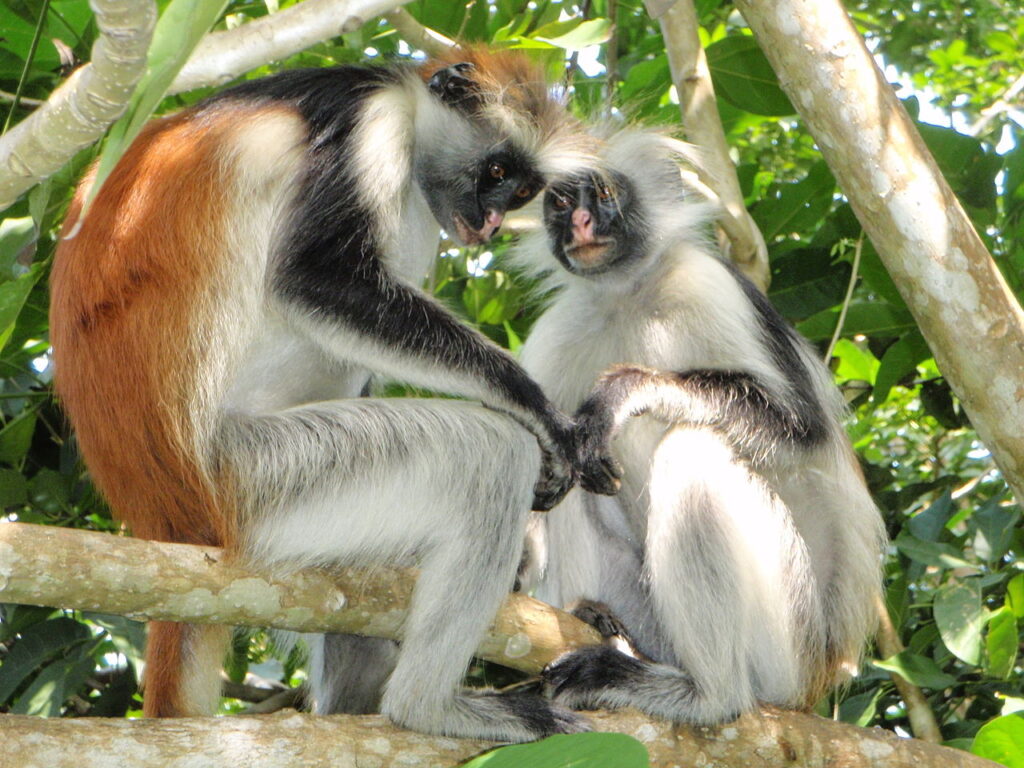
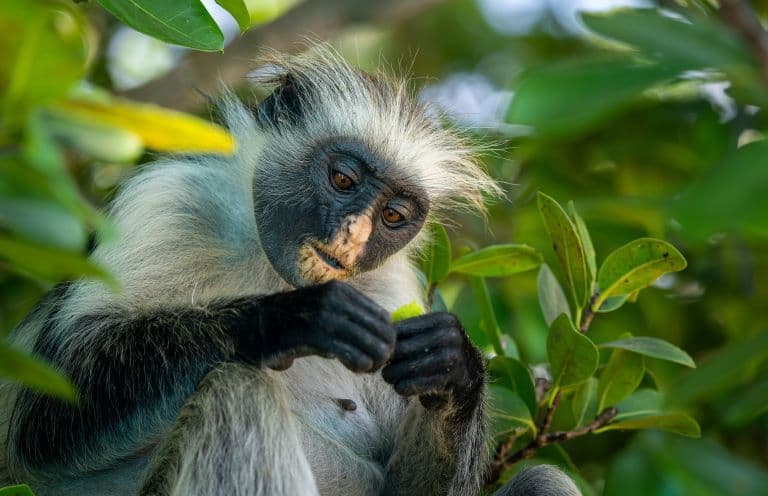
Red Colobus Monkey: There are five kinds of colobus monkeys, including the red colobus, Angola colobus, king colobus, ursine colobus, and black-and-white colobus monkeys. The black-and-white colobus monkeys are indigenous to Africa. They are also closely associated with the red colobus monkeys. The black and white colobus monkeys exhibit striking black fur complemented by an elongated white mantle. They possess elongated, bushy tails and facial beards. Similar to Golden Monkeys, Colobus Monkeys has a very attractive appearance.
The black and white colobus is categorized into two groups: the Eastern black and white colobus and the Angolan black and white colobus. The two groups exhibit subtle differences; specifically, the eastern black and white colobus possesses a U-shaped cape of white hair extending from the shoulder to the lower back. Conversely, the Angolan colobus exhibits white hairs exclusively emanating from the shoulders.
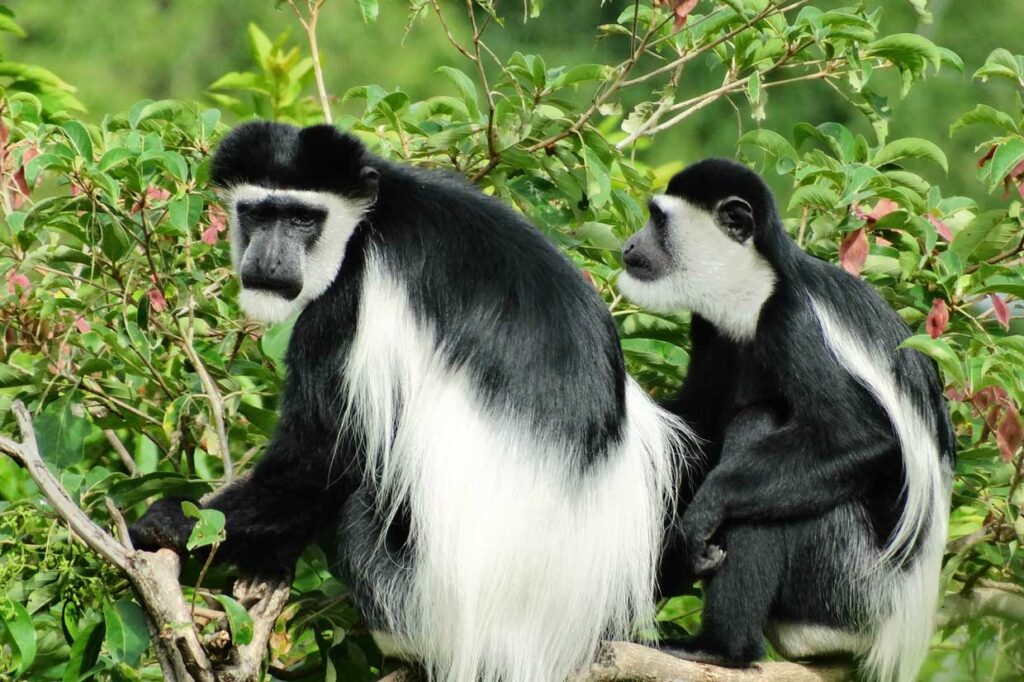
The scientific name of the Angolan black and white colobus is Colobus angolensis, whereas the scientific name of the eastern black and white colobus is Colobus guereza. Colobus monkeys often exhibit a petite stature, weighing between 4 to 14 kilograms, approximately 11 to 30 pounds. Colobus monkeys have an average lifespan of 20 years in the wild, but they can live up to 30 years in captivity.
Colobus Monkeys – Dietary Habits, Social Organization, Behavioral Patterns, and Geographic Distribution
Colobus monkeys inhabit regions characterized by extensive arboreal vegetation or forests. They inhabit the plains, hills, and wetlands of Rwanda, the Democratic Republic of Congo, Nigeria, the Central African Republic, Kenya, Uganda, and Tanzania. Colobus monkeys are exclusively herbivorous. They consume sensitive leaves from trees, fruits, flowers, and vegetables. Primates possess intricate multi-chambered stomachs that facilitate the digestion of substantial amounts of foliage. It is a challenge that other monkey species cannot manage. They possess an expanded salivary gland that aids in softening food and specific microorganisms that assist in its breakdown.
Colobus monkeys are highly sociable primates who inhabit troops consisting of 8 to 15 members. The troops are led by dominant males who employ their leadership abilities to maintain cohesion and safeguard their region. The dominant males communicate with other flock members by distinctive croaking roars. These roars are typically so powerful that they may be heard from considerable distances. Moreover, male colobus monkeys alternate their sleep patterns to ensure the continuous protection of their territory.
It is noteworthy that certain groups of colobus monkeys may briefly consist of multiple mature males. These adolescent male monkeys may opt to depart from their group to seek a new troop to join and establish themselves as the dominant male. Conversely, females typically remain with their natal group for their whole lifespan.
Colobus monkeys are the most arboreal of all African monkeys. They infrequently descend to the ground, unlike other primates. They devote their entire time to traversing from branch to branch and tree to tree. Colobus monkeys may rarely be observed on the ground foraging for food, although this occurs only when the tree canopy is sparse and food is scarce. Primates has the capability to leap distances of up to 50 feet. This huge leap is facilitated by their mantle hairs and tails, which function as a parachute during extended jumps.
Colobus Monkeys – Mating and Reproduction
While not scientifically substantiated, it is posited that colobus monkeys engage in mating during the rainy season. Their females are anticipated to deliver offspring once every 20 months. Their gestation typically endures for 4 to 6 months, culminating in the birth of an infant. The infant is typically born entirely white, with the exception of their faces, which are frequently pink. The white coloration of juvenile colobuses is thought to facilitate their identification and visibility within dense woodlands. This facilitates ‘allo-parenting’, denoting the shared responsibility among all mature females for the care of infants born within the troop. After a duration of four weeks, the hue of the child progressively transitions to the conventional black and white coloration. The entire transformation process typically lasts approximately three months. In what manner are infants transported by their mothers? They are transported on their mothers’ abdomens. The neonate will grasp the mother’s fur. As the infants develop, they predominantly engage in play with their moms. Upon reaching approximately seven months of age, they begin to engage in play with the juvenile monkeys of the tribe. Colobus monkeys exhibit a significant newborn death rate despite the extensive care provided by their moms.
Colobus Monkeys –Threats and Conservation
Colobus monkeys face threats from various predators, including huge eagles and leopards. Nonetheless, people represent their most significant threat. Humans pursue them for their exquisite fur and flesh. The fur is utilized by traditional healers and for the creation of costumes, among other purposes. Human activities, such as deforestation and encroachment on Colobus monkey habitats, have forced armies into isolated forest fragments where food availability is limited. Human activities have endangered colobus monkeys, placing them at risk of extinction. Organizations such as the African Wildlife Foundation and Colobus Conservation are effectively increasing awareness on the threats faced by Colobus Monkeys. They are aiding in the conservation of these exquisite monkey species by educating and raising awareness among the local community regarding the significance of wildlife preservation.