 info@gorillatrekkinginafrica.com

Sundowners and Campfire Evenings In Tarangire National Park
Sundowners and Campfire Evenings In Tarangire National Park, There is a moment in Tarangire National Park — somewhere between the last golden wash of sunlight and the first trembling emergence of stars — when the African bush holds its breath. The fever trees glow amber and jade. An elephant silhouette moves slowly against the darkening sky. The Tarangire River whispers below the escarpment. And you, glass in hand, feel the particular hush of a world that existed long before and will endure long after.
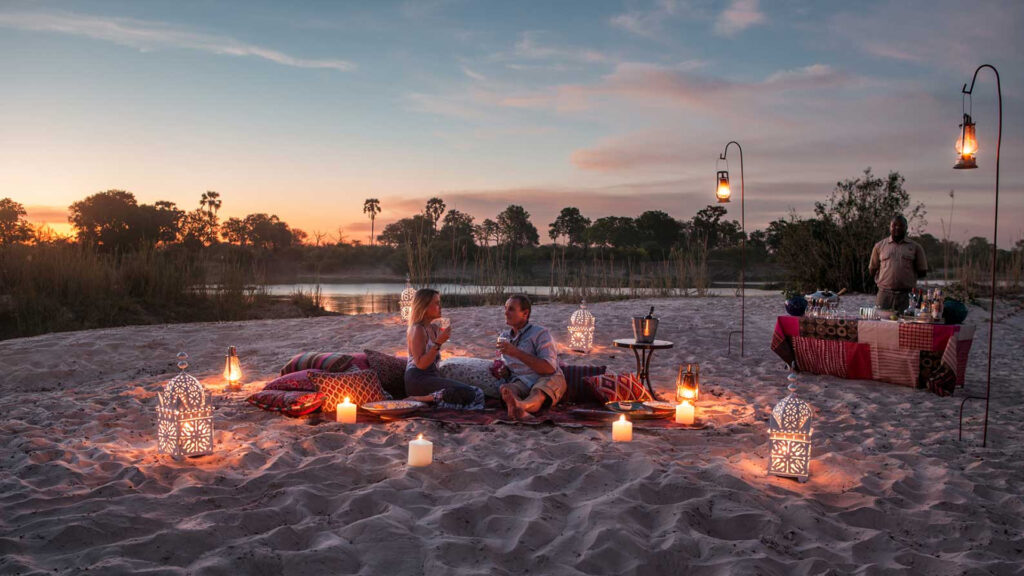
This is the hour of the sundownder — and in Tarangire, it is an hour unlike any other on Earth.
Tarangire National Park, nestled in the Manyara Region of northern Tanzania, is famous for its extraordinary elephant populations, its ancient baobab trees, and the seasonal concentration of wildlife that rivals anything the continent has to offer. But among those who know it well, Tarangire carries a quieter reputation too: as a place where evenings are unhurried, fires burn long, and the transition from day to night unfolds like a ceremony observed by humans and animals alike.
This guide is dedicated to that ceremony — to sundowners and campfire evenings in Tarangire, two interwoven traditions that together form the emotional heartbeat of any visit to this remarkable wilderness.
“In Tarangire, the evening does not fall — it rises, like something ancient drawing breath after the heat of the day.”
The Sundowner Tradition
Origins and Meaning
The sundownder — a drink taken at sunset, usually in the open bush — is one of East Africa’s most enduring safari rituals. Its roots lie in the colonial era, when British settlers and soldiers marked the close of the working day with an evening gin, the drink believed at the time to ward off malaria through its quinine content. Over generations, the practice shed its medicinal pretension and became something more: a conscious pause, a deliberate act of witnessing the day’s end.
In Tarangire, the tradition has found perhaps its most spectacular stage. The park sits on a plateau that drops away toward the Tarangire River valley, and the sunsets here — amplified by dust, acacia smoke, and the wide East African sky — are among the most consistently extraordinary in the region. Camp managers, guides, and lodge staff have refined the art of the sundownder over decades, knowing precisely which kopje, which riverbank bend, which termite mound offers the perfect elevation and orientation as the sun descends toward the Masai Steppe.
What Makes Tarangire Sundownders Special
The Baobab Silhouette
No element defines a Tarangire sunset like the baobab. These ancient trees — some estimated to be over two thousand years old — rise from the landscape with a gravity and strangeness that no photograph quite captures. As the sun drops and the sky transitions through amber, rose, and violet, the baobabs become black architecture against the colour, their swollen trunks and sparse canopies transformed into something between sculpture and myth. A sundownder taken in baobab country is fundamentally different from one taken anywhere else in Africa.
The Wildlife Hour
Late afternoon in Tarangire is a time of intense animal movement. Elephants — sometimes in herds of several hundred during the dry season — make their way from dry-season grazing grounds to the river. Zebra and wildebeest trot in nervous streams. Giraffes pick their way between acacia thornbush with the slow authority of creatures that know they are watched. Lions that have dozed through the heat begin to stir. The sundowner, then, is not merely about the sky — it is about finding a position where the entire theatre of the bush is visible as the day cools.
The Dry Season Concentration
Between June and November, the Tarangire River becomes the only reliable water source across a vast sweep of the Masai Steppe. Animals pour into the park from surrounding areas, creating one of Tanzania’s greatest wildlife spectacles. Sundowners during these months take place against a backdrop of almost surreal density — hundreds of elephants moving to drink, thousands of migrant animals crossing the floodplains, and predators — lions, leopards, cheetahs — emerging as the air cools.
Prime Sundowner Locations in Tarangire
Tarangire River Viewpoints
The Tarangire River is the park’s lifeline, and viewpoints along its banks or above its valley are the most sought-after spots. Several camps and lodges have established dedicated sundowner decks or platforms overlooking the river, where guests can watch elephants come to drink as the light softens into gold. The combination of water, wildlife, and setting sun creates an almost unbearably beautiful scene.
Silale Swamp
In the central and southern sections of the park, Silale Swamp is a magnet for wildlife and one of the most rewarding sundowner destinations for guests staying in the wilderness camps of the park’s southern circuit. The swamp draws massive numbers of buffalo, elephant, and zebra in the dry season, and the open terrain offers unobstructed views of the entire horizon as it lights up at dusk.
The Northern Kopjes
Rocky outcrops scattered through the northern sections of the park provide elevated vantage points that many guides prefer for private sundowners. A vehicle is driven to the base of a kopje, a bush table is set up among the boulders, and guests climb a short distance for a panoramic view. Rock hyraxes — small, improbable-looking mammals that share an evolutionary ancestor with the elephant — often keep a curious watch nearby.
Lemiyon Area
The Lemiyon area in the north of the park is known for mixed habitats — open grassland, woodland, and seasonal swamp — and sees heavy elephant traffic in the dry months. The wide views here make for spectacular sunsets, and the density of wildlife moving through as the light fades is a consistently extraordinary experience.
The Ritual: What to Expect
In most camps and lodges, the sundowner follows a familiar and deeply satisfying rhythm. Around four or four-thirty in the afternoon, the afternoon game drive shifts from active wildlife pursuit to deliberate scenic positioning. A guide who knows the park well already has a location in mind — perhaps a spot scouted that morning, perhaps a favourite they return to when the dry season light is right.
The vehicle stops. A folding table appears, draped in a cloth and set with glasses, ice, and a selection of drinks. The options vary by camp, but typically include gin and tonic (a nod to the original sundownder), wine, cold beer, and non-alcoholic alternatives such as fresh juice and sparkling water. Snacks — often roasted nuts, olives, dried fruit, and bite-sized local treats — are arranged alongside.
And then: you watch. The conversation flows or it doesn’t. Some sundowners are lively, filled with laughter and the shared excitement of a great wildlife day. Others are almost silent, guests holding their drinks with both hands and simply looking — at the sky, at the elephants, at the baobabs becoming silhouettes.
Most last between thirty minutes and an hour, ending before full dark and beginning the drive back to camp in the blue dusk, the air now cool enough for a light jacket, the sounds of the night world just beginning to rise around the vehicle.
“A good sundowner guide doesn’t just find a beautiful spot. He finds the one beautiful spot that belongs to this day and no other.”
Private and Walking Sundowners
For guests staying at some of the more exclusive camps in and around Tarangire, private sundowner experiences are available — a vehicle and guide dedicated to a single group, with more flexibility in timing, location, and duration. These are particularly popular with families, honeymoon couples, and photographers who want to linger without feeling they are keeping a group waiting.
Some camps also offer walking sundowners for guests who have completed the required park safety briefing and are accompanied by an armed ranger. The experience of walking to a sundowner spot through the bush — following a ranger through the long grass as herds move in the distance — adds a visceral dimension that no vehicle-based experience can replicate. The bush smells different at ground level. The sounds arrive unfiltered. The approach to the viewpoint feels earned.
Campfire Evenings in Tarangire
The Campfire as the Heart of the Safari
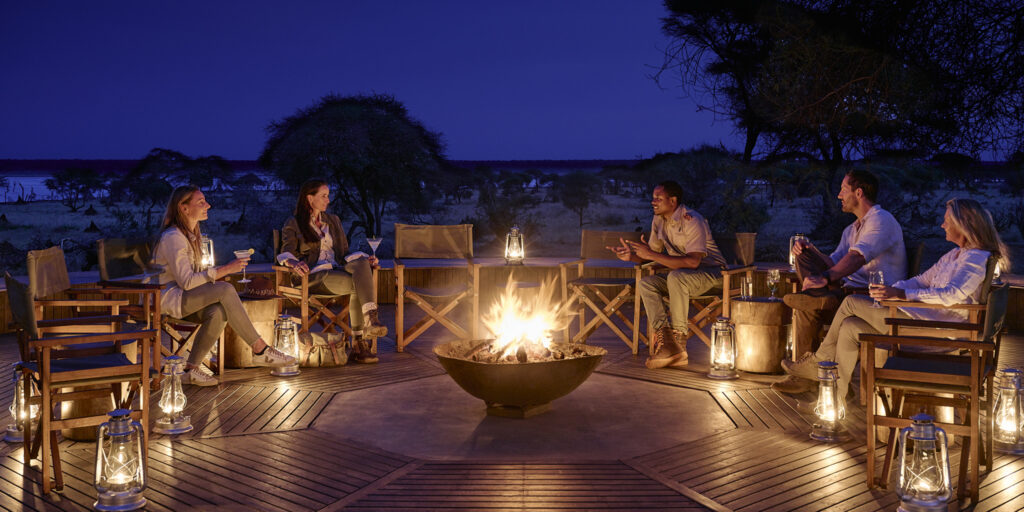
If the sundowner marks the transition from day to evening, the campfire anchors the night. In African safari culture, the campfire is not merely a source of warmth and light — it is the social and psychological centre of camp life. Around the fire, the day is reviewed, stories are exchanged, guides share knowledge that would not come up over a lunch table, and the sounds of the night bush beyond the firelight create a constant, intimate reminder of where you are.
In Tarangire, campfire evenings have a particular character shaped by the park’s wildlife. Lions are heard regularly from camp — sometimes alarmingly close. Hyenas call from the darkness. Elephants occasionally pass through camp boundaries, announced first by the cracking of branches and the deep, sub-audible rumbles guides learn to recognise before they hear them consciously. Sitting at the campfire in Tarangire, guests are never allowed to forget that they are guests in an ecosystem that has its own urgent agenda throughout the night.
Types of Camp Setting
Permanent Tented Lodges
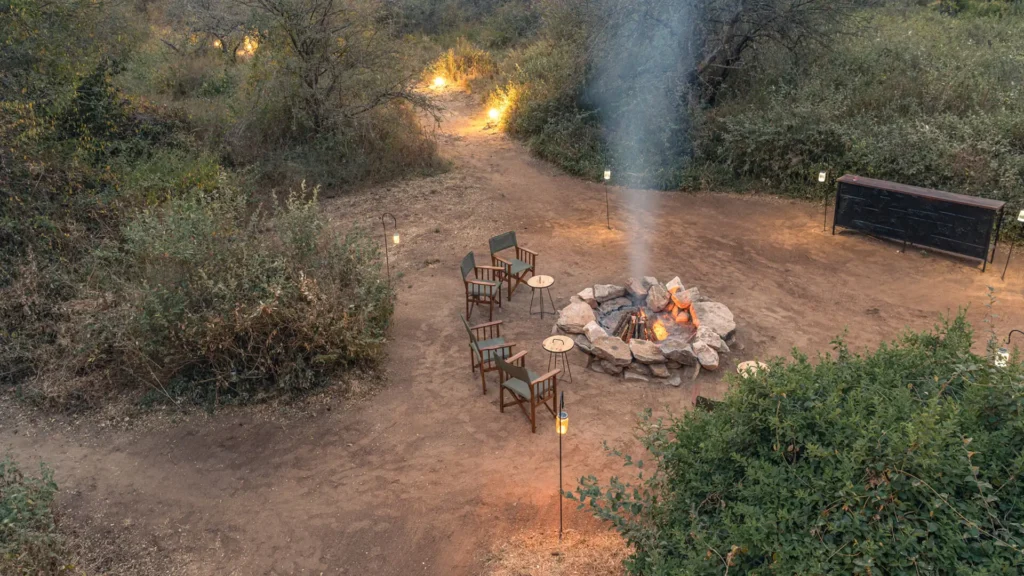
Tarangire’s permanent tented lodges — including some of the most celebrated names in East African tourism — offer campfire areas that are beautifully appointed without sacrificing authenticity. Stone or sand fire pits, timber or canvas seating, lanterns in the surrounding trees, and attentive staff who maintain the fire and replenish drinks create an experience that is simultaneously luxurious and genuinely wild. These lodges are set in carefully chosen positions — often on riverbanks or elevated platforms — that maximise both the view and the ambient sounds.
Seasonal and Mobile Camps
Tarangire’s southern wilderness areas, accessible only during the dry season, host a number of mobile and seasonal camps that offer campfire evenings in conditions of near-total wilderness. These camps are smaller — sometimes only four to eight tents — and the campfire is often the only light source beyond the stars. The absence of any other camp within hearing distance, the uncrowded game drives, and the simplicity of the setting create campfire evenings of exceptional intimacy. These are experiences that guests consistently describe as transformative.
Fly-Camping
For the most adventurous visitors, some operators offer fly-camping in Tarangire — small, temporary camps set up in the bush for one or two nights, with minimal infrastructure. Dinner is cooked over an open fire, sleep is in simple bedrolls under mosquito nets in open-sided shelters or beneath the stars, and the campfire is not a designed amenity but a necessity and a comfort. Fly-camping sundowners — drinks taken at the campfire as the sun goes down over grass that stretches to the horizon — are among the most primal and memorable experiences available anywhere in Africa.
The Structure of a Campfire Evening
Campfire evenings in Tarangire typically begin as guests return from the afternoon game drive and sundowners, usually around seven or seven-thirty in the evening. The fire is already built and burning when they arrive — a skill in itself, since good campfire-builders in the bush understand the ratio of wood, tinder, and air that creates a fire that burns steadily and brightly for three or four hours without requiring constant attention.
Pre-dinner drinks continue around the fire. Guides and camp managers join guests in a natural extension of the sundowner sociability. This is often when the best conversations happen — when the day’s sightings are dissected, when guests who know a little about wildlife ask questions, and when guides, in the warmth of a good fire and genuine curiosity, share knowledge that goes well beyond what appears in field guides.
Dinner in most Tarangire camps is served either around or very near the campfire. In more casual settings, this might mean plates on laps and glasses balanced on the arms of camp chairs. In more formal setups, a dinner table is laid within the campfire area, with candlelight supplementing the fire. The menu in well-run camps reflects a genuine effort to incorporate local Tanzanian flavours alongside more internationally familiar dishes — ugali alongside braised game, fresh vegetables from nearby gardens, tropical fruits.
After dinner, the fire is the main event. Some camps organise informal talks — a guide sharing stories from decades in the bush, a discussion of conservation challenges, or simply a walk through the night sky, which in Tarangire, far from any significant light pollution, is one of the most extraordinary celestial displays visible anywhere on Earth.
“Around a campfire in Tarangire, time moves differently. The past seems closer and the future seems less urgent. Only the fire and the bush are real.”
The Sounds of the Night
One of the most distinctive features of a campfire evening in Tarangire is its soundtrack. The park is acoustically rich in a way that few other wildernesses can match, and the combination of the popping fire and the sounds arriving from the darkness creates something close to an auditory landscape.
The most frequently heard night sounds include:
- Lions roaring — deep, resonant, territorial calls that can travel several kilometres and register physically as a vibration in the chest
- Spotted hyenas whooping and giggling — the laugh-like call that announces a kill or a territorial boundary
- African scops owls — a tiny owl whose repetitive, piping call punctuates the early hours of darkness
- Vervet monkeys alarm calling in the distance — a signal that a predator has been spotted
- Elephants moving through the bush nearby — the crack of branches, the soft percussion of massive feet on dry grass, the deep rumble of communication below human hearing
- Nightjars churring — a strange, mechanical-sounding call from a bird as well-camouflaged as any in Africa
- The occasional roar of a hippo if camps are near the river — territorial, explosive, genuinely startling
Guides at good camps treat these sounds as live interpretation opportunities, often pausing mid-conversation to identify a call, explain what it means in the context of what they are hearing from other animals, and trace the acoustic geography of the night around camp.
Conservation and the Campfire
Responsible camps in Tarangire have developed careful approaches to campfire management that balance the guest experience against environmental impact. Sustainable wood sourcing — using dead wood collected within camp boundaries, or wood from managed woodlots rather than live trees — is standard practice at reputable establishments. Some camps have shifted partially to gas for cooking and rely on smaller campfires for atmosphere rather than heat or light.
The campfire also functions, practically, as a deterrent for wildlife entering camp at night. Elephants, which have a complex relationship with human fire learned over millennia of coexistence, generally avoid active fire — though experienced camp staff know that this is not a guarantee and maintain careful awareness of animal movements through the night.
Several camps in and around Tarangire have established campfire evening programs that incorporate conservation storytelling — sharing data on elephant population recovery, anti-poaching efforts, community partnership programs, and the science of the baobab ecosystems guests have spent the day admiring. These conversations, unhurried and conducted in the intimacy of firelight, often have more lasting impact than any documentary or visitor centre exhibit.
Masai Cultural Evenings by the Fire
Some camps operating in areas adjacent to Masai community land offer optional cultural evenings by the campfire, where Masai warriors and singers visit camp to share traditional music, dance, and conversation. These evenings — when they are genuinely community-managed and fairly compensated — offer guests a layered understanding of the Tarangire landscape as a place inhabited and shaped not only by wildlife but by one of East Africa’s most distinctive human cultures.
The relationship between the Masai and the wildlife of the Tarangire ecosystem is ancient and complex, and conversations around the campfire about livestock and lions, about land use and water rights, about how younger generations relate to traditions their grandparents took as given — are among the most intellectually and emotionally substantial experiences a safari guest can have.
Planning Your Sundowner and Campfire Experience
Best Time to Visit
Tarangire is a year-round destination, but the dry season — from June through November — offers the most concentrated wildlife viewing and, consequently, the most dramatic sundowner and campfire settings. July, August, and September are peak months, when the Tarangire River draws extraordinary concentrations of elephants, zebra, wildebeest, giraffe, and predators.
The green season (November through May) brings a different beauty — lush vegetation, birdlife at its peak, fewer tourists, and softer, more diffused evening light. Sundowners in the green season can be spectacularly atmospheric, with dramatic thunderstorm light on the horizon and an explosion of bird activity. Campfire evenings in the green season feel more enclosed — the bush is thick around camp and the air is warm rather than cold — but no less evocative.
What to Pack for Evenings
- A lightweight fleece or wool layer — evenings in the dry season can drop significantly in temperature
- Insect repellent — evenings around the campfire are when mosquitoes are most active
- A headtorch or small flashlight for walking between tent and campfire area
- A camera with a fast lens or one capable of low-light performance, for campfire portraits and star photography
- A small field guide to bird calls or mammals for evening sound identification
- An open mind and patience — the best moments at both sundowner and campfire are unscripted
Etiquette and Safety
A few principles of bush etiquette are worth keeping in mind for sundowner and campfire evenings. On game drives to sundowner locations, keep voices low when animals are present — the sundowner is not just about the drink but about the wildlife encounter, and unnecessary noise disrupts both. At camp, always walk with a torch or accompanied by a staff member after dark, even between your tent and the main fire area.
Most camps provide a safety briefing on arrival that covers night protocols. These briefings are not formalities — in Tarangire, where elephants and lions are genuinely common around and sometimes in camp, they are important. Following staff guidance without hesitation is both courteous and sensible.
Choosing the Right Camp
The quality of a camp’s sundowner and campfire program says a great deal about its overall philosophy. The best camps in Tarangire treat these rituals as integral to the experience, not as optional add-ons. When selecting accommodation, it is worth asking specifically: where do you typically take guests for sundowners? What is the campfire setting like? Do your guides participate in the campfire evening or is it managed separately? Is fly-camping or walking sundowner available?
Camps positioned in the less-visited southern and central parts of the park — Lolkisale, Kuro, Tarangire Hills, and the areas toward the Rift Valley escarpment — offer particularly exceptional campfire evenings because of their remoteness and the density of wildlife movement after dark.
Combining Tarangire with the Wider Northern Circuit
Most visitors to Tarangire include it as part of a broader northern Tanzania circuit that may include the Serengeti, Ngorongoro Crater, and Lake Manyara. Within this circuit, Tarangire offers a character quite distinct from its more famous neighbours — less crowded, more intimate, deeper in certain kinds of wildlife encounter. A pattern that many guides recommend is to begin or end a northern Tanzania safari in Tarangire precisely because its sundowner and campfire culture sets a tone — of quiet observation, of genuine bush immersion — that enhances everything that follows or that provides a reflective close to a journey spent in the more trafficked parks.
Conclusion: The Meaning of an African Evening
There is a particular kind of contentment that arrives after a great African evening — after the sundowner has been drunk against a sky too beautiful to fully believe, after the campfire has burned low and the voices have quietened and the night sounds have grown familiar enough to stop startling, after the fire-keeper has added a last log and the conversation has run out not from exhaustion but from completion.
It is a contentment rarely found in ordinary life, because ordinary life is poor in exactly what these evenings provide in abundance: time, sky, silence, and the company of something genuinely wild.
Tarangire National Park is many things — a sanctuary for one of Africa’s largest elephant populations, a cathedral of baobabs, a migration corridor of ancient importance, a place where predators still do what predators have always done. But for those who have sat at a campfire here or raised a glass to a sunset over the Tarangire River, the park carries one identity above all others: it is the place where the evenings were unlike anything else.
That is, in the end, what sundowners and campfire evenings in Tarangire give you. Not simply a beautiful moment, though they give you that too. But the experience of having been, briefly and unforgettably, part of a world whose rhythms are older than memory and whose beauty does not need to be explained.
The fire burns. The stars turn. Somewhere in the darkness, an elephant rumbles to her calf. And you sit, in the warmth and the light, absolutely present, absolutely glad to be alive.
“Tarangire asks nothing of you in the evening except attention. In return, it gives you something you will not find anywhere else.