 info@gorillatrekkinginafrica.com

Chome Nature Forest Reserve
The Chome Nature Forest Reserve encompasses 14,283 hectares among the slopes and summits of the South Pare Mountains. It is situated between the West Usambara and North Pare Mountains. The reserve is located in the Para District of the Kilimanjaro Region. The Chome Nature Forest Reserve was inaugurated in 2016. The outcome of elevating the protection status of the erstwhile Chome Forest Reserve, established in 1957.
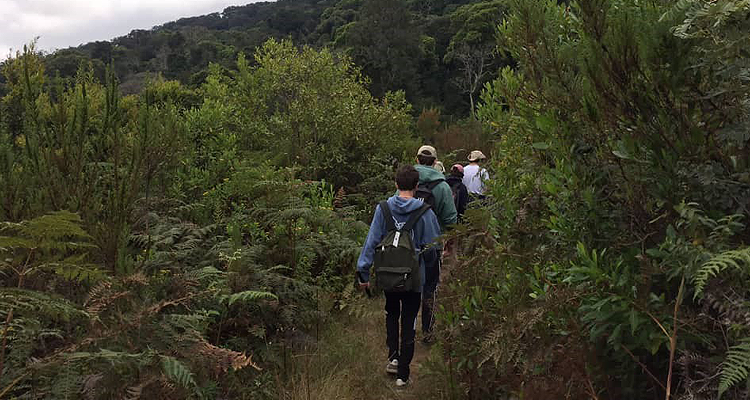
Chome Nature Forest Reserve
The reserve is situated at an elevation between 1,250 and 2,463 meters, with its highest point being Mt Shengena. The reserve is located inside the Eastern Arc Mountain region, which was nominated for the World Heritage List in 2010. Chome Forest Reserve hosts a multitude of avian species and accommodates many sorts of primates. It is encircled by 27 communities, with a cumulative population of 60,916 in 2008.
The projected yearly precipitation is 1,400 mm, characterized by brief rains from November to December and extended rains from March to May. The eastern slopes experience greater precipitation than the western slopes, exhibiting a mist phenomenon at elevated altitudes. Temperature fluctuates between 15°C in July and 20°C in February.
Features of Chome Nature Forest Reserve
Diverse Biodiversity
The Chome Nature Forest Reserve hosts four of the 136 vertebrate species indigenous to the Eastern Arc Mountains, which are exclusively located in the South Pare Mountains. The reserve is home to 13 vertebrate species that are endemic to the Eastern Arc Mountains, as documented in the South Pare Mountains. Remarkably, five of these species are endangered and are exclusively located in Chome Nature Forest Reserve.
The reserve houses primates such as the Angolan pied colobus, gentle monkey, and Zanzibar lesser galago; rodent species including the fragile black and Rufous elephant shrew, bush pigs, as well as chameleons and Rhampholeon viridis.
The reserve hosts two species of warty frog, Callulina shengena and Callulina stanleyi, which are exclusive to Chome Nature Reserve. The Kilimanjaro blade-horned chameleon, Kinyongia tavetanum, inhabits Chome Nature Reserve.
Bird Chome Forest Reserve
The Chome Forest Reserve hosts a multitude of avian species. Birds observed in this area include the South Pare white-eye, red-capped tailorbird, hamerkop, white-eared barbet, brown-breasted barbet, white-crested helmetshrike, black sawwing, Baglafecht weaver, yellow-bellied waxbill, red-billed firefinch, southern citril, Hartlaub’s turaco, mountain buzzard, common buzzard, mustached tinkerbird, white-tailed crested flycatcher, African yellow-warbler, barn swallow, black-headed mountain greenbul, Cabanis’s greenbul, and tawny-flanked prinia, among others.
Vegetation
The reserve hosts more than 554 plant species peculiar to the Eastern Arc Mountains, which flourish in the South Pare Mountains. Six of these are confined to the South Pares, while two are exclusively documented in the Chome Nature Forest Reserve.
Moss-covered upper montane forest is found above 2300 meters, with elfin woodland located on the highest ridges. Wet montane forests comprise approximately 60% of the reserve, predominantly located on the eastern and western slopes of valleys at elevations of 2,000-2,300 m. Ocotea usambarensis is the predominant emergent tree, with heights of up to 45 meters. Primary heath, characterized by Erica arborea, is found on rocky ridges in shallow, acidic soils.
Recreational activities in Chome Nature Forest Reserve
Bird Watching
Birdwatching in Chome Nature Forest Reserve offers a unique opportunity to observe 90 species of birds. More than 43 avian species can be observed during a single birding excursion, with notable species including the South Pare white-eye, mountain wagtail, red-capped robin-chat, African black-headed oriole, trumpeter hornbill, and speckled mousebird.
Additional avian species in Chome Nature Forest are the augur buzzard, long-billed pipit, African stonechat, Cape robin-chat, African dusky flycatcher, and olive-headed greenbul.
The South Pare Mountains, a significant birding location, host over 95 avian species, including the South Pare white-eye.
Nature Walks
Chome Nature Forest Reserve is a biodiverse natural forest, inhabited by various floral and faunal species. The optimal method to experience an intimate connection with nature is by participating in guided nature or forest walks. During a forest walk, one may encounter animals such as the Angolan pied colobus, gentle monkey, blue monkey, Zanzibar lesser galago, rufous elephant shrew, bush pigs, chameleons, and Rhampholeon viridis.
Birds including the South Pare white-eye, red-capped tailorbird, hamerkop, white-eared barbet, brown-breasted barbet, white-crested helmet shrike, among others. During a woodland stroll, you will encounter stunning vistas of the adjacent landscape, including Mkomazi National Park, Taita Hills, and Tsavo National Park.
Chome Nature Forest Reserve Walking Safaris and Hiking
Hiking in Chome, characterized by clearly defined pathways across stunning scenery, is more than a mere activity; it is an adventure. Regardless of whether you are an experienced hiker or a leisurely walker, discover the tranquil beauty of the forest at your own tempo.
Swimming
Rejuvenate in the pristine waters of natural pools dispersed throughout the reserve. Swimming in the picturesque setting of towering trees and singing birds provides a rejuvenating respite on warm days.
Photographing and Picnicking
The Chome Nature Forest Reserve is a premier destination in Tanzania, ideal for those seeking remarkable vistas. This remarkable reserve includes notable sights such as the South Pare Mountains. These areas are abundant in primates, avian species, flora, and various other elements.
Visit to the village
A visit to a community is an essential activity on a Tanzania adventure safari in Chome Nature Forest Reserve. The reserve contains multiple communities. Participating in a village tour provides an opportunity to gain insight into their daily lifestyle. During your village trips, you will have the opportunity to engage in various cultural events, including traditional music, dance, and sampling local beverages, among others.
Scenic Viewing
Tourists on the Tanzania adventure tour in this extraordinary reserve will experience breathtaking vistas of Mkomazi National Park, Taita Hills, and Tsavo National Park (in Kenya), as well as sisal plantations along the Arusha-Dar es Salaam route.
How to get to Chome Nature Forest Reserve
The reserve may be reached by road from either Kilimanjaro or Dar Es Salaam through Same town, located roughly 117 kilometers from Kilimanjaro and 444 kilometers from Dar Es Salaam. From Same, it is approximately a two-hour journey to the reserve.
Accommodation facilities
The reserve provides camping amenities. The reserve contains two campsites: one located within the reserve and the other at the entrance. Alternative accommodation services can be obtained outside the reserve. The hotel options are Kisaka Village Inn in Chome, Tona Lodge, and Tona Annex in Manka. Alternatively, travelers may reside in guesthouses located in settlements adjacent to the area. A visitors’ center for the reserve is located close outside Same Town.