 info@gorillatrekkinginafrica.com

Hiking Mount Kilimanjaro
Hiking Mount Kilimanjaro enables you to tackle the tallest peak in Africa. Mount Kilimanjaro is located within Kilimanjaro National Park in Northern Tanzania. The mountain encompasses around 100 square kilometers and spans 65 kilometers in width. The mountain was formed approximately three million years ago, coinciding with the formation of the East African Rift Valley. Mount Kilimanjaro comprises three separate cones: Kibo, Shira, and Mawenzi. The most recent significant volcanic activity transpired 200 years ago, resulting in the development of Kibo. While Shira and Mawenzi are extinct, Kibo survives in a dormant state. Uhuru is the pinnacle.
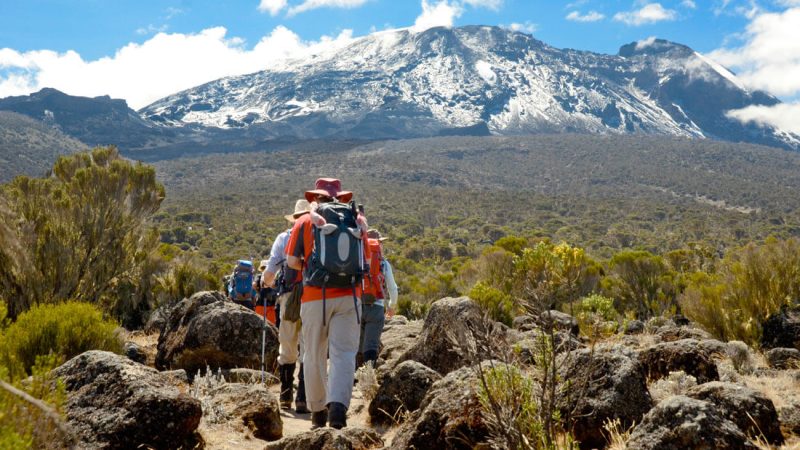
Numerous legends and myths are recounted regarding Mount Kilimanjaro. Certain local tribes believed that the snow adorning the mountain represented the throne of God due to its white hue. Some assert that mountain gorillas previously inhabited the forests on the lower slopes of the mountain. The Chagga people hold the belief that pygmies inhabit the inaccessible ravines and caves located on the mountain slopes. What is the origin of the name Kilimanjaro? The etymology and significance of the name Kilimanjaro continue to be enigmatic to this day. While other local tribes, like as the Wakamba and Kikuyu, possessed names for the mountain, the prevailing belief is that the true name originated from the Swahili-speaking traders residing in Mombasa. The traders coordinated extensive trade caravans to the interior, utilizing the peak as a navigational point.
The initial Europeans to attain the peak of the enigmatic Mount Kilimanjaro were Ludwig Purtscheller and Hans Meyer. Their accomplishment followed unsuccessful endeavors by Richard Thornton in 1861, Otto Kersten in 1862, and Baron Von der Decken in 1862. Currently, numerous notable mountaineers and figures have successfully ascended Kilimanjaro, including former US President Jimmy Carter in 1988 and US Secretary of the Interior Stuart Udall in 1963. Additional information regarding Mount Kilimanjaro or Hiking Mount Elgon in Uganda is available for further reading.
Ascending Mount Kilimanjaro is an extraordinary and fulfilling endeavor. In addition to animal safaris, Mount Kilimanjaro and its majestic snow-capped summits are among the foremost associations people have with Africa. Annually, more than 30,000 individuals endeavor to ascend Mount Kilimanjaro’s peak. It is included in the aspirations of millions of travelers globally. The endeavor of ascending and investigating the peak captivates the imagination of many travelers globally.
What accounts for the popularity of climbing Mount Kilimanjaro?
Mount Kilimanjaro, the highest peak in Africa, is also the tallest free-standing mountain on Earth. Reaching the pinnacle is thus a personal achievement like to graduation or marriage, enduring throughout one’s life.
Mount Kilimanjaro is regarded by many as one of the foremost natural wonders globally. This is due to the magnificent vistas from the peak and the sensation of having traversed from the equator to the North Pole.
Kilimanjaro is the most accessible ascent among the seven prominent mountains globally. No specialized abilities or prior experience are required to reach the summit. Novices and anyone with fundamental physical fitness can attain the summit if they are psychologically equipped. The oldest climber was 86 years old, while the youngest was six, both having ascended Mount Kilimanjaro in Tanzania. Consequently, ascending Mount Kilimanjaro may prove to be the most arduous endeavor for the majority of climbers.
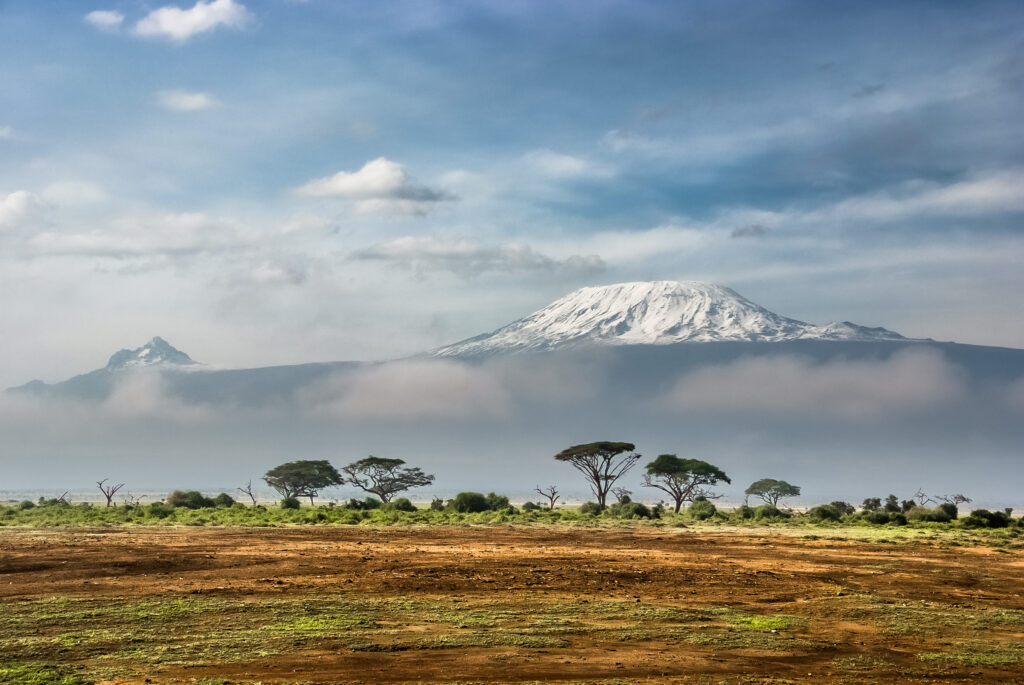
Mount Kilimanjaro is readily accessible: Despite its remote location, travelers can conveniently reach Mount Kilimanjaro National Park by road or air. The majority of tourists arrive at Kilimanjaro International Airport in Arusha following a layover at either Jomo Kenyatta International Airport in Nairobi, Kenya, or Julius Nyerere International Airport in Dar es Salaam, Tanzania.
Contributing to the community: Climbing serves as an indirect means of assisting a developing nation. The Tanzanian government generates in excess of $25 million annually. While it may appear insignificant in certain nations, it significantly impacts a developing country. Additionally, employment opportunities are generated for individuals employed in hotels and tour firms.
Superior services: The infrastructure in Kilimanjaro is of exceptional quality and well-maintained, in contrast to Everest, which is sometimes littered with refuse. All pathways to the peak are clearly delineated and of exceptional quality. Hikers may rent or purchase premium equipment at the departure location or via their tour organizer. The transportation systems to and from the departure location are likewise exemplary. The Guides, porters, and Park Rangers are very competent and well-trained.
Ascending a mountain with seven climatic zones: It is rare to encounter the opportunity to explore seven climatic zones inside a singular geographic region. The ascent to the summit of Mount Kilimanjaro will traverse agricultural lands, rainforests, moorlands, alpine deserts, and the glacier-laden peak. Hikers remain engaged as each segment of the ascent presents a distinct experience.
Hiking Mount Kilimanjaro in Tanzania presents exceptional opportunities for photography; if you are passionate about photography and nature, it should be included on your bucket list. The overall scenery, plants, wildlife, and landscape will wow you. The mountain is located within Kilimanjaro National Park, which has 140 species of animals, birds, and primates. During the ascent of the lower slopes, one may meet baboons, black rhinos, blue monkeys, bushbucks, buffaloes, bush babies, colobus monkeys, duikers, elands, giraffes, honey badgers, leopards, lions, mice, spiders, and tree hyraxes. As you ascend, anticipate encountering distinctive flora, including the unusual Kilimanjaro tree.
What is the experience of hiking Mount Kilimanjaro?
The initial step in organizing a hike up Mount Kilimanjaro is to seek a reputable tour operator. The tour provider should be able to advise you on how to prepare for the hike. Details such as the itinerary, packing list, visa prerequisites, vaccinations, and accommodations before to and following the hike should be addressed prior to making a reservation. The tour operator must guarantee that climbing equipment is organized on-site prior to your arrival.
Ascend Mount Kilimanjaro. The subsequent step is to arrive. Tanzania has three principal international airports. The list include Kilimanjaro, Dar es Salaam, and Zanzibar Airports. Kilimanjaro International Airport is the nearest airport to the park. Most travelers initially transit through Dar es Salaam, Zanzibar, or Nairobi International Airport in Kenya before arriving at Kilimanjaro Airport. Travelers arriving at Kilimanjaro International Airport may opt to spend a night in Arusha or Moshi before to visiting the park the following day. An alternative exists to spend the night near the park and the hike’s starting point. The distance from Moshi to the park is 42 kilometers, and from Arusha it is 50 kilometers.
Prior to commencing the hike, a briefing occurs during which you meet the local guide leading the team, fellow hikers in your group (if applicable), as well as the porters and cooks. This briefing encompasses all pertinent information on the hike, including mental preparation, necessary equipment, and evacuation protocols. This is the optimal time to rent any gear and equipment you may lack. A typical trekking team has 6 to 12 climbers from various nationalities, all prepared to enjoy and share the experience of ascending Mount Kilimanjaro. Tour firms will link solo hikers with others in their age demographic. Inform your tour organization in advance if you desire a private hike for just yourself or your spouse.
The porters are tasked with transporting supplies, pulse oximeters, supplemental oxygen, sleeping tents, seating stools, portable toilets, first aid kits, gas cylinders, sleeping bags, pillows, and further equipment. They will assist you in ascending the challenging segments and transport your backpack. The chefs will produce locally sourced and highly nutritious cuisine. The menu will comprise appetizers, fruits, meat, and vegetarian options.
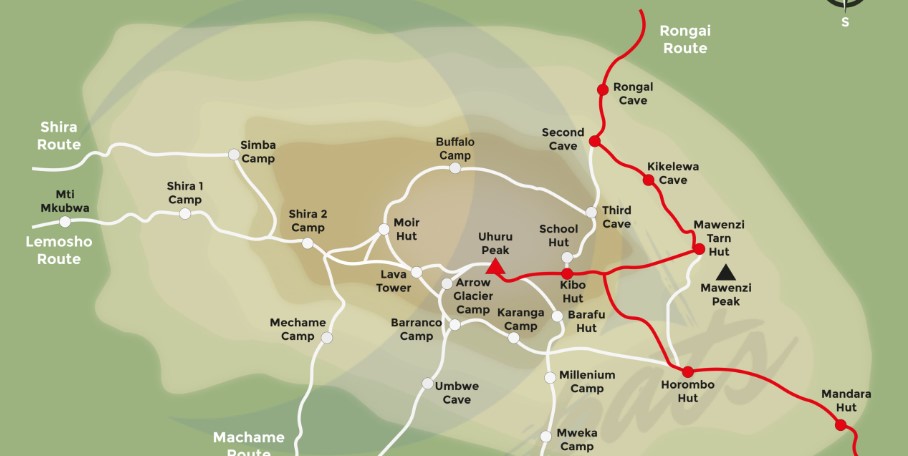
There are six primary routes for ascending Mount Kilimanjaro. The routes comprise Lemosho, Rongai, Marangu, Umbwe, Machame, Shira, and Northern Circuit. Umbwe is the most arduous, briefest, and steepest route. The difficulty level is elevated, and the ascent requires approximately 7 to 8 days. The Lemosho route is the most picturesque, requiring 7 to 8 days for completion. Shira is the path that directly ascends to the summit, characterized by a medium level of difficulty for ascending Mount Kilimanjaro. The Shira route hike requires 7 to 8 days for completion. The predominant route is Machame, requiring 6 to 8 days for completion. Conversely, Rongai is the most accessible of all the routes, however it still requires a duration of 6 to 7 days for completion. The latest route is the Northern Circuit, which requires 9 to 10 days to complete and has a high level of challenge. The Marangu path, which requires 5 to 6 days to complete, is the final option. The Marangu path presents a low level of difficulty and is the sole route offering hut lodging.
For novice climbers, we advise choose the Machame or Lemosho routes. These two routes provide an optimal combination of less crowds, stunning landscapes, and elevated success rates. It is crucial to remember that not all individuals who endeavor to ascend Mount Kilimanjaro achieve the peak. The initial two days will ascertain your potential to reach the summit, irrespective of the path taken. Consequently, it is essential to go gradually, even if you feel excellent.
Trekking Mount Kilimanjaro entails traversing many climatic zones as you ascend the summit. The montane forest zone, moorland zone, alpine desert, and snow-covered peak exist. At altitudes ranging from 1,850 to 2,800 meters, travelers will find verdant montane forests inhabited by various primates, avian species, and huge beasts. Upon ascending to approximately 3,200 meters, one would attain the moorland zone. This region is distinguished by colossal lobelias and oversized heather. At around 4,000 meters, a distinct climatic zone characterized by alpine desert is encountered. This is the point at which challenges intensify, and some hikers may start to experience altitude sickness. This climatic zone sustains a limited diversity of wildlife and flora due to the severe weather and loose sand. This final section is the most arduous and steepest to traverse. It resembles a quintessential winter paradise and extends to the summit. Anticipate significant snowfall and ice accumulation.
The final ascent of Mount Kilimanjaro typically commences at midnight, requiring climbers to navigate towards the top using headlamps for visibility. Your climbing endeavors will be worthwhile upon reaching the crater rim at dawn. Upon reaching the crater peak, a little respite is taken to survey the horizon and regain vigor. Subsequently, proceed directly to the summit to get photographs or films. Upon overcoming the exhilaration of attaining the peak, one must still contend with the challenge of descending the highest mountain in Africa. Although descending is less strenuous, it is also where the majority of incidents transpire. Consequently, you must use greater caution with your footing while descending.
When is best time to hike Mount Kilimanjaro
The cost of climbing Mount Kilimanjaro is influenced by its equatorial location, attracting climbers year-round. Tanzania, akin to many equatorial nations, experiences two rainy and two dry seasons. The optimal period for ascending the peak is during the arid seasons, specifically from January to March and June to October. The dry season is optimal for novice climbers due to reduced rainfall. The sky are clearer, and there is a reduction in snowfall. We strongly endorse the period from January to March due to the reduced number of hikers. The period from June to October is when the majority of tourists visit Africa on safaris. The mountain can become somewhat crowded with several trekkers during that period.
The period from April to May is regarded as the wet season due to precipitation. A multitude of hikers endeavor to evade ascending the peak over this two-month period. Nonetheless, precipitation should be anticipated at any time of the year due to the varying climatic conditions surrounding the peak. Mountain climbers eschew the rainy season due to diminished visibility and the resultant slipperiness or muddiness of the paths. Nonetheless, some individuals opt to ascend the mountain during the rainy season to evade the throngs present in peak season.
The cost of climbing Mount Kilimanjaro
What is the expense associated with ascending Mount Kilimanjaro? The cost of climbing Mount Kilimanjaro ranges from $2,000 to $3,500 per individual, contingent upon the selected route. Certain tour firms provide less amenities, which may compromise the quality of the climb and diminish your likelihood of completion. The funds collected are allocated for compensating personnel, including a guide, porters, and cooks. It also ensures safety equipment, maintains hygiene, and procures additional supplies. The whole expense encompasses park admission fees, which amount to approximately $70 per individual. Camping or hut costs may amount to approximately $50 per night. Additionally, there is a rescue cost of approximately $20 every trip. Group hiking can substantially decrease the expenses associated with ascending Mount Kilimanjaro.
Supplementary Information Regarding hiking Mount Kilimanjaro
The cost of ascending Mount Kilimanjaro, the fourth highest mountain globally. Mount Everest is the tallest, succeeded by Aconcagua and Denali. Mount Vinson is the fifth highest mountain, and Mount Kosciuszko of Australia is the sixth. While any reasonably fit individual can ascend Mount Kilimanjaro, it is advisable for hikers to prepare both psychologically and physically prior to their arrival in Tanzania. Engage in physical activities such as hiking in your local vicinity and performing aerobics for a duration of two to four weeks to get optimal physical condition. Mentally prepare to cope with the consequences of high altitude exposure.
Approximately 30,000 individuals endeavor to reach the summit of Mount Kilimanjaro annually. Your likelihood of successfully reaching the summit is contingent upon the duration of your ascent. Choosing additional days significantly increases the likelihood of reaching the summit, as the body is afforded time to acclimatize to high altitude. The success percentage for climbing Mount Kilimanjaro is above 84%. Budget-conscious travelers inclined to hasten their ascent to evade daily park fees should be aware that this may result in failure.
Annually, between 3 and 10 individuals perish while ascending Mount Kilimanjaro. Some contend that the figures are inflated due to the exclusion of porter fatalities. Only the Park authorities possess the precise figure. The majority of fatalities are attributable to cold or altitude sickness. Deaths may also result from the advent of malaria while situated in the mountainous region.
Which garments should you include in your packing?
Ensure that you bring appropriate undergarments, extended socks, gloves, and long-sleeved shirts. Additionally, you should contemplate a warm jacket, waterproof outerwear, and a sweater. Waterproof and insulated hiking boots are also required. Additional goods to include in your packing list for climbing Mount Kilimanjaro are sunscreen, analgesics, plasters, antiemetics, water purification pills, eye drops, malaria prophylaxis, and anti-inflammatory medications.
The cost of ascending Mount Kilimanjaro. Ensure your passport remains valid for a minimum of six months prior to your arrival in Tanzania. A Tanzanian Visa, obtainable online, is also required. It is feasible to acquire a Tanzanian visa upon arrival at the airport, contingent upon confirmation of your country’s eligibility.
A yellow fever vaccination card must be presented if you are arriving from a high-risk country. Consult your physician before to flying to Tanzania to discuss immunizations for typhoid, Hepatitis B/A, tetanus, measles, rubella, polio, and mumps. Ensure you travel with any necessary prescriptions.
Showers are unavailable for the mountain hike. A huge dish contains warm water for washing the face and hands. The remainder of the body may be cleansed using moist towelettes. Private bathrooms are accessible at the campsites along the Mount Kilimanjaro hiking trail. Accommodation for the mountain ascent consists of contemporary dome-shaped tents that can accommodate approximately three individuals.
While reputable tour companies compensate their employees fairly according to local standards, it is regarded as a gracious act to provide gratuities to porters, cooks, guides, and others who contributed to your enjoyable hiking experience. Bear in mind that your safety and well-being will be entrusted to these individuals for approximately one week. We suggest a gratuity ranging from $10 to $15 each day, or higher, for the guides and cooks. Tips should be distributed directly to the guides and porters.