 info@gorillatrekkinginafrica.com

Public Campsites in Tarangire National Park
Public Campsites in Tarangire National Park , Tarangire National Park is one of Tanzania’s most underrated yet spectacular wilderness destinations. Located in the Manyara Region of northern Tanzania, approximately 118 kilometres (73 miles) southwest of Arusha, the park covers an area of roughly 2,850 square kilometres, making it the sixth-largest national park in the country. It forms a critical part of the Northern Safari Circuit alongside the Serengeti, Ngorongoro Conservation Area, and Lake Manyara.
The park takes its name from the Tarangire River, a lifeline that flows through the park year-round. During the dry season from June to October, this river becomes the only permanent water source across a vast area of the ecosystem, drawing enormous concentrations of wildlife from hundreds of kilometers around. This annual convergence rivals, and in some respects surpasses, the Serengeti migration in sheer density of animals.
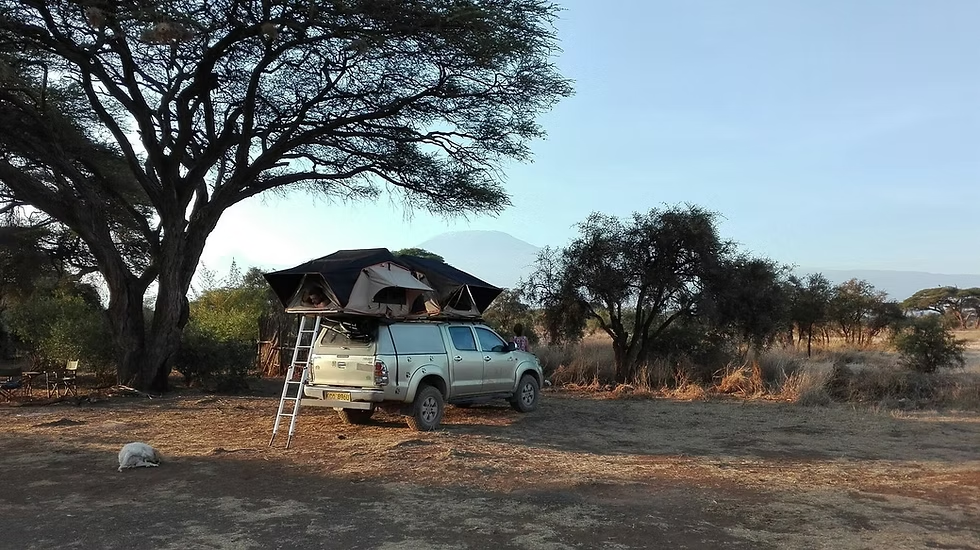
Tarangire is celebrated for its ancient, towering baobab trees — often called the ‘upside-down trees’ — that dominate the landscape and give the park a prehistoric, otherworldly atmosphere. The park also supports one of the largest elephant populations in East Africa, with herds sometimes numbering in the hundreds during the peak dry season. Lions, leopards, cheetahs, African wild dogs, oryx, and over 550 recorded bird species complete a biodiversity portfolio that makes Tarangire a must-visit for serious wildlife enthusiasts.
For travellers seeking an authentic bush experience away from the crowds, Tarangire’s public campsites offer an unbeatable opportunity to sleep under a canopy of stars, surrounded by the sights and sounds of the African wilderness.
Understanding Public Campsites in Tanzania’s National Parks
Tanzania National Parks (TANAPA) manages two broad tiers of accommodation within its parks: Special Campsites (exclusive-use, private, bookable by a single group) and Public Campsites (shared, open to multiple parties simultaneously, and generally more affordable). This guide focuses on the public campsites within Tarangire National Park.
Public campsites are designated, cleared areas within the park where multiple independent travellers or tour groups may camp at the same time. They offer a genuine wilderness experience with minimal infrastructure — visitors bring everything they need. These sites are popular with budget travellers, overlanders, self-drive tourists, and research or student groups seeking an immersive, low-cost stay in the park.
Key Characteristics of Public Campsites
- Shared spaces: multiple groups may occupy the same site simultaneously
- Minimal permanent infrastructure: basic or no ablution facilities at some locations
- No electricity supply at the campsite itself
- Campers must be fully self-sufficient with food, water, camping gear, and fuel
- Lower fees than special campsites, lodges, or tented camps
- Bookable in advance or on arrival at the main park gate, subject to availability
- Open to all visitors: self-drive tourists, organised tour groups, and overlanders
Location and Access to Tarangire National Park
| Country | Tanzania |
| Region | Manyara Region, Northern Tanzania |
| Nearest City | Arusha (~118 km / approx. 1.5 to 2 hrs by road) |
| Main Gate | Kuro Gate (Primary Entrance) |
| GPS Coordinates | 3 degrees 51 S, 36 degrees 1 E (approximate park centre) |
| Park Size | Approximately 2,850 km squared |
| Altitude Range | 1,000 m to 1,600 m above sea level |
Getting There
The main Kuro Gate entrance to Tarangire National Park is reached via the Arusha-Dodoma highway (A104). From Arusha, drive south-west past the town of Makuyuni and turn left (south) onto the B144 road towards Kolo and Kondoa. The gate junction is well-signposted approximately 7 km along this turn-off. The road from Arusha to Kuro Gate is mostly tarmacked and accessible by standard 2WD vehicles, though a 4WD is strongly recommended for movement within the park, especially during and after the rainy season.
Several campsites lie deeper inside the park along dirt tracks that can become challenging in wet conditions. Visitors arriving by public transport can take a daladala or bus to Makuyuni and arrange onward transport or join a budget camping tour from Arusha.
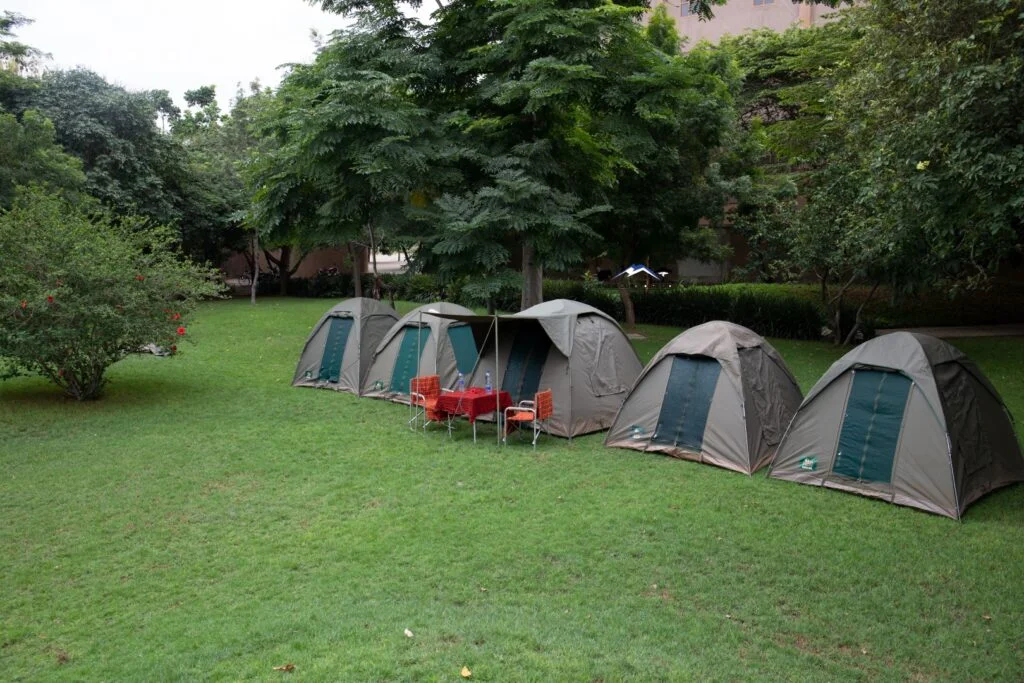
Public Campsites in Tarangire National Park
Tarangire National Park has several designated public campsites scattered across the park, each offering a different experience in terms of scenery, wildlife proximity, and access. The number and status of campsites may be updated by TANAPA from time to time; visitors are advised to confirm availability when booking. Below is a detailed guide to the main public campsites.
Boundary Hill Public Campsite
Boundary Hill is one of the most popular and accessible public campsites in Tarangire, making it an excellent choice for first-time visitors and those arriving in standard vehicles. Situated near the northern part of the park not far from the Kuro Gate entrance, the campsite is set on slightly elevated ground that offers open, sweeping views across the surrounding bush.
| Location | Northern Tarangire, near Kuro Gate |
| Terrain | Elevated open bush, scattered acacia and baobab trees |
| Distance to Gate | Approximately 10 to 15 km from Kuro Gate |
| Road Condition | Accessible; some tracks may require 4WD in wet season |
| Capacity | Multiple groups (shared site) |
| Facilities | Basic pit latrines; no running water or electricity |
Wildlife at Boundary Hill
The elevated position gives campers a natural vantage point. Elephants are regular nocturnal visitors to the area, and guests can expect zebra, wildebeest, impala, and giraffe during daylight hours. Lions have been recorded in the vicinity, and the bird life is exceptional, including lilac-breasted rollers, yellow-collared lovebirds, and various raptors circling the thermals above the hill.
Campsite Facilities
- Basic pit latrines (bring your own toilet paper)
- No piped water — campers must carry all drinking and washing water
- No shower facilities — bucket showers can be arranged if carrying water
- Fire pits (bring your own firewood or buy near the gate)
- No camp kitchen — bring a portable gas stove or cooking equipment
Sunsets at Boundary Hill are spectacular, and the dark skies at night offer phenomenal stargazing. The camp often fills up during peak season (July to October), so advance booking is advisable.
Silale Public Campsite
Silale Public Campsite is located near the Silale Swamp in the central-western sector of Tarangire National Park. The swamp is a permanent water source and one of the park’s most prolific wildlife magnets, making this campsite particularly rewarding for wildlife observation right from the tent.
| Location | Central-western Tarangire, near Silale Swamp |
| Terrain | Flat open woodland, close to swamp habitat |
| Distance to Gate | Approximately 35 to 45 km from Kuro Gate via park roads |
| Road Condition | 4WD essential; tracks can be muddy in wet season |
| Capacity | Multiple groups (shared site) |
| Facilities | Basic facilities; long-drop toilet |
Wildlife at Silale
Silale Swamp is arguably the single best wildlife-watching location in the entire park. Huge herds of buffalo — sometimes numbering in the thousands — congregate here during the dry season alongside massive elephant groups. Hippo inhabit the deeper pools, and lions and leopards regularly ambush prey at the water’s edge. The swamp edges are also home to greater kudu and fringe-eared oryx. Birders will find the swamp irresistible, with open-billed storks, African spoonbills, herons, and kingfishers in abundance.
Campsite Facilities
- Long-drop toilet (bring your own toilet paper and hand sanitiser)
- No water supply — self-sufficiency essential
- Fire rings — use only designated fire areas
- No electricity or lighting
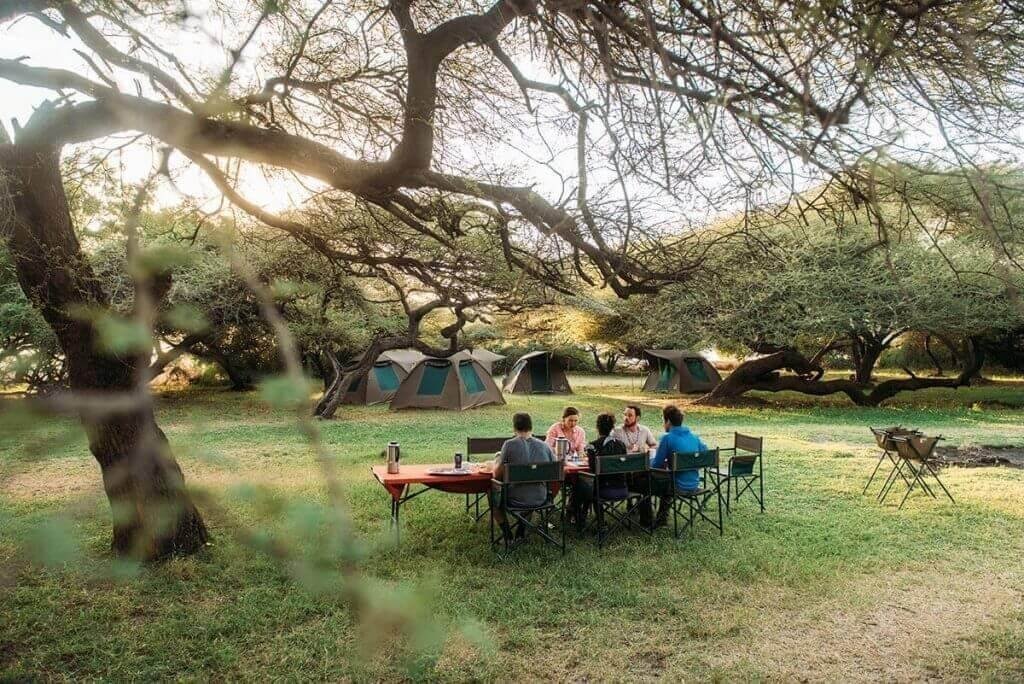
The remoteness of Silale is both its greatest attraction and its primary challenge. Campers must arrive with all provisions, including enough fuel for the drive back to the gate. Wildlife can wander directly through the campsite at night — sleeping in a tent at Silale is a genuinely wild experience. Rangers advise staying in your tent after dark unless there is an urgent need to move.
Lemiyon Public Campsite
Lemiyon Public Campsite sits in the southern portion of Tarangire National Park, in an area characterised by dense miombo woodland, open grasslands, and the iconic baobab groves that define the Tarangire landscape. This campsite is less frequented than Boundary Hill or Silale, offering a quieter, more solitary bush experience.
| Location | Southern Tarangire, Lemiyon area |
| Terrain | Mixed miombo woodland and baobab landscape |
| Distance to Gate | Approximately 60 to 70 km from Kuro Gate |
| Road Condition | 4WD strongly recommended; roads are rough and remote |
| Capacity | Multiple groups (shared site) |
| Facilities | Very basic; long-drop toilet |
Wildlife at Lemiyon
The southern circuit of Tarangire around Lemiyon is renowned for providing an off-the-beaten-track safari experience. African wild dogs are occasionally encountered here — one of the rarest and most endangered predators on the continent. Greater kudu, with their magnificent spiralling horns, are relatively common in the thick woodland. Leopards favour the dense vegetation, and the area supports healthy populations of plains zebra and wildebeest. The bird life reflects the miombo biome, with species such as Bohm’s bee-eater, miombo pied barbet, and Stierling’s woodpecker rewarding patient birders.
Campsite Facilities
- Long-drop latrine (self-contained toilet roll required)
- No potable water at the site
- Campfire area designated
- No park staff permanently stationed at the campsite — carry emergency communications
Due to the distance from the gate and the rough road conditions, Lemiyon is best suited to experienced overlanders or campers with reliable 4WD vehicles, ample fuel reserves, and full self-sufficiency. The remoteness translates into extraordinary solitude and an intimate connection with the bush that busier sites cannot replicate.
Gursi Public Campsite
Gursi Public Campsite is located in the central-eastern section of Tarangire, within a beautiful landscape of rolling hills and open savannah that offers panoramic views and excellent game-viewing drives in the surrounding area. The campsite sits at a slightly higher elevation, providing a natural breeze that offers welcome relief in the dry-season heat.
| Location | Central-eastern Tarangire |
| Terrain | Rolling hills, open savannah |
| Distance to Gate | Approximately 25 to 35 km from Kuro Gate |
| Road Condition | 4WD recommended |
| Capacity | Multiple groups (shared site) |
| Facilities | Basic latrines; fire pits |
Wildlife at Gursi
The Gursi area is excellent for elephant sightings, particularly in the early morning and late afternoon when herds move between the inland plains and the Tarangire River. The open terrain makes it easy to spot predators at a distance, and cheetahs have been recorded hunting on the grasslands near the campsite. Giraffes are a constant backdrop, and the site is surrounded by the magnificent, prehistoric baobab trees that Tarangire is famous for.
Campsite Facilities
- Basic pit latrine facilities
- Designated fire pits — fires must be extinguished before sleeping
- No water available on site
- No electricity or camp lighting
Poacher’s Hide Public Campsite
With a name that reflects the area’s colonial-era history of anti-poaching activities, Poacher’s Hide Public Campsite is a rustic but atmospheric site in the south-western part of Tarangire. The campsite is adjacent to terrain that was historically used by rangers to monitor and intercept ivory poachers, and it carries an interesting historical dimension alongside its excellent wildlife credentials.
| Location | South-western Tarangire |
| Terrain | Mixed bush, acacia thickets, seasonal riverine areas |
| Distance to Gate | Approximately 50 to 60 km from Kuro Gate |
| Road Condition | 4WD required; tracks are challenging in wet season |
| Capacity | Multiple groups (shared site) |
| Facilities | Very basic; pit latrine only |
Wildlife at Poacher’s Hide
Lions are frequently reported near this campsite, particularly at night. Elephants move through the area en route to seasonal water sources. The thick acacia scrub provides excellent leopard habitat, and sightings of this elusive cat are not uncommon. Cape buffalo, zebra, impala, dik-dik, and the diminutive steenbok round out the regular mammal checklist for the area.
Campsite Facilities
- Single pit latrine facility
- No running water
- Natural clearing for tenting; campers set up freely within designated zone
- No camp management staff resident at the site
Park Entry Fees and Campsite Fees
All visitors to Tarangire National Park must pay the standard TANAPA entrance fees in addition to campsite fees. Fees are subject to change and must be confirmed directly with TANAPA or via the Tanzania National Parks website prior to travel. Fees are quoted in USD and must be paid in foreign currency by international visitors.
Entry Fees (per person per 24 hours)
| Category | Fee (USD) | Notes |
| Non-Resident Adult | $53.00 | International visitors |
| Non-Resident Child (5 to 15 yrs) | $20.00 | Children under 5 free |
| East African Resident Adult | $25.00 | Valid EA residency proof required |
| East African Resident Child | $10.00 | Ages 5 to 15 |
| Tanzanian Citizen Adult | TZS 15,000 | Tanzanian nationals |
| Tanzanian Citizen Child | TZS 5,000 | Ages 5 to 15 |
Public Campsite Fees (per person per night)
| Category | Fee (USD) | Notes |
| Non-Resident Adult | $30.00 | Approximate — confirm with TANAPA |
| Non-Resident Child (5 to 15) | $10.00 | Approximate — confirm with TANAPA |
| East African Resident Adult | $20.00 | Approximate — confirm with TANAPA |
| Tanzanian Citizen Adult | TZS 10,000 | Approximate — confirm with TANAPA |
Note: Vehicle fees also apply. Non-resident vehicle fees are typically USD 40 to 60 per vehicle. Rescue fees and other levies may also apply. Always confirm the complete fee schedule with TANAPA before your visit as fees are reviewed periodically.
Booking and Payment
Campsites can be booked through the TANAPA online booking portal (www.tanzaniaparks.go.tz), through licensed tour operators, or in person at the park gate. Early booking is strongly recommended for the peak dry season (July to October) as public campsites do fill up, particularly at Boundary Hill.
- Payment accepted: USD cash, major credit/debit cards (Visa and Mastercard) at the gate
- Online payments: available via the TANAPA booking portal
- Receipts must be retained and presented if requested by rangers within the park
- Cancellations: check TANAPA’s current cancellation and refund policy before booking
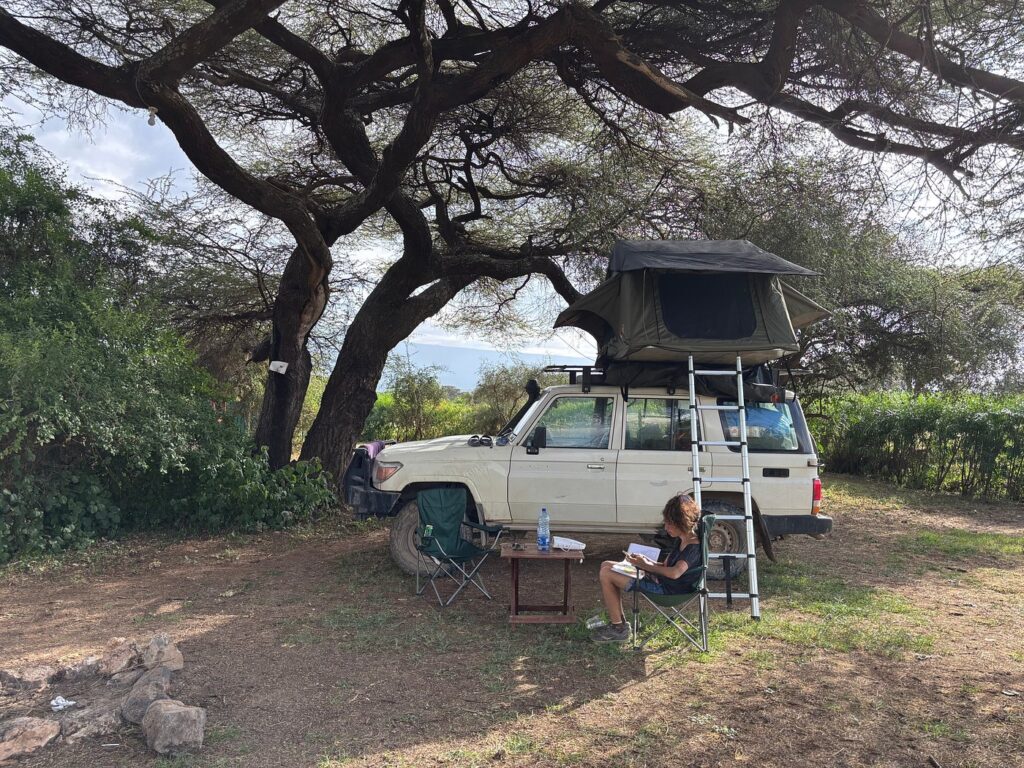
What to Bring: Complete Packing Checklist
Public campsites in Tarangire offer minimal infrastructure. Campers must be entirely self-sufficient. Below is a comprehensive checklist organised by category.
Shelter and Sleeping
- A sturdy, freestanding tent with a full fly sheet and sealed groundsheet
- Sleeping bag appropriate for temperatures down to 10 degrees C (nights can be cool June to August)
- Sleeping mat or inflatable sleeping pad for insulation and comfort
- Tent repair kit (patches, spare pegs, seam sealer)
- Tarpaulin for extra shade or rain shelter over cooking area
Water and Food
- Minimum 10 to 15 litres of drinking water per person for a 2-night stay
- Additional water for cooking and washing (at least 5 litres per person per day)
- Water purification tablets or a filter as backup
- Portable gas camping stove and sufficient gas canisters
- Pots, pans, utensils, cutting board, and a sharp knife
- A cool box or insulated bag with ice for perishables
- All food pre-prepared or easy to cook in the field; stock up in Arusha
- Washing-up basin, biodegradable soap, and a sponge
- Rubbish bags — leave no trace; all waste must be carried out
Safety and Medical
- A comprehensive first-aid kit including antiseptic, bandages, and prescription medications
- Anti-malarial prophylaxis (consult your doctor before travel)
- High-factor insect repellent (DEET-based, 30 to 50% concentration)
- Permethrin-treated clothing or mosquito net for sleeping
- Sunscreen (SPF 50+) and lip balm with UV protection
- Emergency whistle and a fully charged mobile phone (partial coverage via Vodacom and Airtel)
- Satellite communicator or personal locator beacon (PLB) for remote sites such as Lemiyon
Lighting and Power
- Headtorch with spare batteries for each member of the group
- A reliable camp lantern for communal areas
- Power bank(s) for charging phones and cameras
- Solar charging panel (recommended for stays of 2 or more nights)
Clothing and Personal Gear
- Neutral-coloured safari clothing (khaki, olive, tan — avoid white and bright colours)
- Long-sleeved shirts and long trousers for evening insect protection
- A warm fleece or jacket for cool mornings and evenings
- Comfortable closed-toe walking shoes or lightweight hiking boots
- Sun hat with full brim and sunglasses with UV protection
- Binoculars (minimum 8×42 for wildlife and bird watching)
- A wildlife field guide to East African mammals and birds
- Camera with telephoto lens (200 to 600mm recommended for wildlife photography)
Vehicle Essentials
- A 4WD vehicle with high clearance (non-negotiable for most sites in the wet season)
- Full spare tyre (some recommend two spares for remote circuits)
- Basic tool kit: tyre jack, lug wrench, jumper cables, tow rope, shovel
- Enough fuel for the entire planned route plus a 20% reserve (carry jerry cans)
- Vehicle recovery boards or sand ladders for soft ground
- Up-to-date paper map of the park (GPS is unreliable in parts of the park)
Best Time to Visit
Tarangire National Park is a year-round destination, but the experience varies considerably depending on the season. Understanding the seasonal rhythm is key to planning the most rewarding camping trip.
Dry Season — June to October (Peak Wildlife Viewing)
This is the best time to camp in Tarangire. As waterholes and seasonal rivers dry up across the wider ecosystem, wildlife converges on the Tarangire River and perennial swamps in extraordinary numbers. Elephant herds of 200 to 300 animals are not unusual. The bush is dry and open, making wildlife visibility excellent. Temperatures are pleasant during the day (25 to 30 degrees C) but can drop to 12 to 15 degrees C at night.
- Pros: maximum wildlife concentration, dry roads (generally accessible near the gate), excellent visibility through sparse vegetation, comfortable temperatures
- Cons: peak-season crowds at popular sites, higher demand for campsites, dusty conditions
Short Rains — November to December
The short rains bring life back to the bush. Migratory wildlife disperses away from the river as water becomes available throughout the ecosystem. The landscape transforms into vivid green. Newborn animals attract predators, and the birdlife explodes in diversity as migratory species arrive. Roads can become challenging after heavy rain.
- Pros: lush green landscapes, excellent birding, fewer tourists, lower fees
- Cons: some park tracks impassable after heavy rain, wildlife more dispersed
Long Dry — January to February
A brief dry interlude between the two rainy seasons. Vegetation remains relatively green, wildlife is active, and visitor numbers are lower than the peak dry season. This is an underrated time to visit, particularly for birders.
Long Rains — March to May
The long rains bring the heaviest precipitation of the year. Some areas of the park become inaccessible, and campsites may be temporarily closed due to flooding. Only experienced adventurers with full expedition vehicles should attempt camping during this period.
- Pros: dramatic landscapes, very few tourists, lowest park fees, outstanding bird diversity
- Cons: many tracks impassable, risk of getting stuck, some campsites may be closed
Wildlife Highlights
Tarangire is one of Africa’s great wildlife destinations. Camping publicly within the park provides a rare intimacy with the ecosystem that no lodge or tented camp can replicate.
Elephants
Tarangire supports one of the largest elephant populations in Tanzania, with estimates of over 3,000 individuals using the ecosystem. During the dry season, groups of 50 to 300 elephants can be seen moving to and from the river in a steady procession. Public campsite visitors frequently have elephant herds pass within metres of their tents at night — an extraordinary and occasionally nerve-wracking experience.
Lions and Large Predators
Lions are well-represented across the park and are regularly encountered on morning game drives from public campsites. Leopards inhabit the dense riverine vegetation and rocky kopjes, while cheetahs favour the open grasslands of the Gursi and Lemiyon areas. African wild dogs are a rare but remarkable sighting, with a small but growing population within the park’s southern circuit.
The Bird Life
With over 550 recorded species, Tarangire is a world-class birding destination. Key species include the yellow-collared lovebird (endemic to north-central Tanzania), ashy starling, rufous-tailed weaver, grey-breasted spurfowl, and a variety of raptors including the martial eagle and bateleur. The swamps attract exceptional congregations of water birds.
Other Notable Species
- African buffalo — enormous herds at Silale Swamp
- Fringe-eared oryx — distinctive dry-country antelope
- Greater kudu — iconic spiral-horned antelope of the woodland
- Reticulated and Masai giraffe
- Hippo — permanent residents of the Tarangire River
- Striped and spotted hyena
- Black-backed and side-striped jackal
Safety Guidelines for Public Campsite Visitors
Camping in Tarangire National Park means sharing space with dangerous wild animals. Adherence to safety guidelines is not optional — it is essential for the well-being of both visitors and wildlife.
General Safety Rules
- Never leave food unattended outside of your vehicle or a sealed container — this attracts hyenas, baboons, and vervet monkeys
- Do not walk outside the campsite perimeter after dark; wildlife is most active at night
- Always carry a torch and make noise when moving between tents and the latrine at night
- Do not approach, feed, or attempt to photograph wildlife at close range on foot
- Keep tent zips fully closed at all times to prevent scorpions, snakes, and insects from entering
- Store shoes inside the tent or shake them out thoroughly before putting them on
- If an elephant approaches, do not run — stand still, back slowly into your tent, and remain calm
- Inform park rangers at the gate of your intended campsite and expected departure
Fire Safety
- Only light fires in designated fire pits or rings
- Never leave a fire unattended
- Ensure fires are completely extinguished before sleeping
- Do not light fires during periods of high wind or in the dry season when vegetation is tinder dry
- The use of fireworks, sky lanterns, or pyrotechnics is strictly prohibited
Medical Preparedness
Malaria is present in Tarangire National Park. All visitors must consult a travel medicine specialist before departure and begin an appropriate anti-malarial prophylaxis regimen. Use insect repellent from dusk, sleep under a treated mosquito net, and wear long sleeves and trousers in the evening. The nearest hospitals of note are in Arusha. There is no medical facility within the park. Carry a comprehensive first-aid kit and ensure at least one group member holds a current first-aid qualification.
Environmental Responsibility and Leave No Trace
Tarangire National Park is a protected wilderness area. Every visitor has a responsibility to minimise their environmental impact and ensure the park remains pristine for future generations and for the wildlife that depends on it.
Leave No Trace Principles
- Carry out all rubbish — there are no waste collection services at public campsites
- Do not bury or burn plastic, synthetic materials, or food waste
- Use only biodegradable, eco-friendly soaps, shampoos, and cleaning products
- Wash dishes and carry out personal hygiene at least 50 metres from any water source
- Avoid collecting firewood from living trees — use dead wood only, or bring charcoal
- Do not pick plants, collect rocks or soil, or disturb natural features
- Drive only on established tracks — off-road driving causes lasting erosion
- Turn off vehicle engines when stationary at wildlife sightings
- Keep noise to a minimum, especially at night, to avoid disturbing wildlife
Tanzania’s national parks are among the last great wilderness areas on earth. The fees paid by camping visitors directly fund anti-poaching patrols, ranger salaries, habitat management, and community development initiatives that protect the ecosystem.
Nearby Attractions and Combining with Other Parks
Tarangire is ideally positioned as part of a longer northern circuit safari. The following attractions and parks can be combined with a Tarangire camping itinerary.
Lake Manyara National Park
Located approximately 75 km north-west of Tarangire, Lake Manyara is famous for its tree-climbing lions and vast flocks of flamingos on the alkaline lake shore. A half-day visit to Manyara pairs beautifully with a night at Tarangire. The park is more compact and fully accessible in 2WD.
Ngorongoro Conservation Area
The Ngorongoro Crater, often called the Eighth Wonder of the World, lies approximately 180 km west of Tarangire. Descending into the 600-metre-deep caldera to view the densest concentration of wildlife in Africa is a once-in-a-lifetime experience. Public campsites are also available on the crater rim.
The Serengeti
Travelling north and west from Ngorongoro brings visitors to the Serengeti National Park, home to the world-famous Great Migration. Self-drive camping in the Serengeti’s public campsites can be combined with Tarangire to create an epic overland adventure.
Arusha National Park
For visitors based in Arusha, the compact Arusha National Park on the slopes of Mount Meru offers an excellent day trip or overnight camping option. Colobus monkeys, buffalo, and flamingo-filled Momela Lakes are highlights.
Practical Tips for a Successful Camping Trip
- Book early: Tarangire’s public campsites fill rapidly during July to October. Book at least 2 to 4 weeks ahead via TANAPA or a licensed agent
- Arrive by 4:00 PM: park gates close at sunset. Driving in the park after dark is prohibited and extremely dangerous
- Fuel up in Arusha: there is no fuel available inside the park. Carry sufficient fuel for all planned game drives plus a reserve
- Carry USD cash: while card payments are increasingly accepted at the gate, cash remains the most reliable payment method
- Self-drive vs. guided: self-drive campers must navigate using paper maps as GPS signal is unreliable. Guides provide invaluable local knowledge
- Pack out all grey water: do not dispose of washing water directly near tents — pour it at least 50 metres away from sleeping areas
- Respect other campers: public campsites are shared spaces. Keep noise low after 9:00 PM
- Register your presence: always check in with the park gate rangers upon arrival and departure
- Purchase a TANAPA park map: available at the main gate, showing campsite locations and road networks
Contact Information and Useful Resources
| TANAPA Head Office | PO Box 3134, Arusha, Tanzania |
| Main Phone | +255 27 250 3471 / +255 27 250 1930 |
| info@tanzaniaparks.go.tz | |
| Website | www.tanzaniaparks.go.tz |
| Online Booking | www.tanzaniaparks.go.tz/booking |
| Kuro Gate (Tarangire) | Contact via TANAPA Head Office |
| Emergency Services | Tanzania Police: 112 | Ambulance: 115 |
| Nearest Hospital | Arusha Lutheran Medical Centre (ALMC), Arusha |
Happy Camping in Tarangire!