 info@gorillatrekkinginafrica.com

Gorilla Mating – Courtship, Reproduction and Breeding
Gorilla Mating, What is the mating process of gorillas? Gorillas are the largest terrestrial apes currently inhabiting the Earth. They inhabit the woods of East and Central Africa. Gorillas are categorized into two primary species: the Western Gorilla and the Eastern Gorilla. Each species is categorized into two subspecies, resulting in a total of four gorilla subspecies: the western lowland gorilla, the cross river gorilla, the eastern lowland gorilla (Grauer’s gorilla), and the mountain gorilla. Further information is available regarding the various types and subspecies of gorillas. Gorillas are the closest cousins to humans, behind bonobos and chimpanzees. They possess around 98% of human DNA. Gorillas consume fruits, leaves, and tree shoots in the deep woods of Africa. They are not carnivorous but will consume particular insects.
Western Lowland Gorilla Reproduction: Gorillas inhabit groups with as many as 30 members. A gorilla troop typically comprises one dominant male silverback, additional males, youngsters, females, and newborns. Prolonged interaction with other groups is exceedingly rare among most gorilla species, although it has been documented in western lowland gorillas. The dominant silverback regulates the behavior of other individuals. He dictates the actions to be undertaken and their timing. Members of a gorilla group are often tranquil, enabling the silverback to concentrate on confronting threats from predators, such as leopards, as well as solitary males and silverbacks from rival groups. In the presence of additional silverbacks within the group, they will assist him in confronting intruders and other dangers. You might find it worthwhile to explore our gorilla safaris and the expenses associated with gorilla trekking in Uganda or Rwanda.
Mating and Reproduction
What is the mating process of gorillas? To comprehend the evolution and behavior of our species, it is essential to examine the dynamics of our closest relatives, the great apes, in their natural habitats. The mating habits of gorillas are influenced by various circumstances, necessitating an understanding of their reproductive cycle first. Female gorillas attain sexual maturity at approximately 10 to 12 years of age. The ovulation cycle commences at approximately 6 years of age; however, fertility is not attained until maturity at 10 years.
Mating of Silverback Gorillas
The dominant silverback possesses exclusive access to the females. The majority of males depart from the group upon reaching adulthood. Upon departing from their paternal group, they remain solitary or associate with other bachelor males until they can usurp females from rival groups. Females associated with the silverback will depart to prevent inbreeding. Research on mountain gorilla groups indicates that when females connected to the silverback remain with their natal group for extended periods, they strategically evade the dominant silverback/father to prevent inbreeding. The female prefers to mate with the less dominant males in the group rather than with her father. Even when compelled, the likelihood of a gorilla conceiving from the father remains minimal, except in Cross River gorilla populations where inbreeding is more prevalent. This inbreeding may result from the significant decline in the overall population of Cross River gorillas. Neither females nor males possess the privilege of selecting new families due to their scarcity and remoteness from one another.
Mating in Gorillas
Reproduction and procreation transpire year-round. The dominant silverback copulates with all females in the group upon the onset of their ovulation. The physical signs indicating a female gorilla’s readiness to mate are not as apparent as those observed in chimpanzees. Typically, the female initiates the mating procedure after she is prepared. When a female gorilla is prepared to mate, she will gradually approach the dominant male, maintain prolonged eye contact, and pucker her lips. If the guy does not answer, she will draw his attention by striking the ground while extending her hand towards him. If the dominant male remains preoccupied or unresponsive after multiple efforts, she may become receptive to mating with other males in the group.
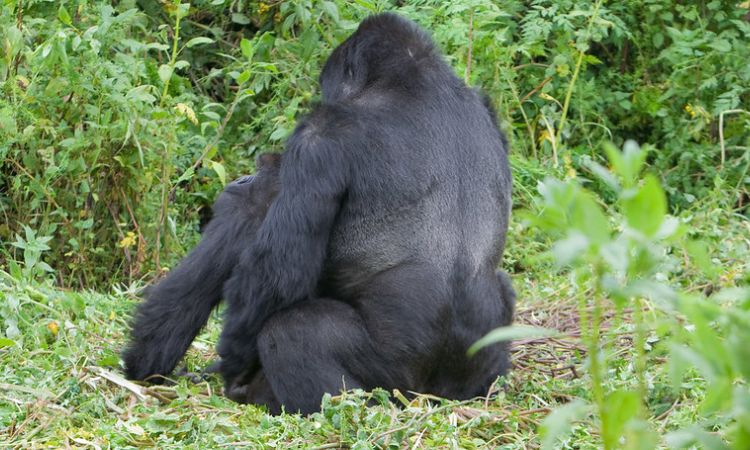
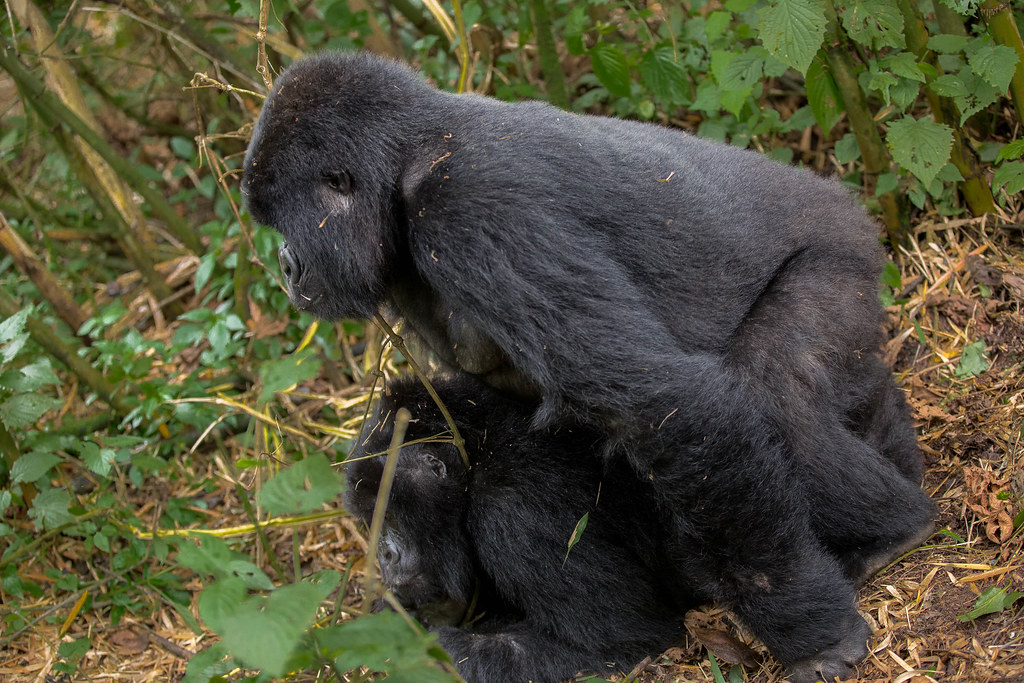
The dominant silverback may initiate mating by approaching the female, touching her, or performing a display followed by a grunt. If the female exhibits hesitation or resistance, the silverback may attack and lightly strike her to compel compliance. A 1982 study revealed that a silverback gorilla may exhibit aggression towards a specific female to compel her to commence mating, even in the absence of estrus. Copulation transpires on the ground, with the silverback positioned atop the smaller female. The female seems to kneel as she concludes the copulation process. It was previously believed that face-to-face copulation was exclusive to bonobos and humans; nevertheless, certain gorilla species, including mountain and western lowland gorillas, have been documented engaging in sexual activity while maintaining direct eye contact.
Gorilla Mating and Reproductive Behavior Sexual activity for competitive and recreational purposes is not uncommon among gorillas. Female gorillas often engage in sexual behavior to secure the approval of the dominant silverback or to inhibit his mating with other females. Instances have occurred where pregnant females copulate with the silverback to diminish the likelihood of other viable females reproducing. The attention bestowed upon a fertile or ovulating female by the silverback often incites competition among the females within the group. In all gorilla subspecies, the dominant silverback favors copulation with older, more experienced females. Observations indicate that male western gorillas engage in mating with all females within the group, irrespective of their fertility status. Silverbacks of mountain gorillas selectively mate with only viable females. Are you interested in gorilla trekking in Rwanda? Examine this one-day Rwanda Gorilla Tour package. The options include a 2-Day Rwanda Gorilla Trekking experience or an extended 3-Day Rwanda Gorilla Tour package.
It is crucial to recognize that while silverbacks establish robust and enduring social connections with the females in their group, they may depart for another group when the silverback ages or approaches the conclusion of his reproductive years. Some will remain faithful to the prevailing silverback but will affiliate with another group should he perish. Females have been documented altering groups multiple times throughout their lifespan. They do this action to safeguard their future progeny. Should the dominant silverback perish before to weaning, the infant will be eliminated by the next male.
Courtship and Reproduction
What occurs subsequent to copulation? Upon successful mating, the female will undergo a gestation period of approximately 8.5 months. Female gorillas typically give birth approximately every four years. Upon conception, the morphology of the abdominal protrusion alters, and the mammary glands enlarge, albeit less markedly than in humans. On the day of parturition, the female exhibits signs of discomfort, refrains from feeding, and engages in extensive stretching. She typically gives birth in the morning. A female gorilla typically gives birth to approximately 8 offspring during her lifetime, although only a limited number will reach adulthood. Males do not engage in active caregiving, and the infant relies only on the mother for survival. The silverback’s duty is to facilitate the acceptance of newborns by other group members. He will safeguard them from any harassment by group members. The mother will remain near the dominant silverback for additional protection throughout the initial five months.
The female transports the newborn using her hands for the initial four months. In the initial four months, the infant breastfeeds from the mother approximately every three hours. After four months, the infant will begin to ride on the mother’s back. It will start to exhibit sufficient confidence to distance itself a few meters from the mother for short intervals. At twelve months of age, it will possess sufficient confidence to distance itself five meters from the mother. In the second year, the separation between mother and baby intensifies, leading to more time spent apart. The mother weans the child at 30 months. Typically, infants will breastfeed until approximately four years of age. Upon weaning, the newborn begins to construct its own nest, coinciding with the mother’s resumption of ovulation. Are you interested in witnessing wild mountain gorillas in Uganda? We provide an intriguing 1-Day gorilla trekking itinerary in Uganda, as well as an extended 2-Day gorilla trekking program. Individuals with additional time may choose the 3 Days Bwindi Gorilla Trekking Package. For individuals seeking extended animal adventures, choose our 8-Day Primates and Masai Mara Safari.
The mortality rate in gorillas is significant, with about fifty percent failing to reach adulthood. The prolonged dependence on their mothers is a contributing factor to this low mortality rate. The alteration of group dynamics and the introduction or ascendance of a new silverback poses a lethal threat to all nursing infants. The silverback typically eliminates all infants to successfully mate with the adult females.