 info@gorillatrekkinginafrica.com

Difference and Similarities Between Gorillas and Chimpanzees
Difference and Similarities Between Gorillas and Chimpanzees, Individuals intending to view wild primates in Africa will inevitably contemplate the distinctions they may confront among various species. This is especially true when their expedition includes the observation of gorillas and chimpanzees. Many individuals conflate gorillas and chimpanzees, necessitating an examination of their distinguishing characteristics. Gorillas and chimpanzees are members of the Hominidae family. They are categorized as great apes with humans, orangutans, and bonobos. Gorillas and chimpanzees predominantly inhabit the equatorial region of Africa; nevertheless, their habitats, distributions, and population densities vary significantly.

Distinction between gorillas and chimps
This article focuses on the distinctions between gorillas and chimpanzees. A significant distinction between the two primates is that gorillas function within more coherent terrestrial family units. Conversely, chimpanzees establish more dynamic, multi-male groups characterized by intricate social regulations. Gorillas are exclusively herbivorous, although chimpanzees have been documented consuming meat and engaging in cannibalism.
This article will examine the aforementioned characteristics in further detail and present other genetic, behavioral, and morphological distinctions to consider before encountering primates in the wild. You may find Colobus Monkeys or the exquisite golden monkeys of Africa intriguing.
Classification and Taxonomy:
As previously mentioned, gorillas and chimpanzees are both constituents of the Hominidae biological family. Bonobos, orangutans, and humans are all members of this group. The evolutionary lineages of gorillas and chimpanzees diverged markedly throughout time. Gorillas are classified within the genus Gorilla, specifically the Mountain gorilla family, which has two distinct species: the western gorilla (Gorilla gorilla) and the eastern gorilla (Gorilla beringei). Each gorilla species is subdivided into two subspecies. The western gorilla has two subspecies: the western lowland gorilla and the Cross River gorilla (Gorilla gorilla diehli). The Eastern gorilla has two subspecies: the Mountain gorilla (Gorilla beringei beringei) and the Eastern Lowland gorilla (Gorilla beringei graueri).
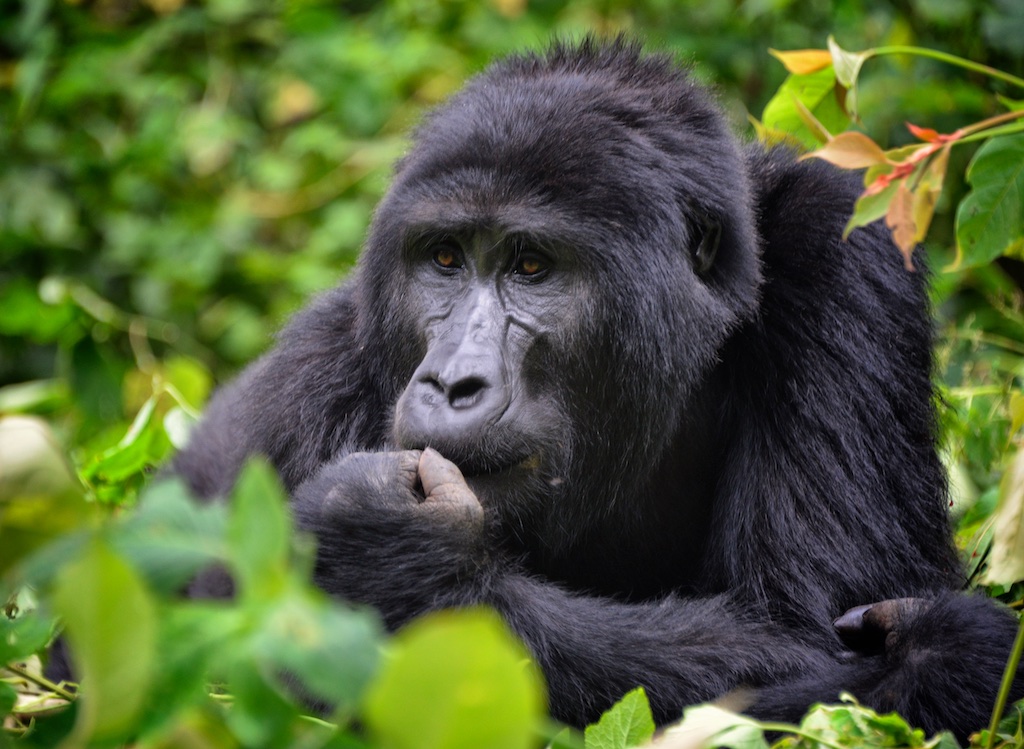
Mountain gorillas inhabit the Virunga Massif, encompassing Bwindi, Mgahinga, Virunga, and Volcanoes National Park. Western Lowland Gorillas inhabit Cameroon, the Republic of Congo, and Gabon. Eastern Lowland gorillas inhabit the Democratic Republic of Congo, whilst the Cross River Gorilla resides in Nigeria and Cameroon. It is essential to recognize that mountain gorillas typically inhabit regions of elevated altitude characterized by milder weather. The Western lowland gorilla thrives in humid lowland forests near rivers.
What is your opinion on chimpanzees?
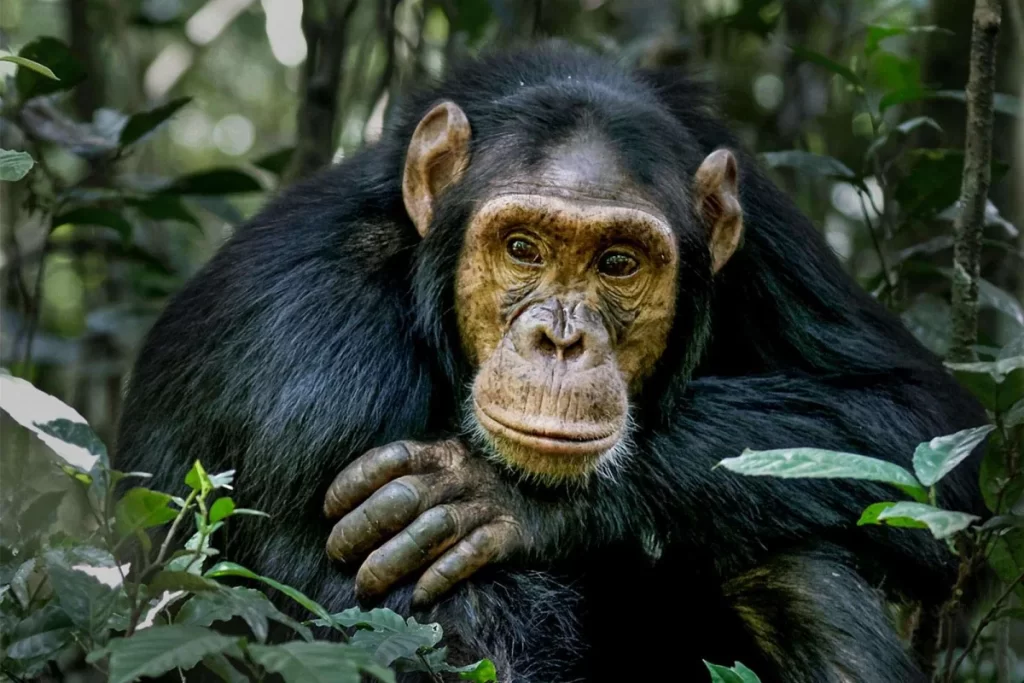
Chimpanzees are classified under the genus Pan and are predominantly located in 21 nations. Robust populations exist in Guinea, Tanzania, and Uganda. The Pan genus comprises two species: Bonobos and the common chimpanzee (Pan troglodytes). Four subspecies of the common chimpanzee have been identified. The species comprise the Central Chimpanzee, the Western Chimpanzee, the Eastern Chimpanzee, and the Nigeria-Cameroon Chimpanzee. The four acknowledged sub-species of the common chimpanzee exhibit variations in voice patterns, tool utilization, behavior, and anatomy.
Primatologists have established that humans share a closer genetic affinity with chimpanzees than with gorillas. The genomic similarity between chimpanzees and humans is 98.7 percent. The Human Genome Project announced these DNA sequencing data in 2005.
Physical Presence and Facial Characteristics:
In comparison to a chimpanzee, a gorilla has a notable constancy in facial expression. A gorilla occasionally alters its facial expression or orientation. Upon examining a gorilla or chimpanzee attentively, one will observe deep-set eyes, prominent nostrils, and a broad, flat muzzle. They exhibit more intense eye contact, which may seem electrifying. In contrast to a gorilla’s fixed facial expression, chimpanzees exhibit greater expressiveness. Their faces are more visible and continuously change. Chimpanzees have heightened vigilance in contrast to the tranquil disposition exhibited in gorillas. The ears, eyebrows, and lips of chimpanzees exhibit greater dynamism as they interact within a group. Chimpanzees exhibit heightened playfulness; yet, this can abruptly escalate into violent vocalizations without prior indication.
Physique, Weight, and Motion:
A fully grown silverback gorilla possesses a commanding presence and can weigh between 140 and 190 kilos. His chest is significantly broader than that of females. Females are distinctly The common chimpanzee is smaller in stature, weighing approximately 100 kilos. The gorilla’s upper torso possesses a significant portion of its strength. They possess robust forearms and powerful shoulders, attributable to their extensive time spent traversing the earth.
Chimpanzees possess considerable strength despite their relatively little physique. A male chimpanzee weighs between 40 and 60 kg in its natural habitat. Although not as substantial as gorillas, chimpanzees possess exceptional muscle density. A chimpanzee possesses three times the strength of a human of equivalent weight. A chimpanzee’s limbs are proportionately longer than its torso, and these elongated arms facilitate its arboreal locomotion. The elongated arms and limbs of chimpanzees facilitate tree climbing with a fluidity unparalleled by gorillas.
Mountain gorillas traverse with a measured and intentional gait due to their substantial mass. They may seem uneasy when traversing small paths or steep gradients. Juveniles ascend trees more often for play or foraging, whilst adults predominantly remain on the ground. Adults ascend trees solely to repose or to obtain delectable fruits. Chimpanzees predominantly inhabit the treetops but descend to scavenge in open areas. They can effortlessly traverse from tree to tree or grasp a tree with one arm. Observing gorillas and capturing photographs is significantly simpler than doing it with chimpanzees. Gorillas predominantly inhabit the ground, whereas chimpanzees often reside in trees. This significant distinction renders gorilla trekking typically more gratifying than chimpanzee hiking.
Sexual differentiation between males and females:
A female gorilla and a male gorilla are differentiated. The male possesses more developed pectoral and mandibular muscles. The most notable feature is perhaps the silver lining on the back of the male, which lends it the designation “silverback.” All aspects of a silverback gorilla demonstrate total dominance over the group. They exhibit behavior, movement, and vocalizations to signify complete authority over their group. The silverback seldom departs from his family to roam independently.
The distinction between male and female chimpanzees is less pronounced. The male chimp remains dominant but lacks complete authority over his group. Females may form alliances and are not invariably faithful to the dominant chimpanzee. He is perpetually striving to maintain his dominance within the group. His period of supremacy is frequently brief due to the dynamics of chimpanzee social structures. Chimpanzee groups frequently separate to forage independently for a while before reconvening after several days. By the time they reunite, numerous changes will have occurred. Females may opt to copulate with other males in the group anytime an opportunity presents itself. This behavior has been documented in certain gorilla families, however it is less common.
Social Hierarchy:
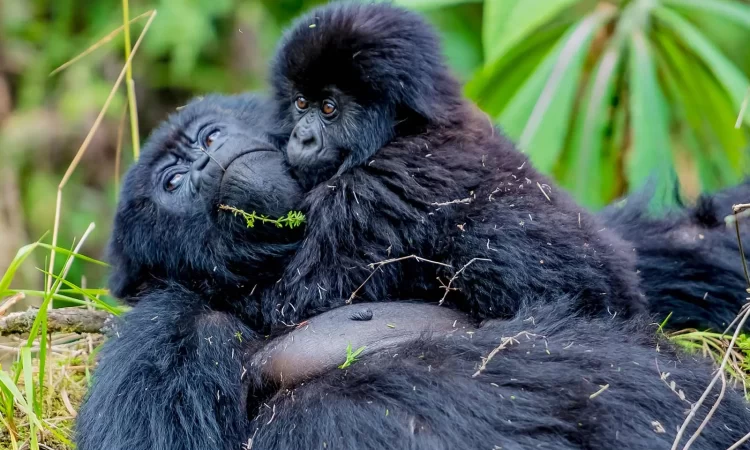
Chimpanzees inhabit more loosely structured familial groups, as previously mentioned. Groups may separate for days and subsequently reconvene. These divisions typically arise from food scarcity or conflicts. The dominating chimp lacks absolute authority over the group. He exerts control by forming alliances and using group dynamics within the Mountain gorilla family. He must continue to work to retain his status. He may become so desperate that he resorts to courting the females. These actions may be insufficient, since females might abandon him for other males providing greater security.
Gorilla groups are invariably governed by a singular dominant Silverback. He guarantees coherence within the group. He is the arbiter and guardian. He decides when to relocate, where to forage, and where to repose. Young guys are permitted to reside with their families temporarily until they establish their own households. A silverback may lose his family as he ages, weakens, and becomes unable to fight against males from rival groups.
Aging:
As gorillas mature, they exhibit indications of rigidity in their bodily joints. Grey hair is observable on the ordinary chimpanzee’s cheeks and arms. They exhibit less mobility and engage in extended times of rest relative to other group members. As the dominant silverback ages, he becomes susceptible to threats from external males seeking to usurp the group. A chimpanzee’s facial appearance will get increasingly patchy or darker with age. Dominant males may continue to associate with the group despite a decline in status. Indeed, they may preserve a significant portion of their rank by forming alliances or acquiescing to the dominance of more powerful and youthful males. Older chimpanzees can be identified by observing any irregularities in their movement or the absence of body parts.
Cooperation and Intelligence:
Observations indicate that chimpanzees are typically regarded as possessing superior intelligence. Gorillas may be regarded as more astute when one considers the stability of their communities, particularly among young western lowland gorillas. What factors contribute to the perception of chimps as more intelligent? Chimpanzees possess the capability to utilize many kind of tools. They will adopt a specific tool, instruct others, and enhance its application. Chimpanzees in Gombe have been observed extracting termites from mounds utilizing twigs. They have been documented utilizing stone hammers to break nuts in Guinea (Bossou) and extracting water from hollow trees with sponges fashioned from masticated leaves. These skills are then imparted to adolescents.
Gorillas utilize tools less frequently than chimpanzees. This may be attributed to their habitation in regions abundant in food resources. Chimpanzees are more prevalent and must adapt to regions with limited food resources. Western lowland gorillas in Nouabalé-Ndoki National Park have been recorded gauging the depth of swamps using sticks prior to crossing. A person was documenting the act of positioning a log over a marsh for traversal.

What are your thoughts on collaboration and social intelligence?
Chimpanzee communities function within a political framework. Coalitions are established and dissolved based on the existing circumstances. The dominant male sustains authority by forging allies rather than relying solely on coercion. Female Western lowland gorillas may copulate with multiple males in exchange for protection and sustenance. Grooming is prevalent in chimpanzee communities to uphold hygiene and reinforce bonds. Adult male chimpanzees consistently challenge the authority of the dominant individual. They will monitor for vulnerabilities and commence takeovers that are frequently transient.
All activities within a gorilla family are focused on the silverback. He decides when to nourish, repose, or relocate. His authority derives from his stature, charm, and composed manner. Chaos is unnecessary; nonetheless, he will demonstrate strength when group members periodically deviate from order. While female gorillas may seem meek, they exert influence on group dynamics in a more nuanced manner than chimpanzees. Young males (blackbacks) do not confront the silverback until they attain maturity, provided they are permitted in the group. When that occurs, individuals are frequently compelled to establish their own families.
Expression and Communication:
Gorillas primarily communicate through bodily movements. They will vocalize, grunt, growl, or thump their chest to convey a message. Chest-beating can serve as a straightforward show, indicating enthusiasm or presence in the area, and is not invariably a signal of peril. The Silverback use subdued vocalizations to orchestrate the group’s subsequent actions or to maintain order among its members.
Chimpanzees employ more complex communication mechanisms. They have been seen clasping hands during grooming to foster trust. Chimpanzee communication is distinguished by the utilization of facial expressions, gestures, and body postures. In extensive chimpanzee colonies, loud screams, hooting, and panting prevail. In the event of a confrontation between two individuals, the defeated party may vociferously summon assistance from allies.
Emotion, Cognition, and Retention:
Both gorillas and chimpanzees exhibit robust memory and learning capabilities. The western lowland gorilla and its emotions. Gorillas exhibit emotions through various expressions. They will remain near injured relatives, upset newborns, or visit locations where a family member passed away.
Chimpanzees and gorillas both retain memories of distinct faces, optimal feeding locations, and social hierarchies. As previously mentioned, chimpanzees exhibit superior intelligence. In captivity, their cognitive abilities have been observed to parallel those of youngsters. They possess the ability to analyze situations and predict outcomes in group dynamics, allowing them to formulate strategies for survival.
Conservation Status:
The several species of gorillas and chimpanzees are of conservation concern and face significant strain. Among all gorilla subspecies, Western lowland gorillas exhibit the largest populations. It is estimated that more than 250,000 persist in their natural habitat. Nonetheless, the majority reside in exceedingly isolated regions with inadequate infrastructure, rendering population monitoring quite challenging. Certain populations have not been reassessed for years. Furthermore, poachers exploit Western lowland gorillas for bushmeat, while concurrently, their environment is endangered by mining and logging activities. Their existence will hinge on the initiatives undertaken by the political leaderships of Gabon, Cameroon, and the Republic of Congo.
Approximately 1,000 mountain gorillas inhabit the woods of Uganda, Rwanda, and the Democratic Republic of Congo. The IUCN has classified them as endangered. While the majority of Western Lowland gorillas remain unmonitored, nearly all mountain gorillas are meticulously observed by Park Rangers, researchers, and veterinary teams involved in gorilla trekking. Tourists may readily reach habituated mountain gorilla families, thereby increasing funds and global awareness for their conservation. What about the Eastern Lowland Gorillas and the Cross-River Gorilla? All of these subspecies are at risk of extinction. Approximately 7,500 Eastern Lowland gorillas exist in the wild, but less than 300 Cross River gorillas endure.
Chimpanzees remain abundant in Africa; nonetheless, they have been designated as endangered due to their diminishing populations. Chimpanzees are endangered due to their proximity to human populations. They have experienced habitat loss owing to agricultural development, illegal logging, and mining activities. They are also victims of the pet trade and poaching for their meat. Considering that gorillas and chimpanzees inhabit impoverished nations with inadequate infrastructure, tourism represents the sole prospect for their conservation. The revenue produced from tourism incentivizes communities and governments to take all necessary measures to save primates. While tourism serves a stabilizing function, it may also represent a latent threat. Ailing tourists could readily transmit infections to a specific population with catastrophic consequences.