 info@gorillatrekkinginafrica.com

Mid – Range Tented Camps in Serengeti National Park
Mid – Range Tented Camps in Serengeti National Park , Tarangire National Park is one of Tanzania’s most underrated yet magnificent wildlife destinations, stretching across 2,850 square kilometres in the Manyara Region of northern Tanzania. Named after the Tarangire River — the park’s lifeblood and the only permanent water source in the area during the long dry season — this remarkable wilderness draws thousands of visitors annually for its extraordinary elephant populations, its iconic baobab-studded landscapes, and its diverse birdlife of over 550 recorded species.
Unlike the more crowded Serengeti or the dramatic Ngorongoro Crater, Tarangire offers a more intimate safari experience. The park is particularly famous for hosting the largest concentration of elephants in northern Tanzania, with herds of 200 or more animals congregating near the Tarangire River between July and October. Beyond elephants, the park shelters lions, leopards, cheetahs, African wild dogs, giraffes, zebras, wildebeest, buffalo, and the rare fringe-eared oryx and gerenuk.
Mid-range tented camps represent the sweet spot of the Tarangire accommodation spectrum — offering genuine bush immersion, professional guiding, and comfortable amenities without the stratospheric price tags of ultra-luxury lodges. Priced broadly between USD 200 and USD 500 per person per night (usually on a full-board or all-inclusive basis), these camps provide excellent value for safari enthusiasts who want quality without compromise.
What Is a Mid-Range Tented Camp?
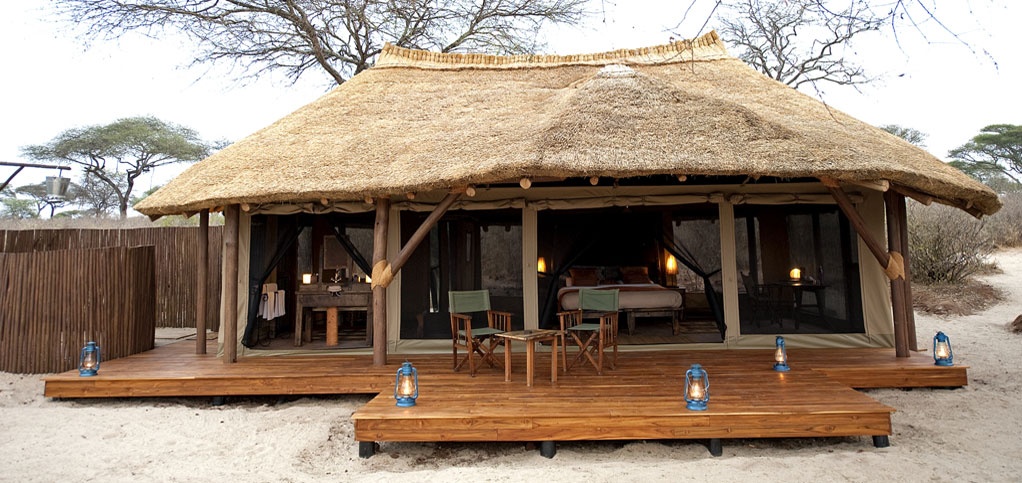
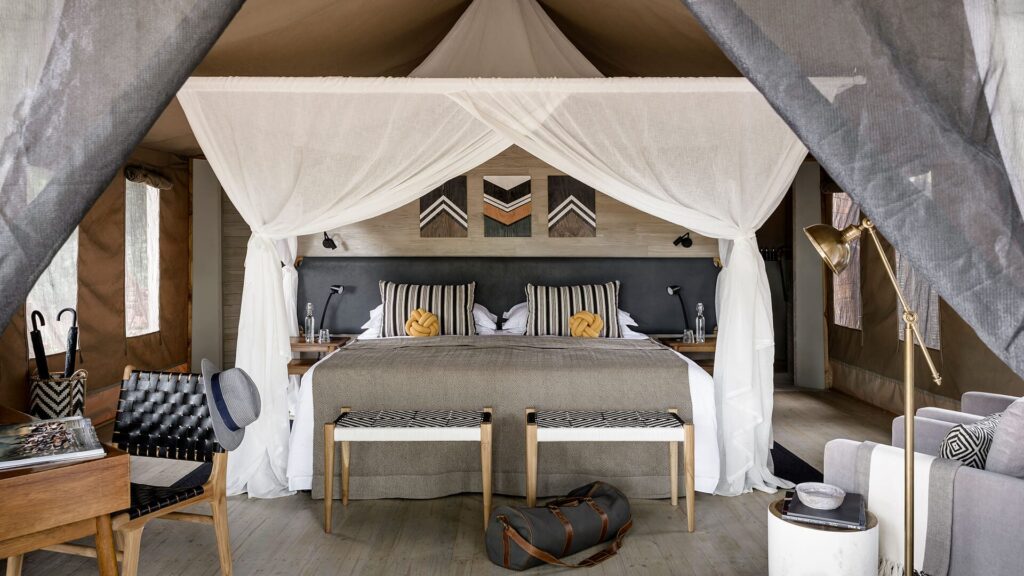
A tented camp in the East African safari context is not what most travellers picture when they hear the word ‘tent.’ These are permanent or semi-permanent structures built on raised wooden decks or concrete platforms, with canvas walls and roofs supported by a solid frame. Inside, guests find proper beds, mattresses, linen, furniture, electric lighting, and often en-suite bathrooms with running hot water and flushing toilets.
Mid-range camps occupy the middle ground between basic budget camps (shared facilities, simple meals) and ultra-luxury lodges (private butlers, infinity pools, helicopters). Their defining characteristics include:
- En-suite or private bathroom facilities
- Full-board or all-inclusive meal plans with quality food
- Professional safari guides and game drives in 4WD vehicles
- Solar or generator-powered electricity, often 24-hour
- A camp bar and social lounge or mess tent
- Wi-Fi in the main areas (though connectivity can be intermittent)
- Bush atmosphere with genuine wildlife access right at camp
Why Choose Tarangire for a Tented Camp Safari?
The Elephant Spectacle
No other park in northern Tanzania rivals Tarangire for elephants. During the dry season, it is common to see hundreds of elephants at the river in a single game drive. The sight of these magnificent animals — bulls, matriarchs, calves — navigating the sandy riverbanks against a backdrop of ancient baobabs is among Africa’s great wildlife spectacles. Mid-range camps position guests close enough to experience this daily.
The Baobab Landscape
Tarangire’s landscape is visually distinct from any other Tanzanian park. Thousands of massive baobab trees — some over a thousand years old — punctuate the golden grasslands and acacia woodland. At sunrise and sunset, these ancient trees cast dramatic silhouettes that make for extraordinary photography and an atmosphere unlike anywhere else on the continent.
Year-Round Wildlife Diversity
While the dry season (June–October) is peak time, Tarangire rewards visitors year-round. The wet season (November–May) transforms the park into a lush green paradise, with migratory birds arriving from Europe and Asia, newborn animals everywhere, and far fewer tourists sharing the roads and waterholes.
Fewer Crowds
Compared to the Serengeti or Ngorongoro, Tarangire receives significantly fewer visitors. Mid-range camps here can offer a sense of exclusivity that would cost three times as much in other parks. The park’s remoteness and size mean that even during peak season, you can often have a waterhole or river crossing entirely to yourself.
Featured Mid-Range Tented Camps
1. Tarangire Simba Lodge
Perched on a hill above the Tarangire River valley, Tarangire Simba Lodge is one of the most strategically located mid-range properties in the park. Its elevated position affords sweeping views over the plains, and a busy waterhole directly below the lodge makes it possible to watch wildlife from the comfort of one’s tent veranda without even stepping into a vehicle.
| Location | Inside Tarangire National Park, overlooking the Tarangire River valley |
| Accommodation | 25 en-suite tented chalets on raised wooden decks |
| Price Range | USD 250–380 per person per night (full board) |
| Best For | Families, first-time safari visitors, wildlife photography |
| Highlights | Active waterhole, panoramic river views, large swimming pool |
| Game Drives | Private and shared vehicle options; excellent in-house guides |
Accommodation & Facilities
Each of the 25 tents features a king-size or twin bed configuration, a writing desk, wooden furniture, and a private en-suite bathroom with a hot shower. Canvas sides can be rolled up to merge the sleeping space with the outdoor veranda, creating an immersive connection with the bush. A central dining tent, bar, and lounge area with a campfire gathering point complete the camp’s social spaces.
🐘 Wildlife Tip: The waterhole below the lodge attracts elephants almost every afternoon. Arrive back from your morning game drive by 3pm for the best viewing.
Dining
Meals at Simba Lodge are buffet-style for breakfast and lunch, with a set three-course dinner in the evenings. The kitchen sources fresh vegetables from Arusha’s markets twice weekly, and the menu rotates daily, offering a mix of Tanzanian dishes and international options. Dietary requirements including vegetarian, vegan, and gluten-free can be accommodated with advance notice.
2. Oliver’s Camp
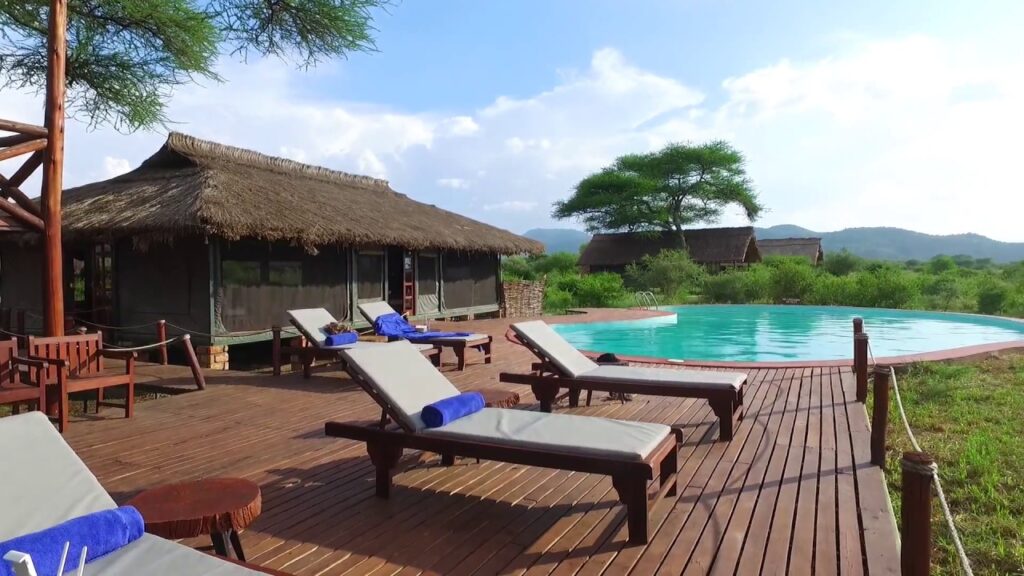
Oliver’s Camp is a firm favourite among serious wildlife enthusiasts and is widely regarded as one of the best-value mid-range options in Tarangire. With only ten tents in total, the camp maintains an intimate, exclusive atmosphere that punches well above its price category. What truly sets Oliver’s Camp apart is its walking safari programme — one of the finest in Tanzania — led by highly trained and licensed walking guides.
| Location | Southern Tarangire National Park, remote wilderness setting |
| Accommodation | 10 classic tented chalets, widely spaced for privacy |
| Price Range | USD 300–450 per person per night (all inclusive) |
| Best For | Adventure seekers, walking safari enthusiasts, serious naturalists |
| Highlights | Walking safaris, night drives, exceptional guiding team |
| Special Feature | Fly camping extensions available into the wilderness |
Walking Safaris
Oliver’s Camp holds one of the coveted walking safari permits in Tarangire, making it a unique destination for those wanting to experience the bush on foot. Professional guides armed with both firearms and encyclopaedic knowledge lead small groups (maximum six guests) through the landscape, tracking wildlife, identifying plant species, and reading the signs that vehicles simply miss. These walks range from two-hour morning strolls to full-day expeditions.
🦶 Walking Safari Note: Guests must be reasonably fit and aged 12 or over for walking safaris. Early morning starts (6:00am) are rewarded with the best animal activity and temperatures.
Night Drives
In addition to standard daytime game drives, Oliver’s Camp offers night drives that reveal Tarangire’s nocturnal world — genets, servals, civet cats, bush babies, and occasionally leopards and lions on the hunt. This activity is particularly popular and should be booked in advance during peak season.
3. Maramboi Tented Camp
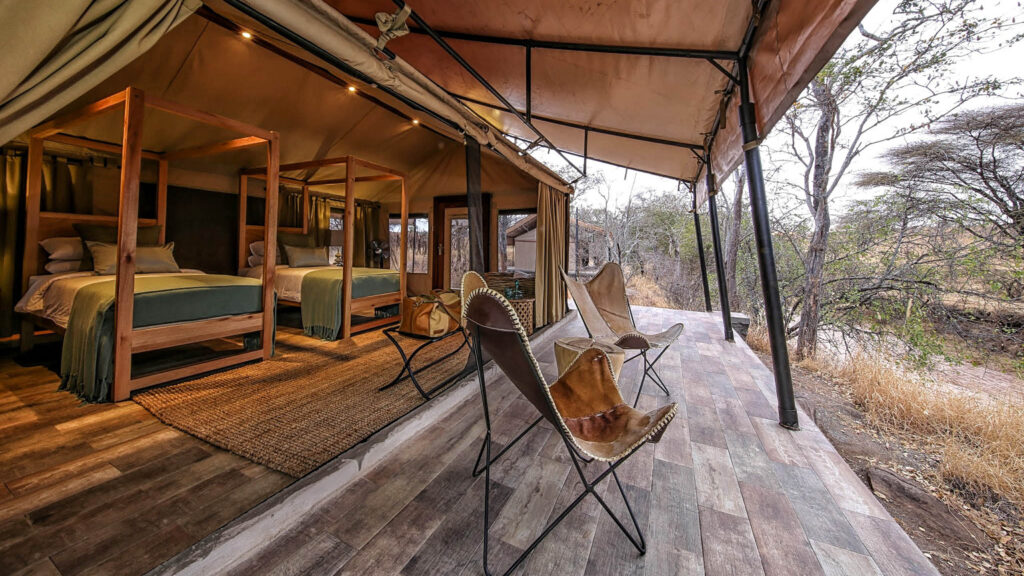
Maramboi Tented Camp occupies a spectacular setting on the edge of Lake Burunge — one of Tanzania’s lesser-known soda lakes — just outside the Tarangire National Park boundary. This unique positioning gives the camp access to two distinct ecosystems: the dry savannah landscapes of Tarangire itself, and the bird-rich wetlands of Lake Burunge, creating an unmatched birding and wildlife combination.
| Location | Lake Burunge, adjacent to Tarangire National Park |
| Accommodation | 50 en-suite lake-view tented chalets |
| Price Range | USD 200–320 per person per night (full board) |
| Best For | Bird watchers, families, value-seeking travellers |
| Highlights | Flamingo flocks on the lake, canoe safaris, prolific birdlife |
| Activities | Game drives, birding walks, canoe trips on Lake Burunge |
Birdwatching Excellence
With over 550 bird species recorded in the Tarangire-Lake Manyara ecosystem, Maramboi is a birdwatcher’s paradise. Lesser and greater flamingos gather on the lake in their thousands during certain months, and the wetland margins attract herons, storks, ibises, and a spectacular range of raptors. The camp employs specialist birding guides who can help identify even the most cryptic species.
🦩 Birding Tip: October to April is the best birding period, with Eurasian migrants swelling the already impressive resident population. Request a dedicated birding guide at booking.
Canoe Safaris
A highlight unique to Maramboi is the canoe safari on Lake Burunge, paddling silently among waterfowl and wading birds with the Rift Valley escarpment as a backdrop. These gentle excursions, typically lasting 60–90 minutes, are suitable for guests of all fitness levels and offer a completely different perspective from the standard 4WD game drive.
4. Boundary Hill Lodge
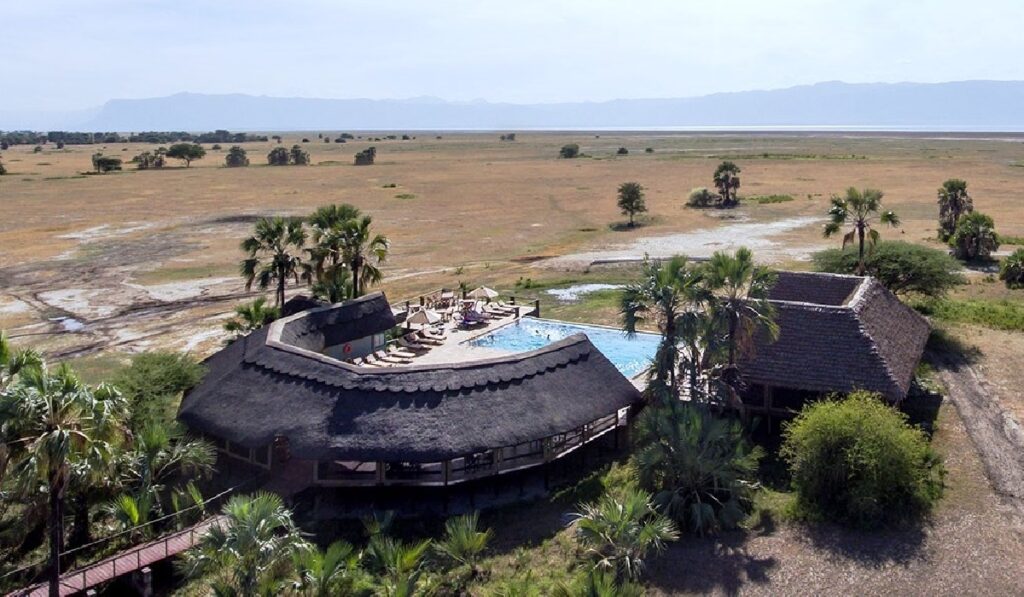
Boundary Hill Lodge sits on the park’s western boundary atop a rocky escarpment that offers some of the most dramatic views in Tarangire. The lodge is named for its position straddling the park boundary, giving it a unique hybrid character — part lodge, part tented camp — with twelve spacious tent-bungalow hybrids that combine the airiness of canvas with the permanence of stone and thatch construction.
| Location | Western boundary of Tarangire, Boundary Hill escarpment |
| Accommodation | 12 tent-bungalow hybrids with private viewing decks |
| Price Range | USD 280–420 per person per night (full board) |
| Best For | Couples, honeymooners, photography enthusiasts |
| Highlights | Escarpment sunsets, elevated viewing deck, massage treatments |
| Special Feature | Spa services available; honeymoon suite with private plunge pool |
The Viewing Deck Experience
Boundary Hill’s centrepiece is its raised communal viewing deck perched on the escarpment’s edge, with unobstructed views across 40 kilometres of Tarangire’s plains. At dawn and dusk, guests gather here with binoculars and cameras as the light transforms the landscape through shades of gold, orange, and purple — a ritual that many visitors describe as the highlight of their entire Tanzania safari.
5. Swala Camp
Swala Camp, meaning ‘gazelle’ in Swahili, is an intimate seven-tent property located in the heart of Tarangire National Park’s Gursi area — a secluded, game-rich zone that receives far fewer vehicles than the northern sections of the park. The camp’s remote position means guests frequently have wildlife sightings entirely to themselves, adding an exclusivity that belies the mid-range price.
| Location | Gursi area, central-southern Tarangire National Park |
| Accommodation | 7 tents — 6 standard and 1 family tent |
| Price Range | USD 350–480 per person per night (all inclusive) |
| Best For | Wildlife purists, couples, small groups seeking exclusivity |
| Highlights | Remote location, near-private game drives, intimate atmosphere |
| Special Feature | Star-gazing sessions with resident astronomer guide |
The Gursi Ecosystem
The Gursi area where Swala sits is known for its year-round resident wildlife populations. Lions denning in the rocky outcrops, leopards using the fig trees along dry riverbeds, and massive herds of buffalo are all regularly seen. Because fewer safari vehicles operate in this zone, wildlife is generally less habituated to human presence, making encounters feel all the more wild and authentic.
⭐ Stargazing: Swala’s remote location, far from any town light pollution, makes for extraordinary night skies. The camp’s guided star-gazing sessions run most evenings and are a highlight for children and adults alike.
Mid-Range Tented Camps — Quick Comparison
| Camp | Tents | Price (USD/pp/night) | Board | Best Feature |
| Tarangire Simba Lodge | 25 | $250–380 | Full Board | Waterhole views |
| Oliver’s Camp | 10 | $300–450 | All Inclusive | Walking safaris |
| Maramboi Tented Camp | 50 | $200–320 | Full Board | Lake & birding |
| Boundary Hill Lodge | 12 | $280–420 | Full Board | Escarpment views |
| Swala Camp | 7 | $350–480 | All Inclusive | Remote & intimate |
Activities & Experiences at Mid-Range Camps
Morning & Afternoon Game Drives
The backbone of any Tarangire safari, game drives depart at first light (typically 6:00–6:30am) to maximise sightings during the coolest and most active wildlife hours. Most mid-range camps use purpose-built 4WD safari vehicles — usually Toyota Land Cruisers — with raised roofs, individual seating, and power sockets for charging camera equipment. Afternoon drives go out around 3:30–4:00pm and continue until park closing time (6:30pm), capturing the spectacular late-afternoon light.
Bush Breakfasts & Sundowner Stops
One of the most cherished traditions at mid-range camps is the bush breakfast — a full spread of eggs, fruit, pastries, and coffee served in the field, often at a scenic lookout or riverbank, while wildlife moves around you. Similarly, afternoon drives frequently end at a pre-selected spot for sundowners (drinks at sunset), a quintessentially East African ritual that lets guests savour the close of day in the bush.
Cultural Visits to Maasai and Barbaig Communities
The landscapes surrounding Tarangire are home to traditional Maasai and Barbaig (Datoga) communities who have coexisted with wildlife for centuries. Most mid-range camps organise optional cultural visits, where guests can learn about traditional homestead (boma) life, observe Maasai jumping dances, purchase beadwork directly from artisans, and gain insight into how indigenous communities manage land and water resources alongside wildlife.
Birding Walks
Tarangire is a globally recognised Important Bird Area, and guided birding walks — typically 60–90 minutes long, conducted in the early morning — are offered at several mid-range camps. Even non-birders frequently discover a passion for birds after watching a lilac-breasted roller in flight, hearing the liquid song of a paradise flycatcher, or spotting a pair of ostriches at close range.
Best Time to Visit Tarangire
Dry Season: July to October (Peak Season)
The dry season is universally regarded as the best time for wildlife viewing in Tarangire. As water sources outside the park dry up, wildlife concentrates around the Tarangire River in extraordinary numbers. Elephants gather in herds of 200+, predators follow their prey, and the sparse vegetation makes spotting animals easy. Expect higher camp rates and advance booking requirements during July–October.
📅 Peak Dates: August and September represent the absolute peak for elephants at the river. Book mid-range camps 6–9 months in advance for these months.
Green Season: November to May (Shoulder/Low Season)
The wet season transforms Tarangire into a lush, photogenic landscape with newborn animals, calving wildebeest and zebras, and the arrival of thousands of migratory birds from Europe and Asia. Wildlife is more dispersed (following fresh grass growth across the park), but the birding is exceptional, the landscape is dramatically beautiful, and camps offer reduced rates — sometimes 20–40% lower than peak season pricing. This is one of East Africa’s best-kept safari secrets.
What to Pack for a Tented Camp Safari
Clothing
- Neutral-coloured clothing (khaki, green, brown, beige) — avoid blue and white which attract tsetse flies
- Lightweight long-sleeved shirts and trousers for morning drives (it can be cold before 8am)
- T-shirts and shorts for warm afternoons
- A warm fleece or light jacket for early mornings and evenings (June–August nights can reach 12–15°C)
- Comfortable walking shoes or boots for bush walks
- Sandals for relaxing at camp
- Wide-brimmed hat and buff/neck scarf for dust and sun protection
Health & Safety
- Prescription anti-malaria medication (consult your doctor at least 6 weeks before travel)
- High-DEET insect repellent (50%+ DEET recommended)
- Personal first-aid kit including blister pads, antiseptic, and antihistamines
- Sunscreen SPF 50+ and quality UV sunglasses
- Prescription medications in sufficient quantity plus a doctor’s letter
Photography Equipment
- Camera with a minimum 400mm telephoto lens for wildlife photography
- Extra batteries and memory cards (charging can be intermittent at smaller camps)
- Beanbag for stabilisation in the vehicle — better than a tripod on bumpy drives
- Dust-proof bag for camera equipment — Tarangire’s black cotton soil creates significant dust
Practical Tips for Mid-Range Camp Guests
Booking & Planning
Mid-range tented camps in Tarangire typically require booking through Tanzania-based tour operators or directly via the camps’ own websites. Many camps are all-inclusive but it is worth confirming exactly what is covered — park fees, premium drinks, laundry, and tips are often extra. Read cancellation policies carefully, especially for peak season bookings made far in advance.
Getting There
Tarangire is approximately 110 kilometres from Arusha, Tanzania’s safari hub, and is typically reached by road (2.5–3 hours) or by charter flight (20–25 minutes from Arusha Airport). Several airstrips serve the park including the main Tarangire Airstrip and the smaller Kuro Airstrip in the south. Charter flight transfers are often bookable through your camp or tour operator and are highly recommended for guests combining Tarangire with other northern circuit parks.
✈️ Transfer Tip: Fly-in safaris combining Tarangire, Serengeti, and Zanzibar are among Tanzania’s most popular itineraries. Ask your camp about inclusive flight packages.
Tipping
Tipping is an important part of camp culture and contributes significantly to staff income. A general guideline is USD 10–15 per guest per day for your main guide, USD 5–8 per day for the camp staff (divided among the team), and USD 5 per drive for your tracker if applicable. Tips are best given in USD cash at the end of your stay.
Wildlife Safety
Mid-range camps are unfenced in most cases, meaning wildlife can and does wander through camp. Guests should always be escorted by a camp staff member at night, never walk alone after dark, and follow their guide’s instructions at all times during game drives and walking safaris. These precautions are straightforward and should not cause concern — camp staff are highly experienced and the combination of precaution and awareness keeps guests safe.
Conclusion
Tarangire National Park’s mid-range tented camps offer one of Africa’s most rewarding and accessible safari experiences. Whether you choose the waterhole spectacle of Tarangire Simba Lodge, the walking safari excellence of Oliver’s Camp, the lake-side birding paradise of Maramboi, the dramatic escarpment views of Boundary Hill, or the remote intimacy of Swala Camp, you will find yourself in genuine wild Africa — surrounded by elephants, baobabs, and extraordinary skies — without the need for an unlimited budget.
The key advantages of choosing a mid-range tented camp in Tarangire can be summarised as follows:
- Authentic bush immersion at accessible price points
- Professional guiding teams with deep local knowledge
- Comfortable, well-appointed accommodation with en-suite facilities
- Fewer crowds than the Serengeti or Ngorongoro
- Year-round wildlife, with extraordinary dry-season elephant concentrations
- A range of camp sizes and specialist niches to suit every traveller
For those crafting a northern Tanzania itinerary, Tarangire should sit alongside — not just complement — the Serengeti and Ngorongoro Crater. A two to three-night stay at a well-chosen mid-range tented camp here may well prove to be the single most memorable chapter of the entire safari.