 info@gorillatrekkinginafrica.com

5 Days Tarangire Camping Safaris
5 Days Tarangire Camping Safaris, Tucked away in northern Tanzania, Tarangire National Park is one of East Africa’s most rewarding yet underrated safari destinations. Stretching across 2,850 square kilometres of diverse savannah, swamp, and ancient baobab woodland, Tarangire offers a raw and authentic wilderness experience that many seasoned safari-goers rank above the more famous parks for sheer wildlife density during the dry season.
Named after the Tarangire River — the park’s lifeline — this extraordinary ecosystem draws extraordinary concentrations of elephant, buffalo, zebra, wildebeest, and a remarkable array of birds. The river never fully dries, making Tarangire a critical refuge for wildlife when surrounding areas lose their water sources. The result is an epic gathering of animals that rivals any in Africa.
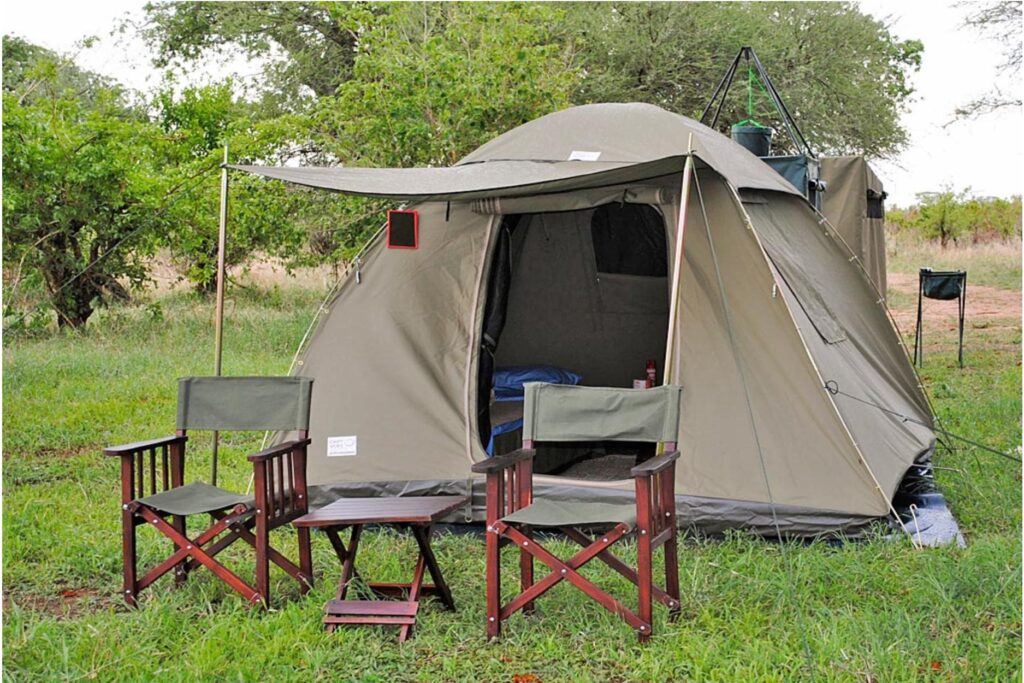
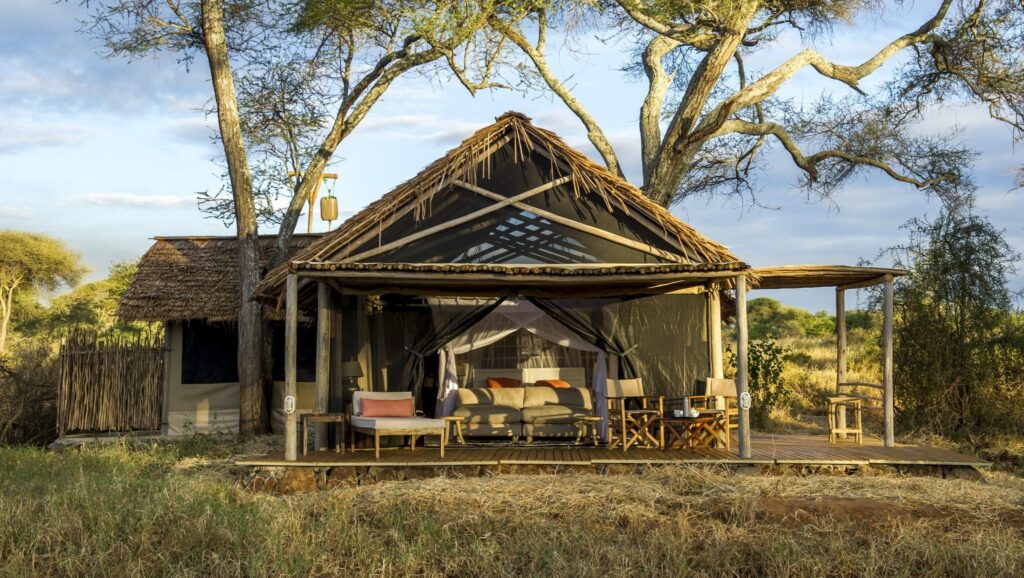
Camping in Tarangire takes the experience to an entirely different level. Rather than retreating to a lodge outside the park’s boundaries, camping places you inside the wilderness — where lions call through the night, elephants pass silently metres from your tent, and the Milky Way arches in breathtaking clarity overhead. This 5-day camping safari itinerary is designed to give you the complete Tarangire experience: game drives, bush walks, cultural encounters, and nights that will stay with you for a lifetime.
Why Tarangire?
Tarangire is often overlooked in favors of the Serengeti and Ngorongoro, yet it offers several distinct advantages:
- Exceptional elephant population — over 3,000 elephants make this one of Africa’s highest-density elephant habitats
- Ancient baobab trees, some over 1,000 years old, create a dramatic and iconic landscape unlike anywhere else in Tanzania
- Fewer crowds than the Serengeti, allowing for an intimate, unhurried safari experience
- Outstanding birdlife with over 550 recorded species, making it a paradise for birders
- Diverse ecosystems within a single park — swamps, savannah, riverine forest, and open floodplains
- Exceptional year-round wildlife, with the dry season (June to October) offering extraordinary animal concentrations
Safari At a Glance
| Duration | 5 Days / 4 Nights |
| Location | Tarangire National Park, Manyara Region, Tanzania |
| Accommodation | Public and special campsites within the park |
| Best Season | June to October (Dry Season) — peak wildlife viewing |
| Also Excellent | November to December (Short Rains) — green scenery, newborn animals |
| Park Entry | USD 59 per adult per 24 hours (Tanzania National Parks — TANAPA) |
| Camping Fees | USD 30 per person per night (public sites); USD 50+ (special sites) |
| Vehicle | 4WD safari vehicle required; self-drive possible with experience |
| Nearest Airport | Kilimanjaro International Airport (KIA) — approx. 120 km |
| Difficulty | Easy to moderate — suitable for all fitness levels |
| DAY ONE
Arrival & First Game Drive Arusha → Tarangire — approximately 2.5 hours |
Morning: Departure from Arusha
Your Tarangire adventure begins in Arusha, the northern safari capital of Tanzania. After an early breakfast at your hotel, your safari guide and 4WD vehicle will collect you and head southwest on the Dodoma Road towards Tarangire. The drive itself is a transition — from the bustle of Arusha’s markets and traffic, through farmland and Maasai homesteads, until the landscape opens into wide, tawny savannah.
Arrive at Tarangire’s main Kwa Kuchinja gate by mid-morning. After completing entry formalities and paying park fees, your first game drive begins immediately inside the park boundary. The road from the gate towards the main viewpoint offers some of the finest wildlife encounters in the park — keep your eyes peeled from the very first kilometre.
Afternoon: Main Viewpoint & Tarangire River
After a picnic lunch at one of the designated areas, spend the afternoon exploring the classic Tarangire landscape around the river bend. The main viewpoint overlooks a sweeping bend in the Tarangire River — during the dry season, this vantage point can reveal hundreds of elephants, zebra herds, and buffalo all converging on the water simultaneously. It is one of the most spectacular natural theatres in all of Africa.
Look for lion resting in the riverine acacia woodland, and scan the open flats for cheetah. The late afternoon light on the ancient baobab trees is extraordinary — these enormous, twisted giants, with their grotesque and beautiful silhouettes, define the Tarangire landscape like no other feature.
Evening: Camp Setup & Sundowners
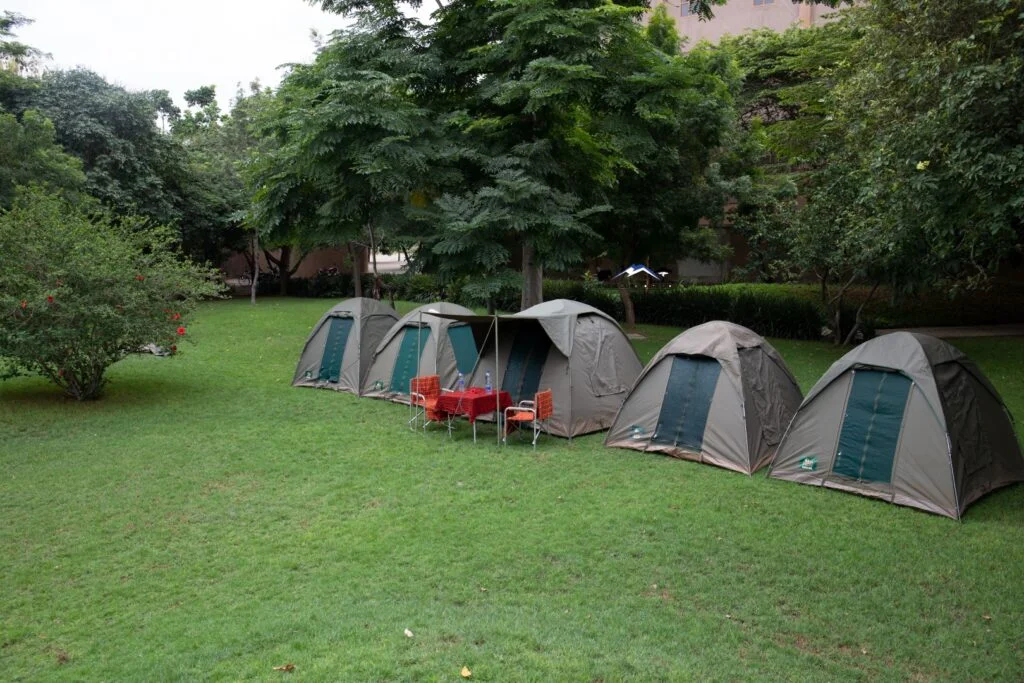
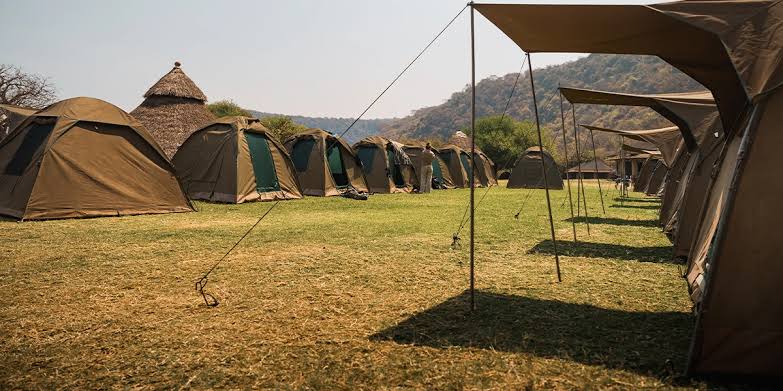
Arrive at your campsite in the late afternoon. Public campsites in Tarangire are basic but perfectly positioned — cleared areas with long-drop toilets and sometimes basic washing facilities, set directly in the wilderness. Special campsites offer greater privacy and are often in more remote locations. Your guide and camp crew will set up tents, prepare a campfire, and serve cold drinks as the sun sets over the baobab-studded horizon.
Dinner is cooked over open fire — typically a three-course bush meal of soup, a hearty main of grilled meat or vegetables with rice and ugali (cornmeal staple), and fresh fruit for dessert. After dinner, your guide will brief you on camp protocols: food stored away from tents, no wandering alone at night, and a torch (flashlight) always at hand.
Wildlife encounters on Day 1 to watch for:
- African elephant (frequently seen at the river from the first hour)
- Zebra and wildebeest in mixed herds on open floodplains
- Buffalo herds resting under acacia and sausage trees
- Giraffe browsing on the flat-topped acacias
- Yellow-necked spurfowl and superb starlings near the gate
| DAY TWO
Deep Wilderness Game Drives Silale Swamp & Lemiyon Circuit |
Early Morning: Dawn Drive
Rise before first light — around 5:30 AM — to the sounds of Africa waking. The pre-dawn chorus of birds is extraordinary: the liquid call of the African fish eagle, the haunting whoops of hyenas returning from a night hunt, the distant rumble of elephant communication below the range of human hearing. A quick cup of tea and a rusk, and you are in the vehicle as the sky lightens from black to indigo to orange.
Dawn is the most productive time for predator sightings. Lion are often active until the first heat of the morning, and cheetah frequently begin their day hunting in the open grasslands of the Lemiyon area, north of the main circuit. The quality of light in the early morning, warm and golden, is also exceptional for photography.
Mid-Morning: Silale Swamp
The Silale Swamp in the southwestern section of the park is one of Tarangire’s most important ecosystems and one of its most rewarding game-drive destinations. Fed by underground springs, the swamp remains green and lush even at the height of the dry season, drawing enormous herds of wildlife and spectacular concentrations of waterbirds.
Elephant herds wade chest-deep into the swamp, using their trunks like snorkels to feed on aquatic vegetation. Greater kudu — one of Africa’s most elegant antelope — emerge from the surrounding thicket. Hippo wallow in the deeper pools. And overhead, African open-billed storks, saddle-billed storks, and yellow-billed storks work the shallows alongside thousands of lesser flamingos when conditions are right.
Afternoon: Lemiyon Grasslands
After lunch back at camp, the afternoon circuit heads north towards Lemiyon, the park’s most open terrain. Flat, grassy plains extend towards the park boundary, offering the kind of panoramic views associated with classic East African safari photography. This is cheetah and lion country — the open ground allows both predator and prey (and safari visitors) to see for kilometres in every direction.
The large termite mounds in this area are important features of the ecosystem — mongoose colonies live in their tunnels, dwarf mongoose dart in and out of entrance holes, and birds of prey perch on the summit to scan for prey. Look carefully at every termite mound: at the height of the dry season, you may find a cheetah using one as an elevated observation platform.
Key wildlife targets for Day 2:
- Cheetah hunting on the Lemiyon plains (sightings frequent June–October)
- Hundreds of elephants at Silale Swamp
- Greater kudu, impala, and gerenuk in the thickets
- Leopard in the riverine trees along the Tarangire River
- African wild dog — occasionally sighted in the northern areas
| DAY THREE
Bush Walk & Cultural Experience On foot in the wilderness & Maasai village visit |
Morning: Armed Bush Walk
Day three opens with one of the most immersive experiences a safari can offer: a guided walking safari. Accompanied by an armed Tanzania National Parks (TANAPA) ranger and your lead guide, you leave the vehicle behind and enter the wilderness on foot. The change in perspective is immediate and profound. Everything is closer, more detailed, and more intense.
Walking allows you to appreciate what a game drive misses: the intricate world of insects, the medicinal and edible plants that the Maasai have used for generations, the tracking skills of your ranger as he reads prints and signs in the dust. Lion tracks from the previous night lead to a dry riverbed. Elephant dung, still warm, tells the ranger a family group passed an hour ago. The bush speaks constantly to those trained to listen.
Distances are moderate — typically 5 to 10 kilometres over two to three hours, adjusted to the group’s pace and wildlife encounters en route. The walk ends back at the vehicle for a well-earned breakfast in the bush: hot coffee, fresh fruit, and sandwiches laid out on a folding table in the shade of a baobab.
Midday: Maasai Village Visit (Optional)
After returning to camp for lunch and rest during the midday heat, the afternoon offers an optional but deeply rewarding cultural experience: a visit to a traditional Maasai boma (homestead) near the park boundary. The Maasai have co-existed with wildlife in this landscape for centuries, and their intimate knowledge of the animals and ecosystems of Tarangire is encyclopaedic.
A community elder will guide you through the homestead — an enclosure of low mud-and-thatch houses within a protective thorn fence. You will be shown how fire is made using two sticks, how Maasai warriors have traditionally used ochre and animal fat in their distinctive body decoration, and the role of cattle in Maasai society as both wealth and spiritual currency. Women demonstrate their intricate beadwork, each pattern carrying a specific meaning.
The visit is always conducted with respect and with a portion of any contribution going directly to the community. Photography is welcome with permission, and many visitors find this cultural dimension of the safari as memorable as the wildlife encounters.
Evening: Night Sounds & Stargazing
Return to camp for a sundowner around the campfire. On clear nights — and in Tarangire, clear nights are the rule rather than the exception — the darkness is absolute beyond the firelight, and the night sky reveals itself in extraordinary detail. With no light pollution for tens of kilometres in any direction, the Milky Way is visible as a dense band of light stretching overhead. Your guide can point out southern constellations and recount the Maasai astronomical traditions associated with them.
| DAY FOUR
Southern Circuit & Boundary Hill Remote wilderness & elevated panoramas |
Full-Day Southern Exploration
Day four is dedicated to the southern reaches of Tarangire — the most remote and least-visited section of the park, and for many visitors, the most spectacular. Pack a full-day game drive lunch and plenty of water; you will be deep in the wilderness from sunrise to sunset.
The southern circuit winds through increasingly dramatic landscape: baobab-covered hillsides, seasonal luggas (dry streambeds) that flood dramatically in the rains, vast areas of open Commiphora woodland, and the Boundary Hill area in the far south, where elevated ground offers panoramic views across the entire park and into the distant Rift Valley escarpment beyond.
Boundary Hill Viewpoint
Boundary Hill (Pofu Hill) stands at the southern tip of the park and offers what many consider the finest viewpoint in all of Tarangire. On clear mornings, the view extends from the Tarangire River valley in the north all the way to the distant blue haze of the Masai Steppe to the south. Lesser kudu and eland — Africa’s largest antelope — are regularly encountered in this area, along with oryx in the drier sections further south.
The drive to Boundary Hill passes through habitat that transitions distinctly from the north of the park. Baobab trees become even more ancient and massive. Dry riverbeds carve deep channels through the red laterite soil. The feeling of remoteness intensifies with every kilometre.
Afternoon: Kitibong Hill Circuit
On the return journey, the Kitibong Hill circuit takes you through some of the park’s finest elephant country. Tarangire’s elephants are notably relaxed around vehicles — years of non-threatening contact with safari tourists have made them among the most approachable in Africa. It is not uncommon for a large bull to walk directly towards your vehicle, investigate it with raised trunk, and continue on his way with complete indifference.
Family groups with newborn calves are particularly fascinating to observe. The matriarch — the largest, oldest female who leads each family — makes all major decisions about movement, water sources, and threat responses. Watching her navigate a family of fifteen through the baobab woodland, calves tucked protectively between adult legs, is to witness an intelligence and social sophistication that humbles.
Special sightings possible on the southern circuit:
- Lesser kudu (shy and rarely seen; the southern woodland is the best habitat)
- Fringe-eared oryx on the semi-arid southern plains
- Common eland — the world’s largest antelope, surprisingly agile
- Ground hornbill foraging in family groups on the open ground
- Striped hyena (rare, nocturnal; sometimes flushed from daytime refuge)
| DAY FIVE
Final Game Drive & Departure Farewell to the wilderness |
Early Morning: Last Dawn Drive
No safari ends without one final dawn drive, and on the last morning in Tarangire, the desire to squeeze every last minute from the wilderness is acute. Rise again before first light, warm your hands on a mug of tea, and head out into the park for a final circuit through your favourite areas of the past four days.
The morning is often bittersweet — the landscape, the sounds, and the animals that have become familiar over four days suddenly feel precious with the knowledge that departure is hours away. Your guide will likely have a favourite spot he saves for the final morning: perhaps a termite mound where a family of mongoose always emerges at sunrise, or a bend in the river where a particular pride of lion habitually rests.
Breakfast in the Bush
A final bush breakfast is laid out in the shade of a baobab — a ritual that epitomises everything the camping safari represents. Coffee brewed over gas, scrambled eggs prepared on a camp stove, fresh toast and bush honey. Around you, the savannah carries on its timeless business: weaverbirds constructing their elaborate nests, a herd of impala grazing between the trees, a hornbill calling from the branches above.
Mid-Morning: Camp Breakdown & Departure
Return to camp after breakfast to oversee the camp breakdown. While the crew strikes tents and loads equipment, you have a final opportunity to take photographs of the campsite and surroundings — the exact spot where you slept under the stars, the fire pit where the stories were told, the tree that the vervet monkeys visited each morning in search of forgotten food scraps.
Depart Tarangire through the main gate mid-morning, allowing ample time for the return journey to Arusha or onward transfer to Kilimanjaro International Airport. The road back passes through Maasai villages and farmland, offering a gradual re-entry into the human world after five days in the wild.
Onward Options
Many visitors combine their Tarangire safari with other northern circuit destinations:
- Lake Manyara National Park — famous for tree-climbing lions and flamingo-fringed shores (1 hour from Tarangire)
- Ngorongoro Crater — the world’s largest intact volcanic caldera with exceptional predator densities (3 hours from Tarangire)
- Serengeti National Park — the Great Migration; unmatched open savannah (5-6 hours from Tarangire)
- Arusha National Park — shorter wildlife walks, colobus monkeys, and Meru crater views
Practical Information
Camping Essentials
What to bring for a comfortable camping safari in Tarangire:
- Sleeping bag rated to 10°C (50°F) — nights can be cold June through August
- Headtorch/flashlight with spare batteries — essential for night-time toilet trips
- Insect repellent with at least 30% DEET — mosquitoes present year-round
- Malaria prophylaxis — begin medication before departure per your doctor’s advice
- Lightweight, neutral-coloured clothing (khaki, olive, beige) — avoid bright colours
- Sun hat and high-SPF sunscreen — UV radiation is intense at equatorial altitude
- Binoculars — 8×42 or 10×42 are ideal for wildlife and birdwatching
- Camera with telephoto lens (300mm+ recommended) — animals can be at distance
- Dust cover for camera equipment — the dry season tracks are extremely dusty
- Warm fleece or jacket — mornings and evenings require layering
- Comfortable walking shoes or lightweight boots for bush walks
- Personal first aid kit including blister treatment and antihistamines
- Reusable water bottles — your camp will provide safe drinking water
Health & Safety
Tarangire is a malaria-endemic area. Consult your doctor or travel health clinic at least 6 weeks before departure regarding antimalarial prophylaxis appropriate for your health profile. Cover up at dawn and dusk, the peak mosquito activity periods, and apply repellent diligently.
The park contains Africa’s Big Five along with hippo, crocodile, and venomous snakes. Always follow your guide’s instructions in camp and on walks. Never leave the vehicle during a game drive without guide permission. At night in camp, use your torch, make noise, and never approach animals attracted to the campfire.
The nearest hospital with adequate facilities is in Arusha. Ensure your travel insurance includes emergency medical evacuation. Flying Doctors Society of Africa (AMREF) covers much of northern Tanzania and can be reached by radio from park headquarters in an emergency.
Best Time to Visit
| June – October | Peak dry season. Best wildlife concentrations at the river. Dusty but outstanding. |
| November – December | Short rains. Green landscape, newborn animals, fewer tourists. Some roads difficult. |
| January – February | Dry inter-season. Hot. Good general game viewing. Bird breeding plumage. |
| March – May | Long rains. Some roads impassable. Lush and beautiful but challenging. |
Budget Estimator (Per Person)
| Item | Budget Option | Premium Option |
| TANAPA Park Fees (5 days) | USD 295 | USD 295 |
| Camping Fees (4 nights) | USD 120 | USD 200+ |
| Safari Vehicle & Guide | USD 200–300 | USD 400–600 |
| Food & Camp Supplies | USD 80–120 | USD 150–250 |
| Cultural Visit Contribution | USD 20–30 | USD 30–50 |
| Miscellaneous & Tips | USD 50–80 | USD 100–150 |
| Total (Approx.) | USD 765–945 | USD 1,175–1,545 |
Note: Prices are approximate and subject to seasonal variation and park fee updates. All TANAPA fees are charged in USD cash at the gate.
Getting There
- By Air: Fly into Kilimanjaro International Airport (JRO) — served by Ethiopian Airlines, Kenya Airways, Qatar Airways, KLM, and others. Transfer to Arusha (approximately 50 km) and then to Tarangire (approximately 120 km).
- By Road: Arusha to Tarangire gate is approximately 2.5 hours on tarmac and graded murram road. Self-drive is possible with a 4WD vehicle and good navigation.
- Light Aircraft: Charter flights operate from Arusha’s Kilimanjaro Airport and from Dar es Salaam into Tarangire’s grass airstrip — contact your tour operator for scheduling.