 info@gorillatrekkinginafrica.com

Camping Grounds in Tarangire National Park
Camping Grounds in Tarangire National Park, Tarangire National Park is one of Tanzania’s most spectacular and underrated wilderness destinations. Located in the Manyara Region of northern Tanzania, approximately 120 kilometres southwest of Arusha, the park covers an area of 2,850 square kilometres and forms part of the greater Tarangire–Manyara ecosystem. Established as a national park in 1970, Tarangire is renowned for its enormous elephant herds — among the largest concentrations in Africa — its iconic baobab trees, and its diverse birdlife, with over 550 recorded species.
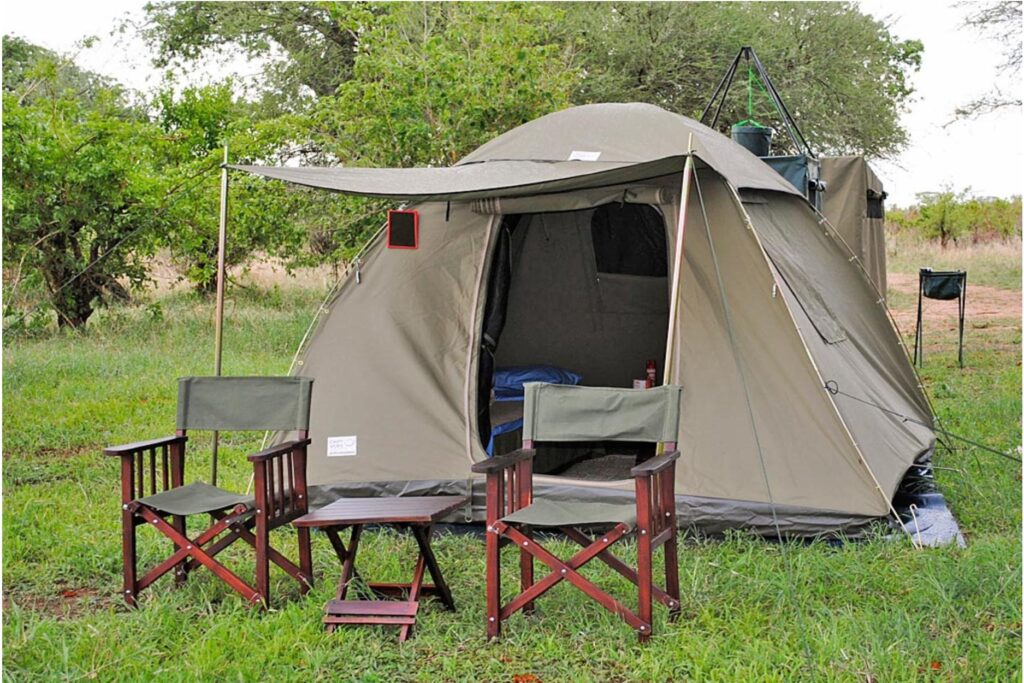
The park derives its name from the Tarangire River, the only permanent water source in the area during the dry season. This river acts as a magnet for wildlife from across the ecosystem, making the dry season (June to October) one of the best times to witness dramatic wildlife gatherings. Beyond elephants, visitors can expect to encounter large herds of wildebeest, zebra, buffalo, giraffe, impala, and numerous predators including lion, leopard, and cheetah. Wild dogs, though rare, have also been sighted.
For camping enthusiasts, Tarangire offers an exceptionally rewarding experience. Unlike the more heavily visited Serengeti or Ngorongoro, Tarangire retains a sense of unspoiled wilderness, with fewer tourists and more intimate encounters with nature. Camping here places you directly in the heart of the African bush, with the sounds of elephants, hyenas, and owls as your nightly soundtrack.
Camping in Tarangire
Camping in Tarangire National Park is regulated by the Tanzania National Parks Authority (TANAPA). The park offers a variety of camping options ranging from fully serviced public campsites to remote special campsites with no facilities whatsoever. This diversity caters to everyone from families on organised safari tours to seasoned overlanders and adventurous independent travellers seeking an authentic bush experience.
Types of Campsites Available
The park operates two principal categories of campsites:
- Public Campsites (Ordinary Campsites): These are designated sites with basic facilities such as pit latrines, water points, and sometimes a simple shower. They are accessible by most vehicles and can accommodate multiple groups simultaneously.
- Special Campsites (Exclusive/Fly Campsites): Remote sites with no permanent infrastructure. Exclusive use is guaranteed, and campers must be entirely self-sufficient, bringing all food, water, fuel, and camping equipment. These sites offer the most immersive and private bush experience.
In addition to these, there are a number of private concession camps — permanent luxury tented camps and mobile safari camps — operating within or adjacent to the park boundaries. These are run by private tour operators and offer an elevated camping experience with full services.
Summary of Main Camping Sites
| Camp Site | Type | Fees (USD) | Facilities | Best For |
| Kuro Campsite | Public | $30–$35 | Toilets, Water | Groups, Families |
| Oliver’s Camp (Private) | Luxury Private | $400–$600+ | Full Service | Luxury Safaris |
| Little Oliver’s (Private) | Luxury Private | $300–$500+ | Full Service | Couples, Small Groups |
| Boundary Hill Lodge Camp | Luxury Private | $250–$450+ | Full Service | Birding, Wildlife |
| Special Campsite 1 | Special/Exclusive | $50–$60 | None (Self-Sufficient) | Adventure Campers |
| Special Campsite 2 | Special/Exclusive | $50–$60 | None (Self-Sufficient) | Overlanders |
| Special Campsite 3 | Special/Exclusive | $50–$60 | None (Self-Sufficient) | Remote Experience |
Note: Fees listed are approximate USD rates per person per night for non-residents and are subject to change. Always verify current rates with TANAPA or your tour operator before travel.
Public Campsites
Kuro Public Campsite
- Location: Near Kuro Ranger Post, western sector of the park
- Type: Public / Ordinary Campsite
- Capacity: Multiple groups; shared facilities
- Approximate Fee: $30–$35 per person per night (non-resident adult)
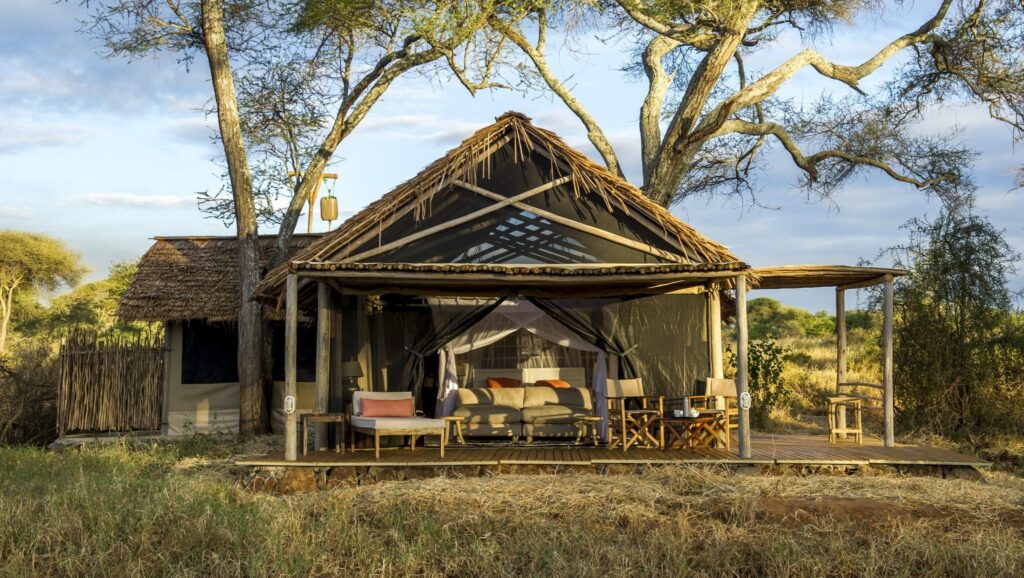
Kuro Public Campsite is the primary publicly accessible campsite within Tarangire National Park and serves as the main base for budget and mid-range safari groups. Situated near the Kuro Ranger Post in the western portion of the park, the campsite offers a strategic location with relatively good road access and proximity to areas known for high elephant and baobab concentrations.
Facilities at Kuro Campsite
- Pit latrines / long drop toilets (basic but maintained)
- Water point (non-potable; bring your own drinking water or purification supplies)
- Simple shower facilities (cold water)
- Designated fire pit areas (firewood must be sourced responsibly or purchased from rangers)
- Designated tent pitching areas on cleared ground
- Park ranger presence nearby for basic security
Wildlife Around Kuro
The western sector of Tarangire, where Kuro is located, is one of the richest areas for wildlife viewing in the park. The landscape here is characterized by open savanna dotted with magnificent ancient baobab trees, some estimated to be over 1,000 years old. Elephant herds frequently pass through the campsite area, particularly in the dry season when they move between feeding grounds and the Tarangire River.
Other regularly sighted species in this zone include giraffe, zebra, wildebeest, impala, Grant’s gazelle, warthog, and various raptor species. Predators such as lion and spotted hyena are present and occasionally heard or seen near the campsite at night, making awareness and respect for wildlife essential at all times.
Practical Considerations for Kuro Campsite
- Arrival before dusk is strongly advised; driving after dark is prohibited in the park
- All food and rubbish must be stored securely in vehicles to avoid attracting wildlife
- Campfires are permitted in designated areas only — never leave fires unattended
- Keep noise levels low, especially at night
- The nearest fuel and well-stocked supplies are in Arusha (approximately 2.5 hours) — arrive fully prepared
- Mobile network coverage is limited to patchy Vodacom/Airtel signal in some parts of the park
Special (Exclusive) Campsites
Tarangire National Park maintains a number of designated special campsites distributed across the park’s remote interior. These sites are allocated for exclusive use — only one group may book each site on any given night — providing unparalleled privacy and an authentic wilderness atmosphere. They are the preferred choice of experienced overlanders, photography enthusiasts, and travellers seeking a truly immersive safari experience away from other tourists.
Because these sites have zero permanent infrastructure, campers must be entirely self-sufficient. This means carrying all drinking water, food, cooking fuel, waste disposal bags, and camping equipment. A high-clearance 4×4 vehicle is essential for reaching most special campsites, as roads in the remote sections of the park can be extremely rough, sandy, or seasonally impassable.
Special Campsite 1 — Northern Sector
- Location: Northern Tarangire, near Larmakau area
- Terrain: Acacia and commiphora woodland; rocky outcrops
- Access: 4×4 vehicle essential; road conditions variable
- Approximate Fee: $50–$60 per person per night (non-resident)
Special Campsite 1 is positioned in the northern reaches of Tarangire, an area noted for its denser woodland and relative remoteness compared to the more frequently visited southern areas. The landscape here is characterised by acacia-commiphora thicket interspersed with rocky escarpments that provide dramatic backdrops for sunrise and sunset photography.
This northern sector receives considerably fewer visitors than the areas around the main Tarangire River valley, offering a genuine feeling of solitude. Wildlife in this area includes elephant, greater kudu (which favour the dense thickets), giraffe, and a rich diversity of bird species. Fringe-eared oryx and eland — less commonly seen in the southern sectors — are among the notable species more frequently encountered here.
Special Campsite 2 — Central River Valley
- Location: Central Tarangire, near the Tarangire River corridor
- Terrain: Riverine woodland; open floodplains
- Access: 4×4 vehicle essential; sandy river crossings may be required seasonally
- Approximate Fee: $50–$60 per person per night (non-resident)
Situated near the Tarangire River in the park’s central zone, Special Campsite 2 offers arguably the most dramatic wildlife encounters of all the special sites. The Tarangire River is the park’s lifeline and during the dry season it attracts extraordinary concentrations of game — it is not uncommon to observe hundreds of elephants drinking, bathing, and socialising within sight of camp.
The riverine forest along the banks provides habitat for tree-climbing lion (occasionally), leopard, vervet monkey, olive baboon, and an astounding variety of waterbirds. African fish eagle calls echo across the water at dawn and dusk. Hippos inhabit the deeper pools of the river, and their nocturnal grunts and splashing are a characteristic feature of nights spent at this campsite.
The proximity to the river means that wildlife intrusion into camp is probable and campers should exercise extreme caution. Elephants are known to walk through or feed near camp sites along the river, especially at night. Maintaining a cold, unlit camp after dark and refraining from leaving any food or scented items outside vehicles or tents is mandatory.
Special Campsite 3 — Southern Wilderness
Location: Southern Tarangire, remote wilderness area
Terrain: Mixed savanna; baobab-dominated hillsides
Access: 4×4 vehicle essential; long drive from park gate
Approximate Fee: $50–$60 per person per night (non-resident)
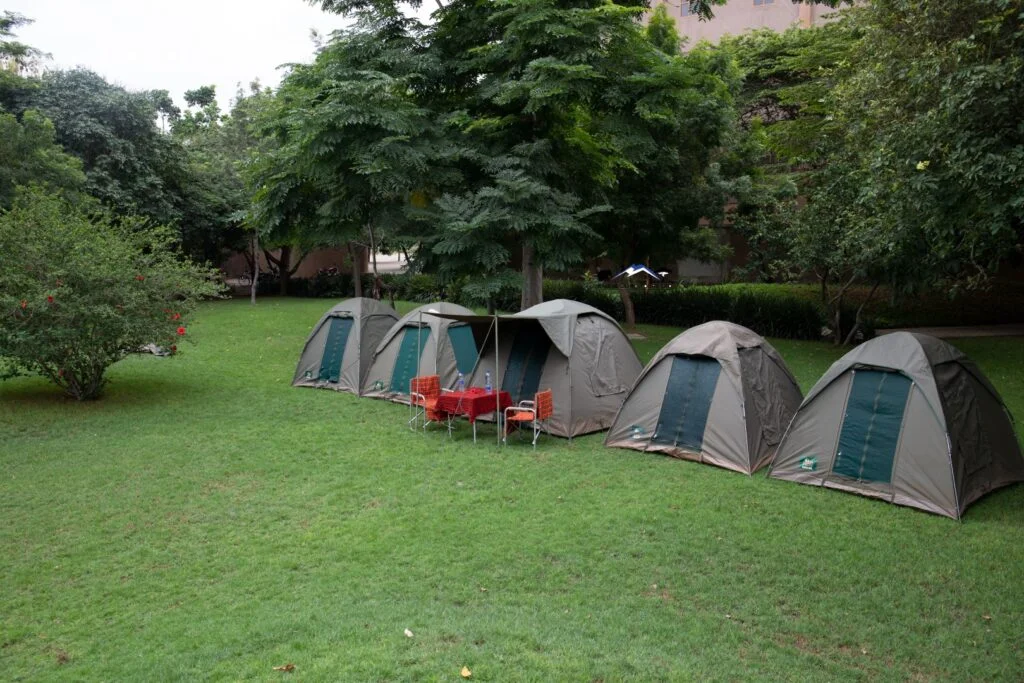
The southernmost special campsite lies deep in the park’s least-visited wilderness. The journey to reach it is itself an adventure, passing through vast tracts of baobab-studded savanna that feel genuinely untouched. The southern area is an important corridor connecting Tarangire to the seasonal wetlands of the Silale and Gursi swamps — critical dry season refuges for thousands of animals.
Campers at Special Campsite 3 can expect excellent chances of encountering large elephant herds, as well as roan antelope and oryx — species that are relatively scarce elsewhere on the Northern Circuit. The remoteness and lack of tourist traffic make this site ideal for serious wildlife photographers and naturalists willing to endure the longer access route.
Private Luxury Camps Within the Tarangire Ecosystem
Several high-end private camps operate within or directly adjacent to Tarangire National Park, many on private concession land. These offer a premium alternative to public camping and special campsites, combining the bush setting with elevated comforts, expert guided activities, and exclusive access to vast tracts of land. While rates are significantly higher, these camps deliver a fundamentally different experience and are worth considering for travellers with the budget.
Oliver’s Camp
Location: Northern Tarangire, private concession bordering the national park
Operator: andBeyond
Style: Permanent luxury tented camp
Approximate Rate: From $400–$600+ per person per night (full board, activities included)
Oliver’s Camp, operated by the renowned andBeyond group, is widely considered one of the finest bush camps in Tanzania. Positioned on a private concession in northern Tarangire, the camp sits atop a rocky ridge with sweeping views across the surrounding wilderness. The camp consists of a small number of classic East African canvas tents raised on wooden platforms, each furnished with handcrafted furniture, en-suite bathrooms, and private decks overlooking the bush.
The camp is famous for its walking safaris — among the best in East Africa — led by highly trained and qualified guides who bring the micro-world of the African bush to life in ways that vehicle-based safaris cannot replicate. Night game drives are also offered, providing the opportunity to encounter nocturnal species such as aardvark, porcupine, bush baby, genet, and various owl species.
Highlights of Oliver’s Camp
- World-class walking safaris on a private concession
- Night game drives not available inside the national park
- Expert naturalist guides with deep knowledge of the ecosystem
- Private concession with exclusive access — no other tourists on game drives
- Exceptional birdwatching, particularly raptors and dry-country endemics
- Intimate atmosphere with maximum 16 guests
Little Oliver’s Camp
Location: Northern Tarangire, adjacent to Oliver’s Camp concession
Operator: andBeyond
Style: Intimate exclusive-use tented camp
Approximate Rate: From $300–$500+ per person per night (full board, activities)
Little Oliver’s is the more intimate sibling camp to Oliver’s Camp, designed for small groups or families seeking an exclusive-use bush experience. The camp accommodates a maximum of eight guests in four tented units and is typically booked out by a single party, making it perfect for private family safaris, honeymoons, or small groups of friends.
The activities and access are similar to Oliver’s Camp, including walking safaris and night drives on the concession, and guests benefit from a personalised ratio of guides to visitors. The camp has a wonderfully relaxed atmosphere and the small size means every meal, activity, and moment is tailored specifically to the group.
Boundary Hill Lodge
Location: Eastern boundary of Tarangire National Park
Style: Permanent lodge with tented camp units
Approximate Rate: From $250–$450+ per person per night (full board, activities)
Boundary Hill Lodge occupies an elevated position on the eastern escarpment of the Tarangire ecosystem, offering panoramic views across the park and surrounding Maasai steppe. The property straddles the park boundary, giving guests access to both the national park itself and the surrounding community conservancy land.
The lodge is a particularly excellent base for birders, as the transitional habitat between the park interior and the community land supports an exceptionally diverse avifauna. Day visits into Tarangire for game drives are complemented by bush walks on the conservancy, and cultural visits to nearby Maasai bomas can be arranged.
Best Time to Camp in Tarangire
Dry Season — June to October (Prime Season)
The dry season is unquestionably the finest time to camp in Tarangire. As water sources across the ecosystem dry up, wildlife converges on the Tarangire River in extraordinary numbers. Elephant herds of several hundred animals, sometimes exceeding a thousand individuals in total over the course of a day, can be seen along the riverbanks. The sparse, dry vegetation makes spotting predators and other wildlife considerably easier.
Nights in the dry season can be surprisingly cold, particularly June and July, when temperatures at night can drop to 12–15°C. Campers should pack warm layers, sleeping bags rated to at least 10°C, and windproof outer layers for early morning game drives.
Short Rains — November to December
The short rains bring a dramatic transformation to the landscape as the dry, brown savanna erupts into vivid green. Resident bird species are joined by hundreds of thousands of migratory birds arriving from Europe and Asia. Wildlife disperses more widely across the ecosystem as water and fresh grazing become available in areas beyond the river corridor, making viewing more challenging but the atmosphere extraordinarily lush and photogenic.
Camping during the short rains is entirely feasible and offers excellent value, as parks are far less crowded and rates at private camps are often reduced. Roads in the park can become slippery and some tracks may temporarily close after heavy rainfall.
Long Rains — March to May
The long rains are the least popular time to visit and some camps close entirely during this period. Park roads can become deeply muddy and certain areas may be inaccessible even to 4×4 vehicles. However, for experienced campers and photographers, the green season has a unique appeal — dramatic skies, vivid colours, newborn animals, and almost no other tourists.
Practical Information for Campers
Entry Fees and Permits
All campers entering Tarangire National Park must pay the standard TANAPA park entrance fees in addition to the campsite fees. Fees are collected at the main entrance gates (Kuro Gate and Boundary Hill Gate) and are payable in USD or via the TANAPA online payment system. As of recent years, TANAPA has transitioned increasingly towards cashless, online pre-booking — it is advisable to pre-book and pre-pay through the official TANAPA website or through a licensed tour operator to avoid queues and ensure site availability.
Approximate Current Fee Structure (Non-Resident Adults)
- Park Entry Fee: $53.90 per person per day (adult non-resident)
- Public Campsite Fee: $30–$35 per person per night
- Special Campsite Fee: $50–$60 per person per night (exclusive use)
- Children (5–15 years): Reduced rates apply
- Children under 5: Free entry
- Tanzanian citizens and residents: Substantially reduced rates in Tanzanian shillings
Note: These figures are provided as guidance only. TANAPA fees are updated periodically — always verify current rates on the official TANAPA website or with a registered tour operator.
How to Reach Tarangire National Park
- By Road from Arusha: Approximately 120 km southwest of Arusha via the Arusha–Dodoma highway (A104). The journey takes roughly 2–2.5 hours in good conditions. The road is tarmac all the way to the Kuro Gate turnoff.
- By Air: Charter flights operate to Kuro Airstrip inside the park from Arusha Airport (ARK) and Kilimanjaro International Airport (JRO). Flight time from Arusha is approximately 30 minutes.
- By Scheduled Flight: Some operators connect Tarangire with Serengeti and other northern circuit parks via light aircraft on the ‘bush hop’ scheduled services.
What to Bring — Camping Essentials
Shelter and Sleep
- A quality free-standing tent with a waterproof rain fly and a sewn-in groundsheet
- Sleeping bag rated to at least 10°C (dry season nights can be cold)
- Sleeping mat or inflatable sleeping pad
- Tent repair kit and spare pegs
Water and Food
- Minimum 10 litres of drinking water per person for multi-day stays (no potable water at special campsites)
- Water purification tablets or a quality portable filter as backup
- Portable gas or butane stove and sufficient fuel canisters
- Pre-cooked or easy-to-prepare meals in airtight containers
- Cooler box with ice blocks for perishables on shorter trips
- All food and scented items must be stored in vehicles at night
Health and Safety
- Comprehensive first aid kit including antiseptics, bandages, and blister treatment
- Malaria prophylaxis (consult your doctor before travel)
- DEET-based insect repellent (minimum 30% concentration)
- Permethrin-treated clothing or a permethrin spray for treating garments
- High-factor sunscreen (SPF 50+) and lip balm
- Emergency satellite communicator (SPOT or Garmin inReach) for remote campsites
Clothing and Equipment
- Neutral-coloured clothing in khaki, green, brown, or grey (avoid bright colours and white)
- Warm fleece or down jacket for early mornings and cold nights
- Windproof and waterproof outer layer
- Wide-brimmed hat for sun protection
- Headlamp with spare batteries (essential for navigating camp at night safely)
- Binoculars — minimum 8×42 for wildlife and birdwatching
- Camera equipment and spare memory cards/batteries
Vehicle Equipment (for Self-Drive Overlanders)
- High-clearance 4×4 vehicle with low-range gearbox
- Full-size spare wheel and a repair kit (tyre plugs, compressor)
- Recovery gear: hi-lift jack, traction boards, tow rope
- Comprehensive vehicle tool kit
- Spare engine oil, coolant, and fuel (jerry cans for remote areas)
- Detailed offline maps downloaded to phone or GPS device
Wildlife Safety at Camp
Camping in Tarangire is a genuine wild experience and must be approached with respect and awareness. The park is home to dangerous animals including elephant, buffalo, lion, leopard, and hippopotamus (near the river). The following guidelines are non-negotiable for safe camping:
- Never leave tents unzipped or food accessible outside vehicles or tents — elephants are adept at investigating camps
- Always use a torch or headlamp when moving around camp after dark, and make noise to alert wildlife to your presence
- Never walk to or from ablution facilities alone at night — always have a companion or stay inside your tent
- Keep a respectful distance from all wildlife at all times
- Do not run if you encounter wildlife — remain calm and back away slowly
- Campfires should be kept moderate and fully extinguished before sleep
- Inform the nearest ranger post of your campsite location, especially at special campsites
Environmental Responsibility
Leave No Trace principles apply absolutely to all camping in Tarangire National Park. The preservation of this extraordinary ecosystem depends on every visitor taking personal responsibility for their environmental impact.
- Pack out all rubbish — no littering under any circumstances
- Bury human waste at least 200m from water sources and at least 15cm deep, or use a portable toilet
- Use biodegradable soap and wash away from water sources
- Do not disturb vegetation, pick flowers, or remove natural materials
- Avoid off-road driving which causes soil compaction and habitat damage
- Respect wildlife by maintaining distance and never baiting or feeding animals
Booking Campsites in Tarangire
Public and Special Campsites — TANAPA Booking
Public and special campsites in Tarangire National Park are administered by TANAPA and can be booked through the official TANAPA online reservation system. It is strongly recommended to book well in advance for the peak dry season months of July, August, and September, when campsites — particularly special sites — can be reserved many months ahead.
Independent travellers and overlanders can book directly through the TANAPA website. Those on organised tours will typically have their operator handle all bookings and fee payments on their behalf.
Private Luxury Camps — Direct or Through Operators
Private camps such as Oliver’s Camp, Little Oliver’s, and Boundary Hill Lodge are booked directly through the respective operating companies or through specialist Africa safari operators. Given the limited capacity of these properties — typically a maximum of 8–16 guests — reservations for peak season should be made at least 6–12 months in advance. Many camps require a non-refundable deposit to secure bookings.
When booking through a reputable tour operator, the full logistics of park permits, transfers, and activities can be arranged as part of a comprehensive package, which is the most efficient approach for first-time visitors.
Combining Tarangire with Other Northern Circuit Parks
Tarangire is most commonly visited as part of Tanzania’s celebrated Northern Safari Circuit, which also includes the Serengeti National Park, Ngorongoro Crater, Lake Manyara National Park, and the Arusha National Park. Each park has a distinct character and combining several into a single itinerary gives a comprehensive impression of Tanzania’s extraordinary wildlife diversity.
- Arusha National Park: A compact park accessible within an hour of Arusha city, ideal as an introductory stop before or after longer safari
- Lake Manyara National Park: Renowned for tree-climbing lions, flamingo flocks, and its spectacular setting beneath the Great Rift Valley escarpment
- Ngorongoro Conservation Area: Home to the world’s largest intact caldera, sheltering dense populations of the Big Five including black rhino
- Serengeti National Park: Tanzania’s most iconic destination, famous for the annual Great Migration of wildebeest and the diversity of big cat sightings
A typical 7–10 day Northern Circuit safari combining all four main parks can include camping in Tarangire (2–3 nights), Lake Manyara (1 night), Serengeti (2–3 nights), and Ngorongoro (1 night). Self-drive overlanders often add the Arusha National Park on the first or last day as a gentle introduction or gentle farewell to the Tanzanian wilderness.
Conclusion
Tarangire National Park offers one of Africa’s finest and most rewarding camping experiences. From the shared conviviality of the Kuro Public Campsite to the raw solitude of a special campsite deep in the baobab-studded wilderness, and the refined luxury of a private concession camp, Tarangire has something to offer every level of camping traveller.
What sets Tarangire apart from many of its more famous neighbours is the sense of space, the staggering elephant populations, and the landscape — ancient, sculptural baobab trees rising from golden grasslands, framing views that feel like they belong to another era. To sleep under canvas here, to hear the deep rumble of an elephant herd passing through camp, and to wake before dawn to the chorus of hundreds of bird species, is to experience Africa in its most uncompromising and extraordinary form.
Plan carefully, prepare thoroughly, respect the wildlife and environment, and Tarangire will reward you with memories that endure a lifetime.