 info@gorillatrekkinginafrica.com

Tourist attractions in Arusha
Tourist attractions in Arusha, Arusha is among the major cities in Tanzania, boasting a population exceeding 400,000 inhabitants. It serves as the capital of the broader Arusha region and is strategically situated in the northern part of the country, a location renowned for some of East Africa’s premier national parks. The city is recognized as Tanzania’s green metropolis due to its ample rainfall, which sustains its verdant landscape year-round. The precipitation is incessant because to its position at the base of Mount Meru.
Arusha is a multicultural city characterized by a diverse population. The region is inhabited by indigenous tribes, Tanzanians of mixed Arab, Swahili, and Indian descent, as well as a prominent European community. The city is rather small, and its inhabitants maintain a more relaxed lifestyle. The city possesses a robust diplomatic community with a heritage of hosting United Nations and African Union missions. Christianity, Islam, and Hinduism are the principal religious denominations.
Arusha is recognized as the safari capital of Tanzania, serving as the nexus for visitors to Mount Kilimanjaro, Mount Meru, the Serengeti, the Ngorongoro Crater, Lake Manyara, and Tarangire National Park. Arusha lies in close proximity to the Masai Mara Game Reserve in Kenya. Despite being frequently disregarded by international tourists on route to surrounding national parks for safaris, Arusha city possesses its own allure with several activities to engage in. If you find yourself in town before or after your safari, do not stay in your hotel room. We shall thoroughly examine some premier tourist spots in Arusha. Additionally, you may explore the attractions in Dar es Salaam or the activities available in Zanzibar. If you intend to ascend Mount Kilimanjaro, our article on the tourist attractions in Moshi may prove beneficial.
Attractions for tourists in Arusha, Tanzania
Volunteer:
If you possess a spirit of volunteerism, you can significantly contribute to community development in several ways while in Arusha. Opportunities for volunteering include tree planting, urban cleanup, and mentoring or assisting local youth soccer teams. In what ways can you provide support for soccer? You can assist local youth by volunteering in Arusha and imparting your understanding of the game. If you possess expertise in officiating, assessing player performance, and recognizing and enhancing soccer talent, then consider registering to volunteer with a local soccer team. Numerous local teams participate in local and regional soccer tournaments but lack enough equipment and skilled coaching personnel. Contribute to these teams by donating soccer cleats, uniforms, and football netting if possible. Volunteering or sponsoring local youth teams will yield significant rewards. You get the opportunity to engage with the local people, gaining insight into their lifestyles and the issues they encounter. If you are uncertain about where to volunteer, we suggest consulting your tour organizer, host family, or the hotel where you will be residing.
Visit the Arusha Central Market for shopping.
Visiting the core retail area is the most effective method to understand the culture of a new locale. The Arusha Central Market (Kilombero Market) offers travelers an authentic connection with the local populace. It is the location in Arusha where everyone shops for household necessities. The market is densely populated, and the majority of shops are situated in close proximity to one another. Anticipate discovering establishments that offer local textiles, spices, traditional remedies, wooden sculptures, handicrafts, artworks, jewelry, vegetables, poultry, meat, fruits, and a variety of food products. The Arusha central market features a substantial area dedicated to the trade of goats, sheep, and cattle. Be prepared to negotiate if you wish to purchase items from the market. Exercise caution over the possession of your valuables while in the market. Should you accompany them, ensure they may be securely affixed to your belt to prevent theft by pickpockets.
Dine out or procure coffee:
If you are contemplating where to have breakfast, lunch, or supper in Arusha, you will have a plenty of options. The city boasts numerous high-quality restaurants, coffee shops, cafes, and other dining establishments offering both continental and local cuisine. Africafe is the premier destination for exceptional sandwiches, coffee, burgers, grilled meats, chips, tramazini, pastries, cakes, and European delights. The restaurant offers a selection of soft beverages, beer, and wines. Rivertrees is another excellent venue for dining and socializing with friends. Riparian trees situated within a coffee plantation. Anticipate being served locally sourced coffee. In addition to coffee and delectable cuisine, a guide can escort you on a stroll through the picturesque gardens and stream for avian observation.
Additional coffee establishments and venues to contemplate include Arusha Coffee Lodge, Sahaga Shangaa, Machweo Wellness Retreat, Fifi’s, Universal Classic Restaurant, Fig & Olive, Lively Lady Bar & Grill, Le Patio, and Khan’s Barbecue. Arusha Coffee Lodge resembles Africafe because to its picturesque gardens and proximity to a coffee estate. They provide three-course dinners, chilled beverages, and coffee. Sahanga provides Bean to Cup coffee tours in Arusha for anyone interested in the beverage-making process. Machweo Wellness Retreat, owned by a Belgian family, is regarded as one of the premier dining establishments in Arusha. They have successfully integrated local flavors with a Belgian influence to create world-class cuisine in a picturesque setting with stunning views of the Monduli Mountains. Fifi’s is situated on Themi’s Road and is a superb option for breakfast, lunch, and coffee. For the finest local cuisine, visit Universal Classic Restaurant on Swahili Road. Le Patio is a recent establishment that has quickly gained popularity for its exceptional cuisine and pizza. Where may one dine with the local populace? Khan’s Barbecue offers takeaway services during the evening hours. This establishment is favored by the local populace due to its inexpensive cuisine. During the day, it operates as a mechanic’s shop, but in the nights, it functions as a wayside eatery.
Arusha National Park, albeit less renowned than the Serengeti, serves as an excellent location, particularly for visitors seeking a unique experience. Arusha National Park in Tanzania is the most accessible national park, distinguished for its remarkable landscapes featuring volcanic craters and lakes. The park is accessible within two hours of driving from the city center. The park’s most prominent feature is Mount Meru, although one can also observe baboons, buffalo, bushbucks, elephants, giraffes, hippos, and leopards, among other wildlife. The park offers mountain hikes, game drives, horseback riding, cycling, canoeing, and nature walks. Canoeing predominantly occurs at the Momella lakes. A collection of alkaline lakes is located within the park. The two largest are the most favored due to their ability to attract numerous park creatures. Canoeing at Arusha National Park is exceptional since it provides the optimal means to appreciate the park’s entire splendor, including its fauna and avifauna.
Ascension of Ol Doinyo Lengai Mountain:
This is an active volcano located in the heart of Maasai territory. It is bordered by the crater highlands to the south, Mount Kilimanjaro to the east, the Ngorongoro Conservation Area to the north, and the Great East African Rift Valley to the west. Ol Doinyo Lengai Mountain stands at 2,962 meters and is the sole carbonatite volcano globally. Every seven years, the mountain explodes, releasing smoke plumes visible for hundreds of miles. The villagers see it as sacred due to its tumultuous nature.
Hiking to the summit of Ol Doinyo Lengai Mountain is feasible but can be arduous due to the intense heat, steep inclines, and loose rocky terrain. Attaining the summit necessitates two days of trekking. One must psychologically prepare before undertaking the effort of ascending to the summit. The initial section necessitates the capacity to endure heat, but the temperatures at the summit can be exceedingly frigid, particularly during the night. Upon reaching the peak, hikers are rewarded with spectacular vistas of the crater, the expansive Serengeti grasslands, Ngorongoro Crater, Lake Natron, Mount Kilimanjaro, and the East African Rift Valley. Upon appreciating the stunning vistas in the horizon, trekkers may traverse the crater floor.
Lake Natron:
Lake Natron is a soda/alkaline lake located at the base of Mount Ol Donyo Lengai. The lake is situated in a highly isolated and barren region characterized by a unique topography. The lake is shallow, and in the summer, water temperatures may attain an astonishing 42 degrees Celsius. Lake Natron neither drains nor connects to any significant river or sea. It is nourished by minor rivers and thermal springs. The closest towns to the lake are Arusha and Magadi in Kenya.
The Lake’s seclusion has established it as the largest breeding ground for almost 2.5 million Lesser Flamingos, thereby designating it as a certified Ramsar site. Lesser Flamingos consider the lake optimal for mating due to its isolation, abundance of algae, presence of salt marshes, availability of tilapia, and lack of significant predators. The Lesser Flamingo is deemed vulnerable due of its need on breeding in a singular place. Global warming may deplete the lake and potentially eradicate the Lesser Flamingo. In addition to flamingos, the lake hosts pelicans, geese, and more than 350 other avian species. Following their excursion to the lake, guests may also encounter the Masai tribe en route to Arusha.
Uhuru Torch Monument:
The monument, referred to as Mwenge wa Uhuru (Torch of Freedom in Swahili), is a national symbol of the country. It was initially ignited by Alexandra Nyirenda in 1961 to symbolize light and freedom at the Uhuru Torch memorial. The monument symbolizes optimism amidst despair, love in the presence of hostility, and respect in the face of antagonism. Annually, Tanzanians and individuals from throughout the globe convene to observe the lighting of the Uhuru Torch.
Timepiece Tower:
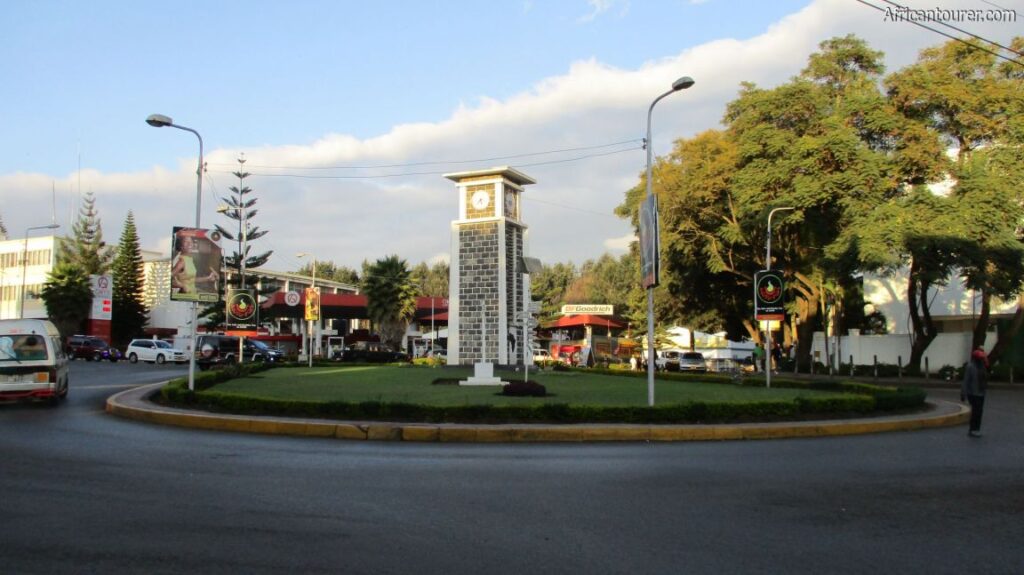
This tower was formerly thought to be constructed at a location between Cape Town, South Africa, and Cairo, Egypt. The tower was believed to symbolize the central point of the erstwhile British Empire in Africa. This has been disproven, as the actual halfway between the two cities is now recognized to be located in Central Congo.
A safari in Serengeti National Park.
Serengeti National Park in Tanzania is undoubtedly the most renowned tourist destination near the city of Arusha. The park consists of extensive savanna grassland, where lions hunt wildebeest, interspersed with acacia trees. The Serengeti reaches the Masai Mara Wildlife Reserve in Kenya. The migration of wildebeest and zebras in the Serengeti offers tourists one of the most remarkable nature shows around. Annually, almost 1.5 million wildebeest and 210,000 zebras migrate from the Serengeti to the Masai Mara in Kenya. This phenomenon has transpired annually for hundreds of millennia. Once the animals commence movement, nothing can impede them. A three-day safari in Serengeti National Park provides an opportunity to observe the wildebeest migration, as well as lions, hyenas, leopards, cheetahs, wild dogs, buffaloes, elephants, giraffes, ostriches, and several other species. The park is expansive and provides a remarkable animal experience that is at least comparable to that of the Masai Mara. Consider exploring further information regarding a hot air balloon safari in Serengeti National Park.
Elephants in Tarangire National Park.
Frequently eclipsed by Ngorongoro Crater and Serengeti, Tarangire National Park is a significant destination in northern Tanzania. It is not only suitable for a conventional safari but has also gained renown for its elephant migration, which intensifies during specific months of the year. Tarangire is situated a mere three hours’ drive from Arusha city. The majority of tourists visit the park briefly and hardly explore all areas. This renders a significant portion of the park unspoiled and comparatively unexplored. From July to October, the abundance of mammals is remarkable to observe. Anticipate observing four of the renowned big five animals and more than 500 avian species. The primary activities in the park are game drives, walking safaris, nature walks, birdwatching, and exceptional cultural tours in Tanzania.
Attend St. Jude Schools:
The St. Jude schools were established to educate talented yet disadvantaged youngsters in Arusha, enabling them to become the intellectual and moral leaders of the nation. The institutions permit tourists to explore and gain insights into their academic programs while engaging with the students. On a normal day, tourists are escorted through the school and treated to lunch with the pupils. Should time allow, kids are also encouraged to participate in activities such as musical performances, drama, physical education, library visits, or morning assembly attendance. St. Jude has expanded to more than three locations, accommodating over 1,800 students and employing 250 staff members. This increase would not have been feasible without the substantial contributions from individual donors globally.
Engage with the Hadzabe community:
To attain an authentic cultural experience, one should visit the Hadzabe tribe of Tanzania, among Africa’s last genuine nomadic communities. The Hadzabe inhabit the vicinity of the Serengeti grasslands and Lake Eyasi. The Hadzabe tribe, also referred to as the Hadzabe, has no close affiliations with any tribes in East Africa. They are said to be connected to the Khoisan people of Southern Africa due to the presence of clicks in their language. They have remained sequestered, with fewer than 1,000 individuals remaining. The intrigue of visiting the Hadzabe tribe lies in their lifestyle, which has remained mostly unaltered and minimally affected by modernization. They rely on subsistence agriculture and hunting for survival. During a standard visit, guests may accompany the men on a traditional hunting expedition utilizing bows and arrows or join the ladies in foraging for fruits and wild berries.
Sidai Designs:
Sidai Designs is situated in a tranquil area near the city center. This project aims to empower women to achieve self-reliance through the opportunities presented by art. The initiative instructs women in the design of jewelry and various artistic creations. The ladies are allocated spaces to exhibit their wares, which are significantly inspired by Masai patterns. Visit Sidai Designs to purchase local goods while simultaneously helping a commendable cause.
Shanga Foundation:
This foundation resembles Sidai Designs. If you seek a venue to acquire high-quality art while contributing to the community or assisting the disadvantaged, here is the destination. The Shanga Foundation and Workshop employs and assists those with disabilities by providing training in the creation of home items, glassware, exquisite jewelry, and Tinga Tinga paintings. The workshop has facilitated employment and enhanced the overall income of ambitious individuals with impairments. The foundation additionally assists them in promoting their items to international clients. Engage with beneficiaries and listen to their narratives as they develop their products. The charity allocates a portion of its profits to train and employ additional individuals with disabilities. Due to its assistance to the physically impaired, Shanga is a preferred destination for tourists.
Coffee Excursion at the Aranga Coffee Collective:
Arusha experiences ample precipitation year-round and possesses fertile volcanic soils. This amalgamation of fertile soils and favorable environment is optimal for coffee cultivation. Numerous coffee farms have emerged throughout the city, providing employment for many locals. The coffee trip transports you to a farm in the highland community of Nkoaranga. The property is situated 25 kilometers from the town. A guide can collect you from your hotel in Arusha and transport you to the base of Mount Meru, where you will proceed on foot to the plantation. While proceeding towards the farm, you will pass a primary school, a secondary school, and the local church.
Upon arrival at the plantation, the farmers will guide you through the premises as you get knowledge about the many stages of coffee cultivation. This refers to the period from the young trees till the time of harvest. Subsequent to this segment of the tour, you will partake in lunch at the farmhouse. Lunch include fresh fruit, ugali, chapatti, goat meat, or rice. Following lunch, you will continue to the second segment of the trip to observe the processes of coffee roasting, grinding, and storage prior to distribution to markets nationwide. Prior to departing, you will sample the coffee itself. The coffee tour is gratifying as it provides guests with opportunities to engage with the local populace and see their daily lives. You will also get knowledge on the many stages of coffee cultivation till it reaches the final product. Remember to return with fresh coffee beans.
A safari in the Ngorongoro Conservation Area:
The Ngorongoro Conservation Area is among the premier safari destinations in Africa, situated 180 kilometers from Arusha. The Ngorongoro Conservation Area also has the Olduvai Gorge, where the initial remains of early humans were discovered. The amalgamation of archaeological and ecological significance persuaded UNESCO to designate it as a World Heritage Site. The Ngorongoro Conservation Area encompasses around 8,292 square kilometers, with its primary feature being the world’s biggest dormant volcanic crater. The caldera measures 300 square kilometers in width, 20 kilometers in length, and 600 meters in depth. The caldera has been designated as one of the world’s great wonders. During a safari to the Ngorongoro Crater, anticipate observing black rhinoceroses, zebras, waterbucks, wildebeests, lions, leopards, hippos, cheetahs, jackals, and elands, among numerous other creatures. In addition to one of the world’s biggest concentrations of wildlife, anticipate interactions with indigenous tribesmen that inhabit the region. Please review our 2-Day Ngorongoro Tour package.
Explore the town of Tengeru:
Tengeru is a settlement located near Arusha and at the base of Mount Meru. The village is located on the eastern flank of the Great Rift Valley, in proximity to Lake Duluti. Similar to Arusha, the temperate environment guarantees that the town remains verdant for the majority of the year. The landscape is remarkable, and visitors can engage in many activities while in the town. The activities encompass exploring picturesque waterfalls, engaging with the local population, and, notably, ascending Mount Meru, which will be elaborated upon momentarily.
Lake Manyara National Park:
This is among the smallest national parks in Tanzania. It is less frequented than the Serengeti and Ngorongoro Crater, however it remains a concealed treasure for its stunning Tree Climbing Lions and unique fauna in Lake Manyara National Park. A prominent characteristic is Lake Manyara. This alkaline lake fluctuates in size according to the season. In the wet season, it can inundate one third of the park that accommodates over one million flamingos. In addition to flamingos, the park hosts kingfishers, herons, and more than 400 other avian species. Birdwatchers will be astonished by the diversity of avian species available. Lake Manyara National Park is renowned for its population of unusual tree-climbing lions. The East African Rift Valley is a significant geographical feature characterized by diverse vegetation, including savanna grasslands, marshes, and dense forests. Anticipate observing buffaloes, elephants, warthogs, waterbucks, giraffes, hippos, hyenas, leopards, wildebeest, and zebras throughout your visit. Examine this four-day safari package for Lake Manyara and Serengeti.
The Arusha Kid engages in athletic activities.
This is an excellent location for a weekend of enjoyment with your children. The Centre features an intricate swimming pool and aesthetically pleasing play areas where children can enjoy themselves all day. They also coordinate several additional water sports to engage both children and adults throughout the day. The facility is in proximity to the Uhuru monument.
Engage in Golf
To encounter the city’s businesses, expatriates, and government officials, one should engage in golf at one of the clubs. The Kilimanjaro Golf Club features an 18-hole golf course that is complimentary for Arusha members, while tourists may access it for a fee. This golf course has magnificent vistas of Mount Kilimanjaro and Mount Meru. To utilize or lease golf clubs and caddies, registration at the clubhouse is required. The Gymkhana Golf Club operates the second golf course in Arusha. This club is situated 30 kilometers from Kilimanjaro Golf Club and was established in 1940. It comprised 9 holes, with a green charge of approximately $100 per individual. If these two do not appeal to you, consider visiting the one located in the adjacent Moshi district, established in 1920.
Acquisition of Tanzanite:
If you seek the most romantic gift for your sweetheart, you must not depart Arusha without acquiring a Tanzanite item. Tanzanite is a rare gemstone exclusively located in Tanzania. A substantial artwork may cost as much as $25,000 outside of Tanzania. It is characterized by a blue-violet hue, with the majority of it being purchased by the jewelry retailer Tiffany’s. You may get a loose stone or request the designers to craft a bespoke piece for you. Numerous jewelry establishments and museums in Arusha are devoted to exhibiting this unique gemstone. Despite a constrained budget, you can still visit a shop to observe the gem’s appearance. It is imperative to visit an authentic Tanzanite establishment, particularly if you intend to purchase one. To ensure quality, visit the artisan stores referenced in this article or the showroom at Mount Meru Hotel.
The Center for Cultural Heritage.
For the finest jewelry and valuable stones such as tanzanite, visit the Cultural Heritage Centre located on the city’s outskirts. The Centre endeavors to exhibit the cultural heritage of several tribes in Tanzania through artifacts and artistic expressions. It features premier art galleries, ornamental antiques, sculptures, relics, paintings, jewelry, African textiles, and souvenir shops. Artists from Tanzania and beyond Africa have established residency in the city because to the accessible market created by tourists visiting the nearby national parks. Anticipate discovering an extensive assortment of tanzanite, diamonds, emeralds, rubies, opals, and sapphires. The comprehensive assortment here competes with anything available in Dar es Salaam, offering an abundance of options at reasonable pricing. Remember to examine the frightening masks from various African tribes. Antique collectors can find abundant opportunities here. If the art piece or souvenir you desire is unavailable at The Cultural Heritage Centre, consider visiting the Masai Market Curio and Crafts Shop. This artisan business is located on Fire Road, near the Clock Tower.
The Jane Goodall Tribute Center:
The Jane Goodall Tribute Centre, inaugurated by Jane Goodall, is situated at the Cultural Heritage Centre. The Centre offers information regarding Jane Goodall’s endeavors with primates in Africa. You will acquire extensive knowledge on contemporary research on chimpanzees, conservation initiatives, and the impact of the Jane Goodall programs in Africa.
Explore geothermal springs:
The Arusha region hosts numerous hot springs. Maji Moto, Kikuletwa, and Chemka Hot Springs are undoubtedly the most exquisite among them. Maji Moto, meaning hot water in Swahili, is an underground spring or oasis located in a barren area of Masai territory, situated outside the city. The oasis is prominent in an apparently barren region of Arusha County, encircled by exquisite palm and fig trees near the Maji Moto Hot Spring. To arrive at Maji Moto, one must undertake a journey of one and a half hours from Arusha. Upon arriving in the oasis, one may engage in swimming and recreation in the pristine waters. Day excursions to Maji Moto commence early in the morning from Arusha. Your guide or tour provider should be capable of providing packed lunches and beverages for the ride. Visiting on a Friday affords the opportunity to explore the nearby Masai Market for souvenirs, including necklaces, handicrafts, and bracelets.
The Kikuletwa hot spring is situated in a parched setting, encircled by verdant fig and palm trees. You may swim and unwind by the picturesque oasis while observing little fish navigating the crystalline waters. The Chemka hot spring is situated in a picturesque region and is ideal for individuals desiring to immerse themselves in the enchanting warm waters of a natural hot spring.
Maserani Snake Park:
This facility is situated 25 kilometers from the city core. It typically serves as a waypoint for travelers en route to the national parks of the northern circuit. Maserani Snake Park near Arusha is home to a diverse array of reptiles and snakes. During a standard tour, a kind resident Guide welcomes guests, provides an overview, and thereafter escorts them throughout the facility. Anticipate encountering many of Africa’s most toxic serpents, including the Egyptian Cobra, Puff Adder, and Black and Green Mambas. If you possess sufficient courage, you may handle certain snakes or touch a juvenile crocodile. A Masai cultural museum is located at the entrance of the park, overseen by the Masai warriors themselves. The Maserani Snake Park contributes to the community. A health clinic and educational center has been established to serve the local Maasai community. The Centre features a well supplied bar where visitors may enjoy beer and BBQ while they unwind en route to the major national parks.
Attend the Farmers Market:
The farmers market, referred to as Nane Nane Day, commences annually on August 8th. This market day acknowledges the significance of agriculture and the role of farmers in the county’s economy. The Farmers Market draws visitors, students, and entrepreneurs keen on understanding the food processing sector in Tanzania. Experienced farmers are willing to share their accomplishments and challenges with you. The most recent farming technologies are prominently showcased. An admission charge permits access to all stalls, where one can purchase various things or observe individuals selling livestock, goats, and local art works.
Explore the Bang’ata and Themi waterfalls:
If you are at a loss for activities this weekend, consider adding a visit to the Themi and Bang’ata waterfalls to your itinerary. The Themi waterfall is located on a creek originating from Mount Meru. The waterfall is encircled by picturesque landscapes and gardens. Subsequent to viewing the cascade, one may also proceed to Themi Falls Leisure Park for lunch and refreshments. The park features exquisite views and gardens adorned with flora. The gardens are ideal for nature hikes and relaxation. After touring the waterfalls and park, conclude your day at the Waterfalls bar in Arusha, Tanzania, for beverages and local cuisine. You may want to camp overnight if the serenity of Themi Falls captivates you.
Another waterfall to consider is the Bang’ata waterfall. This waterfall is located in the secluded village of Bang’ata and serves as an exceptional destination for trekking, leisure, and swimming. Additionally, the Materuni Waterfalls are located in Materuni village. The waterfall has a height of 80 meters and is reachable after a two-hour drive from the city center.
Explore the Themi Living Gardens:
The gardens are located within the city of Arusha. It is a women-led community center established as part of a project sponsored by the Italian NGO Istituto Oikos. The initiative advocates for sustainable gardening while employing those with disabilities and their caregivers. The Centre cultivates organic produce that is served fresh by the women. The Themi Living Gardens is the nation’s inaugural eco-restaurant, where one may enjoy lunch in a tranquil and beautiful setting.
Maasai Market:
Masai markets are essentially souvenir stores that provide artisan and cuisine products from the Masai people. The Masai Markets are prevalent in East Africa. They operate on designated days of the week at Maasai Market in Arusha and are not permanently open. The Masai transport their goods to several markets according to the day of the week. Masai marketplaces are located at Nanya, Kisongo, and Mto Wa Mbu Village. These markets are located outside the city center and may necessitate travel by vehicle or dalla dalla to access them. Visit the markets to help the local Masai community by purchasing sandals, beads, keychains, necklaces, sculptures, bracelets, and blankets. The Masai engage in the trade of livestock, fruits, and vegetables. They typically offer elevated costs to overseas guests; therefore, one must be prepared to negotiate.
Consume local cuisine:
Tanzania, like all nations, possesses its own distinctive cuisines. If you appreciate sampling local cuisine in the nation you visit, you will not be disappointed in Tanzania. Nyama choma (roasted goat flesh) is a favored meal in Swahili-speaking nations, with Arusha offering the finest examples. Consider sampling Samaki (fried fish), Chicken (Kuku), ugali, and Chapatti. The premier establishments for regional cuisine include Tembo Club and Milestones Bar. Should you reside in Arusha for a week or more, it is advisable to allocate time to master the preparation of traditional local dishes. A local acquaintance can accompany you to get regional spices and supplies for home preparation.
Hike Mount Meru:
Mount Meru, located in Arusha National Park, is the second tallest mountain in Tanzania and the fifth highest in Africa, standing at an elevation of 4,562 meters. This inactive volcano serves as an ideal training site for individuals preparing to hike the more arduous Mount Meru, located about 70 kilometers distant. Mount Meru provides an opportunity to experience aspects of the ascent encountered on Mount Kilimanjaro. The recommendation to walk the mountain as preparatory terrain does not imply that it is an uncomplicated trek. Reaching the summit requires four days, necessitating physical fitness and adaptability to high-altitude conditions. The mountain features challenging segments and acute crater rims. The rewards of ascending Mount Meru include stunning vistas of Mount Kilimanjaro, national parks, lakes, and encounters with some of Africa’s renowned species. The hiking trails are well-established; nonetheless, solo ascents are not permitted. An armed ranger must accompany you for protection against wild creatures. Hiking Mount Meru is less expensive than Mount Kilimanjaro, with a cost of approximately $800. The park imposes a fee of $45 for each 12-hour period.
Ascend Mount Kilimanjaro or attain the inclines:
Upon ascending Mount Meru, you may find yourself prepared for the greater challenge of Kilimanjaro. Climbing Mount Kilimanjaro is regarded as one of the premier activities in Tanzania, following a safari in the Serengeti. Mount Kilimanjaro is a dormant volcano with three cones: Shira, Kibo, and Mawenzi. Kilimanjaro is the tallest mountain in Africa; nonetheless, ascending to its peak requires exceptional physical fitness and mental readiness to confront altitude-related challenges. The ascent can commence from either the Arusha or Moshi flank of the mountain. The frequently utilized routes include Umbwe, Machame, and Marangu.
If you lack extensive hiking skills yet desire to ascend a renowned mountain, you may register solely to reach the Mandara hut. The Mandara hut is attained after ascending 2,700 meters. The selected tour operator ought to collect you sufficiently early to commence the travel to the starting site via the Marangu Gate. The hike to the Mandara hut requires approximately 3 to 4 hours. You will traverse a dense rainforest teeming with a diverse array of avian species and monkeys. Lunch is provided upon arrival at the hut, where you may admire the stunning vistas of the national parks, Moshi, and Arusha city. The descent requires less time, and you should anticipate returning to your hotel prior to dusk. The expense for hiking to the summit of Mount Kilimanjaro is approximately $2500 per individual, with an additional $300 allocated for miscellaneous fees such as gratuities.
Lake Duluti:
Duluti Crater Lake is located a 20-minute drive from the city center, at the base of Mount Meru. It is encircled by a rugged escarpment and dense forest, which harbor avian species, small primates, butterflies, and reptiles. Day excursions can be arranged to engage in kayaking, birdwatching, and nature hikes. Birdwatching is notably exceptional near the lake, offering chances to observe kingfishers, egrets, grey herons, fish eagles, and cormorants. Canoeing provides the optimal opportunity to observe the lake’s wildlife. Utilizing a native guide is essential to ensure you do not overlook the premier locations and vistas of Mount Kilimanjaro.
The Museum of Natural History:
This institution, formerly referred to as the old Boma Museum, was constructed atop a historical military station established by the Germans during their colonial governance in East Africa. A visit to the museum offers a temporal journey to explore Tanzania’s history and contemporary state. The museum has a collection of objects and historical archives from the German colonial administration in Arusha. It also displays wall photographs of several species of animals, plants, and insects indigenous to the country. These photographs were captured by the renowned photographer Dick Persson. The Natural History Museum exhibits some of the oldest human fossils unearthed from the Laetoli site and the renowned Olduvai Gorge. The Museum features a modest botanical garden, a little zoo, and a serpentarium. By the conclusion of your visit to the Museum, you will have acquired extensive knowledge regarding the history of Tanzania, Arusha, German colonial rule, and the lifestyle of early people.
Arusha Declaration Museum
This museum, established over 40 years ago, was founded to commemorate the Arusha Declaration drafted in 1967. The TANU executive committee convened at the Museum to prepare the Arusha Declaration, which recommended a new governmental policy of self-reliance and socialism. At the Museum, a Guide will provide insights into the events that influenced the contemporary political system and governance frameworks of Tanzania. International Museum Day is observed annually in May.
Olpopongi Maasai Cultural Village and Museum:
If you remain inquisitive about the cultural history and heritage of the Maasai people, consider visiting this museum. The hamlet offers travelers the opportunity to view reconstructions of Masai structures, including homes and kraals. The objective is to furnish visitors with a comprehensive understanding of the organization of a typical Masai farmhouse, encompassing the roles of the wife, husband, and chief in the management of a mayatta. One can also observe the Masai executing cultural music and dances. A portion exists for the local medicine man, believed to assist in the treatment of both common and complex disorders.
Films and the Nightlife in Arusha:
If you enjoy nightlife or are seeking entertainment options in Arusha, rest assured. Although Arusha is rather tranquil and relaxed, the city boasts a lively nightlife. Prominent nightclubs in Arusha include Via Via, Ma’s Bar, Club D, Cocoriko, Johnny’s Bar, Lepatio, Empire Sports Bar, Boogaloo Club, The Don Club, and Triple A. Via Via is renowned for its Thursday live music accompanied by Tanzania’s national beer, Kili. Club D is likely the premier nightclub, serving as a venue to engage with local enthusiasts while dancing to contemporary Ragga, Hip Hop, Reggae, Bongo, and international music hits. Empire Sports Bar caters to soccer enthusiasts and the trendy individuals in the area. This is the premier venue for engaging with fellow enthusiasts and viewing soccer matches from various global leagues. A pool table, live music, and beer are available to amuse bar clients into the early hours of the morning. Are you seeking the finest nyama choma (roasted goat flesh) available in the evening? Proceed to Boogaloo Club.
Adrenaline-inducing activities — Zip lining, Mountain Biking, Quad Biking, and Horseback Safaris:
Arusha offers an abundance of exhilarating activities. The city features the sole zip line park for biking in Arusha, Tanzania, located in Mto wa Mbu hamlet. Quad biking, cycling, and horseback riding are activities available for exploration in the city’s periphery. Mountain biking can be organized for extended durations, reaching the town of Moshi. Horseback riding and quad biking can range from 30 minutes to 2 hours, contingent upon your budget. Among all the aforementioned activities, we recommend riding for you. Bicycles may be rented via your hotel or a tour operator. While independent riding is permissible, we advise enlisting a local guide or accompanying a knowledgeable acquaintance familiar with the city’s routes and concealed areas.
Additional facts and information regarding a visit to Arusha
Traveling to Arusha can be accomplished by automobile or the more expedient plane travel. Should you opt for air travel, you may initially arrive at Julius Nyerere International Airport in Dar es Salaam, followed by a direct flight to either Arusha International Airport or Kilimanjaro Airport. Direct flights to Kilimanjaro Airport are available from various nations, including Kenya and the Masai Mara. Kilimanjaro Airport is situated at 46 kilometers from Arusha. This airport focuses on internal routes and connections to coastal islands such as Zanzibar. Upon arrival at either airport, you may rent a taxi to the town center or await your tour operator’s pickup. Individuals seeking to utilize road travel may board a bus from Nairobi (6-hour journey), Dar es Salaam (12-hour journey), or Kampala (12-hour journey). Despite the lengthy road travels, they will reward nature enthusiasts and astute observers with breathtaking vistas of the African landscape.
What transportation options are available in Arusha?
The predominant mode of transportation within the city is the minibus referred to as dala dala. They are an economical mode of transportation and can access every area of the city. They are consistently frequented by local residents, providing an opportunity to interact and immerse oneself in the life of an average Tanzanian. Hiring a taxi is also an option at a marginally increased expense. Should you possess the resources, you may engage the services of a tour operator accompanied by a professional guide/driver to navigate the city and its principal sights.
In Arusha, high-quality housing is readily available due to the influx of international tourists annually. The choice of accommodation is wholly contingent upon one’s financial resources. Facilities are categorized into ultra-luxury, luxury, mid-range, and economical options. If you seek lodging options beyond the urban area with vistas of the natural landscape, consider reserving hotels near the national parks or the adjacent Ngorongoro Crater. Accommodation options within the city are more economical than those located in or near the national parks.
What is the safety level of Arusha?
Arusha is comparatively a secure city in relation to several others in East Africa. International tourists unfamiliar with the city should exercise caution. Avoid traversing alone at night or in unfamiliar locations. Always establish the fare for the automobile or cab before to commencing the journey to prevent excessive charges. Refrain from using motorbikes, particularly around nighttime. As with other large towns in East Africa, small robbers are present, poised to seize your luggage or phone. Avoid displaying your purse or phone openly when in the city. Carry a little wallet secured around your waist to prevent theft. Always traverse locations beyond the city center accompanied by a local guide. Steer clear of infamous locations such as the bridge on the old Moshi road.
What is the optimal time to visit Arusha?
Arusha is situated at a high altitude of 1,300 meters. Consequently, the city endures a temperate environment for the most of the year. Visits are permitted year-round, and programs remain consistently available. Nonetheless, if you intend to embark on a safari in the national parks, you may find the dry season to be more advantageous. The arid season typically commences in June and concludes in October. The period from November to February is also optimal for safaris. It is advisable to visit during the dry season for safaris, as this is when the park’s animals congregate near boreholes and rivers to drink. The reduced vegetation facilitates improved wildlife observation. The rainy season occurs from March to May. It is essential to recognize that the rainy season revitalizes the national parks, resulting in spectacular landscapes. The wet season also marks the arrival of migrating birds from Europe and other regions of the world. The avian mating season coincides with less park attendance, facilitating a more exclusive tour experience. Regrettably, the rainy season renders park routes muddy and occasionally unusable in certain regions.