 info@gorillatrekkinginafrica.com

Things To Do in Zanzibar and Stone Town
Things To Do in Zanzibar and Stone Town, The Zanzibar archipelago comprises a collection of islands renowned for their exquisite beaches. Zanzibar, albeit a part of Tanzania, retains a degree of autonomy, with residents occasionally identifying as Zanzibaris. Inhabitants possess their own elected officials and governance frameworks. Islam is the predominant religion on the island due to the centuries-long dominance of the Arabs under the Sultan of Oman, following the expulsion of the Portuguese. The British subsequently assumed sovereignty of the Island from the Arabs. Foreign occupancy and intermarriage have impacted the island’s architectural and cultural heritage. A significant amalgamation of African (Swahili) and Arabic cultures exists. The island’s significant Islamic influences render its population more conservative and pragmatic compared to those on the mainland of Tanzania.
Activities and attractions in Zanzibar include several sites to explore and experiences to do. The Islands serve as an ideal refuge for tourists seeking a tranquil and peaceful environment to discover the Indian Ocean and its offerings. Zanzibar presents amazing beaches, vibrant nightlife, diverse dining establishments, and numerous recreational activities. This article is thorough and will address the principal features and elements that render Zanzibar an exceptional destination. Additionally, you may explore the premier sights in Dar es Salaam and the activities available in Mombasa, should that align with your interests. We offer an exceptional 3-day safari package in Serengeti and Ngorongoro, which may be paired with a visit to Zanzibar for an extraordinary African experience. A detailed article exists regarding the premier attractions in Arusha and activities in Tanzania. You may also find information regarding Mount Kilimanjaro or Tanzania’s cultural attractions of interest.
Explore Stone Town.
Its attractions and interactions with the local populace: Stone Town is a UNESCO World Heritage Site and serves as the cultural epicenter of Zanzibar. The town is located on the principal island of Unguja and derives its name, Attractions in Stone Town, from the 19th-century structures whose construction reflects the influences of European, Arabic, Indian, and Swahili immigrants. Stone Town possesses a well-documented past due to its Arab and European heritage. A tour to the town provides an excellent opportunity to comprehend the historical narrative of the island’s inhabitants across many epochs. The town is situated in the center of Zanzibar and was historically a significant waypoint for both ordinary commerce and slave traffickers traveling to and from the mainland. Stone Town is distinguished by its tiny alleyways, bazaars, historic buildings, and several mosques.
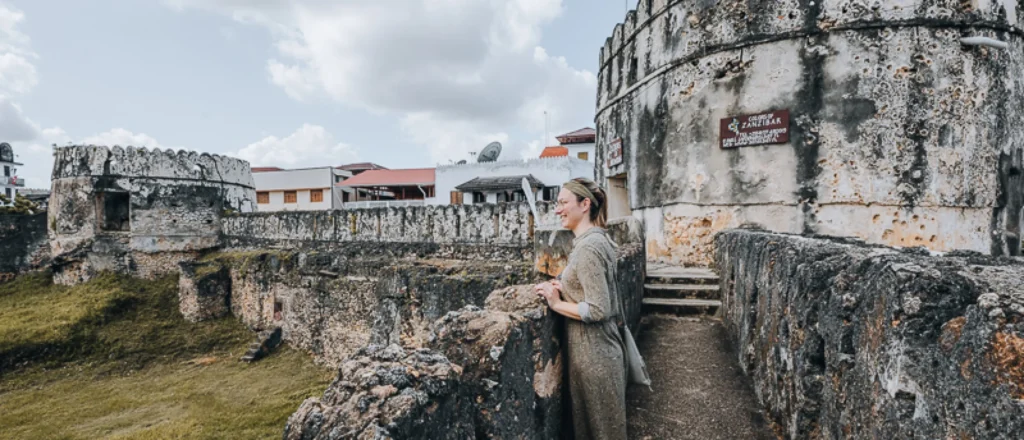
The principal features in the town include the Anglican cathedral, the ceremonial palace, the Kidichi Persian Baths for Sultan Said, the Dunga ruins, the Peace Memorial Museum, and the Makusurani graveyard for former Arab kings.
The Mtoni Palace Ruins is a notable site located north of the town, well of a visit. The Mtoni Palace, constructed in the 1800s, was ravaged by fire; yet, its remnants continue to draw numerous visitors. Additionally, you may explore the historic slave market and the House of Wonders, one of the six palaces of the sultan. There are further heritage sites to explore or one may stroll to appreciate the town’s general architecture.
The Old Fort, or Ngome Kongwe, is a notable 17th-century structure constructed by the Omani Arabs following the expulsion of the Portuguese. Subsequently, it was employed to safeguard the town from adversaries such as the Mazrui Arabs in the 1700s. A local guide can provide information regarding its history and the pivotal role it played in safeguarding the town from potential adversaries. Numerous hotels and lodges in Stone Town organize day trips conducted by a knowledgeable guide. In the subsequent chapters, we shall examine the principal attractions in Stone Town in greater detail.
Explore the local markets in Stone Town:
In Stone Town, one can explore the Darajani market to observe local livelihoods or shop for fruits, large sea fish, meat, and veggies. Participate in the fish auction when merchants bid on the largest catch. Participating in the fish auction is exhilarating, as it provides an opportunity to interact with locals and observe rare and colossal marine species. If you possess some excess currency, you may participate in the auction. You may assign a price to one of the larger fish and donate it to female fish vendors with limited financial resources. At the market, you may request fresh fish, which can be fried or grilled and accompanied with potato chips.
In addition to purchasing fish from friends at Darajani market, one may also explore the nocturnal markets along the streets for roasted pork, French fries, and regional cuisine. The food markets operate from the afternoon until late at night. These food stalls are patronized by residents hurrying home after work or after consuming a drink or two. While visiting the markets in Stone Town, you will observe that the native populace is exceptionally amiable and unpretentious. English is often spoken, allowing you to initiate conversations regarding life on the island. For those interested in purchasing local souvenirs, jewelry, and apparel, it is advisable to explore the boutique shops located on Changa Bazaar Street, Kenyatta Road, and Ginzenga Street.
Tour the Livingstone House:
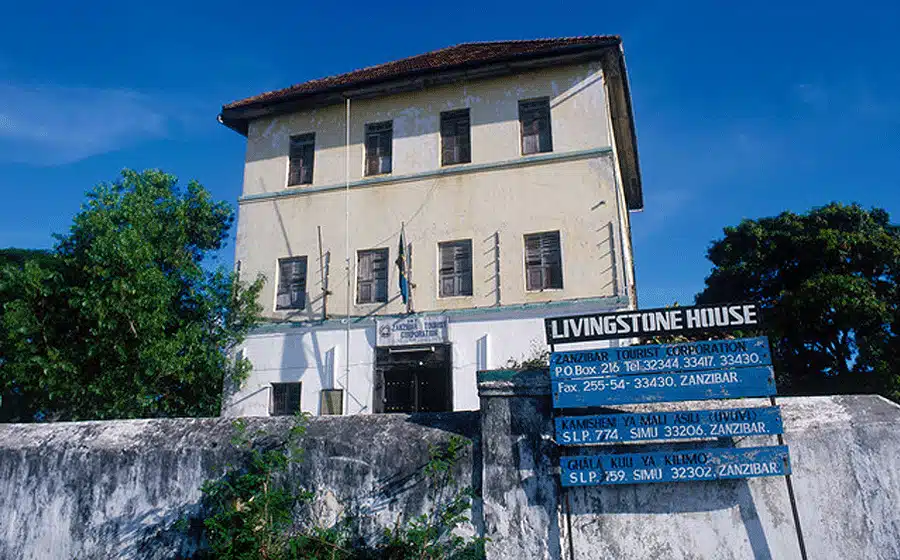
This edifice is also located in Stone Town, Zanzibar. Constructed by Sultan Sais Majis in 1860. Subsequently, it functioned as the headquarters for explorers and missionaries engaged in designated missions in East Africa. Among the explorers was the renowned Dr. David Livingstone. Livingstone resided in the edifice before to commencing his trip to the East African mainland. The British acquired the home in 1947, although it currently serves as government tourist offices.
Attend Religious Institutions:
While Islam is the predominant religion on the island, Zanzibar is also home to inhabitants who practice Christianity or Hinduism. Stone Town features Hindu temples, Christian cathedrals, and numerous mosques. The Shakti Temple is notable for its distinctive architecture, whilst the Malindi mosque is the island’s oldest, featuring an unusual yet simplistic design. Christians may visit the Anglican Cathedral, constructed in the 19th century. The cathedral is situated near one of the main slave marketplaces in Stone Town and merits a visit.
The premier activities of Zanzibar’s Prison Island:
Prison Island, or Changuu Island, was uninhabited until the arrival of Arabs in the 1860s. The island served as a provisional refuge for slaves deemed insubordinate or with the potential to incite uprisings. The enslaved individuals were confined there prior to being sold overseas. The Island was utilized to isolate individuals afflicted during yellow fever outbreaks. Upon Zanzibar’s designation as a British protectorate, the island was acquired from the Arabs, and a legitimate prison was constructed. The prison remained unused upon completion and has since been transformed into an exquisite resort. In 1919, four large Aldabra tortoises were introduced to the island as a gift from a British Governor in the Seychelles. By the 1950s, their numbers of places to visit in Zanzibar had escalated to the hundreds. Trafficking in subsequent years significantly diminished their population, but they have recently rebounded with the government’s construction of a vast enclosure for their protection. Certain tortoises are thought to exceed 100 years in age. After engaging with the tortoises, you may proceed to swim at the beach and appreciate the stunning scenery and avian life, especially the remarkable peacock. To access the island from Stone Town, one must procure a boat and undertake a voyage lasting 30 minutes.
Acquire further knowledge regarding the Island’s history of slavery:
If you wish to explore the islands’ involvement in the slave trade, you may engage a local guide to visit the historical slave market, slave caverns, and other attractions in Zanzibar. The Mangapwani Slave Chambers is undoubtedly a superior destination for understanding the atrocities of slavery and Zanzibar’s involvement in the trade. The majority of slaves from the mainland and various regions of East Africa were transported to Zanzibar prior to being subjected to forced labor in different areas of the world. The Mangapwani Slave Chambers are located 12 miles from Stone Town. The Chambers were constructed underground and were utilized to conceal slaves long after the abolition of slavery. You can conclude your investigation by swimming at the historic slave port.
Explore the beaches:
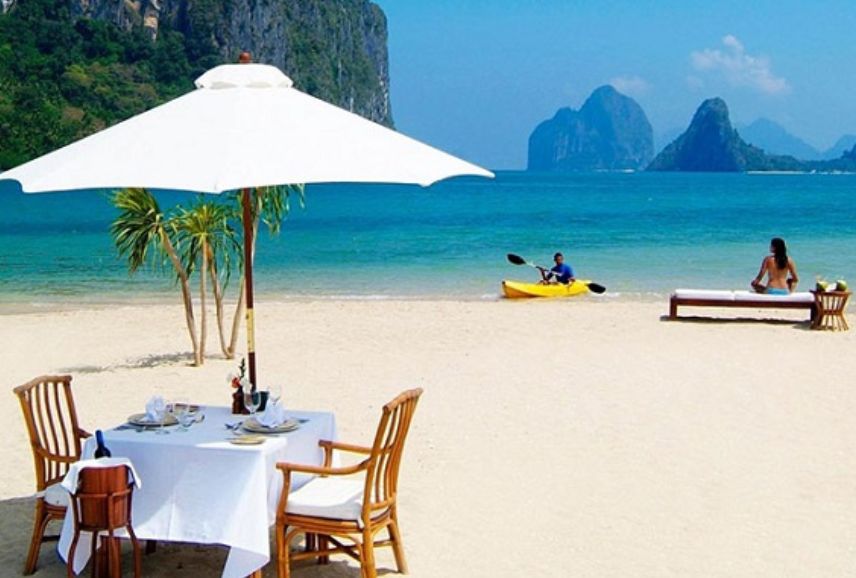
Zanzibar possesses some of the most exquisite beaches globally. Every island features distinctive beaches with engaging activities available. The western beaches of Zanzibar offer stunning sunsets, whereas the southern beaches are renowned for their abundant dolphin population. Nungwi is undoubtedly the finest and most picturesque beach in Zanzibar. The pristine white sands and stunning blue waters will captivate nearly all who visit. It offers a diverse range of lodging options, clubs, bars, and restaurants, serving as the primary destination for island residents seeking the finest parties and beach experiences. The other notable beaches are Kendwa, renowned for its nightlife, and Paje, located on the eastern coastline. All the beaches feature exquisite white sands and waters that are ideal for swimming and diving. To visit all the beaches efficiently, it is essential to select a hotel that is strategically situated for convenient access to the many islands. All beaches in Zanzibar are accessible to the public without charge.
Attend the Seaweed Centre:
The Seaweed Centre is overseen by a collective of women in Zanzibar. The women have utilized the plentiful seaweed around the coastal shores to produce items such as smoothies, drinks, organic soap, and oils. During your tour to the Centre, you will engage with the ladies and observe their product-making process. You will have the chance to sample a seaweed smoothie and discover its characteristics. Numerous methods exist to assist the ladies at the Zanzibar Seaweed Centre. The most straightforward method is to purchase some of their items.
Embark on a Sunset Dhow Cruise:
Charter a dhow and navigate towards the ocean while observing the town or island recede from the horizon. Most dhows guarantee sufficient provisions for the day, including delectable snacks, seafood (grilled fish, lobsters, octopus, and calamari), and beverages to assure everyone’s satisfaction. A Dhow trip enables you to admire the exquisite splendor of the Indian Ocean, typically commencing from the main island and on to Kwale Island or fishing settlements such as Fumba. Upon arriving at these islands or fishing communities, you may disembark to explore the surroundings or ascend ancient baobab trees. Throughout the voyage, you may observe dolphins navigating the picturesque green lagoons. A significant concentration of fish exists in the vicinity of coral reefs and mangroves.
All-Terrain Vehicle Riding:
The most exquisite way to appreciate the beauty of Zanzibar is to traverse the interior on a Quad bike from one of the islands. Utilizing a quad bike, one can traverse sugar cane and pineapple plantations, rice fields, settlements on the island, coconut plantations, as well as fruit and spice fields.
Snorkeling, windsurfing, parasailing, and scuba diving:
Numerous aquatic sports are available for participation in Zanzibar. The paragliding experience exemplifies an exhilarating activity among the top attractions in Zanzibar, offering breathtaking views of the Indian Ocean. Parasailing can be undertaken individually, with companions, as a family unit, or with a spouse. In addition to parasailing, the crystalline waters and coral reefs offer exceptional prospects for scuba diving and snorkeling. The premier beaches for snorkeling in Zanzibar include Kendwa Beach, Matemwe Beach, Nakupenda Beach, Nungwi Beach, and Paje Beach. The Pange Sandbank is perhaps the premier location for snorkeling, particularly for novices. The waters at the Sandbank are more tranquil and less deep.
The optimal hotel for water sports is Mnemba Island Lodge. The lodge is situated on a secluded island and features 10 opulent bandas. Mnemba Island Lodge organizes kayaking, windsurfing, snorkeling, and two daily scuba dives. To engage in scuba diving, one must possess experience and qualifications. Otherwise, you must complete training before being permitted to approach the deep seas. Optimal diving locations may necessitate venturing deeper into the ocean with speedboats.
Utilize a dala dala or boda (scooter):
Dala dalas are inexpensive minibus taxis that function inside the islands. They lack a designated stage and will halt anytime they identify a prospective passenger. Dala Dalas are distinguished by their destination names and distinct registration numbers. They are consistently filled with passengers and eager to accommodate additional individuals. The local residents can assist you in determining the destination of each one. The benefit of utilizing dala dalas for transportation is that they facilitate interaction with local inhabitants, providing a distinctly unique experience. The dala dala operators levy approximately $2 for extended journeys and a lesser amount for brief pauses.
A recently developed mode of transportation is the more convenient scooter or boda boda. These motorcycles do not adhere to designated routes and can transport you to nearly any location on the island. Boda bodas, or scooters, are not the most secure mode of transportation. Several riders have been discovered operating while impaired by drugs or alcohol, or without a valid license. It is consequently prudent to consistently wear your helmet. The most secure method of exploring the island is to procure a specialized vehicle with a driver from your hotel or a local tour company.
Explore Cheetah’s Rock:
For wildlife enthusiasts, this is an essential destination to visit when in Zanzibar. The facility has cheetahs, lions, zebras, and several renowned African animal species. The facility enables tourists to experience what to anticipate when exploring Tanzania’s remarkable wildlife sanctuaries. During your time at the Centre, the Guide will provide information on the animals while you engage with and feed them. The facility operates on Tuesday, Thursday, and Sunday from 2 PM to 6 PM and is situated in Kama.
Attend the Full Moon Party at Kendwa Rocks:
The full moon party is a monthly beach event staged by resorts, primarily in the northern region such as Kendwa, in Zanzibar. Kendwa Island boasts numerous gorgeous, expansive, shallow sandy beaches with crystalline waters. The full moon party unites tourists, locals, and other revelers at Zanzibar Tourist Attractions for an evening of enjoyment and celebration. Anticipate vibrant fireworks, acrobatics, percussion, dance, cacophony, cuisine, and exuberant festivities. A primary stage is established on the beach, accompanied by tables, seats, and mobile bars for the enjoyment of the attendees. Should you participate in the event, anticipate entertainment from premier local DJs, musicians, acrobats, and fire-eaters. The full moon celebration originated in Finland. The primary distinction is that it occurs in a vast tropical climate, bordered by the expansive Indian Ocean. The Full Moon party is so renowned that individuals journey from Dar es Salaam and various regions of Tanzania solely to partake in a single night of entertainment.
Volunteer:
A visitor with a voluntaristic mindset should anticipate possibilities to contribute to development while in Zanzibar. The exquisite luxury resorts are next to local towns. Inhabitants of certain villages endure deplorable conditions. You can effect change by participating in beach cleanups or by planting trees in regions that lack them. Participating in volunteer efforts to conserve dolphins in Zanzibar is an exceptional chance not to be overlooked. Fishing and swimming with dolphins lack adequate regulation. It has frequently jeopardized the lives of mammals when executed by negligent individuals or corporations. Volunteering at GVI’s dolphin research program involves responsibilities such as organizing workshops to promote awareness regarding the necessity of dolphin conservation.
In addition to safeguarding dolphins, you may also contribute your skills and proficiency in English at the Tamani Foundation or a comparable organization of your preference. The purpose of the Tamani Foundation is to enhance literacy throughout all educational levels, including primary, secondary, and adult education. They instruct individuals of all ages in computer skills. One may volunteer to instruct beneficiaries of the foundation in computer skills or English. Additional community-based organizations welcome volunteers, and it is essential to contact them directly beforehand, particularly if you intend to assist for an extended duration. In summary, volunteering enhances your comprehension of local community issues while offering a chance to effect change through activities such as beach cleanups and tree planting.
Enjoy tea or patronize one of the coffee establishments:
For superior tea, coffee, and international cuisine, try visiting the exclusive Tea House in Stone Town. Tea House is an elevated dining establishment. The building is equipped with comfortable chairs, tables, and painted walls. The quality of customer service and food is exceptional due to the caliber of patrons frequenting the establishment. Reservations must be secured in advance either online or via a friend in person due to the establishment’s popularity. In addition to tea and coffee, you may also request espresso meringue dessert, massaman goat curry, crab cakes, and saffron chilies.
Cycling around the coastal shoreline and the Ngezi Forest in Pemba Island is an excellent method to discover the many islands in Zanzibar and the city of Stone Town with a quality mountain bike. Your hotel in Zanzibar should provide bicycle rentals for a nominal price. A bicycle enables exploration of the beaches, fishing spots, and neighboring villages. You may pause to swim at a beach or traverse between islands. If you become fatigued from biking, you may easily halt a dala dala and board it with your bicycle to return to your accommodation. If you are contemplating island hopping with your bicycle, you should visit Pemba. Pemba Island is one of the enchanting islands comprising the Zanzibar archipelago. The Ngezi Forest is one of its most significant attractions. The woodland harbors red vervet monkeys, flying foxes, and a remarkable avifauna. Cycling along its principal pathways will provide you stunning vistas of the lush forest and fauna.
Explore the Nungwi Maasai Village Market and the surrounding local people.
The Masai Market in Nungwi village is an ideal location for purchasing indigenous souvenirs, apparel, and artwork. The street market in Stone Town, Zanzibar, provides an opportunity to engage with people and engage in amicable discussions regarding commerce and life on the island. During your exploration of the village and market, you will witness their distinctive attire, traditional residences, bazaars, educational institutions, and recreational areas, providing insight into the lifestyle of the island inhabitants. Following your tour to Nungwi Village, you may also explore the nocturnal food market to sample the local foods. These night markets emerge each evening as local chefs commence the preparation of roasted meat, pizza, samosas, sugar cane juice, and seafood from the roadside.
Dine at a premier restaurant:
The Rock restaurant on Paje Island is among the premier destinations to experience in Zanzibar. CNN characterized it as one of the most eccentric eateries globally, and for valid reasons regarding activities in Zanzibar. The restaurant is constructed on a rock and meant to provide fortunate patrons with a romantic ambiance while with their companions. The restaurant offers delectable seafood and wine, which may be enjoyed on the terraces while overlooking the Indian Ocean. Another place to contemplate while in Zanzibar is The Beach House place. This restaurant provides stunning ocean views and serves exquisite French, Italian, and Mediterranean cuisines. Finally, there is 6 Degrees South. This dining establishment is an exceptional option for individuals seeking a romantic evening while relishing breathtaking ocean views with a partner.
Gathering at Jaws Corner:
This is a favored gathering place for the inhabitants of Stone Town and visitors. It is situated in the heart of Stone Town, making it highly accessible to residents. Jaws Corner is readily recognizable due to a prominent shark mural on the wall. The Jaws Corner is an ideal location to stay informed on the latest island headlines while enjoying exquisite Arabica coffee. Most island inhabitants convene here each evening to engage in political discourse, exchange the latest gossip, or have brief meetings while consuming tea and coffee.
Spice Excursions:
Zanzibar was referred to be the spice island in the 19th century. Clove cultivation thrived on the island due to its lush soils and tropical environment. Subsequently, ginger, vanilla, cardamom, pepper, cinnamon, and nutmeg were incorporated for extensive cultivation. The cultivation of spices in Zanzibar is highly popular and profitable. Tourists can visit these estates to understand the cultivation of spices and their significant contribution to Zanzibar’s economy. The Kizimbani Spice Farm is among the most frequented spice plantations in Zanzibar. This plantation is located on the island of Unguja. During your tour to the farm, anticipate experiencing the flavors and aromas of cinnamon, breadfruit, lime, coconut, cloves, nutmeg, black pepper, coriander, bananas, jackfruits, and mangoes. One can also acquire the skills to prepare local cuisine with the varieties cultivated on the estate. Irrespective of the plantation you choose to visit, a spice tour in Zanzibar is highly informative and lasts between two to three hours.
Sample various local fruits and seafood.
Zanzibar possesses a historical legacy of spice cultivation. The island is also endowed with numerous fruit farms, including those of bananas, pineapples, mangoes, coconuts, vanilla, and coffee. The island’s popular seafood may comprise seagull, octopus, broiled lobsters, crabs, and squid. Seafood and fruits are available at open markets, restaurants, supermarkets, and from street vendors. The predominant native dishes of Zanzibar include Zanzibar pizza (like to a pancake filled with chicken, beef, onion, mayonnaise, eggs, pepper, cheese, and onion), urojo soup, Mishkaki (meat kebab), Mandazi, pilau, and Biryani.
Mrembo Spa:
For optimal spa treatment in Stone Town, one should visit Mrembo Spa. Mrembo Spa distinguishes itself from other establishments in the town due to the excellence of its services. At Mrembo Spa, you may receive exceptional massages, manicures, and pedicures. Locating Mrembo Spa is somewhat challenging due to the tight and busy streets of Stone Town. Mrembo Spa is situated on Cathedral Street. Upon arrival at the facility, you will be greeted by a group of cheerful women and a pleasant, fresh fragrance.
Diving at the Atoll Marine Reserve: The islands of Zanzibar provide premier diving locations along the East African coastline. Exploring the ocean depths enables the examination of coral reefs and lagoons, providing opportunities to encounter uncommon marine species such as turtles, emperor fish, stingrays, giant trevally, moray eels, and lionfish. We strongly endorse the Mnemba Atoll Marine Reserve for divers. Numerous firms provide diving adventures utilizing boats for a fee. Diving can be combined with fishing for tuna, dorado, and bonito.
Engage in aquatic activities with Humpback Dolphins:
The optimal location for swimming with dolphins is the quaint fishing village of Kizimkazi. Dolphin excursions are conducted via boats or dhows. Tourists typically go on boats and venture into the ocean in pursuit of dolphins. The tours can be arranged as group excursions or private sessions. Dolphin trips provide opportunity to witness substantial marine fish, prawns, lobsters, and various other aquatic organisms. Following the dolphin swim, guests are typically transported to a smaller island for a dinner that may consist of fried prawns, calamari, pilau rice, and tropical fruits. The dolphin excursion commences at 10:00 PM and concludes by 5:00 PM.
Kitesurfing and lagoon exploration:
The tranquil beaches, favorable climate, and level lagoons of Zanzibar facilitate exceptional kitesurfing experiences. April, May, and November exhibit minimal wind conditions, rendering them ideal for kite-surfing. The premier kitesurfing locations are situated in the eastern region of Zanzibar. In addition to kite surfing, certain firms and resorts provide tourists the chance to navigate the lagoons of Chwaka Bay in tiny boats. The optimal approach to navigate and traverse the lagoons is via paddle boarding on tiny vessels.
Engage in aquatic activities beside turtles:
The premier Turtle Aquarium in Zanzibar is the Baraka National Aquarium. The majority of turtles are admitted to the facility subsequent to being ensnared in fishing nets. The majority arrive at the Centre when they are young or injured. They are attended to until their release back into the water is feasible. The Turtle Aquarium in Zanzibar provides visitors the opportunity to swim with turtles. Visitors are permitted to observe and photograph the totals.
Activities in Zanzibar and Stone Town: The Kuza Cave.
The Kuza Caves are a fascinating yet infrequently explored tourist destination in Zanzibar. The caves, located in the village of Jambiani, are regarded as sacred by the nearby populations. A tiny well exists within the caves, reputed to possess healing properties. Certain locals and individuals from mainland Tanzania frequent the caves to swim in the well, aspiring to attain relief from their ailments. The landscape surrounding the caves is breathtaking and hosts an impressive array of avian species. If birdwatching does not appeal to you, you may opt to observe hordes of monkeys reveling in the trees of the vicinity.
Explore Jozani Chwaka Bay National Park to observe the endangered Red Colobus Monkey and engage with the Zanzibar Butterfly Project.
This park encompasses around 6,200 acres, predominantly consisting of woodland. Jozani Forest was designated a national reserve in the 1960s. The park provides a refreshing respite from beach activities and is distinguished by its stunning landscapes and rich biodiversity. Jozani Chwaka Bay National Park has the uncommon and endangered Zanzibar Red Colobus Monkey. This monkey is native to the island, with approximately 2,500 individuals remaining. Their conservation efforts have typically been effective; yet, their exclusive presence on the island renders them highly susceptible to extinction.
In addition to the primates, visitors might anticipate encountering duikers and several butterfly species. The Zanzibar Butterfly Project is located within the park. Tourists may participate in a tour of the project facilities to understand how local farmers gain advantages from cultivating butterfly pupae until maturity. Additional activities in the park encompass birdwatching (over 50 species) and traversing the mangrove swamps via boardwalks. The admission cost is approximately $50 and encompasses a knowledgeable guide to escort you through the woodland.
Monitor the elusive Zanzibar Bush Baby:
Bush infants are little and reticent nocturnal primates. The sub-species endemic to Zanzibar are exclusive to the island. Bush babies bear resemblance to possums, although are typically more aesthetically pleasing. Their cries and calls are audible at night when you are resting in your bed. The primates are extensively distributed around the island and can be observed even within hotel grounds. If your resort or motel has resident individuals, you may spend time discovering them without venturing into the woods. They are fond of bananas, and this serves as a method to entice them from their concealments.
Acquire proficiency in Swahili and explore the indigenous culture.
Swahili is undoubtedly the most prevalent African language. In Zanzibar, 98 percent of the populace is proficient in Swahili. To interact and socialize with the locals, it is essential to learn few key terms. The fundamental phrases to master are Jambo (Hello), Mambo (How are you?), tafadhali (please), Karibu Sana (You’re welcome), Nzuri Sana (Very good), and Asante sana (thank you). Additional significant Swahili terms are Hapana (no), Sawa (okay), Pole (slowly), Ndiyo (yes), Hakuna matata (no concerns), and Kesho (tomorrow). Mastering few of these significant words during your stay on the island will greatly enhance your ability to earn the smiles of the local populace. Proficiency in Swahili may facilitate the acquisition of certain advantages.
Participate in Zanzibar festivals:
Zanzibar, as a multicultural island, hosts intriguing cultural festivals that may captivate your curiosity. Sauti za Busara is a renowned music event held annually in Stone Town every February. The event spans several days and showcases activities in Zanzibar, Tanzania, featuring numerous African musicians recruited to delight island revelers. The Zanzibar International Film Festival, conversely, is among the largest cultural festivals in East Africa. Initiated in 1997, it occurs during a fortnight in July. Over the course of two weeks, exceptional talents in the fields of arts, music, and movies are acknowledged and awarded. The Zanzibar Beach and Water Sports Festival is held annually in September in the village of Jambiani. The festival draws all community members to participate or compete in various water sports. The Culture Musical Club in Zanzibar operates year-round and hosts premier Swahili orchestras alongside Traditional Taarab music performances.
Factors to Consider When Visiting Zanzibar
Zanzibar comprises numerous islands. Pemba and Unguja are the main islands; however, there are also Mnemba, Chumbe, Mafia, Kendwa, Nungwi, Matemwe, Michamvi, Pongwe, Bwejuu, Paje, and Jambiani. The capital is Stone Town, located in Unguja.
Prior to landing in Zanzibar, it is necessary to obtain a Tanzanian visa. The most straightforward method to obtain a visa is upon arrival at the airport. A yellow fever vaccination card is mandatory and will be required at all entrance points, including the airport. To safeguard yourself and your possessions during your stay to Zanzibar, it is advisable to obtain travel insurance prior to your arrival.
Zanzibar experiences two rainy seasons. The extended rainy season occurs from March to May, whilst the brief rains transpire from November to December. Consider reconsidering a visit during the rainy season if your primary objective is to relish the picturesque beaches. The monsoon winds intensify during the rainy season. The island remains enjoyable during the brief rainy season due to the mildness of the precipitation. Precipitation occurs intermittently and seldom across the islands.
Zanzibar offers exceptional lodging options. The hotels vary from opulent to basic budget alternatives. The premium hotels are of superior quality, offering breathtaking ocean views. Certain hotels and lodges are so exceptional that they may compel you to defer your departure date. Budget tourists and backpackers will discover numerous motels providing superb self-contained rooms with beach views at competitive rates.
Notwithstanding a history of invasions, battles, and occupations, the island remains comparatively secure. Tanzania is regarded as the most tranquil destination in Africa. Consequently, it is crucial to exercise vigilance, particularly when transporting valuable electrical devices in densely populated areas. Refrain from traversing during nighttime and in unfamiliar locations. The majority of recorded thefts are attributed to individuals who are not residents of the island. Pickpockets typically target visitors who are negligent in leaving their cameras, laptops, or phones unattended while swimming in the ocean.
Zanzibar is a comparatively conservative island due to its Islamic heritage. Both ladies and men like adorning themselves in traditional Muslim attire crafted from exquisite textiles. Dress appropriately and refrain from wearing excessively revealing attire when off the beach or your accommodation.
The majority of arrivals and departures to Zanzibar take place in Stone Town. Access is available via boat, ferry, or plane from Dar es Salaam. The aircraft are costlier, although they require about 20 minutes from Dar es Salaam, whereas speedboats necessitate approximately two hours. Despite being perceived as leisurely, the most exhilarating experience is the ferry journey from Dar es Salaam. The extensive journey will enhance your appreciation for the exquisite splendor of the Indian Ocean.