 info@gorillatrekkinginafrica.com

Mweka Route
The Mweka Route on Mount Kilimanjaro is situated on the southern flank of the mountain, similar to the Umbwe Route, and is predominantly utilized for descent. Nevertheless, experienced hikers often endeavor to ascend Mount Kilimanjaro using this route as well. This is the most direct path for individuals descending from the summit via the Lemosho or Machame climbs, utilizing Barafu Camp as their final staging area before the summit.
Upon reaching Uhuru Peak via the Lemosho, Machame, Umbwe, or Shira Routes, one can generally descend the mountain using this route. The elevated Kibo South Circuit trek beneath the Southern Icefields links these paths to the Barafu-Mweka Route. This crossing is among the most picturesque walks on Kilimanjaro. Despite a sufficient respite, the descent from Kibo to the Mweka Huts remains arduous following the drop from Uhuru Point to Barafu Camp. This phase may be omitted if you wish to overnight at the Millennium Camp. The rapid and direct descent of the mountain offers limited vistas of the southern glaciers.
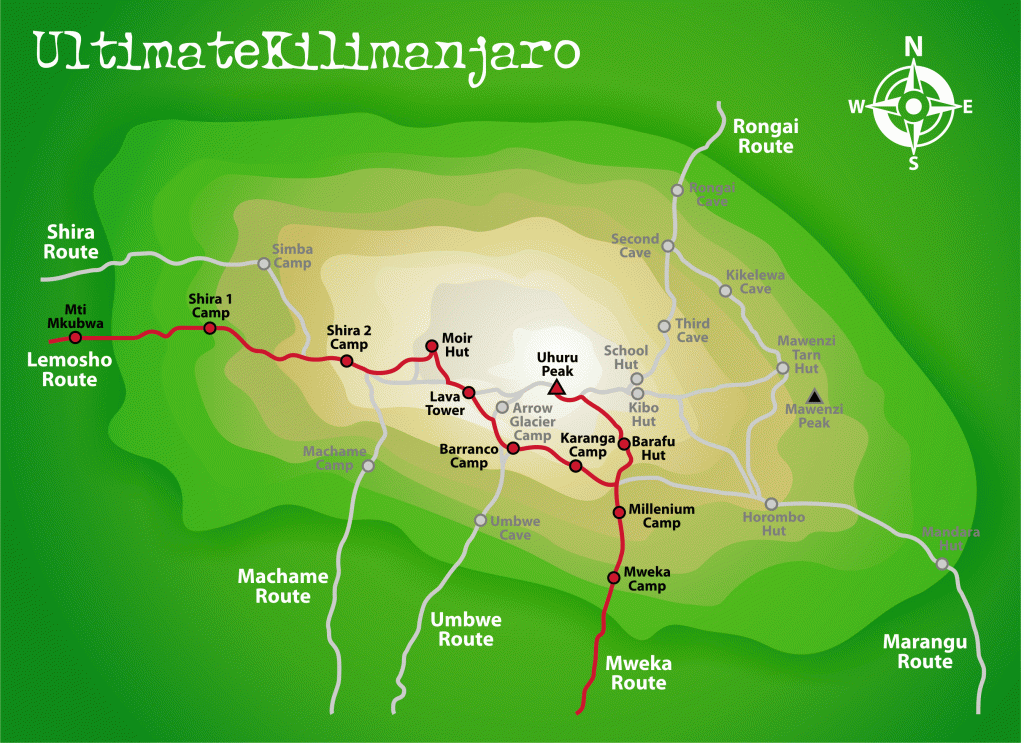
The path is steep and intermittently treacherous beyond the roadhead. Water must be transported over the Mweka Huts. The Barafu Hut periodically must traverse considerable distances to procure snow or ice for water. The majority of individuals perceive selecting a course as challenging. Consideration must be given to the route’s topography, level of difficulty, traffic conditions, and altitude acclimatization factors. Mobile tents constitute the sole kind of accommodation for the ascent and descent. This route is more challenging than the Marangu Route and is designed for more adventurous hikers.
The formidable Barranco Wall must be ascended on the fourth day of the Machame/Mweka Route, commonly referred to as the Smart Route. The approximately 300-meter ascent is considerably simpler than it appears, and the majority of climbers successfully navigate the wall with relative ease. The path becomes even after the wall before abruptly descending into the Karanga Valley. The trail rises again, tracing the Karanga Valley to the fourth campsite, designated as Barafu Camp. Climbers must familiarize themselves with the campsite’s layout before dusk, as Barafu is situated on a rocky promontory near the mountain’s edge. This will ensure they can evade disorientation and injury in the darkness on the treacherous ridges.
The penultimate segment of the Machame Trail on the fifth day commences about midnight. Climbers will be gratified for persevering through the obsidian ice upon witnessing the African sun ascend from behind Stella Point. The final ascent to Uhuru Peak requires around forty-five minutes from that point. Even for the most seasoned climbers, the final few meters are physically demanding and a significant test of willpower, despite their technical simplicity. Nonetheless, the majority of those who succeed claim that the panoramic vista of Africa sprawling below is indeed worth the exertion expended during the climb.
Descending via the Mweka route
Shortly, it will be time to commence the descent from the Roof of Africa. The Machame Route is also referred to as the Machame-Mweka Combination Route, as it descends via a different path than the ascent, unlike the Marangu Trail. Upon arrival at Mweka Camp, situated 2795 meters below Uhuru, trekkers are likely to feel fatigued and somewhat unsteady on their feet.
Following a rejuvenating night’s slumber, the final descent of the trek will commence. Climbers will traverse Kili’s arboreal canopy before reaching the Mweka Park Gate around midday. Subsequently, they will proceed to their lodging in a proximate town, including Kibo, Moshi, Rongai, Marangu, or Arusha.
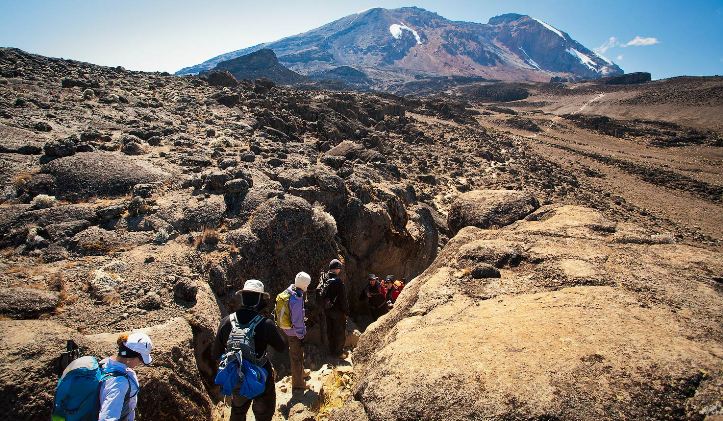
The Mweka route is arguably the most direct path to and from the top of Mount Kilimanjaro, which mostly accounts for its sole use for descent, as the ascent poses significant challenges and hinders acclimatization. One must be well prepared for the breathtaking and exhilarating descent of Africa’s tallest peak, which exceeds 4,000 meters in elevation.
You will traverse diverse ecosystems, including the rocky and icy terrain beneath the summit craters, cliffs, and glaciers; the desolate, rugged alpine desert amidst lava flow remnants; the sparsely attractive scrubby moorland; the lush, moist giant heather adorned with trailing lichens; and the dense cloud forest teeming with competing tree species such as podocarpus, fig, and hagenia. Eagles and buzzards will glide overhead, but larger fauna is uncommon, in contrast to the adjacent Mount Meru. Colobus and blue monkeys, together with sunbirds, hornbills, and turacos, may be observed, although sightings of smaller antelope and leopards are uncommon. At elevated altitudes, one may also observe chameleons and the charming Kilimanjaro shrew.
In ascending order:
The route from Stella Point to Barafu Hut to Millennium Camp is amazing, traversing from rugged rock and scree to enchanting moorland to the magnificent expansive heather zone. Approximately 1,800 meters (6,000 feet) of somewhat uniform descent.
A remarkably picturesque moment in the expansive heather region, perhaps enhanced by the brilliant early light, and a stretch along the ridge of an ancient lava sill are encountered en route to Mweka camp and at the Mweka gate. Upon departing the Mweka camp, one encounters the enchanting and captivating cloud forests, followed by rain forests. Prior to the fall becoming less severe, there is a 2,300m (7,800ft) drop that is predominantly steep and unyielding on damp stairs and gravel.