 info@gorillatrekkinginafrica.com
 +256 787505601
Where to see Lions in Africa
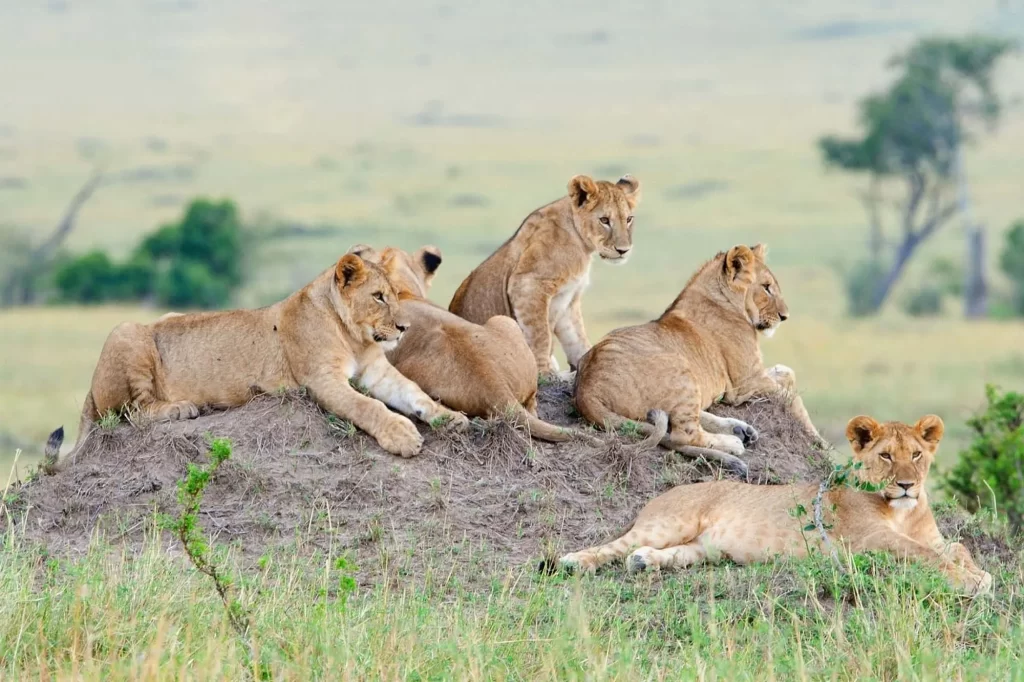
Where to see Lions in Africa , Lions are the unequivocal sovereigns of the African savanna and among the most coveted observations during a safari. Observing lions in Africa is profoundly exhilarating and evokes a primitive fascination. Despite its reassuringly feline designation – Panthera leo – lions are remarkably large, nearly the size of bears. Their robust, barrel-shaped physiques and prominent chins unmistakably signal dominance – and it is not the bipedal beings adorned with sunglasses! Lions are the apex predators of Africa, preying on large animals such zebras, buffalo, giraffes, hippos, and even juvenile elephants. Observing lionesses on a hunt is exhilarating, and their accompanying hyenas, jackals, and vultures provide an intriguing spectacle. Lions, sharing the same hue as the savannah they inhabit, are integral to the African landscape, alongside its flat-topped acacia trees and reddish, crumbly soil. Regal in size, the resonant roars that echo at dark when they convene for hunting create an unforgettable encounter. Their calls serve as a chilling reminder that the forest remains their domain.
Top Africa destinations you can travel to see Lions
1. Botswana
Okavango Delta
It is widely acknowledged that felines generally dislike water; yet, the lions of Duba Plains in the northern Okavango Delta have adapted to flourish in this environment due to the presence of nutrient-rich grasses and a consistent water supply, which create an ideal habitat for buffalo. Lions have a strong affinity for buffalo.
However, 2,000 pounds of hoof and horn does not yield easily, and the lions of Duba Plains have developed into remarkably formidable creatures. Due to their continuous exercise from traversing shallow water and engaging with aggressive buffaloes, the lions in this region are around 15 percent larger than average. They have also adjusted to diurnal hunting, often a behavior of prides that hunt at night and rest during the day, coinciding with the grazing of buffalo herds on the exposed floodplains. This results in exceptional game observation and ranks among the premier locations to observe water-adapted lions in Africa.
Chobe National Park
The Savuti region of Chobe is renowned for the frequent confrontations between lion prides and hyena clans over sustenance and territory. This distant region is renowned for its well-documented, formidable lions that hunt Africa’s largest species, including buffalo, giraffes, and even elephants. Savuti, renowned for its exhilarating lion encounters, is an exceptional destination in Africa for wildlife aficionados.
2. Kenya
Masai Mara National Reserve
The lions in Kenya’s Masai Mara are so abundant that they were featured in their own BBC nature documentary series, Big Cat Diary. Approximately every July, two million wildebeest traverse the Mara River into the Masai Mara National Reserve to graze on new, lush grass, all while being monitored by predatory lions. The Mara’s expansive, flat plains provide an excellent opportunity to observe lions throughout the year, while also being ideally suited for cheetahs, making it an exceptional location to witness the world’s fastest land mammal hunt its prey.
3. Namibia
The lions of northern Namibia are among the most intriguing on the planet, enduring in a harsh environment where flora and prey are few. The lions inhabiting the Namib Desert have adapted exceptionally to this arid habitat and are referred to as ‘desert-adapted’ or ‘desert lions.’ Due to their wandering disposition, encountering them is not guaranteed; your optimal chance is in the secluded regions of Kaokoveld and Damaraland.
Kruger National Park
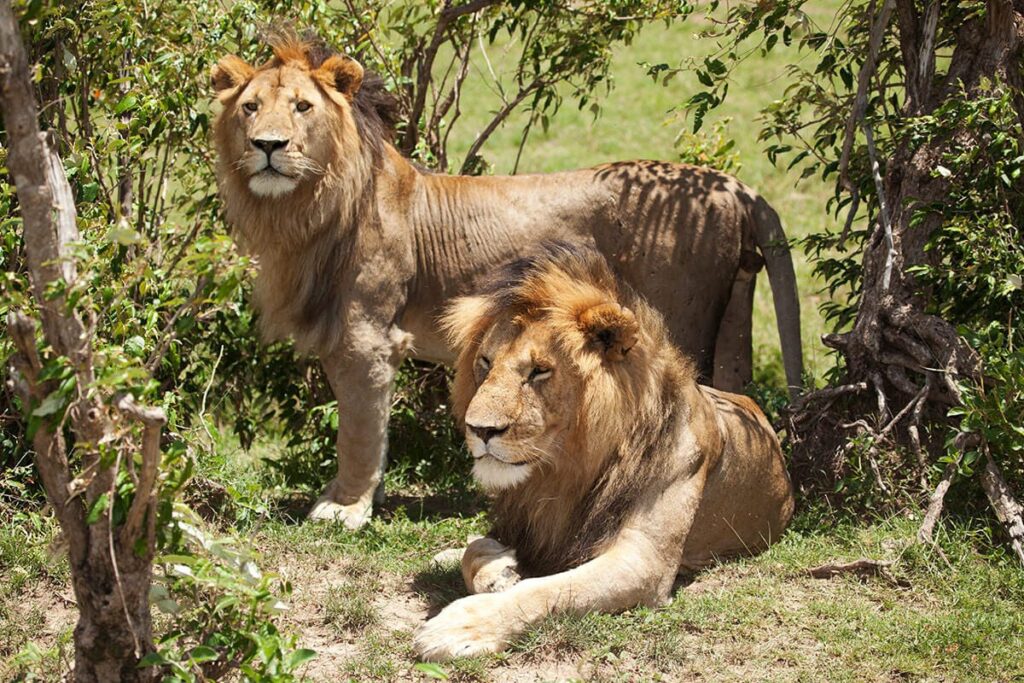
Kruger National Park, the primary habitat for the majority of the nation’s wild lions, has consistently been South Africa’s foremost location for lion safaris. However, Kruger encompasses an area equivalent to Wales, and the dispersion of its 2,000 lions is influenced by geographical and climatic factors. Regions with more fertile, grassy soils and increased precipitation sustain a greater abundance of prey, resulting in larger lion numbers. The arid northern Kruger hosts approximately five to six lions per 100 km² (39 square miles), but the more humid and verdant southern Kruger supports over twice that population density. For a Kruger lion safari, we suggest visiting the following private reserves:
Sabi Sands Game Reserve
The private Sabi Sands Game Reserve provides an unparalleled big game experience unmatched by any other region in the broader Kruger National Park. It is not unusual to observe all members of the Big 5 during a single game drive in Sabi, particularly the large felines such as lions and leopards. This is among the most dependable locations to observe lions in Africa.
Timbavati Game Reserve
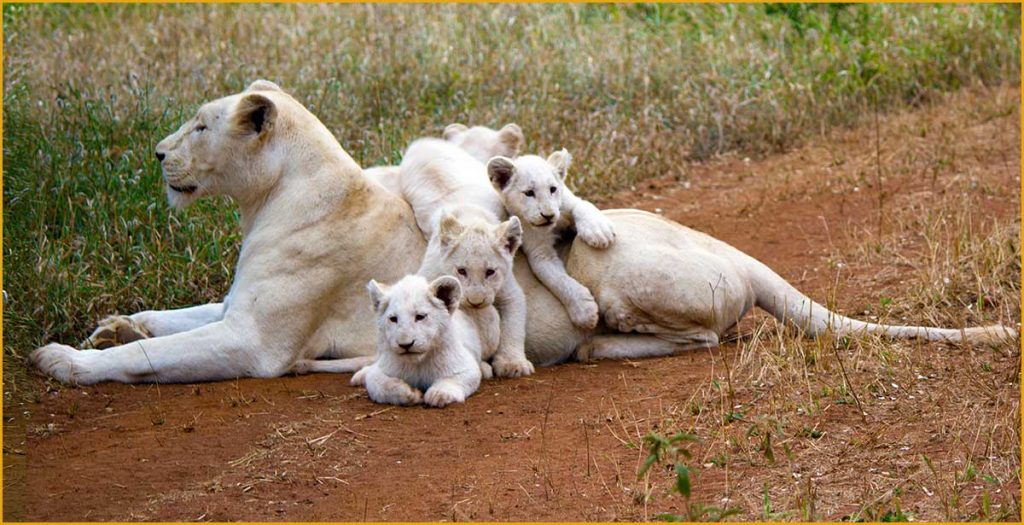
In contrast to their tawny-coated, amber-eyed counterparts, white lions possess snowy coats and striking blue eyes, rendering them exceptionally appealing. Their pallor is not attributable to albinism but rather to a benign genetic anomaly known as leucism. Their Latin name, Panthera leo krugeri, is derived from their natural occurrence in the Timbavati Game Reserve, situated north of the Sabi Sands on the western boundary of the Kruger National Park. Timbavati is an anglicized version of the native name ‘Tsimba Vati’, signifying ‘the location where the star lions descended to Earth’. Timbavati is the optimal location to observe white lions in Africa.
Eastern Cape
The Eastern Cape province of South Africa is rapidly acquiring a favorable reputation for uncomplicated Big 5 safaris, owing to its temperate climate (lacking extremes of cold, heat, or precipitation), malaria-free status, and child-friendly environment. We suggest the following for an exceptional lion safari:
Pumba Private Game Reserve
A stay in Pumba Game Reserve is an excellent conclusion to a self-drive holiday along the stunning Garden Route or a trip to Addo Elephant National Park, with the additional advantage of maybe observing white lions in Africa.
Sanbona Wildlife Reserve
If safaris to the Eastern Cape are uncomplicated, then those to Sanbona Wildlife Reserve are even more so. Situated in the Little Karoo between the charming villages of Barrydale and Montagu, Sanbona serves as an ideal diversion on a self-drive tour of the Garden Route or a convenient stopover when traversing the picturesque Route 62. Approximately three hours after departing from Cape Town, you will arrive in Sanbona, the site of the White Lion Project and the critically endangered riverine rabbit.
5. Tanzania
Serengeti National Park
Consider it from a lion’s perspective: if your survival hinges on the accessibility of appropriate sustenance, how appealing does a million wildebeest appear? Accompanied by tens of thousands of zebras and gazelles, wildebeests grunt and gallop through the Serengeti-Mara habitat, engaging in a cyclical migration that is so beautiful it traverses two countries and requires most of the year to accomplish. The Grumeti Game Reserve in the west and the middle Seronera region are among the premier locations in Serengeti National Park for observing lions in Africa.
Ngorongoro Crater
For the most accessible and dependable wildlife watching in East Africa, proceed to the floor of the world’s largest dormant volcanic crater. The Ngorongoro Crater, housing over 30,000 animals, including formidable lions, offers an exceptional Big 5 safari experience in a remarkable environment.
Ruaha National Park
It is likely that you may get solitary lion sightings in Ruaha. Concealed in southern Tanzania, Ruaha National Park receives less than 6,000 tourists annually—approximately 16 per day—rendering it one of Africa’s concealed gems. The stunning landscape and remarkable biodiversity host 10% of the global lion population. In reality, it ranks second only to the Serengeti for total numbers. Ruaha is a location in Africa renowned for its abundant lion population, however it features few other safari vehicles.
6. Zambia
South Luangwa National Park
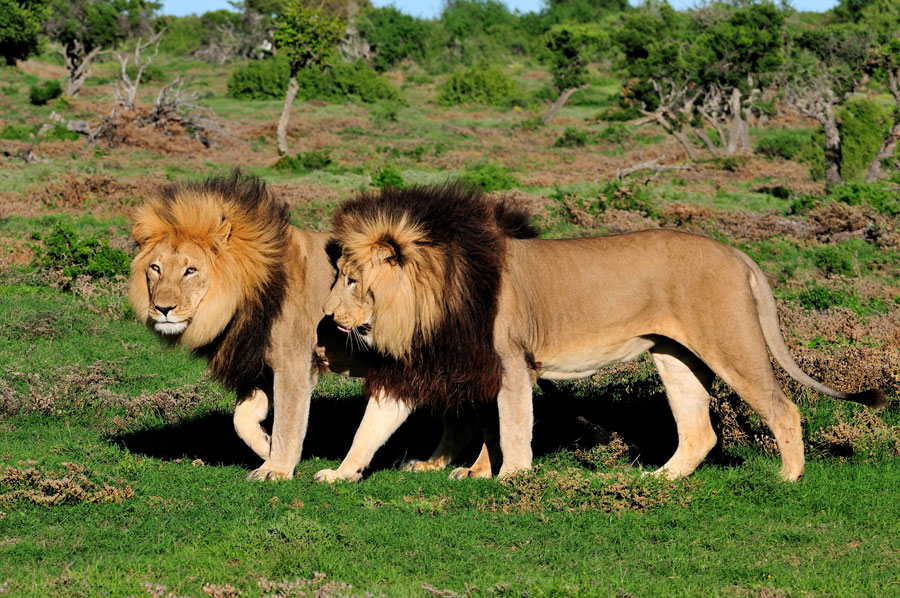
Zambia’s extensive reserves host a considerable percentage of Africa’s lions, predominantly residing in the Luangwa Valley, a sanctuary for animals and the location of South Luangwa National Park.
This location is where walking safaris were first developed, and numerous lodges provide options ranging from morning walks to multi-day hiking excursions. During the dry season from May to October, you will be elevated and secure in a 4X4 while patrolling the banks of the Luangwa River. Fauna congregate around the banks and oxbow lakes, rendering them vulnerable to the lions of Luangwa.