 info@gorillatrekkinginafrica.com
 +256 787505601
Where is Serengeti National Park located?
Where is Serengeti National Park located, Serengeti National Park is located in the Serengeti District, which is one of the seven districts in the Northern Arusha Region of the Mara Region in Tanzania. The district is governed through administrative cells, with its headquarters located in Mugumu town in the western region of the park, adjacent to the Western gate.

Mara Region in Tanzania is located in northern Tanzania, within the Mara and Simiyu regions, and shares its northern border with Kenya’s Maasai Mara National Reserve. As part of the greater Serengeti ecosystem, it is one of the most celebrated safari destinations in East Africa, accessible from Arusha, Kilimanjaro International Airport, and other popular tourism hubs.
The Mara region, situated in Northern Tanzania, is renowned and was formerly referred to as the Lake Region during colonial control until being renamed to its current designation. The Mara Region adjoins the Arusha Region to the southeast, the Kagera Region to the northeast, and the Mwanza Region to the south. The Mara region is renowned as the birthplace of Tanzania’s first president, the late Julius Nyerere.
The National Census of Tanzania indicates that the population of Serengeti District was 249,420 in 2002. The administrative entities of the Serengeti district are subdivided into 28 wards, which comprise the following:
Busawe, Kisangura, Morotonga, Nyansurura, Geitasamo, Kyambahi, Mosongo, Rigicha, IKoma, Machochwe, Mugumu, Ringwani, Issenye, Magange, Natta, Rungabure, Kebanchabancha, Majimoto, Nyamatare, Sedeco, Kenyamonta, Manchira, Nyambureti, Stendi Kuu, Kisaka, Mbalibali, Nyamoko, Uwanja wa Ndege.
The Serengeti district adjoins the Maasai Mara of Kenya to the north, Butiama district and Bunda to the west, and Ngorongoro district to the south. The Mara region is one of Tanzania’s premier tourist destinations, featuring sites such as the Ngorongoro Conservation Area, Lake Manyara National Park, Tarangire National Park, and Serengeti National Park. The District of Serengeti encompasses the Serengeti Mara environment, which includes game reserves, local communities, and the national park.
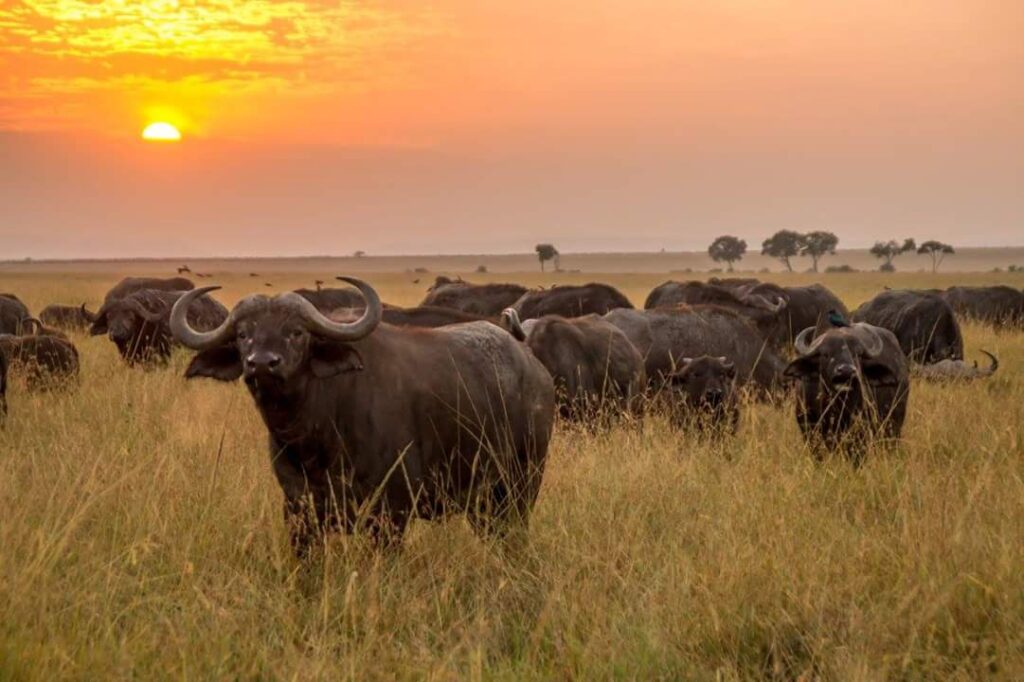
The Serengeti ecosystem is a geographical area located in northern Tanzania, Africa. The safeguarded zone encompasses over 30,000 km² (12,000 sq mi) of territory, comprising the Serengeti National Park and many game reserves.
Wildlife in Serengeti National Park.
Serengeti National Park is an exemplary destination for a safari in Tanzania due to its diverse array of wildlife, which can be observed throughout various regions of the park. Notable species include elephant herds, zebras, warthogs, wildebeests, giraffes, lions, hippos, leopards, black rhinos, hyenas, bat-eared foxes, porcupines, hunting dogs, jackals, baboons, vervet monkeys, colobus monkeys, mongooses, patas monkeys, and hyraxes, among others.
Bird
Serengeti National Park is regarded as a birdwatcher’s paradise, boasting about 500 recorded bird species that tourists can observe while exploring the park. Included among these avian species are the kori bustard, tawny eagle, grey-backed fiscal, southern ground hornbill, von der Dickens hornbill, rufous-tailed weaver, white-backed vulture, red-necked spurfowl, Karamoja apalis, grey-breasted spurfowl, Hildebrandt’s starling, fish eagles, flamingos, martial eagles, vultures, and numerous others.
Activities conducted at Serengeti National Park.
Exploring Serengeti National Park is consistently exhilarating, as it provides folks with opportunities to engage in many activities and forge unforgettable memories. Some of these activities encompass game drives, typically conducted in various sessions, such as morning, afternoon, and evening. The morning session is often regarded as the most advantageous, as it provides tourists the opportunity to observe a diverse array of animal species, including leopards, cheetahs, hyenas, antelopes, buffalo, zebras, and others, which appear particularly active while foraging in the park. Individuals can observe the wildebeest migration, a remarkable phenomenon characterized by vast numbers of animals traveling from one national park to another.
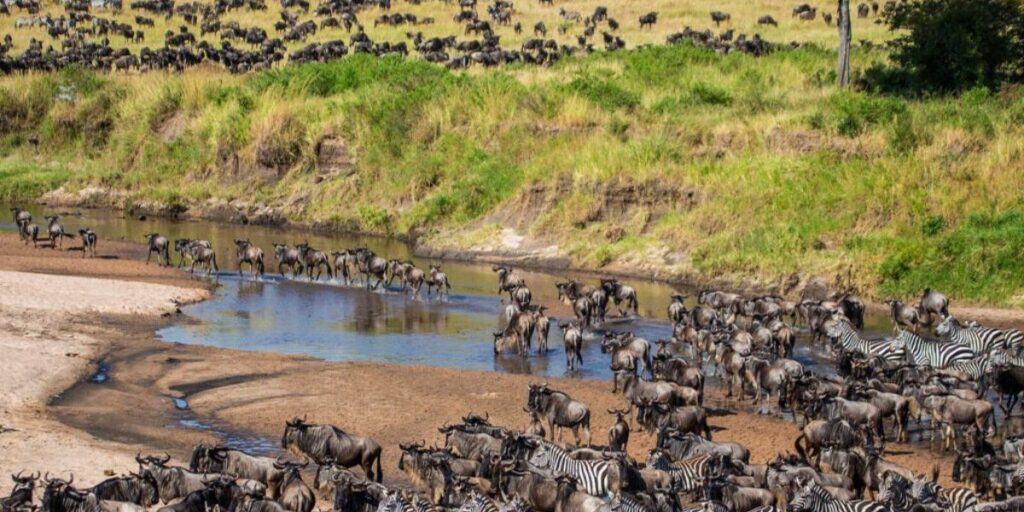
Additionally, tourists may choose to visit the adjacent communities to engage with the Maasai Mara people, who have resided in this park for over 200 years. Interacting with them provides opportunities to gain insights into their history, culture, and traditions, as well as to observe their daily lifestyle, such as the preparation of local meals. Visitors may opt to explore the Olduvai Gorge, renowned as the excavation site where archaeologist Dr. Louis Leakey unearthed the remains of early hominids. Additionally, they can traverse the Moru Kopjes, an optimal location for observing substantial populations of black rhinos, visit the Seronera River Valley, Grumeti River, and the Retina Hippo Pool, and partake in hot air balloon safaris to capture iconic vistas of the park, among other attractions.
Accommodation options in Serengeti National Park.
Serengeti National Park offers numerous hotel options that provide comfort and leisure throughout your visit. However, they vary across different categories, including cheap, mid-range, and luxury. Among these accommodations are Soroi Serengeti Camp, Serengeti Wildlife Lodge, Serian’s Serengeti Camp, Serengeti Mawe Tented Camp, Seronera Wildlife Lodge, Singita Mara River Camp, Robanda Tented Camp, Heritage Tented Camp, Mapito Tented Camp, Lobo Wildlife Lodge, Lake Masek Tented Camp, and numerous others.