 info@gorillatrekkinginafrica.com
 +256 787505601
What is the Big Five safari in Rwanda?
Rwanda presents numerous attractions for its visitors, particularly in the realm of tourism. Tourists have numerous activities available during a visit to any national park in the country. Akagera National Park, situated in the eastern region of Rwanda, is an exceptional destination for vacationers.
Akagera National Park is the sole refuge remaining in Rwanda for savannah animals. The national park is the sole location in Rwanda where visitors can observe the renowned Big Five animals in their natural environment.
The national park hosts more than 8,000 wildlife species, including lions, leopards, black eastern rhinoceroses, Cape buffalo, over 100 savannah elephants, antelopes, impalas, hippos, crocodiles, and over 500 bird species.
Akagera National Park is the largest national park in Rwanda, encompassing an area of 1,122 km². The park was founded in 1934, rendering it one of the oldest national parks in Africa. It was originally designated as a national park to safeguard its distinctive biodiversity of flora and fauna across three principal regions: savannah grasslands, mountains, and marshlands.
Tourists at the national park are captivated by the stunning and unspoiled scenery, together with the diverse array of wildlife inhabiting the savannah. It is difficult to comprehend that, at one time, a significant amount of the park and its fauna was eradicated owing to persistent poaching, deforestation, and the encroachment of agricultural and grazing activities. Numerous wildlife species, particularly lions and rhinos, have become extinct in Akagera National Park. The final observation of a black rhino in the park occurred in 2007.
In the years subsequent to 1970, the management of Akagera National Park resolved to restore the park to its previous splendor. The park effectively relocated numerous elephants to safeguard and enhance the declining stock of the animal. Furthermore, approximately 300 lions were observed inhabiting the national park, while thousands of antelopes, zebras, and buffaloes flourished in the savanna.
In 1994, the Rwandan genocide marked the second phase of decline for Akagera National Park. A significant number of Rwandan refugees repatriated to the country, with many establishing residence in regions within and adjacent to the national park. A significant portion of the park’s trees and land was deforested to establish areas for agriculture and livestock grazing. A significant proportion of the animals in the park were hunted as an alternate protein source for the populace. A significant amount was lost during this period, including a considerable portion of Akagera National Park.
In 2009, a collaborative management agreement was negotiated between the Rwanda Development Board and African Parks, a conservation non-governmental organization. The joint venture resulted in the two organizations assuming control of Akagera National Park, culminating in the formation of the Akagera control Board in 2010. Since that time, numerous advancements have been achieved in the conservation of species within the park.
Currently, Akagera National Park is home to over 100 savannah elephants, more than 80 giraffes, and in excess of 20 lions. Visitors can observe more than 500 avian species in the national park, as well as many reptilian species, including crocodiles. Within the diverse array of wildlife in the national park, tourists can observe the renowned Big Five creatures, which include:
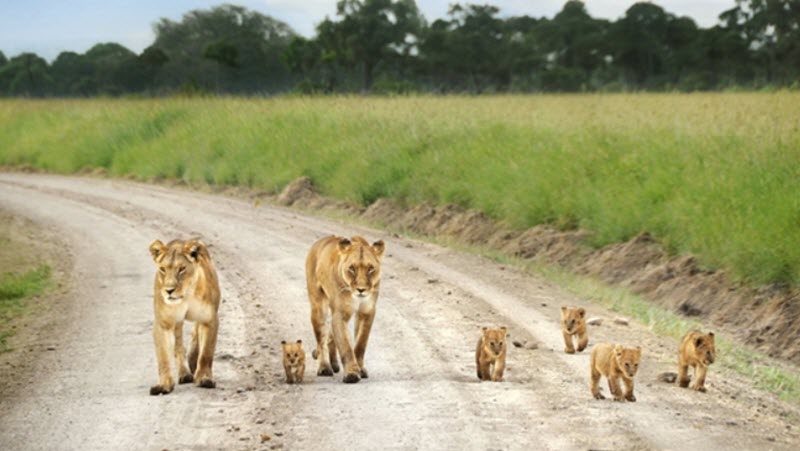
Lions in Akagera National Park:
In 2015, seven lions were relocated from South Africa and reintroduced into Akagera National Park. The five females and two male lions thrived in the savannah regions of the national park. Their population increased double in the initial year due to the birth of eleven cubs. In late 2017, two male lions were relocated from South Africa to Akagera, thereby augmenting the population of this species within the park.
Visitors may observe lions throughout Akagera National Park on a wildlife drive; nevertheless, it is essential that your guide is well-informed about their precise whereabouts. The park provides tourists with guided game drives during both day and night, with the nocturnal drives being optimal for observing animals like as lions.
The Leopards of Akagera National Park
The leopard is one of the Big Five species that visitors may observe during a game drive in Akagera National Park, provided they are attentive and patient. The leopard is inherently a reticent yet lethal creature. In comparison to other wild cat species, the leopard possesses comparatively short legs, an elongated body, and a substantial cranium. The animal’s anatomy, characterized by its rosette-patterned fur, renders it challenging for tourists to detect in the wild. The leopard predominantly remains solitary in its natural habitat, concealing itself among trees and long grass. Leopards in Akagera National Park are difficult to observe, particularly during daylight hours. Visitors desiring to observe leopards in Akagera must undertake a guided nocturnal game drive.
Rhinos in Akagera National Park:
The rhinoceros species in Akagera National Park were a subject of history, with the last recorded sightings occurring in 2007. Fortunately, this is not the prevailing narrative in the park today. In May 2017, African Parks, in collaboration with the Rwanda Development Board and the Howard G. Buffett Foundation, translocated 18 eastern black rhinos from South Africa to Akagera National Park. This transfer facilitated the reintroduction of rhinos to the park in Rwanda, following a decade-long absence of the species.
In June 2019, the remaining five black rhinos were relocated from the Czech Republic to Akagera National Park. This translocation represented the longest recorded transfer of rhinos from Europe to Africa, spanning a distance of 6,000 kilometers.
Currently, Akagera National Park is home to around 20 rhinoceroses, and a wildlife safari featuring the Big Five is incomplete without the sighting of rhinos within the park. Daytime guided game drives in the park provide guests excellent opportunities to observe rhinos grazing within the national park.
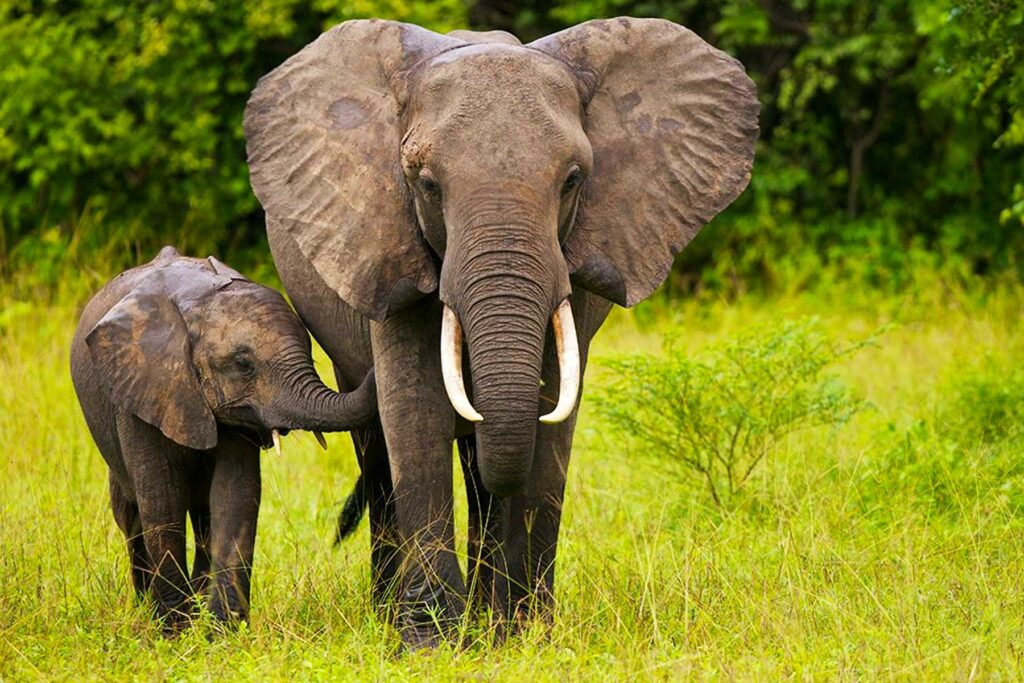
The African savannah elephant at Akagera.
Discussion of the Big Five animals necessitates the inclusion of the magnificent African savanna elephant. Savannah elephants are considered the largest and heaviest terrestrial mammals globally. These animals may weigh as much as 6,048 kg and can survive for more than 60 years. Currently, more than 100 African savannah elephants inhabit Akagera National Park, where tourists can observe these remarkable wildlife creatures during a game drive.