 info@gorillatrekkinginafrica.com
 +256 787505601
What is special about a mountain gorilla’s nose
What is special about a mountain gorilla’s nose, Numerous fascinating facts exist regarding mountain gorillas; nonetheless, it is their distinctive nose print that renders these huge primates absolutely exceptional.
Threats like poaching, sickness, and habitat destruction have diminished mountain gorilla populations to slightly over 1,000 globally.
Conservation initiatives, habitat restoration endeavors, and anti-poaching patrols are diligently striving to safeguard our primate relatives.
Within the Bwindi Impenetrable and Virunga National Parks, located in the Democratic Republic of the Congo, Uganda, and Rwanda in east-central Africa, the last two extant populations of mountain gorillas traverse their verdant domain.
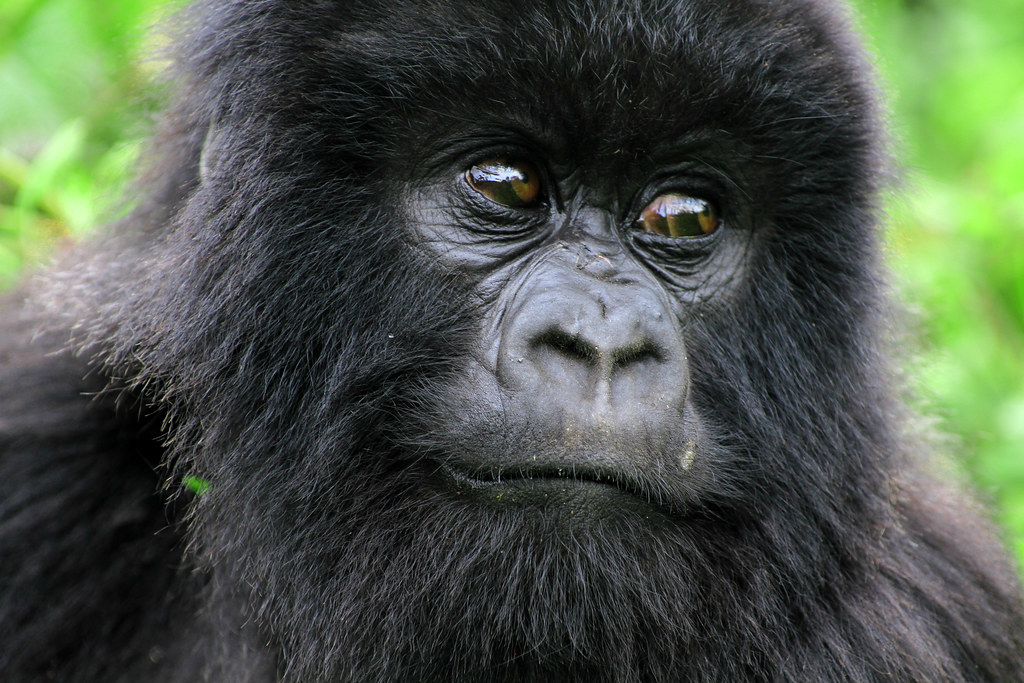
Among the several intriguing aspects of these colossal primates, one is particularly notable: their nose. Similar to human fingerprints, gorilla noses provide a distinctive narrative, extending beyond simple olfaction to provide insight into the individual identity of each gorilla.
What is special about a mountain gorilla’s nose
Examine the complex contours surrounding a mountain gorilla’s nostrils, and you will uncover a landscape of unique ridges and elevations, each as individual as the gorilla itself. These pleats are not simply decorative features.
They function as an advanced identification system, enabling researchers to recognize individual gorillas with exceptional precision. Dian Fossey, the renowned primatologist, employed this technique, converting the creases into an essential instrument for identifying these gentle giants.
Fossey meticulously recorded illustrations of the nose prints in her journals. Currently, the Fossey Fund staff upholds an extensive database of images documenting the distinctive nose prints of each gorilla under their observation.
Gorilla Nose – What Distinguishes a Mountain Gorilla’s Nose – Mountain gorillas represent the largest primates on the planet. They reside in the tropical rainforests of certain regions in Uganda, Rwanda, and the Democratic Republic of Congo. They are the second closest relatives to humans, sharing 98% of their DNA. Similar to humans, mountain gorillas possess distinguishing characteristics that enable individual identification based on their physique, dimensions, behavior, and facial morphology. Identifying mountain gorillas can occasionally be challenging, as several exhibit similar appearances, particularly from a distance.
In the initial scientific investigations of mountain gorillas, undertaken in the 1950s by field scientists George Schaller and Dian Fossey, there arose a necessity for a procedure to facilitate accurate identification. The strategy would significantly aid in record-keeping, allowing future observers to compare data on the same persons.
Upon discovering that mountain gorillas possess distinct nasal wrinkle patterns that distinguish them individually, Schaller and Fossey choose to incorporate these features into their study and investigation of the primates. These creases are referred to as “nose prints.” Fossey reportedly created several illustrations of the nose impressions. This strategy has since been employed by several researchers. The Fossey Fund staff currently preserves unique images of the nose prints of monitored gorillas. They are maintained in their extensive scientific database.
Among the four subspecies of gorillas—mountain gorillas, eastern lowland gorillas, cross river gorillas, and western lowland gorillas—mountain gorillas possess the most distinct nose prints. Conservationists that observe mountain gorillas everyday primarily utilize nose prints in their work.
How to identify gorillas: Memorizing nose prints
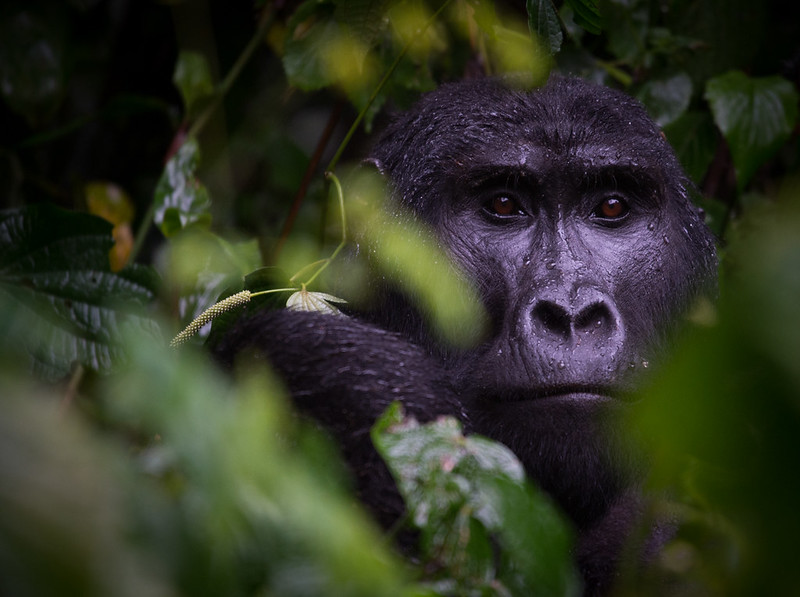
Memorizing gorilla nose prints may need months of frequent observation and multiple drawings of each individual. Mountain gorilla researchers encourage new personnel to memorize the nose prints of the gorillas, enabling quicker identification during fieldwork. Memorizing the nose prints of each gorilla is essential for observing and analyzing their behavior both in groups and as individuals. Some gorillas possess highly different nose prints, but others exhibit similar nose prints. The design of the nose print exhibits subtle alterations as gorillas age.
During your gorilla trip, you may also witness the nose prints of mountain gorillas at Bwindi National Park, Mgahinga National Park, Volcanoes National Park, or Virunga National Park, where photography is permitted with a non-flash camera. Subsequently, one can compare the nose prints of several gorillas to observe the distinctions. Some studies have verified that one method they employed to memorize the nose prints of each individual was drawing them and subsequently comparing these drawings with the actual photographs of the noses.
Mountain gorillas are the most critically endangered species of gorillas; yet, conservation efforts have yielded encouraging outcomes, resulting in an increase in their population during the 20th century. The cost of a gorilla permit is USD 800 in Uganda, USD 1,500 in Rwanda, and USD 400 in the Democratic Republic of Congo, with the majority of this amount allocated toward gorilla conservation efforts. Reserve your gorilla tour with Adventure in the Wild Safaris and journey into Africa’s lush forests to witness the mountain gorillas.
How many mountain gorillas are left?
The furrows on a mountain gorilla’s snout convey a narrative of an alternate nature as well. With a global population estimated at slightly over 1,000, these exquisite creatures barely cling to an endangered existence.
Their environment, once an expansive playground, is diminishing annually. Human encroachment, driven by population expansion and resource needs, has rendered them fragmented and isolated.
The shimmer of a silverback’s substantial form can evoke both admiration and vulnerability. Poaching, intensified by the illicit wildlife trade, disrupts familial structures and creates significant voids within gorilla communities. Every lost life is a detriment not only to individuals but also to the complex social fabric that unites these communities.
According to the WWF, humans share approximately 98 percent of their DNA with mountain gorillas. This renders them exceedingly susceptible to human infections, as they have not acquired the requisite immunities to combat them. Exposure to the Ebola virus, or even influenza, can have catastrophic effects on its population.
Conservation initiatives offer optimism for the preservation of mountain gorillas.
In the midst of adversity, there are signs of optimism. Committed conservation initiatives, fueled by the collective zeal of academics, rangers, and communities, seek to reverse the trend and facilitate population growth.
Habitat restoration initiatives are reassembling their fragmented ecosystems, while anti-poaching patrols safeguard against animal trafficking.
Next time you observe a photograph of a mountain gorilla’s nose, take a moment to enjoy its remarkable beauty. Bear in mind, it is not merely a protuberance on a visage; it serves as a glimpse into the existence of a species on the brink of extinction.
Let it serve as a call to action, a reminder of our interconnectedness and that their destiny lies under our control.