 info@gorillatrekkinginafrica.com
 +256 787505601
What is Serengeti National Park famous for?
What is Serengeti National Park famous for? What is the This is a prevalent inquiry posed by discerning travelers while choose their vacation destination within a specific timeframe.
What is Serengeti National Park famous for, and what are the primary major attractions in Serengeti National Park that can entice visitors to explore these specific features? The Serengeti is predominantly considered the quintessential sanctuary for animals, owing to its extensive array of diverse species within the park. Serengeti National Park is the most frequented park in Africa and globally, featuring one of the Seven Wonders of Africa and one of the Ten Wonders of the World in terms of species.
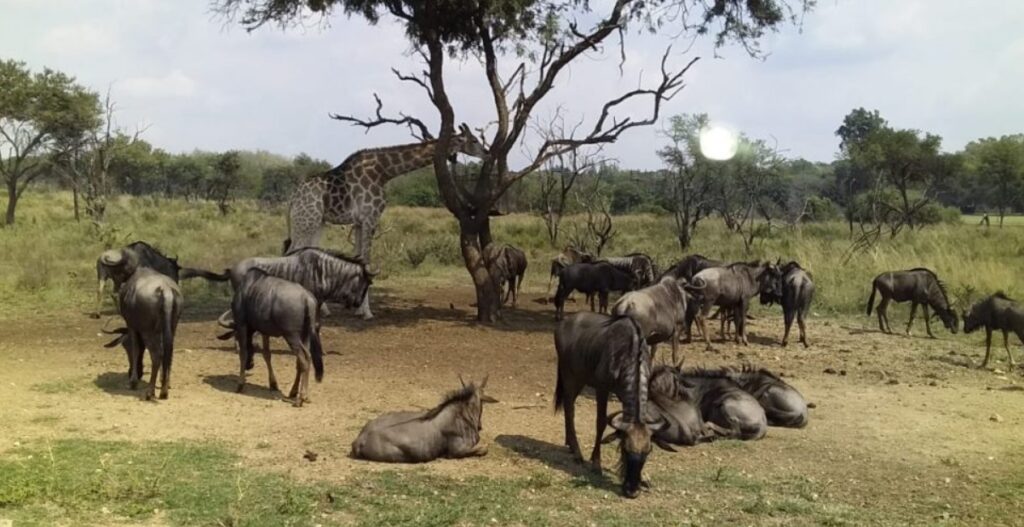
To address the inquiry, “What is Serengeti renowned for?”, one must primarily analyze the annual migratory cycle of wildebeest inside the Serengeti National Park ecosystem. The wildebeest migration is a global animal phenomenon that occurs exclusively in Serengeti National Park. During the wildebeest migration, millions of wildebeest traverse from one region of the Serengeti to another, with the most notable event occurring when they cross the Mara River into the Maasai Mara National Reserve in Kenya.
The wildebeest migration is referred to be the survival of the fittest. The wildebeest must traverse the densely inhabited crocodile river, while on land, it faces numerous predators including as lions, leopards, cheetahs, and hyenas. The wildebeest migration occurs continuously from January to January, traversing various portions of the Serengeti.
Wildebeest Migration in Serengeti
The wildebeest migration is a renowned phenomenon that contributes to Serengeti National Park’s status as a premier destination, recognized globally and awarded for its exceptional tourism appeal.
Serengeti National Park is not only a gem for Tanzania but also a renowned national park due to the natural marvel of the big wildebeest migration. In addition to the natural wonders of the wildebeest migration, the Serengeti is renowned for several significant sites within the park.
World class accommodation
Serengeti National Park offers a comprehensive range of accommodations, from economy to luxury, according to all guests’ financial considerations. The distinctive feature and shared characteristic of these lodgings is their proximity to animals, as they are located in the woods. Privacy is essential, and they offer luxurious, spacious, self-contained rooms, complemented by exquisite meals.
The oldest ecosystem on planet
This directly addresses the question. What is the Serengeti renowned for? Records and historical documentation indicate that the Serengeti possesses the oldest ecology in the world. The ecology has remained largely same, with minimal variation in weather patterns, flora, and animals for over a million years.
The Maasai Culture
Historically, the park was inhabited by Maasai herdsmen and warriors who grazed livestock and hunted inside its boundaries until the government resettled them to the periphery of the Ngorongoro Conservation Area. Currently, the Maasai tribe plays a significant role in attracting visitors to the Serengeti. Most camps provide evening entertainment for guests around a campfire hosted by the Maasai tribe.
The distinctive culture of the Maasai people enhances the visitor’s experience beyond just wildlife observation. This is a significant enhancement for first-time vacationers who saw Africa as a hostile continent; nevertheless, after engaging in dance and celebration with Africans, they feel sufficiently at ease. Visiting the Maasai Manyata during your Serengeti journey enhances your understanding of Africa.
High concentration of predators
Serengeti National Park possesses the highest population of predators, not only in Africa but globally. The lion population in the Serengeti can surpass that of most African countries, earning the park the designation of the lions’ habitat. Additional predators include leopards, hyenas, cheetahs, and jackals, which can be readily observed in the park during game drives. Lions are ubiquitous, with significant populations concentrated in the Seronera region near the Kopjes, where they are frequently observed resting. From the aforementioned, one may comprehensively address the inquiry: What is the Serengeti renowned for? Most guests are primarily aware of the wildebeest migration, overlooking other notable happenings in the park.
Attractions in Serengeti National Park
Serengeti National Park is a UNESCO World Heritage site and the most renowned in Tanzania. Situated in the northeastern region of the country, it encompasses around 30,000 square kilometers. To the north lies the Ngorongoro Conservation Area, to the west are the Ikorongo and Grumeti Game Reserves, and to the southwest is the Maswa Game Reserve. Serengeti translates to “Endless plains” in the Maasai language. Serengeti National Park was formed in 1952 and initially encompassed the Ngorongoro Conservation Area. The park features vast plains interspersed with kopjes, rivers, and acacia trees. These habitats host the Big Five animals (elephants, buffaloes, rhinoceroses, leopards, and lions), along with wildebeests, zebras, hyenas, giraffes, African wild dogs, hippopotamuses, crocodiles, and more than 450 avian species. The wildebeest migration is the primary attraction for visitors to Serengeti National Park, as it is favored by most tourists. The environment of Serengeti National Park, extending into Masai Mara, Kenya, is notably intriguing and appealing to visitors. This established ecosystem is defined by the vast expanses of the Serengeti National Park. Notable features, including granite outcrops, are observable throughout Serengeti National Park.
The majority of travelers frequent Serengeti National Park for its remarkable offerings, which encompass wildlife observation, nature walks, hot air balloon safaris, bush meals, excursions to the Serengeti Visitor Center, visits to Olduvai Gorge, exploration of the Ngorongoro Crater, witnessing the wildebeest migration, interactions with the Maasai, camping, discovery of Bologonja Springs, Lobo Valley, Moru Kopjes, bird watching, swimming, and experiences at the Hippo Pool and Lake Natron. This article emphasizes few of these remarkable attractions, which include:
The Great Migration.
The Great Migration It is one of the most remarkable animal phenomena globally, showcasing the migration of about two million wildebeest, zebras, and gazelles across the Serengeti and Maasai Mara. All guests interested in a safari to Tanzania are keen to witness the annual wildebeest migration in Serengeti National Park. From around June to September, substantial herds migrate across the Serengeti’s grasslands in pursuit of fresh pastures and water sources. The migration is remarkable not just for its magnitude but also as a striking setting for predator-prey interactions, with lions, crocodiles, and hyenas poised in ambush. The significant migration occurs in many regions of Serengeti National Park, with the wildebeest traversing a circular path that changes monthly, commencing with the calving season in the Ndutu area, located in the southern portion of the park. Observing the river crossing at the Mara River, where herds confront perilous waters and hidden crocodiles, is an indelible experience. The movement profoundly affects the ecology, enhancing nutrient distribution and preserving equilibrium within the environment.
Seronera Valley
The Seronera Valley is a haven for wildlife aficionados, renowned for its perennial game viewing. The valley hosts a variety of fauna, including lions, leopards, cheetahs, elephants, hippos, topis, wildebeests, zebras, and gazelles, all of which can be observed during a safari in the Seronera stream valley. Its vast grasslands and riparian woods provide optimal habitat for a diverse array of animals. The Seronera River’s existence lures numerous herbivores, establishing exceptional feeding grounds that subsequently attract predators. Birdwatchers can find enjoyment in the region, featuring a variety of species such as secretary birds and raptors. The Seronera region is readily accessible, rendering it a preferred location for both guided game drives and self-drive safaris, allowing tourists to thoroughly engage with Tanzania’s stunning wildlife. Additionally, wildlife observation can occur at any time in the Seronera Canal valley, where the wildebeest migration is observable within this segment of Serengeti National Park, characterized by kopjes and expansive savannahs that host a diverse array of wildlife species.
The Lobo Valley
The Lobo Valley is situated in the northern region of Serengeti National Park and is renowned for its breathtaking vistas, marked by undulating hills and rocky outcrops. The Lobo Valley is the premier location for observing lions and other large felines in the Serengeti. The large felines are drawn to the valley due to the plentiful prey and consistent water sources. This distant region is notably renowned during the migratory period when wildebeest and zebras congregate in substantial quantities. The Lobo River draws species, including baboons, elephants, and giraffes, facilitating striking predator-prey interactions and offering an exceptional vantage point for observation. The valley is less frequented than other areas of the park, resulting in a more personal safari experience. Birdwatchers will value the diverse assortment of avian species, encompassing both native and migratory birds. The serenity and scenic allure of Lobo Valley render it an ideal sanctuary for naturalists and photographers.
The Bologonja Springs
The Bologonja spring is among the prime attractions in Serengeti National Park. The hot springs are situated in the southeastern region of the national park and are present in the adjacent areas. The springs supply water that enables vegetation to flourish year-round. This therefore draws various types of small monkeys, birds, migratory animals, giraffes, elephants, steenbok, mountain reedbuck, as well as impalas, topi, antelopes, and numerous other herbivores. Their seclusion allows for exploration devoid of the substantial throng prevalent in central Serengeti.
The Ngorongoro Crater
The Ngorongoro Crater is no longer included in the Serengeti and is now incorporated into the broader Ngorongoro Conservation Area. The crater hosts more than 30,000 large mammals and is frequently characterized as a “garden of Eden” for biodiversity. The crater was created when a colossal volcano, comparable in size to Mount Kilimanjaro, erupted and subsequently imploded. The Ngorongoro Crater is a fundamental component of the region’s appeal. This UNESCO World Heritage Site is the largest active volcanic caldera globally, providing a distinctive habitat that sustains a plethora of wildlife, including the endangered black rhino. The floor comprises grasslands, a forest, and a soda lake, creating a habitat for various creatures like elephants, zebras, wildebeest, and flamingos. Visitors can enjoy breathtaking vistas from the crater rim and participate in a game drive to observe wildlife intimately in this exhilarating natural setting. The crater’s extraordinary beauty, along with its exceptional wildlife observations, renders it an essential destination.
The Maasai community
The Maasai population, residing in the vicinity of the Serengeti, enhances the cultural richness of the safari experience. They are undoubtedly the most renowned tribal tribe in East Africa. They possess a lofty stature and don vivid clothes. The Maasai have resided in proximity to the Serengeti grasslands for the past 300 years, having migrated from Sudan. They continue to uphold their ancestral traditions and values. A visit to one of their communities (bomas) is an exceptional opportunity to gain insight into their culture and traditional beliefs. They are very amicable and will instruct you on hunting, milking domestic animals, preparing traditional cuisine, and additional activities. Following your visit to the individual homesteads, you may also explore a local school, observe traditional dance performances, and purchase handicrafts.
Olduvai Gorge
Olduvai Gorge, commonly known as the “Cradle of Mankind,” is a prominent archeological site situated in the eastern periphery of Serengeti National Park, where the Leakey family unearthed the earliest human remains. The Gorge is located in the adjacent Ngorongoro Conservation Area and within the East African Rift Valley. This renowned ravine has produced some of the most ancient hominid fossils, dating back almost two million years, providing essential insights into human evolution. Visitors may visit the site, examine fossil exhibits, and learn about Louis Leakey, who conducted significant research there. The gorge attracts both archeology enthusiasts and visitors captivated by its spectacular vistas and diverse species. A visit to Olduvai Gorge provides significant historical context to a safari, connecting the ancient past with the dynamic ecosystems of the Serengeti.
Retinal hippopotamus enclosure
The Retina hippo pool is a key attraction for nature enthusiasts. The pool is located in the Seronera part of the park and draws numerous hippos. This natural marvel is celebrated for its dynamic environment and the striking image of several hippos relaxing in the warm, partially submerged waters, forming a lively display. Visitors are afforded a thrilling experience as they see these colossal creatures mingling and occasionally shouting to communicate, their vocalizations resonating throughout the region. The pool is inhabited by hippos and functions as a crucial water source for several wildlife species, including crocodiles, birds, and various other creatures who approach the edge to drink. The verdant vegetation and varied terrain create a breathtaking setting for photography and wildlife observation, rendering it a preferred destination for safari enthusiasts eager to engage with the magnificence of the African bush. Furthermore, the famous hippo pool is situated along well-frequented game-viewing paths, enabling guests to integrate it effortlessly into their safari plans.