 info@gorillatrekkinginafrica.com
 +256 787505601
Virunga Mountain Range
The Kinyarwanda term “Ibirunga,” signifying Volcanoes, has evolved into “Virunga,” now featured on maps, search engines, and recognized as a premier safari destination in Africa, characterized by distinctive tree species, primates including the coveted rare mountain gorillas and golden monkeys, alongside remarkable mountains suitable for hiking. It is now opportune to gain insight into the composition, attractions, and locations of the Virunga mountain range. The Virunga Mountains constitute a volcanic range in East Africa, spanning the Republic of Rwanda, Uganda, and the Democratic Republic of Congo.
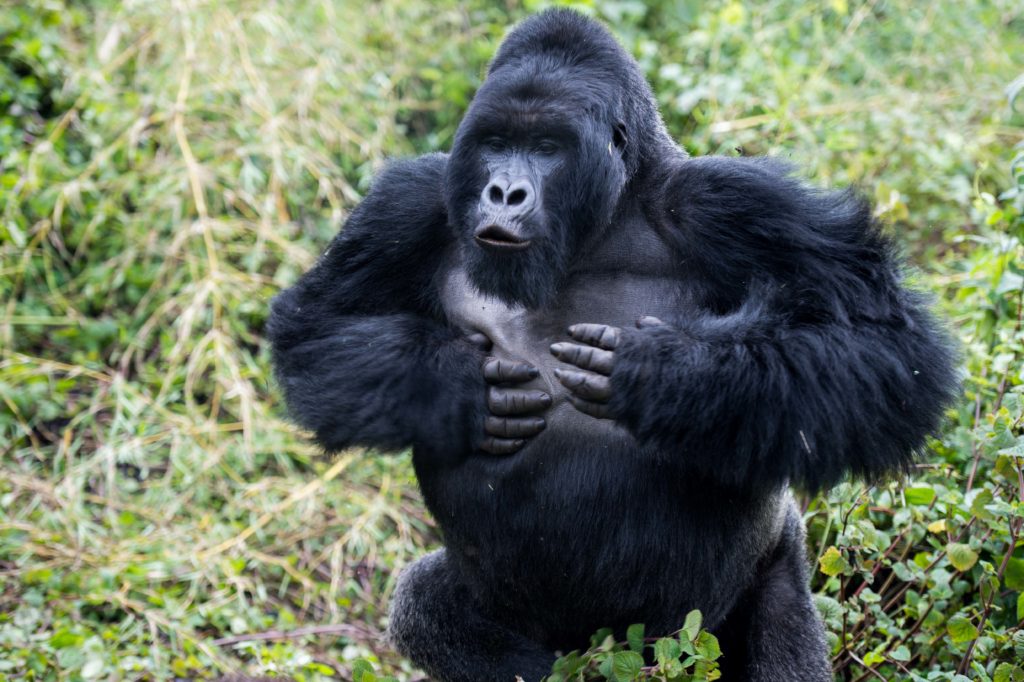
The mountains comprising the Virunga massif.
Mount Karisimbi.
Mount Karisimbi is the tallest and most picturesque volcano in the Virunga mountain range. The name originates from the Kinyarwanda term “Amasimbi,” signifying snow, which is exclusively present during the arid months of June to September. It is an inactive stratovolcano situated on the boundary between Rwanda and the Democratic Republic of the Congo. It rises to roughly 4,507 metres, situated within the Albertine Rift on the western side of the East African Rift. Mount Karisimbi is flanked by Mount Mikeno to the north, Nyiragongo to the west, and Bisoke to the west.
Mount Karisimbi is the 11th tallest mountain in Africa. The most recent eruption occurred about in 8050 BC. The Karisoke Research Centre, founded by the late primate researcher Dian Fossey, is located between Mount Karisimbi and Mount Bisoke. Fossey dedicated her life to the protection and habituation of gorillas.
Mount Mikeno.
Mount Mikeno, the second tallest volcanic summit in the Virunga range, stands at 4,437 metres and ranks as the 13th highest peak in Africa, located in the Democratic Republic of Congo. It is adjacent to Mount Nyamuragira, Mount Bisoke, Mount Nyiragongo, and Mount Karisimbi. The term Mikeno in a regional dialect signifies “poor,” attributed to its steep inclines that have consistently disadvantaged the local populace. Gorillas inhabit the slopes, with trekking beginning at the Bukima gas station.
Mount Muhabura.
This mountain, located in the Republic of Rwanda and Uganda, ranks as the third tallest of the eight principal peaks of the Virunga range. It rises 4,127 meters above sea level, situated on the western side of the East African Rift. The majority of the mountain is located in Mgahinga National Park, while the remainder is situated in Volcanoes National Park in Rwanda. The name originated from a local Kinyarwanda term signifying “The Guide.”
Mount Bisoke.
Last erupted in 1957, Mount Bisoke is the fourth highest peak of the Virunga range. Mount Bisoke is a dormant volcano situated on the western flank of the East African Rift, approximately 35 km north-east of Goma and in proximity to Lake Kivu.
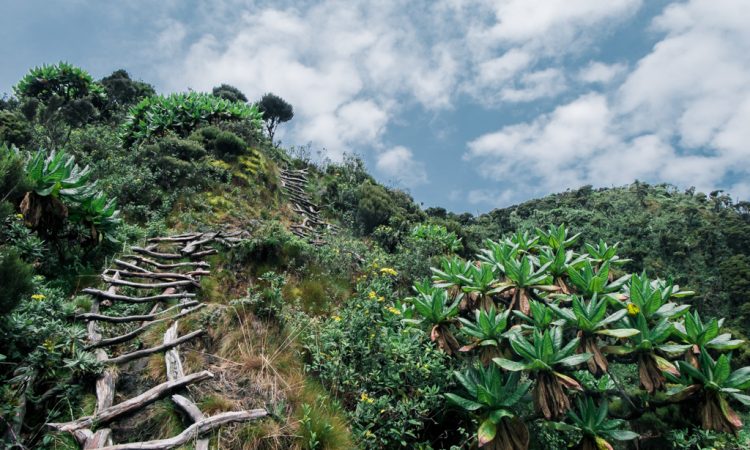
Mount Sabyinyo.
The name Mount Sabyinyo translates to “Tooth” in the indigenous Kifumbira dialect, “iryinyo.” It is the most ancient mountain range situated north-east of Lake Kivu in Rwanda and west of Lake Bunyonyi in Uganda. The summit reaches an elevation of 3,669 metres above sea level and is jointly located in Rwanda and the Democratic Republic of Congo. A segment of the Mountain is located in Volcanoes National Park in Rwanda, Virunga National Park in the Democratic Republic of Congo, and Mgahinga National Park in Uganda.
Mount Gahinga.
This is an extinct mountain located on the boundary between Rwanda and the Democratic Republic of the Congo, situated between the Sabyinyo and Muhabura mountains. Residents refer to it as Mountain Rufumbira, which translates to “small pile of stones.” The park features a small swampy caldera about 180 metres in width. The peak ascends to 3,473 metres above sea level.
Mount Nyiragongo.
Commonly referred to as “General Nyiragongo,” Mount Nyiragongo is one of the most distinguished peaks in the Virunga range. It is among the most active volcanoes globally. The peak features a prominent lava lake, which requires approximately 5-6 hours to reach. The peak ascends to 3470 metres, approximately 20 metres north of Goma town.
Mount Nyamuragira.
Mount Nyamuragira, the smallest of the eight principal peaks in the Virunga Mountain range, is situated approximately 25 km north of Lake Kivu in the Democratic Republic of Congo. It is recognised as the most active volcano in Africa, with its latest eruption recorded in April 2018. No offence in referring to it as Mount Nyamuragira. The name signifies “herd of cows,” originating from a word; Kurangira Ngavu from the Kifuru and Kishi languages.
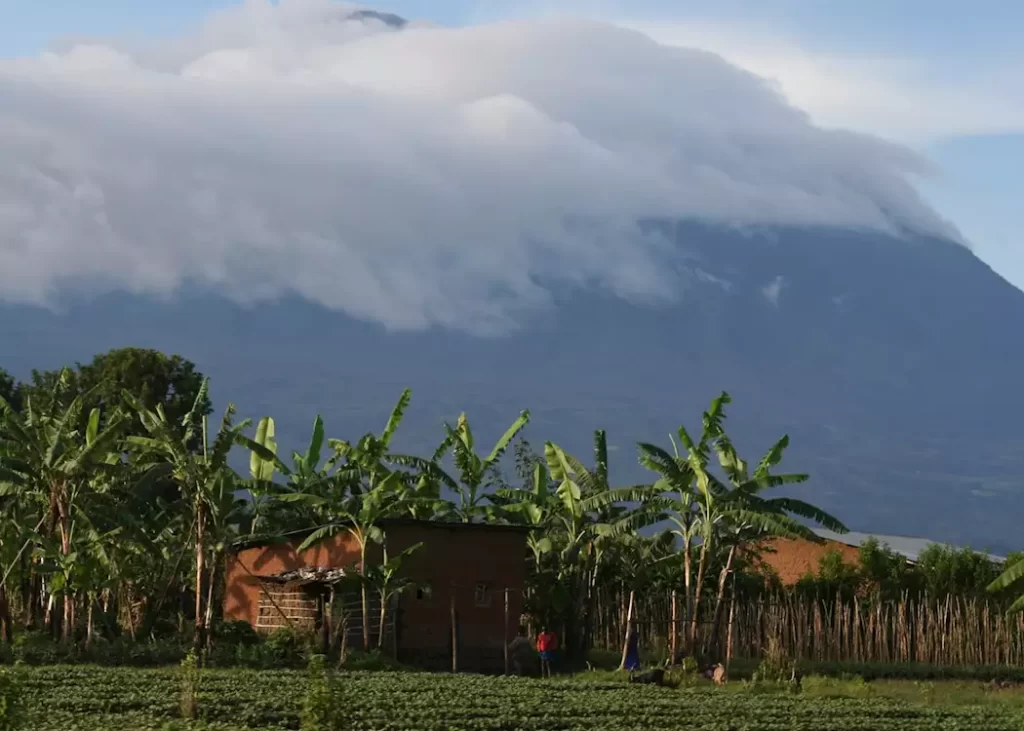
Additional attractions within the Virunga protected region.
An unparalleled primate center globally. The endangered mountain gorillas are the principal attractions within the expansive Virunga mountain range. They reside at the slopes, surrounded by dense forestation that complements their climate. Approximately 1,060 Mountain Gorillas are found alone in this region worldwide. The apes, our relatives sharing over 95% of human DNA, can be located in various national parks across different nations: Virunga National Park and Volcanoes National Park in the Democratic Republic of Congo, and Bwindi Impenetrable National Park and Mgahinga National Park in the Republic of Rwanda.
Additional attractions comprise the Golden monkeys exclusive to Volcanoes and Mgahinga National Parks in Rwanda, avian species, forest mammals, and chimpanzees—though trekking is not permitted—and the indigenous Batwa people living adjacent to the park.
Tourist activities in the park encompass gorilla trekking, birdwatching, cave exploration, mountain hiking, guided nature walks, golden monkey trekking, and cultural adventures.
It is now acceptable that you comprehend the significance of the term “Virunga chain of mountains,” a range distinguished by its distinctive features, including endangered mountain gorillas, bamboo forests, and the lively golden monkeys.