 info@gorillatrekkinginafrica.com
 +256 787505601
Tsavo East National Park
Tsavo East National Park, in conjunction with Tsavo West National Park, constitutes one of the largest animal sanctuaries globally, as well as in Africa. The predominant characteristic of eastern Tsavo is the Yatta plateau, famous for its vast expanse of flat thornbush. The western region is renowned for its breathtaking volcanic mountains, hills, and substantial outcroppings that provide stunning vistas. The two parks have a combined area of 80,382 square miles, with heights ranging from a minimum of 230 meters to a maximum of 2,000 meters. The significant variation in height is one of the many factors that render this park distinctive.
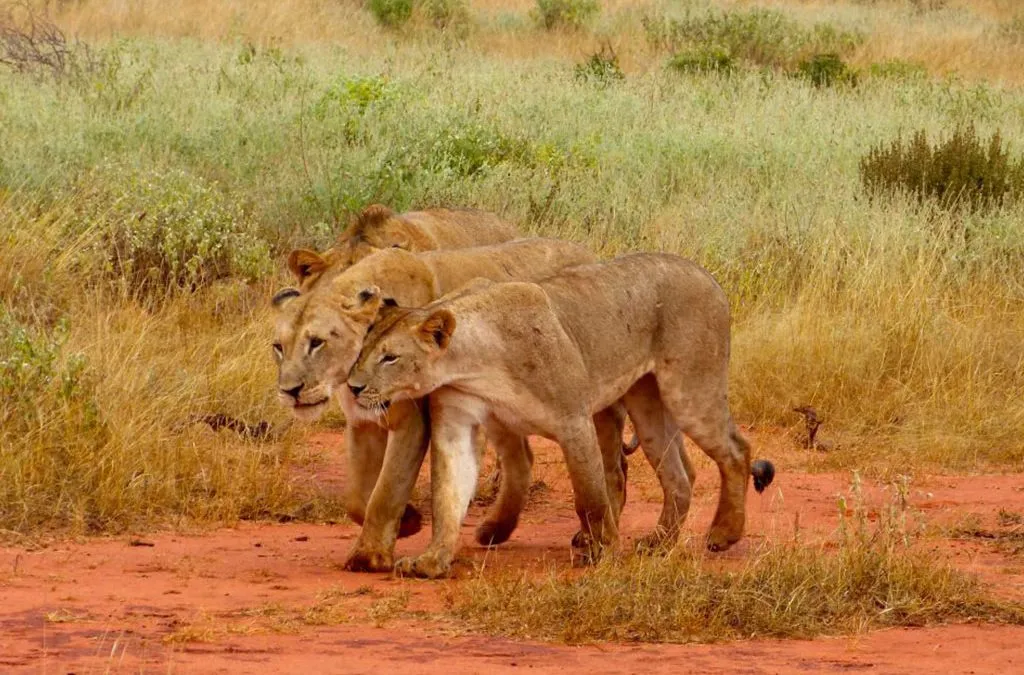
Historically, several infamous lion assaults in Tsavo have contributed to the area’s notoriety. It is posited that the lions in the region had a penchant for human flesh, which they consumed particularly during the slave trade era when corpses were discarded in the jungle; tradition asserts that they were responsible for the notorious Tsavo man-eaters. Similar to most African legends, this narrative is predominantly fictional; therefore, there is no need for concern over lions, as the region you will be visiting during your holiday is devoid of them. However, if fortunate, you may get the chance to encounter at least one of these species.
Tsavo East National Park is one of the oldest national parks in the country, encompassing a total area of 11,747 square kilometers. The park was inaugurated in April 1948. It is located in the Taita District in a small town called Voi. It is adjacent to other significant game reserves, including Mkomazi Game Reserve in Tanzania and Chyulu Hills. Several access gates are located throughout the park, including the Sala Gate in Malindi, the Bachuma Gate in Mombasa, and the Manyani Gate in Voi.

Tsavo East National Park is divided into eastern and western halves by a road and a railway. The park was named after the Tsavo River, which flows from east to west. This park provides exceptional wildlife viewing opportunities throughout Africa and is notably home to the continent’s celebrated big five mammals: black rhinos, leopards, Cape buffaloes, elephants, and Maasai lions.
Additionally, the park is home to various bird species, including lovebirds, black kites, holy ibises, and crowned cranes. The park’s landscape is predominantly flat and consists of arid plains. Additional noteworthy features include the Lugard Falls and the Yatta Plateau.
Tsavo East National Park features various attractions, including Mudanda Rock, a 1.6-kilometer inselberg of stratified rock that functions as a water catchment area supplying one of the park’s dams. Numerous huge elephants, along with various other wildlife, congregate here to hydrate, especially during the arid season. The Aruba Dam, erected in 1952, spans the River Voi. The Yatta Plateau is the longest lava flow globally, extending along the western perimeter of this park. The plateau spans 290 kilometers and was created by lava from the adjacent Ol Doinyo Sabuk Mountain.
How to get to Tsavo East National Park
Tsavo East National Park is situated adjacent to the Mombasa Business Centre in the southern region of the park, near Voi town in Taita-Taveta County, historically recognized as part of the coastal province. Tourists on a wildlife safari in Kenya intending to visit this national park may choose road transportation for an extensive journey, allowing them to appreciate the country’s picturesque landscapes. The distance is approximately 233 kilometers, requiring a drive of 7 to 8 hours from Nairobi, the capital city of Kenya, to reach the park. Alternatively, people may opt for a drive, which would require approximately 5 to 6 hours from the coastal province in the Mombasa region to reach the park. Furthermore, there are various entry points to the park, including the Sala gate located in the western section accessible from Malindi, and the Mtito Andei Gates, which provide a direct route from the Nairobi-Mombasa road.
Individuals seeking to avoid lengthy journeys may use air transportation, which is expedient and significantly time-saving. Consequently, individuals may reserve their flights from Wilson or Jomo Kenyatta International Airport. Furthermore, Tsavo National Park features multiple airstrips that operate regularly, including Bachuma, Satao, Mopeo, and Voi airstrips, among others.
Attractions at Tsavo East National Park.
Tourists in Tsavo East National Park have opportunities to engage in many activities, including as bird viewing, which is most favorable during the rainy season, coinciding with the birds’ breeding and nesting period. Consequently, tourists can observe various bird species, like the rosy-patched bush shrike, black-headed lapwing, Eastern chanting goshawk, vulturine Guinea fowl, red-winged lark, golden pipit, Taita falcon, Taita fiscal, Somali bunting, nightjar, and Somali ostrich, among others. Additionally, individuals may partake in guided nature walks along trails accompanied by park guides, as well as game drives best conducted in 4×4 safari vehicles. Tourists can engage in game viewing, observing wildlife such as zebras, wildebeests, cheetahs, oribi, dik dik, topi, impala, gazelles, baboons, hyenas, black rhinos, leopards, lions, and numerous others.
Mudanda Rock
This rock, an inselberg of stratified rock, is located in Tsavo East National Park and measures 1.6 kilometers. The rock serves as a water catchment, supplying water to the natural dam situated beneath it and other drinking areas frequented by animals, particularly during the dry season. Mudanda Rock offers an ideal vantage point for observing the breathtaking, expansive grasslands of the park and serves as an excellent location for viewing wildlife, including wildebeest, buffaloes, and elephants, that come to drink water.
Yatta Plateau
The Yatta Plateau is a distinctive tourist destination in Tsavo East National Park, recognized as the world’s longest lava flow, extending over 290 kilometers, created by lava from the Ol Doinyo Sabuj Mountain during volcanic eruptions. The Yatta Plateau channels its water along the western boundary of Tsavo East National Park, situated above the Athi River.
Lugard Falls
Lugard Falls is a prominent attraction in Tsavo East National Park and a gratifying destination for a walking safari within the park. The falls are a distinctive feature characterized by white water rapids and are located on the Galana River.
Lugard Falls is named after Sir Frederick Lugard, a British explorer and colonial governor who arrived in Mombasa in 1888.
Galana and Tsavo Rivers
Tsavo East National Park appears adventurous, with the Galana and Tsavo rivers, which serve as the primary water sources sustaining the park’s ecological and natural environment.
The Tsavo River traverses both Tsavo East and Tsavo West national parks before merging with the Athi River to create the Galana River. The Galana River originates in the southeastern highlands of Kenya and flows towards the Indian Ocean, traversing Tsavo East National Park along its course.
During a visit to the Galana River, one can observe several crocodiles while participating in wildlife viewing safaris in Tsavo East National Park.
Kanderi Wetland
This is a vital water supply that sustains the ecosystem of Tsavo East National Park. The Kanderi Swamp is a primary tourist attraction in the park, situated along the Voi River and serving as a water supply that draws various wildlife. During a game drive in this region, one can observe an array of wildlife, including buffaloes, antelopes, elephants, and hartebeests, among others.
Aruba dam
This location is particularly appealing to wildlife, especially during the dry season, as several animals congregate to hydrate. It is an excellent location for observing a diverse array of avian species and wildlife.
Wildlife
Tsavo East National Park is a key tourist attraction for people interested in Kenyan wildlife, featuring a diverse array of animals, with over 675 species represented.
Wildlife present in Tsavo East National Park includes the Big Five: elephants, lions, leopards, buffaloes, and black rhinos. Additional species comprise waterbucks, civets, caracals, African wild cats, zebras, gazelles, impalas, aardwolves, Grevy’s and plains zebras, bush duikers, slender mongooses, white-tailed mongooses, Egyptian mongooses, marsh mongooses, spotted hyenas, African dormice, African hunting dogs, warthogs, red duikers, and blue duikers, among others. You may also observe primates.
Bird fauna
The park serves as a refuge for birdwatching, hosting approximately 500 avian species. Included are: Eurocephalus, female Eastern Paradise, Golden Pipit, Martial Eagle, Rufous Chatterer, Slender-tailed Nightjar, Somali Bee-eater, Shelley’s Starling, African Finfoot, Lesser Kestrel, Kingfisher, Hornbills, Secretary Birds, Heron, Eastern Chanting-Goshawk, and African Finfoot, among others.The most frequently observed birds in this area are resident and migratory species originating from Europe and northern African nations.The migratory bird species come in Tsavo East National Park from November to April.