 info@gorillatrekkinginafrica.com
 +256 787505601
Tribes in Rwanda
Tribes in Rwanda, Rwanda, referred to as the “Land of a Thousand Hills,” has French and English as its official languages, while Kinyarwanda serves as the indigenous tongue. Rwanda is a landlocked nation in east-central Africa, situated south of the Equator and renowned for its stunning landscapes. Moreover, it has an exceptional position rich in wildlife observable during a Rwanda Safari, including gorilla trekking in Volcanoes National Park and other remarkable offerings, notwithstanding the cultural aspects. The geography of Rwanda is picturesque, offering tourists gratifying vistas while traveling to volcanoes and engaging in chimpanzee tracking in Nyungwe National Park.

Additionally, Rwanda is situated in the central area of East Africa’s Great Lakes region, encompassing Uganda, Tanzania, Burundi, and the Democratic Republic of the Congo. Despite its diminutive size, Rwanda excels in quality due to its advantageous climate, attractions, and picturesque landscapes. To be thoroughly satisfied is to embark on a safari to its destination, where you will validate why and how Rwanda is referred to as the land of a thousand hills. Rwandans collectively uphold cultural characteristics including patriotism, resilience, social cohesiveness, and diligence, with Kinyarwanda serving as the predominant language spoken nationwide.
Ethnic Groups in Rwanda
Rwanda comprises three tribes: the Hutu, the Tutsi, and the Twa, each characterized by unique cultural attributes that appeal to guests on safari trips.
The Hutu tribe;
The Hutu tribe of Rwanda is regarded as the second largest in population, residing primarily in Rwanda, with some also inhabiting Burundi. The Hutu population is estimated to be approximately 10 million individuals, predominantly Christians. The Hutu people share certain cultural and traditional elements with the Tutsi and Twa, as they are all Bantu speakers.
The Hutu were the dominant leaders of Rwanda until 1994, when the Tutsi sought to seize power, leading to the onset of the 1994 Rwandan genocide, as the two groups vied for control, ultimately resulting in Tutsi victory.
The prevalent Bantu language utilized by all three is Kinyarwanda in Rwanda and Kirundi in Burundi. The dialects are similar; yet, distinctions in pronunciation and certain vocabulary are evident. They primarily adhere to Christianity; nevertheless, this does not preclude their traditional beliefs in the abazima, the ancestor spirits that influence the fortunes of the living. Some individuals continue to invoke these spirits for guidance and protection.
The primary staples of the Hutu people include beans, corn, millet, sorghum, sweet potatoes, and cassava. Milk is a valued food; nonetheless, goat meat and goat milk are frequently linked to poverty or lower social status. The Hutu are agrarians who choose cattle herding over grain cultivation.
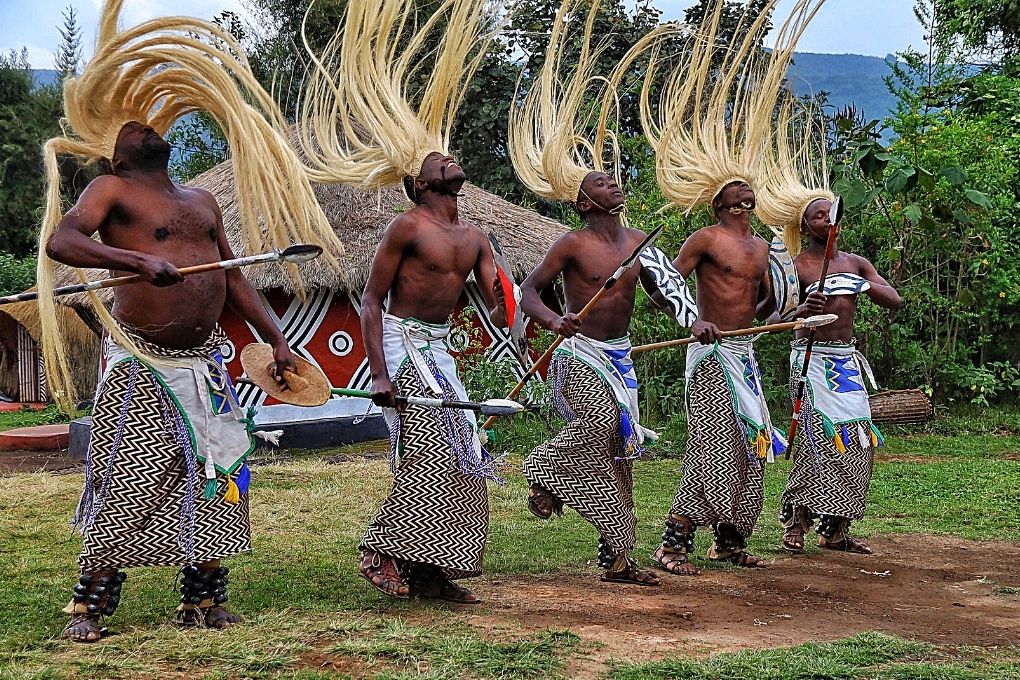
The Tutsi people
The Tutsi tribe of Rwanda has held leadership since 1994, following the Rwandan genocide. The Tutsi population is located in Rwanda, Burundi, and the northeastern region of the Democratic Republic of Congo, previously referred to as Zaire. In 1994, the projected global population of Tutsi individuals was 13 million.
The Tutsi are predominantly cattle herders, and those possessing cattle were seen as affluent within culture. Historically, the Tutsi exchanged cattle for labor from the Hutu, or to secure governmental loyalty and favor. They also communicate in the prevalent Bantu language, Kinyarwanda, and some are proficient in French, which is frequently spoken in educational or formal contexts.
The Tutsi are predominantly Christian; yet, the elder population continues to venerate “Imaana,” a deity linked to riches and fertility for women, whose power is analogous to that of the King. The Tutsi hold the abazima with high esteem, and those who fail to show them respect are subject to punishment.
The Tutsi traditionally married within their own group; however, recent lifestyle changes have led to an increase in intermarriages between Tutsis and other tribes. The Tutsis predominantly drink milk, butter, and beef. Cows are slaughtered exclusively on rare occasions for consumption.
The Twa tribe;
The Twa people are considered the original inhabitants of Rwanda, representing the traditional group that persisted in forested regions. Visiting a family from this tribe is feasible during your Rwanda safari tour. They maintain a close relationship with the inhabitants of Central Africa residing in the forested regions. The Twa group is the least populous of the three tribes in Rwanda.
The Twa cannot be readily differentiated from other tribes due to their same beliefs and language. The Twa people, despite contemporary advancements, have successfully preserved their cultural and traditional practices with minimal impact from the Western world. In 2004, over 3,000 Twa individuals resided in Rwanda, distributed across roughly 600 households.
They were formerly inhabitants of the forest and remained within the wooded areas; nevertheless, it is probable to encounter a few residing outside the forest in the towns of Rwanda, but in somewhat smaller populations. The Twa people frequently serve as artisans in ceramics and are categorized as laborers, with very few possessing animals or land in the traditional context.
Presently, these tribes are not referenced publicly due to the suffering and carnage that ensued during the annihilation of the nation. Locally, individuals commonly identify as Rwandans, eliminating tribal distinctions. The genocide that transpired in Rwanda during 1994, associated with the Rwanda Civil War, is referred to as the Rwanda genocide. This lasted over 100 days of carnage due to the terrible killings of several individuals during this crisis.

The genocide involved a formidable army and Hutu militia organizations, commonly referred to as Interahamwe, meaning “fight together,” and another slogan, Impuzamugambi, meaning “same goal,” which they employed to play a crucial role in opposing the Tutsi’s FPRA.
During the genocide, millions of Rwandans were exterminated within a span of 100 days, with the Tutsi representing the majority of the victims. Be aware that discussing the events in Rwanda may result in imprisonment, as such discourse is deemed reprehensible within the nation. Moreover, discussing ethnicity seems to be unlawful, which is highly contentious in relation to the events among Rwanda’s sub-tribes. It is designated as the offense of division in Rwanda’s penal law.