 info@gorillatrekkinginafrica.com
 +256 787505601
Things to do to Lake Naivasha National Park
Things to do to Lake Naivasha National Park: Lake Naivasha National Park offers a plethora of remarkable activities, situated in the elevated region of the Great Rift Valley bottom, with the park focused around the freshwater lake at its core. Lake Naivasha, a freshwater lake, is referred to as “rough water” by the local populace. Lake Naivasha is one of the few freshwater lakes located in Kenya, situated within a few kilometers from the town of Naivasha. Furthermore, the park is recognized as one of Kenya’s frequently visited national parks.
Furthermore, the park is situated in the Northwest of the capital, Nairobi, and is a component of the geological features of the Great Rift Valley region. The park’s name originates from the Maasai term ‘Naiposho,’ which translates to ‘rough water,’ a reference to the frequent and abrupt storms that occur there. Additionally, Lake Naivasha is encircled by two smaller lakes: Lake Oloidien and Lake Sonachi, the latter referred to as the green crater lake. The park is predominantly characterized by magnificent Umbrella Acacia trees that line the shores of the lake.
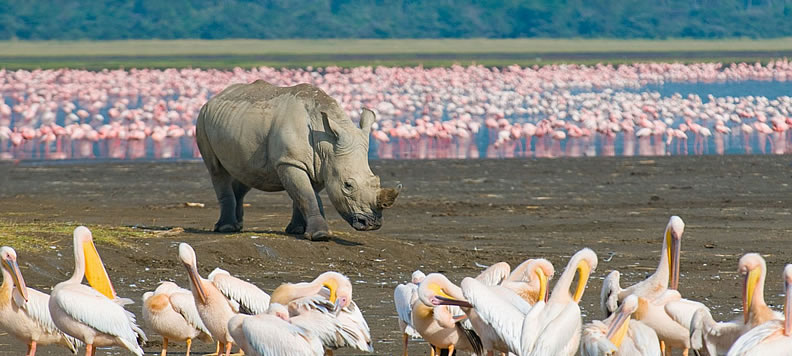
Things to do to Lake Naivasha National Park
Despite its modest size, it is a worthwhile destination where one may observe all of the Big Five and encounter a greater variety of wildlife species for exploration. Nonetheless, you may opt to include additional Kenyan destinations on your bucket list, such as Hell’s Gate and Maasai Mara National Reserve. Here are exceptional things to engage in during a visit to Lake Naivasha National Park:
Game viewing
During a safari to Lake Naivasha National Park, one can partake in game viewing, as the park is home to over 100 species of animals. Opting for a full day of game viewing will enable you to observe many game species in their natural acacia habitats, where you can anticipate encountering animals like as hippos, giraffes, zebras, waterbucks, and wildebeests, among others.
Birding
Lake Naivasha is a veritable sanctuary for birdwatching in Kenya, hosting over 350 avian species that can be observed amidst papyrus swamps and Acacia trees. The diverse array of birds includes the Emerald-spotted Wood-Dove, Laughing Dove, Ring-necked Dove, Red-eyed Dove, Red-chested Cuckoo, Black Cuckoo, Great Spotted Cuckoo, Marabou Stork, various weavers, flamingos, herons, Kingfishers, and Jacanas, among others.
Horseback Riding Safari
Horseback riding is an exceptional activity available in several national parks in Kenya. This activity provides an exceptional opportunity to observe wildlife closely while horseback riding in an open environment. It can be accomplished with the assistance of the park guide for your protection. The experience of horseback riding offers a unique sense of immersion, making it ideal for honeymooners and first-time visitors to Africa, allowing them to relax in the pure air of the African landscape.
Hike Longonot Mountain
A hike to Mountain Longonot is possible, but it necessitates physical fitness to reach the summit. Hiking Mount Longonot presents an excellent opportunity that requires only physical fitness, not prior experience. The hiking experience here may last between 2 to 4 hours, contingent upon your fitness level. At the base of the volcano, anticipate observing zebras, giraffes, buffaloes, and hartebeests, among others. At the summit of the mountain, there exists a substantial crater offering a picturesque vista and an aerial perspective of the entirety of Lake Naivasha National Park.
Boat Cruise
Lake Naivasha contains freshwater, facilitating boat rides, particularly during the wet season when the water is clean. During the boat ride, you will observe aquatic avifauna such as kingfishers, herons, and egrets, among others.
Lake Naivasha National Park serves as a convenient stopover for travelers en route from major parks such as Amboseli, Maasai Mara, or Lake Nakuru National Park, making it one of the premier destinations in Kenya.
The Best Time to Visiting Lake Naivasha National Park, Kenya:
The best time to visit Lake Naivasha: This blog thoroughly examines the ideal time to visit Lake Naivasha National Park and outlines expectations for both the dry and wet seasons.
The Maasai moniker for Lake Naivasha, translating to “rough water” in English, originates from the area’s tendency for abrupt storms. The lake, readily accessible from Nairobi, serves as a rejuvenating day trip or weekend retreat from Kenya’s bustling capital. Lake Naivasha, a substantial freshwater lake, is situated in Nakuru County, adjacent to the town of Naivasha. Lake Naivasha, located at an altitude of 1,884 meters, is the largest lake in the Great Rift Valley.
A 64 km² swamp encircles the 139 km² Lake Naivasha, which predominates the adjacent natural terrain. Adjacent to the swampland, groves of fever trees around the lake. In equatorial Kenya, seasonal variations are contingent upon precipitation levels. The inquiry regarding the optimal time to visit Lake Naivasha emerges due to the presence of two dry seasons and two wet seasons annually.
A prolonged, cool dry season persists from July to October, after by a brief wet season in November and December. The onset and cessation of the rains occur toward the end of March and the beginning of July, respectively, despite the protracted rainy season extending from April to June and the short hot and dry season spanning January to February. The optimal period to visit Lake Naivasha may be now.
Comprehending these seasons will facilitate the optimal planning of a Kenyan safari, since precipitation or sunlight influences wildlife behavior, forage availability, water levels, and vegetation growth for visibility. The optimal seasons for visiting Lake Naivasha National Park are:
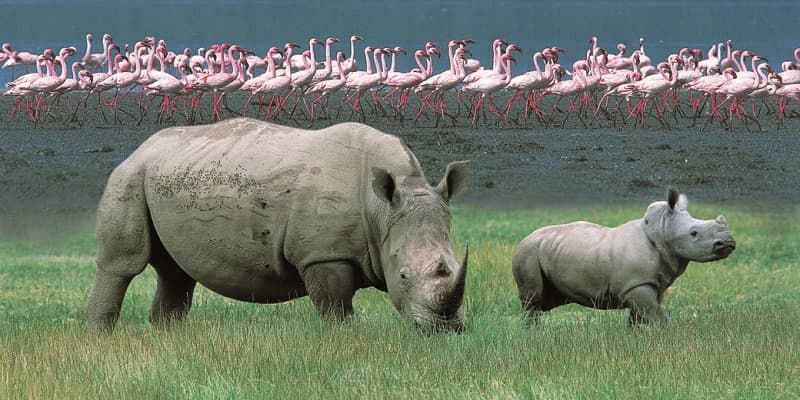
Visiting Lake Naivasha National Park to Dry Season
The optimal period to visit Lake Naivasha National Park is during the arid season. The animals gather around the scarce waterholes during the dry season due to a lack of both vegetation and water. This behavior influences your expedition with Focus East Africa Tours to Lake Naivasha in pursuit of wildlife, as fauna may be either more elusive or more readily observable, resulting in either animals dispersed across a wider area or a variety of species congregated in a single location.
During the dry season, when vegetation and water are few, animals gather around the limited waterholes. This behavior influences your wildlife observation excursion to Lake Naivasha with Focus East Africa Tours, as the fauna may be either more challenging to view or more readily accessible, resulting in either animals dispersed across a broader area or a variety of species concentrated in a single location.
Both the prolonged dry season and the prolonged wet season include advantages and disadvantages. Due to the lack of precipitation, the roads and trails are in optimal condition for your exploration activities at Lake Naivasha. The extended cool-dry season is the optimal period for observing wildlife. Conversely, in the absence of rain, the foliage may lack vibrancy and lushness. Consequently, the dry season, characterized by less complications than the wet season, is the optimal period to visit Lake Naivasha.
Visiting Lake Naivasha National Park Wet Season
The low or green season may extend into much of June. It often endures from April to May. If you seek a tranquil vacation in Lake Naivasha, East Africa, at the pinnacle of natural beauty, these months may be optimal for your visit. The optimal period to visit Lake Naivasha National Park is during the wet season for budget-conscious travelers and avian enthusiasts.
This season poses several challenges during your holiday, such as muddy roads, especially in parks, which may become slippery and disrupt your travel itinerary. Incidents during your journey may be precipitated by rainfall, especially when navigating Kenya’s rugged and muddy terrain, or by the presence of wildlife.
The region’s established and open pastures enable animals to access water and grazing at will, thereby disrupting activities such as game drives and lake flooding, which occurs due to rainfall that elevates the lake’s water level and rivers that flow into Lake Naivasha. The expense of accommodation has decreased; nevertheless, all other expenditures—such as logistics, activities, guides, and conservation—remain unchanged year-round.
Both the prolonged dry season and the prolonged wet season include advantages and disadvantages. Due to the lack of rainfall, the roads and trails are in superb shape for your exploration activities in Lake Naivasha. The extended cool-dry season is the optimal period for observing wildlife. Conversely, in the absence of rain, the foliage may lack vibrancy and lushness.
Animals in Lake Naivasha National Park
The dry season is optimal for a game drive at Lake Naivasha National Park, as most animals gather near water sources in pursuit of sustenance and hydration. A variety of species inhabit Lake Naivasha National Park, including:
Hippopotamuses: Following elephants, hippopotamuses are the largest land mammals. Hippopotamuses are erratic, belligerent creatures that predominantly inhabit aquatic environments. More than 400 hippos have been observed at Lake Naivasha, rendering them the most abundant creatures in the park. These are observable from the boat.
Buffaloes: These are among the “big five” mammals, large herbivorous animals that resemble cattle. Buffaloes often coat their bodies with mud to eliminate ticks. These are located throughout the park and throughout the game drive.
Giraffes: The largest ruminants globally, giraffes are characterized by their exceptionally elongated necks and limbs. At Lake Naivasha National Park, one can observe a diverse array of wildlife, including giraffes.
Zebras: These animals can be distinguished by their black-and-white striped coats. Observing zebras is essential when visiting Lake Naivasha National Park.
Flamingoes in Lake Manyara National Park
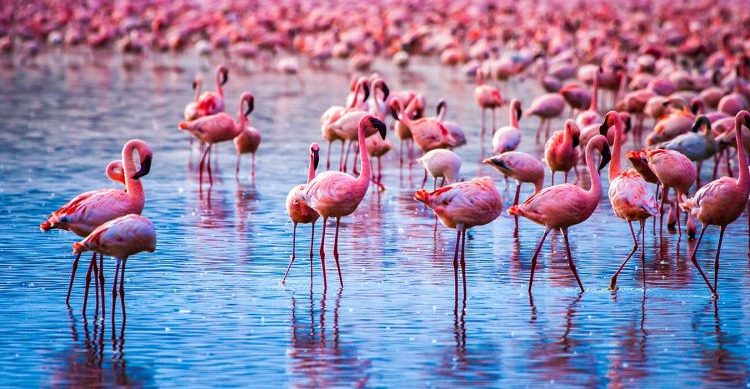
Birdwatching is a prominent activity in Lake Naivasha National Park, with flamingos being a notable attraction. Lake Naivasha National Park is home to the most common avian species. These are located along lakeshores, with the rainy season being the optimal period for observation. The avian species inhabiting Lake Naivasha include kingfishers, African jacanas, ducks, and mourning collared doves.