 info@gorillatrekkinginafrica.com
 +256 787505601
Pian Upe Wildlife Reserve
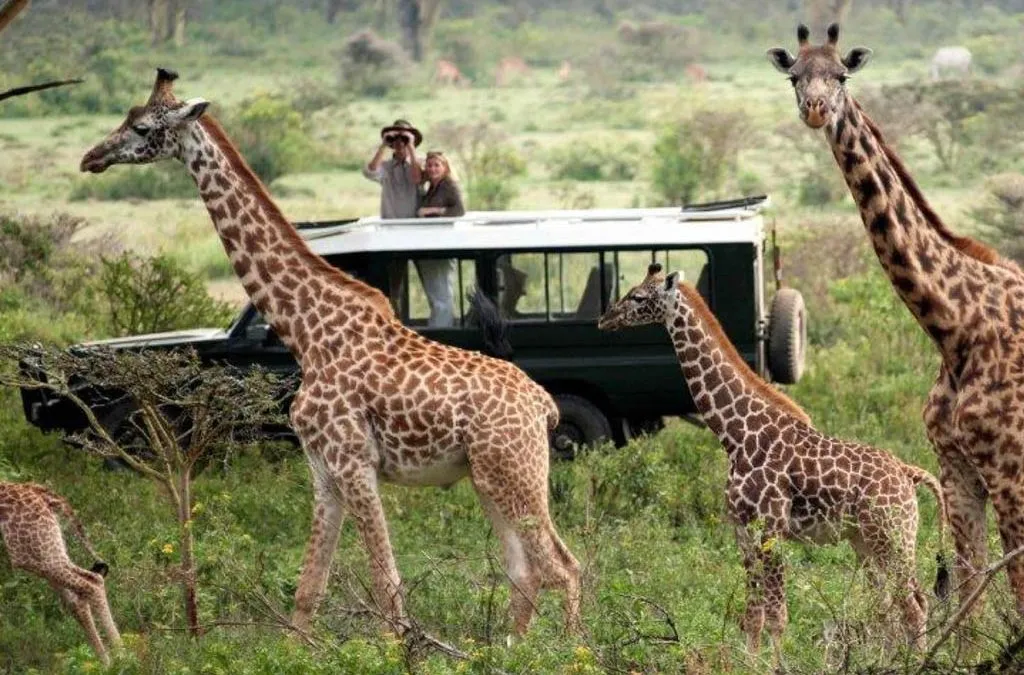
Pian Upe Wildlife Reserve is one of Uganda’s largest national protected areas, encompassing around 2043 square kilometers north of Mount Elgon, making it the second-largest protected area after Murchison Falls National Park. Pian Upe Reserve is located in the Karamoja subregion of Uganda, in the northeastern part of the country, within Nakapiripirit District. The reserve contains numerous wildlife species, including impalas, giraffes, plains zebras, and common elands, among others. Pain Upe Game Reserve is a sanctuary for a diverse array of avian species, with ostriches being the distinctive and most coveted bird in the park.
Explore Pian Upe Wildlife Reserve
Pian Upe Wildlife Reserve has emerged as one of the premier wildlife safari destinations in Uganda. Considering that it remains one of the recently recognized tourist sites featuring pristine and stunning landscapes in Uganda. The game reserve features breathtaking landscapes with encircling mountains, and often, you will have the entire reserve to yourself. Pina Upe is the second largest conservation area following Murchison Falls National Park, with around 3,893 square kilometers. The Pian Upe Wildlife Reserve encompasses approximately 2,275 square kilometers north of Mount Elgon and is governed by the Uganda Wildlife Authority for conservation purposes, overseen by the Mount Elgon Conservation Department. Pian Upe Wildlife Reserve is connected to two additional wildlife protected areas in northeastern Uganda: Matheninko and Bokora Wildlife Reserves, together with Mount Elgon National Park, collectively forming the Mount Elgon Conservation Area.
Geographic location of Pian Upe Wildlife Reserve
Pian Upe is situated in the northeastern region of Uganda, within Nakapiripiti district, and encompasses around eight other districts that are either adjacent to or partially encompassed by the game reserve. These districts include Amudat, Moroto, Katakwi, Napak, Kween, Kumi, Bukedea, and Bulambuli. The wildlife reserve is readily accessible by road from Kampala, the capital city, via the Mbale to Soroti route, which requires approximately 8 to 9 hours. It takes about 4 to 5 hours from Mbale city and 5 to 6 hours from Kidepo National Park to reach Pian Upe Wildlife Reserve. Pian Upe is readily accessible from the south of Chepsikunya Trading Centre or the north of Namalu Trading Centre for travelers traveling from Moroto City. The nearest functional airfield is situated at Amudat airstrip.
History of Pian Upe Wildlife Reserve
Prior to its designation as a conservation area, the Pian Upe wildlife reserve was renowned as a conflict zone between two pastoral groups of the Karamojong: those from northeastern Uganda and the Pokot from Kenya. This battleground extended into the Matheniko and Bokora Wildlife Reserves and Kidepo Valley National Park, with the principal road serving as the demarcation line where both tribes engaged in violent cattle raiding. Nevertheless, tranquility has since been restored to this region, and tourism has been implemented for the benefit of the residents.
In 1958, the southern section of Pian Upe Wildlife Reserve was designated as the Debasien Animal Sanctuary, despite ongoing threats to the reserve’s boundaries due to a government agricultural project created south of the Girik River. This heightened threat to the reserve’s resources compelled the state to extend the area northward and rebrand it as Pian Upe Game Reserve in 1964. The Government of Uganda has shown significant interest in elevating the Pian Upe Game Reserve to National Park status. Initiatives to reintroduce and bolster wildlife populations in the reserve are currently underway, alongside plans to expand tourism development in additional areas and communities.
The origin of the name of Pian Upe Wildlife Reserve
Pian Upe derives its nomenclature from its community, where “Pian” denotes a clan among the Karamajong people of northeastern Uganda, and “Upe” signifies a Kalenjin-speaking pastoralist community of the Karamong, believed to have originated from the Pokot tribe in Kenya, now residing near the wildlife reserve in Amudat district. “Pian” signifies “calm-hearted individuals,” while “Upe” denotes “enemy.” When these terms are amalgamated, they yield the phrase “friendly enemies.” These individuals are mostly pastoralists and maintain a traditional lifestyle, centered exclusively around their livestock. This group is predominantly located in the Nakapiripirit district near the Pian Upe Wildlife Reserve Headquarters.
Best time to visit Pian Upe Wildlife Reserve
optimal time to arrive in Pian UpeAll national parks and wildlife reserves in Africa possess optimal visiting periods, and Pian Upe Wildlife Reserve is no exception. The optimal period to visit Pian Upe Wildlife Reserve is from January to March, when the foliage is desiccated, visibility is unobstructed, and wildlife congregates at water sources, facilitating game observation. During this period, reserve management conducts controlled bush burning to maintain short grasses, resulting in dry vegetation that facilitates the observation of animals congregating around important water sources for hydration. The Girik River, situated in the southern section of the reserve, serves as a water source for the fauna inhabiting this semi-arid area. Between November and December, a dry season prevails; nonetheless, the vegetation remains verdant, complicating the detection of animals concealed in the grass, treetops, and other obscure locations.
From April to October, the rainy season renders the trails muddy and often leads to inaccessible roads owing to flooding, thereby obstructing game viewing. The pathways at Pian Upe Wildlife Reserve remain inadequately developed, making navigation challenging during the wet season due to dense foliage and obstructed visibility. Visitors are advised to utilize a 4WD vehicle, ideally a Land Cruiser, in the event of adverse weather conditions.
Attraction in Pian Upe Wildlife Reserve
Vegetation and Wildlife;
Pian Upe Wildlife ReserveFlora – Pian Upe Wildlife Reserve is a captivating conservation area characterized by unique wildlands, predominantly featuring wooded savannah plains, encircled by mountains and interspersed with rocky ridges, kopjes, plateaus, and seasonal rivers. Pian Upe is characterized by small trees, shrubs, thatching grass, lemon grasses, bristle species, and beard grasses, among others. The reserve grasslands are adorned with red acacia, butterfly pea plants, desert date, and bush willows.
The Pian Upe Wildlife Reserve is a notable location for hosting several rare species not seen elsewhere in Uganda, including a robust population of Cheetahs and the country’s sole remaining population of Roan Antelopes. The Pian Upe Wildlife Reserve offers an 80% probability of observing the cheetah, making it the premier location to witness the world’s fastest mammal. Other predators present in the reserve include wildcats, jackals, spotted hyenas, civets, serval cats, elusive leopards, and prides of lions, which are said to intermittently traverse between the adjacent Amudat Wildlife Conservation Area and Pian Upe Wildlife Reserve.
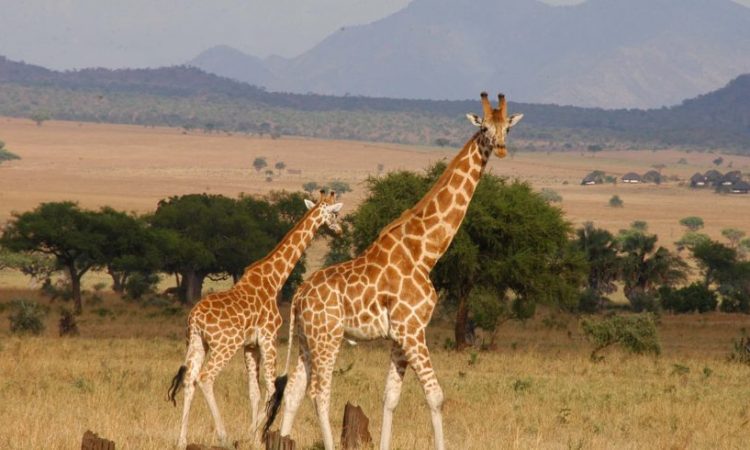
The reserve hosts substantial herds of ungulates, including the Common Eland, a limited population of Zebra, Hartebeests, Günther’s Dik Dik, the well-known Oribis, and the Impalas, who were recently translocated from Lake Mburo National Park. The Pian Upe Wildlife Reserve is home to Cape Buffalo, Uganda Kob, Waterbuck, Blue Duiker, Common Duiker, Klipspringers, Bohor Reedbuck, and Mountain Reedbuck. Some of the unusual wildlife in the reserve are the Vervet and Patas monkeys, the African hare, the crested porcupine, aardvarks, rock hyrax, four-toed hedgehogs, and olive baboons.
The Pian Upe Wildlife Reserve hosts a diverse array of reptiles, including the common agama, geckos, venomous puff adders, rock pythons, savannah monitors, chameleons, and crocodiles located in the River Girik. The reserve remains pristine with minimal visitor numbers, ensuring wildlife observations occur in a private and intimate setting, free from the throngs typical of other national parks. Morning and evening game drives provide optimal opportunities to observe a majority of the wildlife, accompanied by breathtaking sunrises and sunsets; for instance, each morning, the sun emerges from behind the mountains and drops over the horizon, creating captivating vistas. Most animals in Pian Upe Wildlife area became extinct during the period of insurgencies; however, the Uganda Wildlife Authority has plans to reintroduce many species to revitalize the area for tourism growth.
Bird watching
Avifauna observation at Pian Upe Wildlife ReservePian Upe Wildlife Reserve has emerged as one of Uganda’s premier birdwatching locations. The reserve provides an excellent birdwatching experience, featuring a diverse array of bird species. The reserve’s ecology has drawn distinctive avian species, rendering it a sought-after birdwatching locale in Africa. The reserve is home to several bird species, including the rare Ostriches, which are more readily observed here than at Kidepo Valley National Park, and the Karamoja Apalis, a unique species native to the northeastern region of Uganda. Additional avian species comprise the Superb Starlings, Green Bitta, Secretary Bird, Abyssinian Ground Hornbill, the uncommon Shoebill Stork, and the Fox Weaver, all observable within the park’s expanse.
Community trips
The Pian Upe Wildlife Reserve is situated in the Karamoja region, home to the Karamojong people, who bear similarities to the Maasai of Kenya and Tanzania. This group possesses a vibrant culture and heritage that is exhilarating to encounter, despite their historical reputation for hostility during the initial phases of settlement. The Karamojongs are mostly recognized for their pastoral practices. The cultural tour to a nearby Karamojong community will be an exhilarating experience featuring a unique performance of traditional music, dance, and drama, particularly highlighting the renowned Edonga dance.
Mountain trekking and guided nature trip
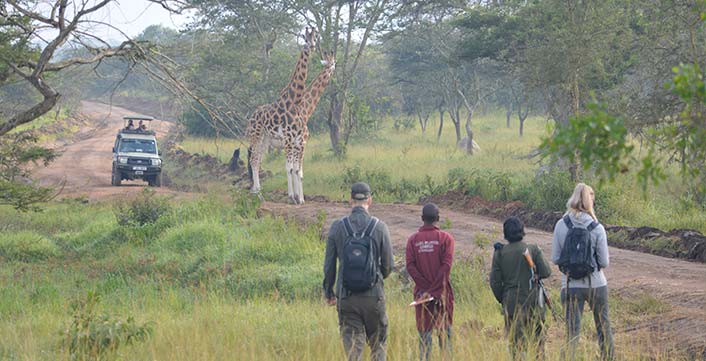
Pian Upe Game Reserve hiking Traversing Pian Upe Wildlife Reserve reveals an unceasing expanse of savannah grasslands, interspersed with Acacia and Sausage trees, among rugged hills, framed by three mountains: Mount Napak, Mount Kadam, and Mount Elgon. Beyond the horizon, the mountains ascend majestically into the sky. The mountains provide hiking options; for instance, trekking to Napedet Cave is among the premier hiking excursions in Pian Upe Wildlife Reserve. This hike evaluates physical fitness, enhances health, and provides stunning vistas of the reserve’s hills. Napedet Cave served as a prominent ancient leisure site for the region’s earliest residents, who congregated to partake in painting prior to the area’s designation as a protected site. Visitors can view unusual paintings of Roan Antelope, Hartebeests, Baboons, and Giraffes that once inhabited the reserve’s vast plains.
Accommodations at Pian Upe Wildlife Reserve
The Pian Upe Wildlife Reserve has few accommodations as it is still in the developmental phase. The often utilized lodging option in the park is the Uganda Wildlife Banda’s, situated at the park headquarters. Alternatively, one may opt to camp near the park headquarters using either their own tent or a rented tent from the park. The sole mid-range accommodation option is Karamoja Overland Camp, which offers self-contained tents equipped with en-suite amenities such as showers and power.
Packing list for a Pian Upe Safari
Similar to the necessity of preparation for a gorilla trekking safari, a visit to Pian Upe Wildlife Reserve demands careful consideration on what to carry due to its limited resources for accommodating people. Essential items to bring when visiting the reserve include;
Comfortable, lightweight garments in neutral hues are required. Nevertheless, warm attire is recommended as evenings and early mornings frequently become cool.
It is strongly advised to wear comfortable closed shoes, particularly if you plan to trek in the mountains during your visit to Pian Upe Wildlife Reserve.
Campers are urged to bring their own equipment, including a tent, bedding, utensils, and other essential items for everyday usage.
Insect repellant to safeguard against wild flies and safari insects.
It is advisable to take sunscreen lotion, sunglasses, and a sunhat, as this semiarid region can experience significant heat.
Ensure to take your personal products, including lotion, toothpaste, toothbrush, bath soap, deodorant, and lip balm.
Bring devices capable of capturing quality photographs, such as cameras and binoculars for avian observation. This breathtaking setting will be memorable, and photographs will assist in narrating your experiences.
A portable external battery charger or power bank is strongly advised due to the intermittent electrical supply, particularly at night. Ensure to bring a touch.