 info@gorillatrekkinginafrica.com
 +256 787505601
Hiking Ngabwe Trail at Nyungwe Forest National Park
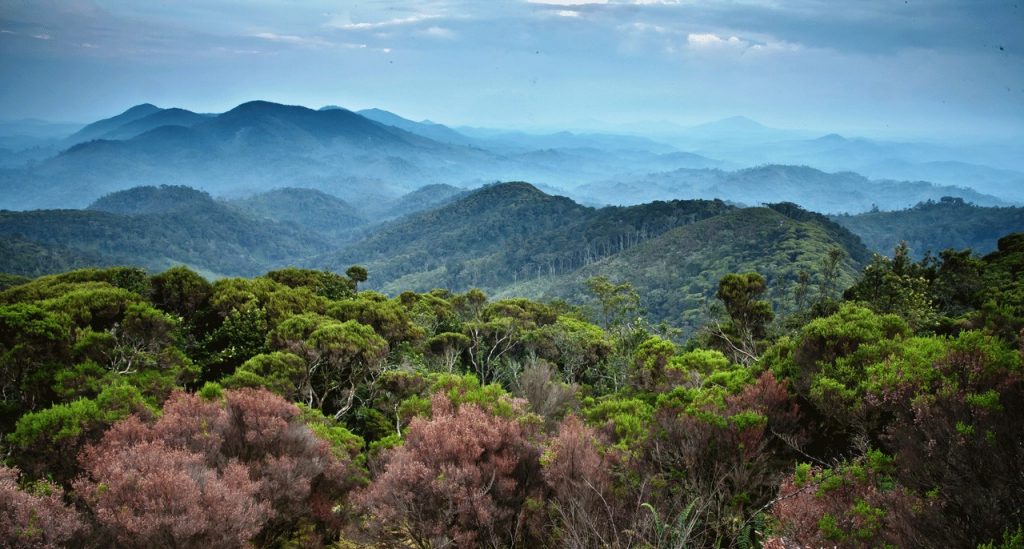
The Ngabwe Trail in Nyungwe Forest National Park marks the eastern edge of the park. The mountain is a favored location for hiking and picnicking among residents and tourists in the Huye district. This place is ideal for individuals unfamiliar with Nyungwe to assess their lung capacity before to traversing the remarkable ravines or mountainous trails deeper within the park.

Hiking Ngabwe Trail within Nyungwe Forest National Park.
The Ngabwe route in Nyungwe Forest National Park is suitable for those seeking to camp amidst nature. This hiking trail features excellent picnic spots overlooking the forest canopy. This walk measures approximately 4.6 kilometers and requires 3 to 4 hours for completion. This track is ideal for avian observation, with tourists commencing their excursion daily at 9 a.m. from the Kitabi reception area.
You can still ascend the Ngabwe route while exiting the park at the conclusion of your Nyungwe Forest trip and arrive in Kigali well before evening. Experienced hikers in Nyungwe will appreciate the two distinct advantages of this trail: the return trek is predominantly downhill, and the traction is excellent due to the sandy terrain.
Additional advantages encompass a notable variety of plant species, given the minimal distances traversed, and an excellently situated camping and picnic spot equipped with a restroom at the summit. Two primary routes lead to the summit, and hikers are encouraged to use one for ascent and the other for descent to experience a variety of views. By proceeding counter-clockwise, you will arrive at the most acute section of the waterfall.
The path commences 200 meters along a brief side road, approximately 3 kilometers from the park’s entrance on the Kitabi side. To the right, there is a water tank supplying the Kitabi tea business; a minor road extends briefly to the left, while the main path ascends a ridge between the two.
The forest is diverse, comprising both mature and secondary species. Additionally, there are strangler figs, including one associated with a notably robust host or ‘mother tree’, a waterberry tree. Although there are several beautiful, twisted ancient trees present, few possess the tall, straight trunks characteristic of those in Uwinka.
The eastern part of the park has lower natural diversity compared to the western side; yet, both regions possess their own unique beauty. The path traverses numerous shrub areas characterized by sparse soil and exposed bedrock.
The summit is discernible on an exposed shoulder adjacent to one side of the ridge. The dense green forest vegetation terminates suddenly at this point, giving way to the heath community, characterized by a lighter green hue, finer texture, and reduced height. If you appreciate flowers, remember to gaze upwards into the trees; the shorter trees facilitate the observation of epiphytes, avian species, and monkeys.

Mountain, blue, and Angolan black and white colobus monkeys are among the monitored species, with the latter being acclimatized by a team. Mangabeys and chimpanzees may also be observed. At elevated altitudes, black-fronted duikers, diminutive creatures akin to antelopes, graze on the meadows.
Two benches are positioned in opposing directions, with a tent located at the apex. The initial seat, positioned to the left, provides a sweeping vista of the park, framed by a buffer zone of eucalyptus, pine, and tea, extending to the towns and their mosaic of agricultural plots. One minute further along the path, the second seat overlooks a rainforest hill leading to an area of restored woods that resembles savanna.
It is recovering from the massive fire of the 1997 dry season, perhaps ignited by honey collectors. Burundi is concealed by a large distant hill. Red-rumped swallows, typically associated with rocky outcrops, glide between the observer and the environment.
Small openings in the forest along the eastern trail offer views to the south and east. At the midpoint of the mountain, you will encounter a trail intersection where you can either proceed on an 8-hour journey to the Kitabi tea plantation or diverge along the same path to arrive at the park headquarters.
At the crossroads, a leftward route ascends the mountain to Butare, the summit of Mount Ngabwe, and subsequently descends through colobus territory, concluding in Uwasenkoko. Prior to arriving to the trail’s conclusion, eucalyptus saplings with aromatic leaves emerge, interspersed among weeds and rejuvenated native flora.
Ngabwe Trail subsequently traverses a creek and ascends the opposite side of a minor, open valley. A burgeoning number of invasive eucalyptus seedlings and pioneer umbrella tree saplings is evident.
A sand quarry will shortly come into view ahead. It is situated across the road from the trail’s endpoint and is 1.2 kilometers nearer to the main entrance than the trek’s starting point. The quarry serves as an optimal site for rendezvousing with a pick-up vehicle.
Ideal Time for Hiking the Umuyove Trail in Nyungwe Forest National Park.
Trekking the Umuyove Trail in Nyungwe National Park is feasible year-round; however, the months of January, February, June, July, August, September, and December are favored due to the reduced mud and hazards on the trekking pathways. Precipitation results in postponed treks and renders roads muddy and uneven, diminishing the whole experience; nonetheless, this season is optimal for avian observation in the Nyungwe forest.
Additional hiking and nature trails to investigate in Nyungwe Forest National Park.
Bigugu Trail
The Mount Bigugu nature route in Nyungwe Forest National Park provides visitors with an exhilarating walk through the forest’s flora. The ascent to the summit of Mount Bigugu requires 6 hours and spans 6.6 kilometers. In the dry season, three flame flowers illuminate your path: the large, conical orange blossoms of the orchid Disa Robusta, the red-orange flowers of the Red-hot Poker, and the scarlet blooms of the uncommon Nyungwe jewelweed bird. Nyabishwati serves as the starting point for excursions along this track.
Kamiranzovu Swamp Trail.
The Kamiranzovu wetland path in Rwanda’s Nyungwe Forest features the park’s most extensive wetland, Kamiranzovu Swamp. Hikers on this trail may encounter several breathtaking waterfalls along the path. The distance is around 5.9 kilometers and the trip duration is roughly 3.5 hours. Hiking excursions along this route commence daily at 9 a.m. The route is named for the Kamiranzovu wetland, the ultimate burial site of the woodland elephant.
Congo Nile Divide Trail.
The Congo Nile Divide Trail extends 227 kilometers alongside Lake Kivu. The Congo Nile Trail commences on the northern bank of Lake Kivu in Gisenyi and extends to the Rusizi region, situated between the Kahuzi Biega National Park in the Democratic Republic of the Congo and the Nyungwe Forest National Park in Rwanda.
Congo Nile Trail
The Congo-Nile Hiking Trail, which traverses the vicinity of Lake Kivu and navigates through rainforests, bracken fields, and bamboo groves, is favored by both cyclists and pedestrians.
The trekking route requires 10 days to traverse on foot, interspersed with occasional short boat rides. Trekking in portions is conceivable. The walk, primarily tracing the footpaths of local inhabitants, offers an exceptional opportunity to engage with the daily lives of traditional communities while remaining in proximity to environment and seeing Rwanda intimately.
The Congo-Nile hiking trail provides exceptional hiking opportunities in East and Central Africa, featuring engaging community-based tourist activities, coffee-washing stations, tea plantations, large towns, numerous villages, and countless beaches, coves, waterfalls, valleys, and scenic views.
This hiker’s dream traverses the lake’s perimeter via the peaks of Rwanda’s verdant highlands, presenting both challenges and beauty. It is a demanding activity, reaching a maximum altitude of 2,630 meters. For individuals desiring additional comfort, there are campgrounds along the route and guesthouses in the towns. There are little shops along the route that offer refreshments. Active travelers can navigate the coastal waters through kayaking excursions and boat rides, while also observing the numerous islands of Lake Kivu. The path is accessible from the north and the south. Hikers are typically advised to prearrange their lodgings.
Isumo Trail.
The Isumo trek in Nyungwe Forest National Park is a 10.6-kilometer route that guides hikers through picturesque tea plantations, steep rainforest gorges, and the park’s greatest waterfall. A four-hour journey along this route commences and concludes at the Gisakura office.
Muzimu Trail
Hiking excursions along the Muzimu Trail in Nyungwe Forest present moderately challenging ascents in Rwanda’s secluded northeastern area, guiding hikers through pine and eucalyptus trees for a distance of 5.2 kilometers. On a clear day, one can observe Lake Kivu and the Virunga Volcanoes during this hike, along with other avian species. This expedition commences at the Gisovu Ranger Station and requires 3½ hours to finish.
Irebero Trail.
The Irebero nature route in Nyungwe Forest National Park is a 3.4-kilometer loop that encircles two of the park’s highest summits and provides vistas of Lake Kivu in Rwanda. Hiking excursions along this route typically endure approximately 3 hours.
What items should be packed for a trip on the Buhoro Trail in Nyungwe Forest National Park?
It is essential to carry a raincoat or jacket for the guided adventure in the Nyungwe forest along the Buhoro route, as rain may occur unexpectedly. Recommended items include binoculars, quality hiking boots, long-sleeved attire, a helmet, sunscreen, bug repellent, gardening gloves, bottled water, energy drinks, snacks, and a walking stick.
When organizing a guided excursion to the Buhoro trail or a chimpanzee trekking safari in Nyungwe Forest National Park, incorporate Volcanoes National Park into your itinerary for an unparalleled experience, featuring mountain gorilla trekking, golden monkey trekking, visits to the twin lakes of Burera and Ruhondo, and a trip to Dian Fossey’s gravesite.
Accommodations in Nyungwe Forest National Park.
Guests at Nyungwe Forest National Park may choose to reside at the following lodges: Gisakura Visitor Centre, Nyungwe Hill Top View Hotel, Gisakura Guesthouse, and One and Only Nyungwe House.
What is the route to Nyungwe Forest National Park?
Travel south from Kigali to Nyungwe National Park via Lake Kivu. The journey from Kigali to Nyungwe National Park spans around 225 km and requires about 6 hours.
Individuals seeking to avoid extensive travel durations may opt to fly to Nyungwe Forest National Park. RwandAir links Kigali International Airport to Kamembe International Airport. Upon landing in Kamembe, you will proceed to travel 32 kilometers to the park.