 info@gorillatrekkinginafrica.com

Discover Mount Rungwe Nature Reserve
Discovering Mount Rungwe Nature Reserve: Mount Rungwe, a dormant volcano, ranks as the second-highest elevation in southern Tanzania (2,981 m) and delineates the northern boundary of the Southern Rift inside the Great Rift Valley. The tropical forests of Mount Rungwe Nature Reserve are recognized for their distinctive biodiversity, featuring two flagship species: Abbot’s duiker and the Kipunji monkey. The Mount Rungwe Nature Reserve encompasses an area of 13,652 hectares and has a boundary length of 69.3 kilometers.
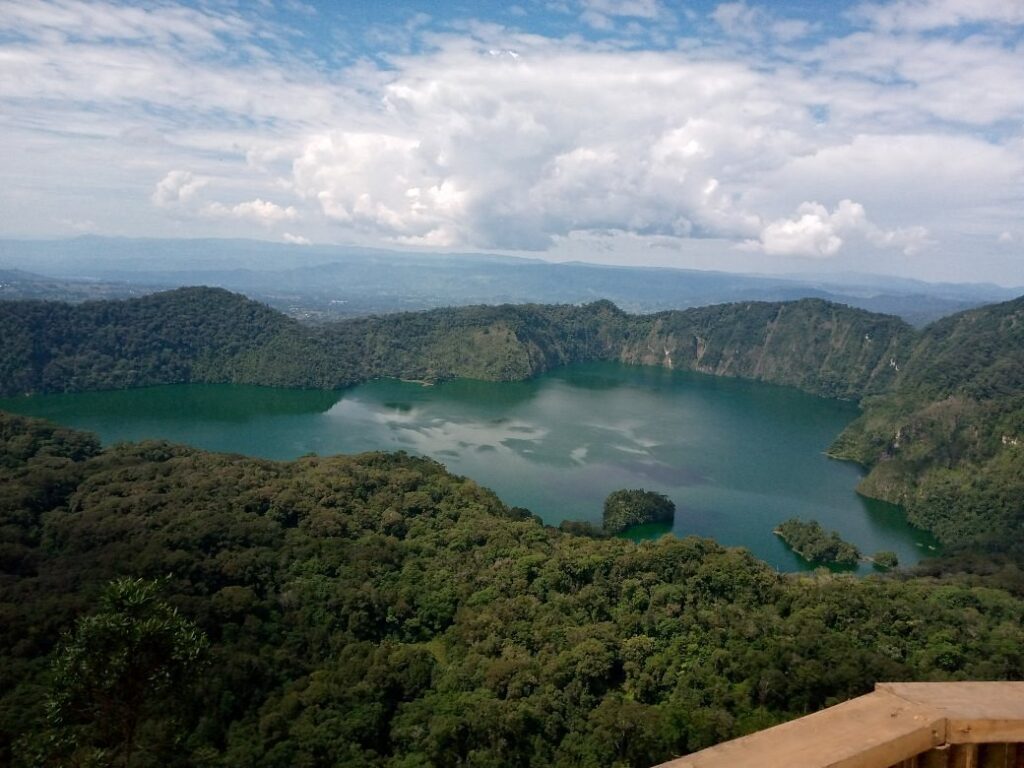
It is situated in the Rungwe District in the Mbeya region in southwestern Tanzania. To the east, Mount Rungwe Nature Reserve is adjacent to Livingstone Forest, a component of Kitulo National Park; to the north, it is bordered by Kiwira Forest Plantation, overseen by the Tanzania Forest Services Agency; and to the west, it is flanked by Rungwe Avocado Farm and the Moravian Mission, which possesses a minor portion of Rungwe Forest.
The reserve is identical to Lake Ngosi, the second-largest Crater Lake in Africa and the primary tourist destination within the reserve. The lake is located near the summit of Mt. Rungwe, which is the highest mountain in the Southern Highlands of Tanzania. In addition to Lake Ngosi, the reserve hosts uncommon red colobus monkeys, referred to as Rungwe Cebus or “Kipunji” locally; the bamboo belt; the rivers Kiwira and Kibisi; and the breathtaking vista of the rift valley.
The Mount Rungwe ecosystem serves as a significant water catchment area. Annual precipitation measures 900 mm in the lowlands, 2700 mm in the highlands, and an extraordinary 3000 mm on the southeastern slopes. Temperatures vary from 6 degrees Celsius in the hills to 29 degrees Celsius in the lowlands. Abundant rainfall and considerable forest cover ensure the flow to numerous streams that supply water to villages, cities, agricultural lands, and significant rivers that feed into Lake Nyasa.
Attraction located within Mount Rungwe Nature Reserve
Fauna
Mount Rungwe Nature Reserve is renowned for its distinctive faunal richness, influenced by the Eastern Arc, Southern Rift, and montane Tanzanian endemism. The reserve contains 100 mammal species, over 230 bird species, 45 amphibian species, and 10 fish species, including several rare and endemic varieties. The reserve is also inhabited by endemic primate species found in 2003. The Kipunji (Rungwecebus kipunji) is a newly identified species classed as Critically Endangered. The reserve hosts a diverse array of wildlife, including red colobus monkeys, elusive monkeys, elephants, and leopards, among others.
Flora
The vicinity of Mount Rungwe is renowned for its tea plantations, where visitors may partake in guided excursions to gain insights into the tea production process. The reserve encompasses five predominant types of vegetation. The Montane Forest is located at lower elevations inside the reserve, specifically in the southeastern region. Prevalent species comprise Aphloia theiformis, Ficalhoa laurifolia, Maesa lanceolata, Trichocladus ellipticus, Albizia gummifera, and Bersama abyssinica. Secondly, the upper montane forest, characterized by a fragmented canopy ranging from 10 to 25 meters, is located at elevated altitudes.

Prevalent tree species comprise Albizia gummifera, Aphloia theiformis, Bersama abyssinica, Bridelia micrantha, Diospyros whyteana, Hagenia abyssinica, Macaranga kilimandscharica, Maesa lanceolata, Maytenus acuminata, Myrianthus holstii, Neoboutonia macrocalyx, and Schefflera goetzenii. Additional species are Protea spp. and Hagenia abyssinica.
The belt is predominantly established in the southern and southeastern elevations (2,600 – 2,800 m). Above 2,500 m, approximately 300 ha of the mountain summit is covered by bushy grassland. Dispersed bushes are prevalent. Buchnera rungwensis and Valeriana capensis are herbs located at elevated altitudes.
The identified bush and tree species comprise Agauria salicifolia, Aloe spp., bracken, Catha edulis, Erica spp., Hagenia abyssinica, Hypericum revolutum, Maesa lanceolata, and Protea.
Recreational pursuits in Mount Rungwe Nature Reserve
Mountaineering
The Mount Rungwe Nature Reserve offers a variety of hiking trails suitable for different skill levels. From leisurely pedestrians to seasoned hikers. Each path unveils a varied topography, with verdant woodlands, rugged cliffs, and stunning vistas.
Bird watching
The reserve serves as a sanctuary for avian aficionados, including an abundance of distinctive bird species. Exceeding 150 avian species documented. During your birdwatching safari, you will have the opportunity to observe species such as the rare Rungwe bush warbler and other sunbirds, allowing birdwatchers to appreciate both visual splendor and melodious cries.
Cultural trips
Experience the profound heritage of the Nyakyusa people through curated cultural excursions on Mount Rungwe. Visitors may investigate historic communities, get knowledge of local customs, and observe distinctive artistic techniques. These immersive experiences provide insights into the community’s lifestyle, values, and their deep relationship with the natural environment.

How to get access
Visitors to the reserve from Dar es Salaam can travel to Mbeya City via airplane, public bus, or the TAZARA railway. The distance from Mbeya to the reserve is 22 kilometers.
Additional Tourist Attractions in Proximity to Mt. Rungwe Nature Forest Reserve
Nearby tourist attractions to Mt. Rungwe Nature Forest Reserve include the Livingstone Mountains and Kitulo National Park to the east, the Mbozi Meteorite (Kimondo) located in the Songwe Region, 72 km from Mbeya, the Kalambo Nature Forest Reserve approximately 397 km from Mbeya via Sumbawanga, and the Mpanga Kipengele Game Reserve about 101 km from Mbeya along the highway to Dar es Salaam.
Best time to Visit
The optimal period to visit Mount Rungwe is the dry season, spanning from June to October. During this period, the climate is temperate, and the paths are less saturated, enhancing the trekking experience. It is essential to recognize that mountainous weather can be erratic; therefore, preparation for all conditions is recommended.