 info@gorillatrekkinginafrica.com
 +256 787505601
Guide to Visit Mount Longonot national park
Mount Longonot National Park is a stratovolcano situated southeast of Lake Naivasha in Kenya’s Great Rift Valley. It is believed to have last erupted in the 1860s, and its name is derived from the Maasai term Oloonong’ot, meaning “mountains of many spurs” or “steep ridges.” Mount Longonot is safeguarded by the Kenya Wildlife Services as a component of Mount Longonot National Park. The park is 52 square kilometers and features a scenery at an elevation of 2,776 meters above sea level, with Mount Longonot, a V-shaped valley, ridges, and sparse vegetation. The park was founded in 1984.
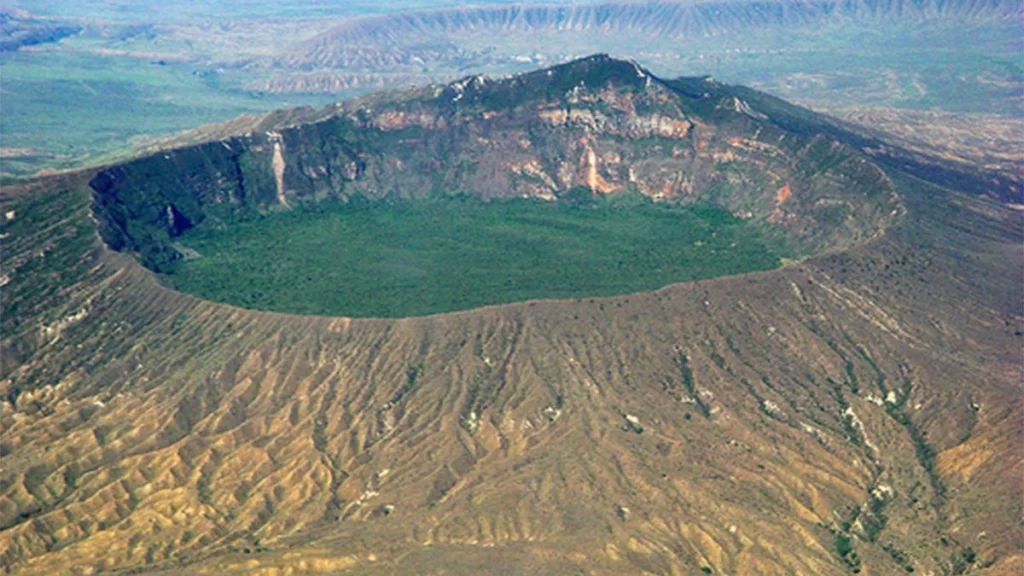
Points of interest in Mount Longonot National Park.
The extinct volcano and crater forest offer a picturesque scenery with rewarding vistas of Lake Naivasha and the Great Rift Valley, as well as a haven for birds of prey.
The rim of the Mount Longonot crater.
From the crater rim, one can observe the geothermal steam emanating from several fissures, serving as a reminder of the energy reservoirs beneath.
Wildlife and Birds.
Mount Longonot National Park presents an exceptional array of wildlife observable along the ascent to the rim. Adventurers venturing into the forested crater may encounter animals such as buffalo, giraffes, zebras, various antelope species, baboons, and leopards, although tracking is conducted within the park. A significant number of Rift Valley birds can be observed, including several raptors that soar on thermals over the crater. Common species in the park include the Verreaux’s Eagle and Lammergeier.
Park’s Landscape.
The vistas from the volcano are gratifying; from the elevated vantage point, one can obtain a lucrative bird’s-eye view of a substantial portion of the breathtaking southern Rift Valley, extending to Mount Kenya and the Aberdare Mountains in the distance. Additionally, the picturesque Lake Naivasha and Hell’s Gate National Park are both remarkable sites that can be explored following a visit to Longonot, given their proximity to one another.
Activities conducted in Mount Longonot National Park.
Mountaineering
Mount Longonot provides exceptional hiking opportunities on the continent, featuring its impressive elevated ranges and prominent peaks. The hike is a formidable task to tourists, although it is rewarding, as those who reach the mountain’s summit are afforded a view of Lake Naivasha.
Cycling.
An exhilarating experience for tourists is cycling on the gentle slopes of the mountain ranges through the vast wildness of Longonot National Park, where they may observe many animal species along the cycling trails.
Avian observation.
Birdwatching can occur throughout the park, with Lammergeyers and Verreaux’s eagles frequently observed, among other species.
Observation of Wildlife.
Mountain Longonot National Park offers a remarkable and unique picturesque vista not found in any other park. The activities here resemble those of other parks; nevertheless, the most remarkable aspect is that it is a locale of concealed tourist gems. Within the park, animals may be observed in the mountainous areas, including buffalo, antelope, baboons, and many species of primates.
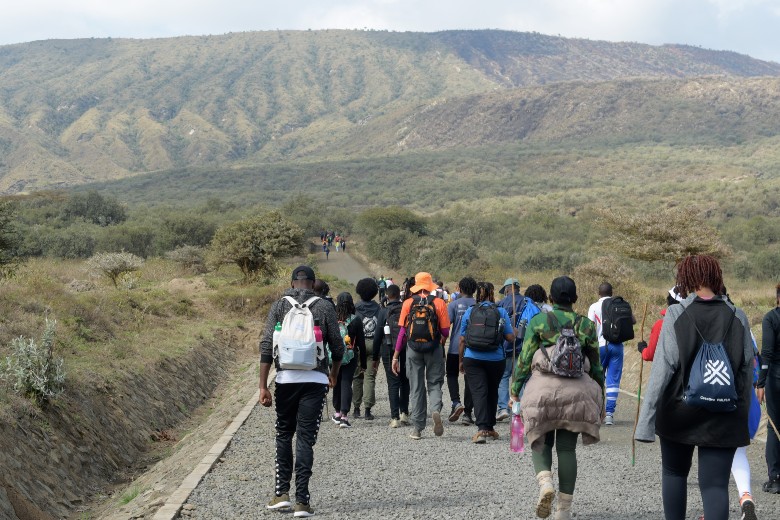
Mountain Biking.
This cycling experience enables participants to traverse the circuit road leading to the volcanic lava flow, approximately 2 kilometers away, allowing for an appreciation of the park’s natural beauty. The bicycles are consistently available for rental.
Accommodation options in Mount Longonot National Park.
The Park lacks any lodging facilities, except for the Olongonot Campsite, situated just inside the park entry along the access road to the crater. The campsite provides an optimal location for tent installation, along with toilet facilities and running water; however, you may need to bring your own equipment for the safari to Mount Longonot National Park.
Nevertheless, a traditional array of lodging options is accessible in the adjacent town of Naivasha and along Moi South Lake Road; notable establishments with commendable amenities include the Lake Naivasha Country Club and Mamsada Hotel, among others.
Entrance fees of Mount Longonot National Park.
| Category | Citizen (KSH) | Resident (KSH) | Non- Resident (USD) |
| Adult | 300 | 300 | 26 |
| Child | 215 | 215 | 17 |
Best time for visiting Mount Longonot National Park.
Mount Longonot National Park is optimally visited during favorable weather conditions, specifically in the dry seasons of January to March and July to October. The park provides breathtaking vistas, encompassing the glistening waters of Lake Naivasha, the lilac-blue escarpments of the Mau Escarpment, the imposing peaks of the Aberdares, and the undulating waves of the Rift Valley.
Directions to Mount Longonot National Park.
Mount Longonot is accessible via both aerial and terrestrial transportation from Nairobi to the park region.
Via road transportation.
The park is reachable via a tarmacked road from Nairobi (90 km). Visitors may opt for either public or private transportation. If utilizing public transport, disembark in Longonot settlement and then take a motorbike or cab to the park entrance. This requires less than 3 to 4 hours.
Via air transportation.
Domestic charter flights are available from either Jomo Kenyatta International Airport or Wilson Airport to Green Park Airstrip; from the airstrip, one can drive to the park’s entrance. The distance is 71 km, requiring 34 minutes to go from Nairobi to the park.
Mount Longonot National Park offers “sheer adventure,” featuring the extinct volcano of Mount Longonot, which ascends from the Great Rift Valley bottom like a monolith. A distinctive characteristic is the dense forest situated within the mountain’s crater. The crater rim offers stunning vistas of the picturesque Rift Valley extending to Lake Naivasha.