 info@gorillatrekkinginafrica.com
 +256 787505601
Meru National Park
Meru National Park is an undervalued park, not only in Kenya but throughout Africa. It was significantly impacted by poaching in the early 1980s. The park was included on the globe map during the era of George Adamson, who filmed “Born Free” in 1989. Following Adamson’s demise, the park was mostly neglected and removed off the visitor itinerary. The park is referred to as “complete wilderness” due to its abundant biodiversity. The diverse vegetation cover in the park enhances wildlife habitats. The flora extends from riverbanks to termite mounds.
Meru National Park was formed in 1966, encompassing a total area of 870 square kilometers. It is situated on the eastern edge of Meru town. The park is located 350 kilometers from the capital city, Nairobi. The park is home to all of the African Big Five: lions, leopards, rhinoceroses, elephants, and buffalo. Additional fauna at the park comprises zebras, hippos, oryx, among others. The park is one of the two locations where the acclaimed conservationists George Adamson and Joy Adamson fostered the liberated lioness, Elsa. This is the location where various works, including “Born Free,” were written, drawing numerous travelers to the park to observe Elsa. The uncommon lioness have a profound affinity for nature, enabling her to consistently nurture young Oryx when she encounters them. She could safeguard them from all forms of peril, even other lions, until they mature and she relinquishes them.
Following the demise of Elsa, the esteemed lioness, Adamson’s family resolved to inter her within the park. Adjacent to Joy Adamson’s burial, the ashes of Joy were interred on Elsa’s tomb as a demonstration of love and reverence.
Meru National Park is managed by Kenya Wildlife Services, which, with assistance from the International Fund for Animal Welfare, repaired and rehabilitated the park due to significant damage caused by poaching. A gift from IFAW facilitated the development of basic infrastructure and the acquisition of vital law enforcement equipment.
The park is accessible via both air and road transport, located 350 kilometers from Nairobi through Meru town. One can select between two established and well-paved routes by road. Travel through Nyeri and Nanyuki to get the main entrance to Meru National Park. An alternative route is via the Embu – Meru highway, renowned for its beautiful beauty and favored by tourists. The entry to the park is via the URA gate, utilizing a secondary path that is permitted solely during the dry season, traversing through Mathara and Kageta towards the Maua to Kinna road before accessing the park.
The park can be accessed by air via two airstrips that handle flights directly from Wilson Airport and Jomo Kenyatta International Airport. This is an excellent choice for elderly people and individuals who are unable to endure prolonged journeys on rugged African roads. The driver-guide will meet you at the airfield, collect you, and transport you to the lodge.

Attractions in Meru National Park
Meru National Park, untouched and less congested, presents numerous attractions for tourists. The park offers a diverse array of attractions, including the following:
Adamson’s Falls: This 50-meter-high cascade is named for the distinguished conservationists Adamson Gorge and Joy Adamson, the initial settlers of the park. The caves of Hastings house an exceptional site where touring is of utmost importance. The waterfalls were once inaccessible; however, the passage has now been cleared, facilitating access for guests. The hike to the falls requires approximately 2 to 3 hours, contingent upon the individual’s physical capability. Creekton Falls is situated at a higher elevation in a rugged terrain, necessitating advanced hiking skills for access.
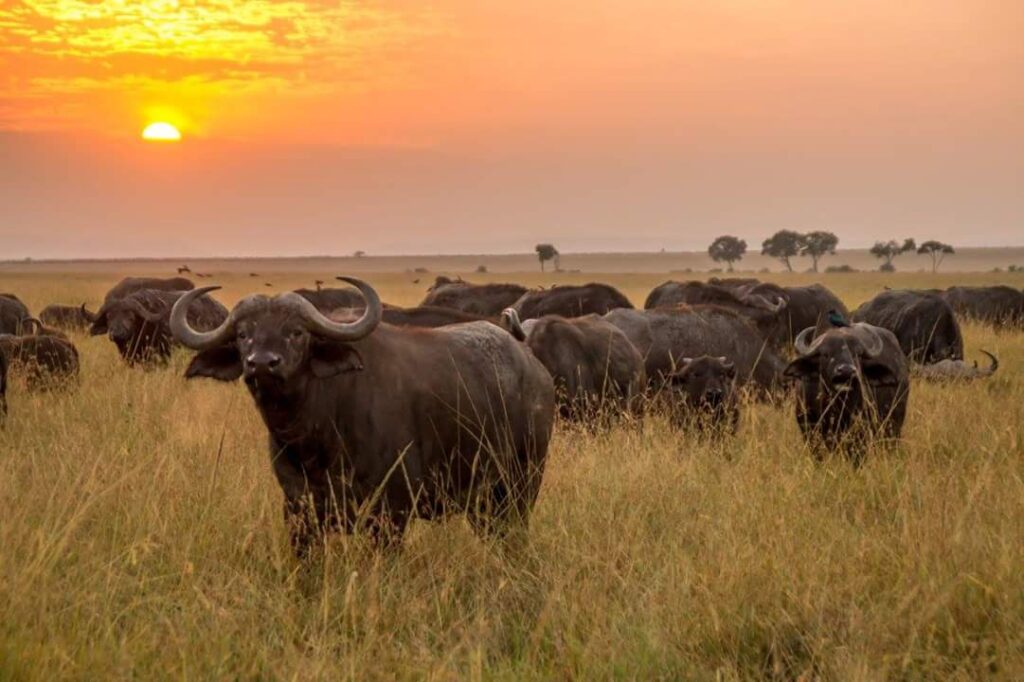
Wildlife species: Although Meru National Park is less renowned, it is endowed with a diverse array of species, including the African Big Five: lions, leopards, buffalo, elephants, and rhinos. Observing leopards is challenging and technical; nonetheless, seasoned driving guides consistently endeavor to ensure that clients encounter leopards throughout their visit to Meru National Park. The park is home to several creatures, including zebras, kudu, giraffes, gerenuk, hyenas, wildebeest, cheetahs, oryx, hippos, and others.
Burial Sites of Joy Adamson and Elsa the Lioness: Joy Adamson was the spouse of George Adamson; they were the first explorers to establish residence in Meru National Park. They accomplished significant work at the park and produced numerous documentaries that garnered fame not only in Kenya but beyond. Gorge’s wife passed away, and he interred her in the park adjacent to the grave of Elsa, the renowned lioness. The residence and burial site of the Adamson family remains the foremost tourist attraction at Meru National Park to this day. Visitors attend the historical event at the park to observe the residence and burial sites of the cast of Born Free. The Dutch family consistently visits the location to commemorate their fellow conservationists.
Birds: Meru National Park is home to around 300 avian species, encompassing those from wooded, swamp, and open savannah habitats. The park hosts uncommon native avifauna not observable in other parks. The most frequently observed avian species include Maasai Ostriches, guineafowl, Boran cisticola, African finfoot, ibises, Palm weavers, fish eagles, kori bustards, and starlings, among others.
Activities at Meru National Park
Visiting the gravesite of Elsa and Joy Adamson: This historical location marks a pivotal juncture in Meru National Park, as the Adamson family significantly contributed to the park’s construction. The majority of visitors come to observe the park’s foundation, paying their respects at the tombs of Joy and the notable lioness Elsa. Their book “Born Free” significantly boosted the park’s sales. The distinctive nature of Elsa, the sole lioness that defended and nurtured the baby Oryx.
Nature walks and waterfall visits: Under the guidance of a certified game ranger, guests can partake in nature walks within the park as the ranger accompanies them. The park authority prohibits guest walks without rangers due to safety concerns. We traverse the rivers, go to the summit of the falls, and explore other locations within the park. We approach the wildlife on foot.
Birdwatching: Meru National Park hosts around 300 avian species that visitors can observe during their birding excursions within the park. The park features 13 rivers, facilitating the observation of various aquatic wildlife. Notable avian species include the Chanting Goshawk, ostrich, Hartlaub’s Bustard, secretary bird, Wattled Starling, Saddle-billed Stork, Taita Fiscal, Martial Eagle, Boran Cisticola, Bat Hawk, and Rufous Chatterer, among others.
Wildlife observation: This is the predominant activity in nearly all national parks in Africa, except primate-focused areas. Game watching at Meru National Park is exceptional year-round, however the optimal period occurs during the dry months. Open safari vans are the predominant choice among tour operators, providing ample space for clients to observe the big game and facilitating closer encounters with the animals during game drives. The residence of Elsa, the renowned lioness, is inhabited by additional lions, leopards, elephants, both black and white rhinoceroses, hippopotamuses, crocodiles, hyenas, zebras, topis, kudu, and various other species.
Welcome to the distant yet very gratifying national park of Kenya, the residence of George Adamson and Joy Adamson, along with their pet lioness, Elsa. The park houses both black and white rhinoceroses among other members of the African Big Five.