 info@gorillatrekkinginafrica.com
 +256 787505601
Kilimanjaro National Park Tanzania
Kilimanjaro National Park Tanzania: The Most Distinctive Nation in Africa While organizing a global expedition, there exists an extraordinary locale where you can indulge in virtually all your desired activities. This remarkable location is Tanzania. Indeed, it is the residence of three of the Seven Natural Wonders of Africa: the Great Migration, Ngorongoro Crater, and Mount Kilimanjaro. This stunning country encompasses many cultural groups, national parks, and wildlife reserves that attract thousands of visitors from around the globe. Given Tanzania’s numerous attractions, specificity is essential while selecting activities in this remarkable country. I will now elucidate all pertinent information on Kilimanjaro National Park.
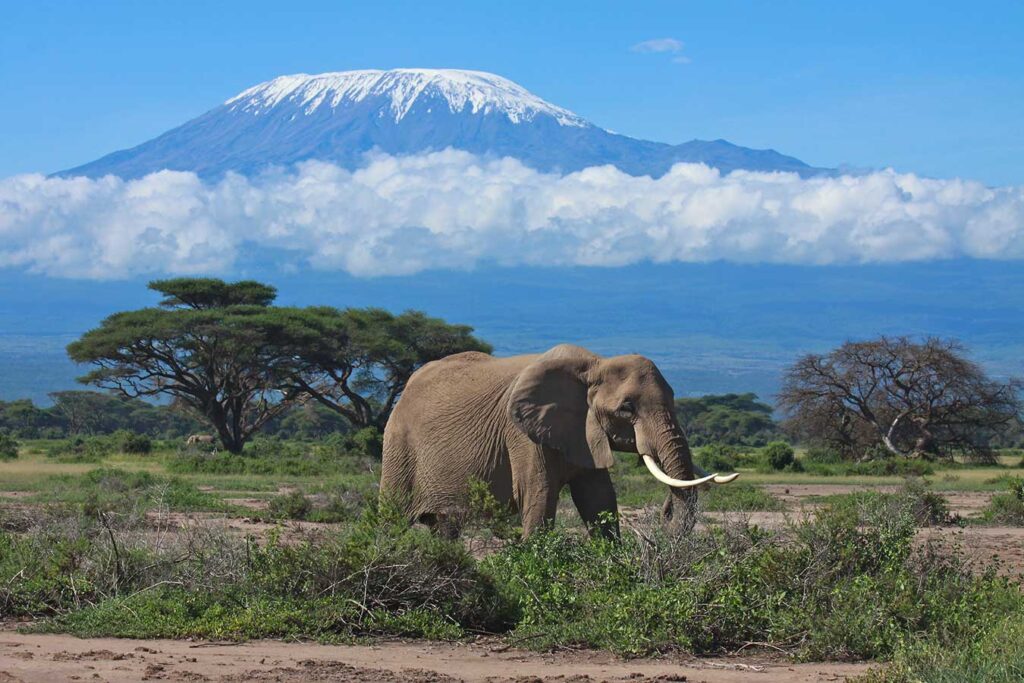
Kilimanjaro National Park is a remarkable protected area situated in the Northern Circuit of northern Tanzania, within the Kilimanjaro region. It houses Africa’s highest summit, the world’s tallest freestanding mountain, and is one of the Seven Summits. This park encompasses over 1688 square kilometers and is situated near the town of Moshi, 128 kilometers from Arusha. This remarkable park is conveniently accessible from key areas with international airports.
These comprise Dar es Salaam and Arusha. Julius Nyerere International Airport (DAR) accommodates aircraft from multiple countries across various continents, similar to Kilimanjaro International Airport (JRO). Upon arriving in Dar es Salaam, you will need to reserve an additional flight to Arusha. From Arusha, you will proceed to Moshi and subsequently to one of the entrances of Kilimanjaro National Park. Chartered flights from several places in Tanzania are accessible to this park. Regional airlines around Tanzania provide economical flights to Arusha (JRO) and Moshi. Airlines providing domestic flights encompass Air Tanzania, Wings of Kilimanjaro, Coastal Aviation, Precision Air, Fastjet, Auric Air, Flightlink, among others. The optimal periods for visiting Kilimanjaro National Park are from January to March and from June to October. In these periods, the sky is unobstructed, enabling clear vistas of this magnificent peak.
Kilimanjaro National Park has numerous things that may captivate your interest. It include Mount Kilimanjaro, diverse wildlife, avifauna, and remarkable flora. Let us examine each item sequentially.
Mount Kilimanjaro is a dormant volcanic peak with three volcanic cones: Kibo, Mawenzi, and Shira. Kibo maintains its snow cover year-round, which is why Mount Kilimanjaro is sometimes referred to as the snow-capped mountain. Uhuru Peak, the highest summit, is situated on Kibo. Uhuru Peak is situated at an elevation of 5,895 meters above sea level and approximately 4,900 meters above the plateau base. Climbers must reserve a trek lasting six to nine days to attain the peak. If you are unaccustomed to high elevations, I recommend undertaking an acclimatization exercise on Mount Meru, the lesser-known counterpart of Mount Kilimanjaro. The Mount Meru walk requires 3 to 4 days to ascend to the Social Peak (4566m), allowing for enough acclimatization to high elevations. Upon acclimatization, you may advance to the magnificent Mt. Meru’s “big brother,” where you will experience the ascent of Africa’s tallest mountain. The ascent of Kilimanjaro is extraordinary.
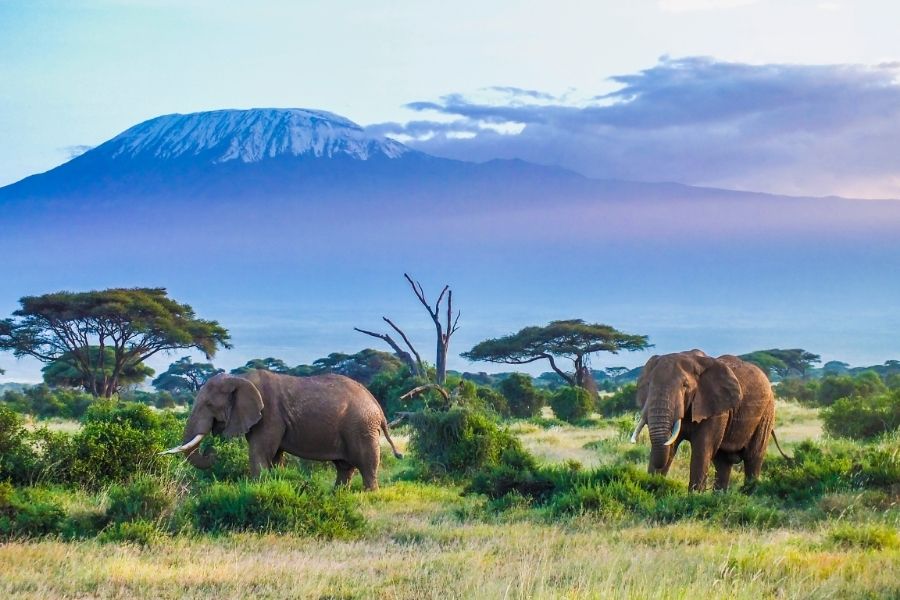
You must select your optimal operator and the most advantageous route for your ascent. Seven ways are attributed to the peak of the majestic mountain. The routes include Machame, Rongai, Umbwe, Lemosho, Marangu, Northern Circuit, and Shira. The selection of your routes should take into account the difficulty of the summit night. The Machame and Lemosho routes offer relatively simple summit nights, whilst the Rongai and Marangu climbs present the most challenging summit nights. The most isolated route is Rongai, where you will ascend either alone or with a small number of infrequent climbers. This path provides wonderful sights and comfort. The Machame and Lemosho paths are optimal for acclimatization. Your decision should also account for the duration required to attain the summit. The Umbwe route requires approximately 6 days; the Machame route necessitates 7 days, the Lemosho route extends to 8 days, and the Northern Circuit route spans about 9 days. All these routes vary in price range from one another. For example, Machame is priced at approximately $2540, Rongai at $2630, Lemosho at $2670, Northern Circuit at $2999, Lemosho at $2590, and Marangu at $2450. It is important to recognize that tour operators provide unique packages that may appeal to you. Some of the offerings include
- A 9-day safari and hike on Kilimanjaro’s Shira Plateau, priced at $3,450 per person.
- 9-day trekking expedition on the Lemosho Route of Mount Kilimanjaro at a cost of $2,495 per person.
- 7-day Kilimanjaro Trekking Tour via Machame Route with a cost $1, 945 per person.
- 6-day Mount Kilimanjaro trekking via Marangu at a cost of $1,500 per person.
- Six-day Kilimanjaro ascent via the Umbwe Route at a cost of 1,590 per person.
Vegetation zones:
Kilimanjaro National Park is home to Mountainous vegetation, which starts from its base to the summit. There are five primary vegetation zones: the Lowest Zone, Montane Forest Zone, Semi-Alpine Moorland Zone, Alpine Zone, and Arctic Zone.
Lowest Zone;
This is often referred to as the Cultivation Zone. It ranges between altitudes of 792 meters and 1800 meters. This area encompasses several human activities, including agriculture and animal grazing. You will appreciate the stunning vistas of this area during your journey to the entrances of Kilimanjaro National Park (Mweka, Marangu, and Machame Gates).
Montane Forest Region;
This zone commences at a height of 1800 meters and ascends to 3000 meters. The region has significant precipitation, receiving up to 2000mm of rainfall annually. It contains more than 1,200 species of vascular plants. Prominent tree species in this region include Yellowwood (Podocarpus latifolius), East Africa camphorwood (Ocotea usambarensis), wild olive (Olea africana), maracanga (Macaranga kilimandscharica), and wild figs (Ficus sp). At elevated heights, one will observe exquisite plants such as the aromatic Hagenia abyssinica and the African pencil-cedar, Juniperus procera. This zone is also blessed with stunning flowers like red-and-yellow impatiens and violets. If you wish to engage with the animal species inhabiting this park, this is the optimal area for you. Excellent views of monkeys, Cape buffalos, elephants, leopards, servals, bushbucks and duikers have been witnessed here. Superb birds such Hartlaub’s turaco, silvery-cheeked hornbill, greenbuls, robin-chats, emerald cuckoo and nectar-loving sunbirds have been observed in this zone. Other wildlife species include Jackson’s three-horned chameleon and butterflies. Are you familiar with the largest duiker species, Abbott’s duiker? This rare species inhabits the highland forests of eastern Tanzania. This zone also contains it.
Semi-Alpine Moorland Zone;
Located at heights between 3000m and 4000m, this zone is sparsely populated with shrubs, grasses, and little trees. It experiences comparatively minimal precipitation in relation to the montane forest zone. It hosts exotic flora such as the yellow-flowered alpine sugarbush and the alpine red-hot poker. It is characterized by the prevalence of huge lobelia and giant groundsel. This region, characterized by elevated altitudes, is home to various animal species, including mice, rock hyrax, and klipspringers. The avian species thriving at elevated altitudes include the scarlet-tufted malachite sunbird, Augur buzzard, Alpine chat, Alpine swift, streaky seedeater, and Mountain buzzard.
Alpine Zone:
This range is between 4000 meters and 5000 meters in altitude. It is a semi-arid region characterized by daily temperature variations. The flora present at this location includes grasses, lichens, and mosses. This zone lacks permanent wildlife. However, elands and elephants can occasionally be observed in unusual instances.
Arctic Region;
This is the highest vegetation zone in Kilimanjaro National Park. It is situated at altitudes ranging from 5000 meters to 5895 meters. This zone has no precipitation. Life is absent in such location. Nonetheless, a frozen leopard was found in 1926 and a herd of African wild dogs in 1962.
- A 9-day safari and hike on Kilimanjaro’s Shira Plateau, priced at $3,450 per person.
- 9-day trekking expedition on the Lemosho Route of Mount Kilimanjaro at a cost of $2,495 per person.
- 7-day Kilimanjaro Trekking Tour via Machame Route with a cost $1, 945 per person.
- 6-day Mount Kilimanjaro trekking via Marangu at a cost of $1,500 per person.
- Six-day Kilimanjaro ascent via the Umbwe Route at a cost of 1,590 per person.
Vegetation zones:
Kilimanjaro National Park is home to Mountainous vegetation, which starts from its base to the summit. There are five primary vegetation zones: the Lowest Zone, Montane Forest Zone, Semi-Alpine Moorland Zone, Alpine Zone, and Arctic Zone.
Lowest Zone;
This is often referred to as the Cultivation Zone. It ranges between altitudes of 792 meters and 1800 meters. This area encompasses several human activities, including agriculture and animal grazing. You will appreciate the stunning vistas of this area during your journey to the entrances of Kilimanjaro National Park (Mweka, Marangu, and Machame Gates).
Montane Forest Region;
This zone commences at a height of 1800 meters and ascends to 3000 meters. The region has significant precipitation, receiving up to 2000mm of rainfall annually. It contains more than 1,200 species of vascular plants. Prominent tree species in this region include Yellowwood (Podocarpus latifolius), East Africa camphorwood (Ocotea usambarensis), wild olive (Olea africana), maracanga (Macaranga kilimandscharica), and wild figs (Ficus sp). At elevated heights, one will observe exquisite plants such as the aromatic Hagenia abyssinica and the African pencil-cedar, Juniperus procera. This zone is also blessed with stunning flowers like red-and-yellow impatiens and violets. If you wish to engage with the animal species inhabiting this park, this is the optimal area for you. Excellent views of monkeys, Cape buffalos, elephants, leopards, servals, bushbucks and duikers have been witnessed here. Superb birds such Hartlaub’s turaco, silvery-cheeked hornbill, greenbuls, robin-chats, emerald cuckoo and nectar-loving sunbirds have been observed in this zone. Other wildlife species include Jackson’s three-horned chameleon and butterflies. Are you familiar with the largest duiker species, Abbott’s duiker? This rare species inhabits the highland forests of eastern Tanzania. This zone also contains it.
Semi-Alpine Moorland Zone;
Located at heights between 3000m and 4000m, this zone is sparsely populated with shrubs, grasses, and little trees. It experiences comparatively minimal precipitation in relation to the montane forest zone. It hosts exotic flora such as the yellow-flowered alpine sugarbush and the alpine red-hot poker. It is characterized by the prevalence of huge lobelia and giant groundsel. This region, characterized by elevated altitudes, is home to various animal species, including mice, rock hyrax, and klipspringers. The avian species thriving at elevated altitudes include the scarlet-tufted malachite sunbird, Augur buzzard, Alpine chat, Alpine swift, streaky seedeater, and Mountain buzzard.
Alpine Zone:
This range is between 4000 meters and 5000 meters in altitude. It is a semi-arid region characterized by daily temperature variations. The flora present at this location includes grasses, lichens, and mosses. This zone lacks permanent wildlife. However, elands and elephants can occasionally be observed in unusual instances.
Arctic Region;
This is the highest vegetation zone in Kilimanjaro National Park. It is situated at altitudes ranging from 5000 meters to 5895 meters. This zone has no precipitation. Life is absent in such location. Nonetheless, a frozen leopard was found in 1926 and a herd of African wild dogs in 1962.
Upon examining the attractions within this magnificent national park, you may find yourself faced with a quandary regarding activities beyond ascending this formidable mountain. Activities available in the area encompass birdwatching, wildlife observation, primate trekking, and excursions to Lake Chala. This park has more than 150 avian species, rendering it a remarkable location for ornithologists. Birdwatchers will appreciate the opportunity to observe mountain birds and species inhabiting elevated terrains. This park is home to around 30 kinds of mammals. Their population comprises dik-diks, elephants, colobus monkeys, Cape buffalos, duikers, leopards, servals, and numerous additional species. This park is an exceptional destination for trekking primates, with baboons, white and black colobus monkeys, blue monkeys, and black-faced monkeys. Lake Chala is a crater lake located at the periphery of Mount Kilimanjaro, encompassing an area of approximately 1.6 square miles, within Kilimanjaro National Park, Tanzania.
Kilimanjaro National Park is encircled by superior lodging options strategically situated approximately 5 to 18 miles from the park entrances. Facilities are offered in budget, mid-range, and luxury categories. The accommodations are Mt. Kilimanjaro View Lodge ($76 per night), Kilemakyaro Mountain Lodge ($48 per night), Kambi Ya Tembo Elerai Tented Camp ($519 per night for two visitors), Kilimanjaro White House ($34 per night), Chanya Lodge ($102 per night), and Ndarakwai Camp ($762 per night for two guests).
As humans, we often strive to condense narratives for clarity, thus compromising their integrity. My little description of the remarkable Kilimanjaro National Park is neither comprehensive nor flawless. Nonetheless, if you wish to encapsulate it in your recollections, organizing a vacation is essential.