 info@gorillatrekkinginafrica.com
 +256 787505601
Kibira National Park
Kibira National Park is an undiscovered jewel, a repository of biodiversity in the verdant landscapes of Burundi, appealing to nature enthusiasts, outdoor adventurers, and scholars alike. Celebrated for its chimpanzee population. The park offers an exceptional opportunity for nature walks and wildlife observation. The park possesses various significances, including ecological value, socio-economic effects of tourism, notable personalities who have contributed to its conservation, and considerations for its future sustainability and developments aimed at enhancing its position as a natural reserve. The park offers diverse activities for visitors to engage in while appreciating the forest vistas. Kabira is among the last remaining tropical rainforests, a crucial consideration for determining the optimal season to visit the park.
Additional information regarding Kabira Forest National Park
Kabira Forest National Park has roughly 40,000 hectares and is integrated within the broader Albertine Rainforest ecosystem. It harbours numerous indigenous species and exquisite flora and wildlife. The trees provide a substantial habitat for primates, especially the chimpanzee population, which is a primary attraction for visitors to the park in Burundi. The park is essential for wildlife protection, significantly contributes to environmental preservation and climatic regulation, and functions as a watershed for local residents, supporting both biodiversity and regional livelihoods.
Anticipated outcomes
Kabira National Forest Park is home to more than just chimpanzees; it also hosts blue monkeys and red-tailed monkeys among its population. When considering activities in the park, hiking and birdwatching are among the most prevalent. This provides tourists with a mutually beneficial opportunity to appreciate natural beauty while aiding in its preservation. Hiking provides opportunity to observe the exquisite flora and wildlife, together with the tranquil atmosphere of the forest.
Kibira is a delight for avian enthusiasts, featuring over 200 kinds of birds. The vivid hues and varied vocalizations of these birds entice both novice and expert birdwatchers throughout the year. Furthermore, there will be guided nature walks that enrich the experience for visitors. Expert guides offer insights into the forest’s ecology, history, and the diverse creatures that inhabit the region. Interacting with informed guides enhances comprehension of the equilibrium between conservation and tourism.
Another stimulating endeavour to participate in is the community participation activities. Visitors to Kabira can engage in conservation initiatives, such as tree planting or wildlife monitoring. Such hands-on experiences cultivate a heightened respect for the environment and promote responsible travel. These measures can augment the long-term viability of Kabira Forest National Park.
Best time
Identifying the optimal time to visit Kabira Forest National Park is crucial for enhancing enjoyment and experience. The arid season from June to September is particularly conducive to animal observation and trekking. In these months, precipitation is scarce, rendering the trails more navigable and increasing the likelihood of observing many wildlife species. The climate is typically consistent, facilitating a pleasant tour of the park’s pathways.
Nevertheless, the wet season, occurring from October to May, possesses distinct advantages. The woodland becomes remarkably verdant and vibrant during this time. Numerous trees provide fruit, supplying sustenance for fauna and enhancing the probability of observations. Moreover, the park accommodates less tourists during the wet season, facilitating a more serene experience inside nature. For those prepared to endure sporadic rain, this period presents significant rewards through vivid scenery and rich wildlife.
Socio-economic ramifications of tourism
The significance of tourism in Kibira Forest National Park is undeniable. Eco-tourism has emerged as a sustainable alternative to conventional tourism. Visitors can now participate in guided nature excursions and witness the park’s diverse fauna, especially its chimpanzees. Such interactions cultivate a profound respect for nature and enhance knowledge of conservation challenges. The local economy thrives due to the influx of tourists, generating employment in guiding, hospitality, and crafts. It is essential to maintain equilibrium, as unchecked tourism might jeopardise the fragile ecosystems present within the park. It is imperative to educate tourists on responsible conduct in the forest to mitigate human influence.
Numerous prominent individuals and organizations have significantly contributed to the continuing conservation initiatives of Kibira Forest National Park. Local and international NGOs, like the Wildlife Conservation Society, have collaborated with the Burundian government to execute conservation programmers. Researchers examining monkey behavior, ecology, and health provide significant insights that enhance these initiatives. Moreover, local communities are increasingly seen as essential stakeholders in conservation efforts. By including them in decision-making processes, conservationists may guarantee that local needs and traditional environmentally sustainable practices are acknowledged. This cooperative strategy enhances the efficacy of conservation initiatives.
The viewpoints about Kibira Forest National Park are varied and warrant consideration. Environmentalists and conservationists underscore the necessity of safeguarding the park’s distinctive ecosystems and animals. They contend that biodiversity is fundamental to ecological health and that the preservation of ecosystems such as Kibira is crucial for sustaining ecological equilibrium. Conversely, certain stakeholders prioritise economic growth prospects above conservation efforts. Their viewpoint focuses on optimising the forest’s potential for communal advantages, encompassing logging and agricultural development. It is crucial to acknowledge that harmful behaviours can result in enduring deterioration of both the environment and the economy, as ecosystems may collapse, rendering the region less adaptable to change.
In recent years, there has been heightened awareness of climate change and its consequences on biodiversity. Kibira Forest is essential for carbon sequestration, aiding in the mitigation of climate change impacts. This function corresponds with international initiatives to address climate change and underscores the need of forest conservation. The dedication to sustainable development is increasing, as local and global players recognise the interdependence between environmental health and human well-being. Integrating climate resilience methods into the park’s management plan can improve its ecological integrity and benefit the surrounding community.
The future of Kibira Forest National Park depends on ongoing joint conservation efforts. An opportunity exists to formulate adaptive management strategies that can successfully address rising challenges. Innovative methodologies, including the application of technology for the surveillance of species and ecosystems, can augment conservation initiatives. Community-driven initiatives that advocate for sustainable tourism, such as homestays or cultural experiences, can generate supplementary revenue for local inhabitants while enhancing the relationship between individuals and wildlife.

Kibira Forest National Park represents a vital ecological and socio-economic asset deserving of preservation. The park, notable for its abundant biodiversity and significant chimpanzee population, serves as an essential habitat that supports environmental sustainability and local economies. The interplay between tourism and conservation offers a pathway for sustainable development, highlighting the necessity of reconciling economic interests with ecological integrity. Initiatives spearheaded by prominent figures and organisations underscore the imperative of a cooperative strategy for conservation. Anticipating the future, a dedication to sustainable techniques and community engagement will ensure the preservation of Kibira Forest and exemplify a paradigm for other areas confronting analogous issues. Kibira Forest National Park serves as a crucial shelter for wildlife and mankind within the complexity of environmental care.
Attraction in Kibira National Park
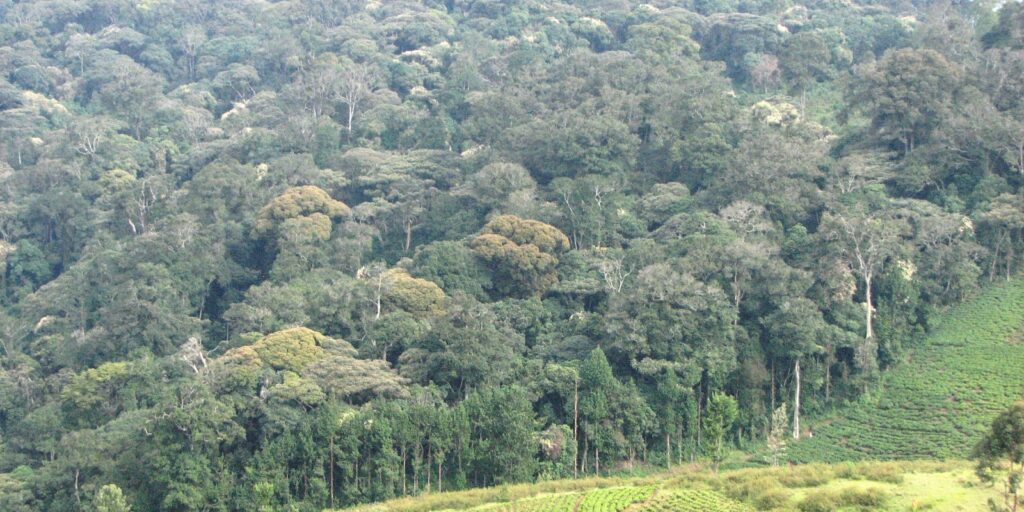
The Park comprises montane bogs and bamboo groves, providing an excellent habitat for the diverse fauna inhabiting the area. The Park is the origin of numerous rivers and streams that supply water throughout the country, with the vicinity of the park experiencing the highest precipitation levels. The dense foliage of Kibira National Park necessitates exploration by travellers to uncover its wonders. Kibira National Park boasts numerous attractions, including around 98 mammal species, 200 bird species, butterflies, and diverse plant species that merit exploration.
Birding in Kibira National Park
Birds observable in Kibira on birdwatching excursions include the mountain buzzard, white-spotted flufftail, grey parrots, great blue turaco, and black-and-white-squeaked hornbill.
The diverse mammalian species in the park that attract considerable interest from tourists include chimpanzees, several monkey species like as black and white colobus monkeys, and baboons.
The flora of Kibira Park merits a visit due to its diverse array of tree species.
Directions to Kibira National Park.
Visitors planning to explore Kibira National Park can access the park by passing through the pilgrims’ town of Busekera, which is also a significant tourist destination. When in the park, it is advisable to navigate with a proficient guide and utilise a 4WD vehicle to effectively traverse the difficult roads.
Things to do in Kibira National Park
Numerous activities are available in Kibira Park for travellers throughout their visit. Here are several of them:
Wildlife observation
Game viewing in Kibira National area is an exceptional pastime that allows tourists to observe the diverse mammal species residing within the area. Travelers are likely to encounter several wild species, including chimpanzees, black and white colobus monkeys, and baboons, among others. Game watching in Kibira National Park occurs with armed guides who provide expertise on the park and its diverse fauna.
Birds observation
Birdwatching in Kibira area guides tourists over well-established trails within the area. The park is designated as an Important Birding Area in Burundi, hosting over 200 bird species observable during birdwatching activities. Travellers are advised to own bird guides and binoculars to observe a sufficient variety of bird species.
Supervised Nature Walk
Guided nature walks in Kibira National Park provide an excellent opportunity to discover the park’s concealed gems, such as minor rivers and waterfalls. Guided nature walks enable travellers to explore other aspects of the park that they may have overlooked.
Cultural interactions
Cultural interactions are also available in Kibira National Park, where travellers can visit the pygmy settlement of Busekera to learn about the indigenous inhabitants’ way of life. The pygmies illustrate their lifestyle to the tourists through traditional songs and dances, exhibit local food preparation, and showcase their apparel, so providing the travelers with a broader understanding of a distinct culture. Travelers may participate in these activities at their discretion. Participants in the various activities experience a sense of belonging akin to that of the locals.
The best time to explore Kibira National Park
The park is accessible year-round, regardless of the season. The optimal period to visit Kibira Park is during the dry season, spanning from June to August and December to February, when the roads are more navigable and less treacherous. Travelers should be aware that Kibira Park is a forested region that experiences precipitation at any time throughout the year, regardless of the season.
Accommodation in Kibira National Park may be challenging to secure for last-minute travelers. Traveler’s may get lodging in proximity to the park, including notable establishments such as Niyama Hotel and Guest House la Residence.
The Park is an excellent destination to explore when in Burundi. Travelers seeking to explore the park should contact a reputable tour operator well-versed in both the park and the country, ensuring that your Burundi safari to Kibira Park is meticulously organized to your utmost delight.