 info@gorillatrekkinginafrica.com
 +256 787505601
Is it better to see gorillas in Uganda and Rwanda?
Is it better to see gorillas in Uganda and Rwanda, Rwanda and Uganda are the premier destinations for mountain gorilla trekking, each offering exceptional safari opportunities. Rwanda restricts permits to Volcanoes National Park to promote a conservation-oriented experience. Uganda’s Bwindi Impenetrable Forest hosts four regular gorilla troops, although presents a more challenging hiking experience. Baas recognized that Uganda and Rwanda present significant potential for gorilla trekking.
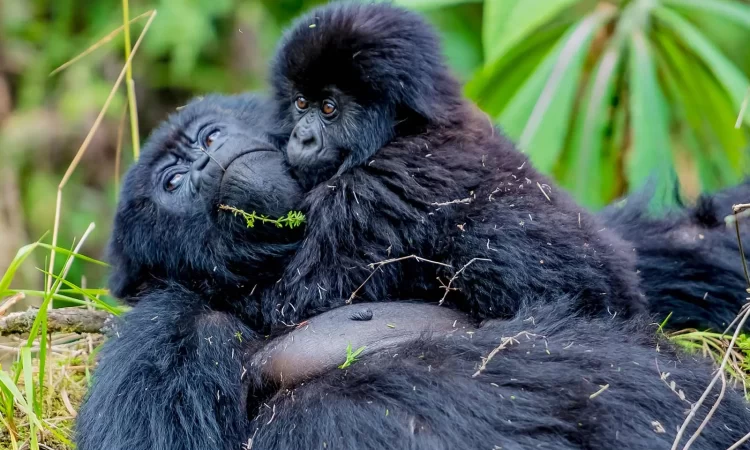
She expressed a personal preference for Rwanda, citing that the landscape is generally more open while gorilla trekking, facilitating better visibility. All mountain gorillas globally inhabit the Virunga Mountains in Central and East Africa. The two paramount nations for gorilla trekking are Rwanda and Uganda. In Rwanda, one can trek to observe mountain gorillas in Volcanoes National Park.
In Uganda, one can observe mountain gorillas at Bwindi Impenetrable National Park or Mgahinga National Park. The gorilla population in Mgahinga is neither as substantial nor as steady as that in Bwindi, rendering the latter the superior and more favored choice. Local armed factions continue to function in eastern Congo and the Virunga region, complicating efforts to safeguard the gorillas compared to Uganda and Rwanda, due to the volatile security environment and the threat posed by trophy hunters seeking bushmeat. Gorilla climbing in the Democratic Republic of Congo is consequently less expensive, however significantly more perilous compared to Uganda or Rwanda, where safety is assured.
Odzala Kokoua National Park, located in the country, is mostly unrecognized and spans 13,500 square kilometers (5,200 square miles) of pristine tropical rainforest – a sanctuary for approximately 100 animal species and one of Africa’s most varied monkey populations. The park is renowned for its effective conservation of western lowland gorillas, establishing Congo as the premier location for observing these gorillas in their natural habitat. In contrast to their mountainous relatives in Rwanda and Uganda, lowland gorillas exhibit lower stature and less coarse fur, characterized by softer pelage, narrower facial structures, and more rounded nostrils. However, akin to their larger counterparts residing at high altitudes, it is consistently a delight to observe them.
Given that this is a comparative analysis, I select Uganda. No experience is as exhilarating as an extended journey to a tourist attraction. The journey may yield more memories than the destination itself. Among the two nations, Uganda has the most extended travel duration to the gorilla trekking park. Secondly, Uganda possesses two mountain gorilla parks.
Gorilla clearance is also relatively expensive. Obtaining a gorilla trekking permit in Uganda is somewhat more accessible than in Rwanda, particularly if reservations are not made well in advance. Although gorilla trekking is the pinnacle attraction in these two Central African countries, both Rwanda and Uganda provide an abundance of additional adventures. Gorilla trekking is a strictly regulated endeavor, with a restricted number of permits allocated each day. If you postpone the decision until the last moment, the option may be made on your behalf.
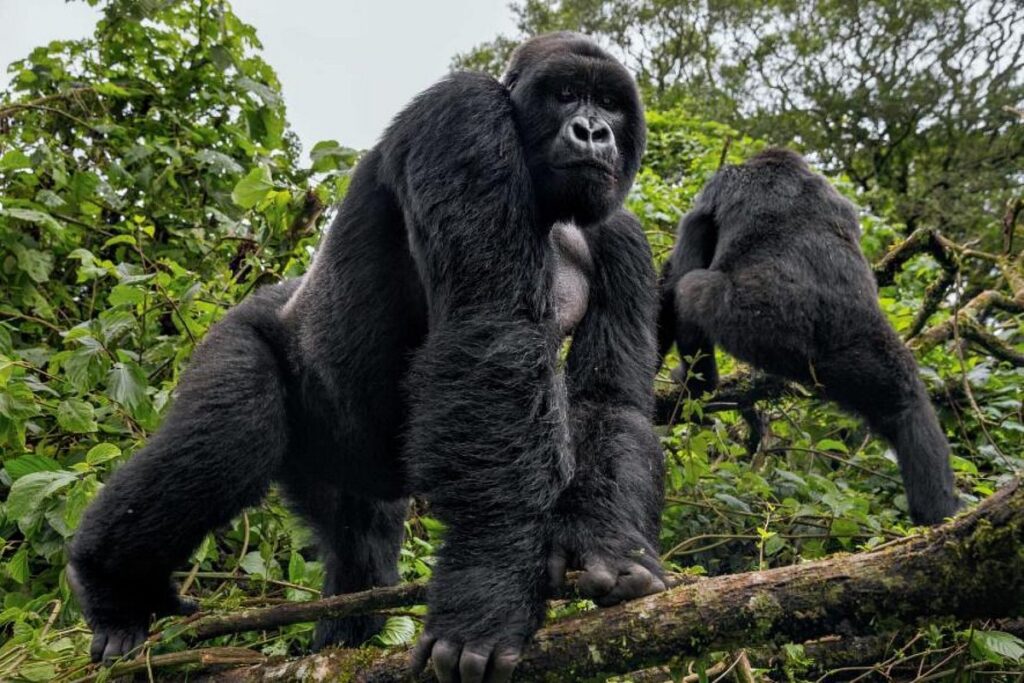
Uganda’s inexpensive hiking permits make it an excellent alternative for those seeking affordable opportunities to observe gorillas in Africa. Some customers prefer to amalgamate a Tanzania safari or Kilimanjaro ascent with their gorilla trekking experience while in the region. Embarking on a trek to see gorillas in Africa’s verdant rainforests and witnessing the daily behaviors of these endangered animals is perhaps one of life’s greatest gifts. Rwanda’s recent investment in low-impact, high-end tourism has resulted in a doubling of gorilla trekking permit fees, now twice the price in Uganda and nearly quadruple that in the Democratic Republic of Congo.
Daily excursions to observe Rwandan gorillas are permissible, if one possesses the appropriate permits, equipment, and assistance. Bwindi National Park offers 88 licenses for 11 gorilla groups, whereas Mgahinga National Park provides 8 permits for a single gorilla group. The choice to engage in gorilla trekking in Rwanda or Uganda typically hinges on considerations of expense and accessibility. It is advisable to verify whether your travel insurance includes coverage for gorilla trekking, as an additional cost may be required.
One can arrive in Kigali, be transported to the lodge, embark on a hike the following day, and depart for the airport the subsequent morning, so concluding the gorilla trekking expedition within five days or fewer. Henk Graaff, general director of SW Africa, stated that gorilla trekking has consistently enjoyed significant popularity among U.. Tanzania synergizes effectively with Rwanda due to a direct flight from the city, Kigali, to the Serengeti, enabling guests to merge gorilla trekking with a conventional safari experience and, if timed appropriately, witness another wildlife phenomenon – the Great Migration.
Monthly Guide to Gorilla Trekking: Optimal Periods for Observing Gorillas in Uganda and Rwanda.
Uganda and Rwanda provide one of the globe’s most stunning wildlife experiences — gorilla trekking. A journey to observe Africa’s mountain gorillas in their natural environment is an aspiration for several nature aficionados. What is the optimal period for gorilla trekking in Uganda and Rwanda? Timing is essential for an ideal experience.
The dry season, occurring from December to February and June to September, is typically the optimal period for observing gorillas in Uganda and Rwanda, since it provides drier terrain and facilitates a more manageable hiking experience. Gorilla hikes are feasible throughout the year, with each season offering its unique allure.
This article examines the optimal periods for observing gorillas in Uganda and Rwanda, highlighting the distinctions of each season. We will examine how weather patterns influence your experience, assisting you in selecting the optimal timing for your memorable gorilla walk.
Monthly Assessment of Optimal Timing for Gorilla Trekking in Rwanda and Uganda.
January (peak season, arid conditions, optimal weather)
January occurs during the brief dry season, rendering it an optimal period for gorilla trekking in Rwanda and Uganda. The trails are drier, facilitating more accessible traverses into the rainforest. Temperatures are expected to be warm, ranging from a high of 84°F (29°C) to a low of 67°F (19°C). The elevated altitudes of Bwindi and Volcanoes National Parks provide a cooler, more comfortable trekking experience. Anticipate occasional precipitation owing to the tropical environment; nonetheless, it is improbable that this would hinder your expedition.
Given that this is peak season, it is imperative to secure gorilla permits and accommodations well ahead of time. For those seeking to merge gorilla trekking with a traditional safari, January is an optimal opportunity to observe gorillas in Uganda and Rwanda while also experiencing the remarkable wildlife of the Serengeti and Masai Mara.
February (peak dry season, optimal weather conditions)
During the dry season, February experiences a little reduction in visitors, providing it an excellent opportunity for gorilla trekking in Uganda and Rwanda. You will experience the advantages of optimal weather conditions, characterized by arid trails and superior visibility. In February, temperatures in the gorilla highlands generally fluctuate between a maximum of 85°F (29°C) and a minimum of 69°F (20°C). This month is optimal for birdwatching and traditional safaris, as fauna congregates near diminishing water sources before to the onset of the March rains.
As the dry season concludes, the foliage diminishes, facilitating the observation of remarkable wildlife on game drives. February is a great period for observing gorillas in Uganda or Rwanda and for experiencing the excitement of witnessing savannah predators during the calving season in the northern Serengeti.
March (low rainfall season, adverse weather conditions)
March signifies the commencement of the extended rainy season and a period of diminished travel activity. Daytime temperatures typically average approximately 23°C/73°F, while morning temperatures remain around 12°C/54°F. Despite potential reservations among some people, gorilla trekking in Rwanda and Uganda is feasible and presents distinct benefits. For budget-conscious travelers seeking optimal gorilla viewing in Uganda or Rwanda, March is a noteworthy option. Lower hotel pricing and increased availability of gorilla permits are expected to be found.
While trekking trails may become more saturated, precipitation often occurs in brief intervals, allowing sufficient opportunity for a gratifying gorilla encounter in Africa. Equip yourself with waterproof attire and relish the serene pathways and possibly more tranquil ambiance at safari resorts.
April and May (low/wet season, adverse weather conditions)
April and May experience the most substantial precipitation of the year, with daytime temperatures averaging approximately 23°C/73°F and morning temperatures around 12°C/54°F. The precipitation renders paths especially difficult for gorilla trekking and game drives. Although it may not be the optimal period for the majority of vacationers, there are benefits if you are adaptable and indifferent to precipitation. Permits are increasingly accessible, and you will discover exceptional offers on lodging.
For individuals who appreciate verdant landscapes and are undeterred by precipitation, the vivid greenery of this season presents a distinctive aesthetic for photography. Combining gorilla trekking with a traditional safari may provide the Serengeti-Mara trip delightful, characterized by brief afternoon showers and vibrant foliage.
June and July (peak dry season, optimal weather conditions)
June and July commence the optimal gorilla trekking season in Uganda and Rwanda, providing the most favorable weather conditions. Anticipate negligible precipitation and readily traversable paths, with temperatures fluctuating between a maximum of 78°F (25°C) and a minimum of 67°F (19°C). Due to its popularity, secure gorilla permits in advance and anticipate possible elevated expenses. Review this subsequently to comprehend the seasonal expenses associated with a gorilla safari.
Although it is high season, the restricted group numbers for gorilla hikes guarantee a personal wildlife experience. Boutique lodges tend to reach full capacity swiftly, thus it is advisable to arrange your rooms in advance.
June, characterized by residual verdancy following the rainy season, is ideal for amalgamating gorilla trekking with picturesque photography and wildlife observation. Beginning in July, the arid circumstances render it the optimal period to observe gorillas in Uganda or Rwanda, concurrently experiencing the thrill of the wildebeest migration in the Masai Mara and Serengeti.
August (peak dry season, favorable weather)
August is regarded as the optimal period for observing gorillas in Uganda and Rwanda. The dry season is firmly established, characterized by scant precipitation and elevated temperatures reaching 79°F (26°C) during the day and 66°F (19°C) at night. Trails are most accessible for navigation. Wildlife observation during game drives is exceptional, since animals gather near water sources.
This peak period is optimal for an all-inclusive Uganda safari tour that integrates gorilla trekking with traditional wildlife viewing. Experience several memorable days in Uganda’s gorilla sanctuary, complemented with exhilarating interactions with elephants, lions, and other wildlife in Queen Elizabeth National Park. Experiencing both at their zenith is awe-inspiring!
Although August provides ideal conditions for a gorilla walk, occasional rainfall may occur in the rainforest. Equip yourself with gear suitable for all conditions.
September (conclusion of peak season, somewhat favorable weather)
September signifies the shift from the dry to the rainy season, resulting in increased weather unpredictability. Anticipate occasional rain throughout your gorilla hike, however dry intervals remain feasible. Typical temperatures fluctuate between a maximum of 80°F (26°C) and a minimum of 67°F (19°C). Trekking is feasible throughout the year; however, anticipate rainfall while traveling to Uganda or Rwanda for gorilla encounters in September.
Should you be fortunate enough to experience a dry period in September, it remains high season; thus, secure permits and accommodations promptly to prevent restricted availability.