 info@gorillatrekkinginafrica.com
 +256 787505601
How to Get to Maasai Mara National Reserve
How to Get to Maasai Mara National Reserve, Accessing Maasai Mara National Reserve is straightforward by either aerial or terrestrial transportation. Travelers must possess identification credentials that clearly indicate their nationality to access the park. A reliable tour company may provide valuable information regarding trip packages prior to arrival in Nairobi, Kenya. The Maasai Mara National Reserve is located in the northwestern region of Nairobi, the capital city of Kenya. The distance from Nairobi to Maasai Mara by road is approximately 270 kilometers, which typically requires about five hours of driving. However, most travelers prefer to fly to the park, as the flight duration is between 45 minutes to one hour.
Accessing Maasai Mara can be achieved through either driving or flying, each method possessing its own perks and limitations. The mode of transportation you select will be dictated by your budget, comfort, and time constraints.
It is important to note that road transit offers greater excitement due to the opportunity to traverse picturesque landscapes, observe hills and countryside, and engage in photography during the journey. Which is disadvantageous for an individual utilizing air transport.
Travel by car to Maasai Mara
The journey from Nairobi to Narok town typically requires 3 to 4 hours by car. As your tour operator or guide transports you to the safari destination in Maasai Mara, you will experience stunning vistas, including the remarkable view of the Rift Valley escarpment, with opportunities to gaze down from the escarpment. Given the extended duration of the travel, a pause may be necessary to stretch your legs and have a picnic lunch. The route from Nowak to Kilima Camp is infamously poor. It is advisable to utilize a 4×4 vehicle for road travel, since this will enhance the smoothness of your drive.
If the traveler delays, the journey will become prolonged and arduous, resulting in a 5 to 6-hour drive to the safari site in Maasai Mara.
Note: Road transport is more economical compared to flights, particularly when the number of guests exceeds two.
Air Travel to Maasai Mara
Accessing Nairobi is straightforward, as the city serves as a primary transportation hub in Africa for travelers arriving in the country. Jomo Kenyatta International Airport, designated as “NBO,” is the primary international airport for arrivals in Kenya. Jomo Kenyatta International Airport is situated in the southeastern region of Nairobi.
It is straightforward to obtain a domestic flight from Nairobi to Maasai Mara, utilizing either a charter flight to one of the nine airstrips within or adjacent to the park, or a scheduled flight that can be reserved through various domestic airlines such as Mombasa Air Safari, Kichwa Tembo Airstrip, Safari Link, and Air Kenya, which typically lasts one hour to reach the park. Utilizing domestic flights provides an exceptional experience, allowing one to observe an aerial perspective of the country. These domestic flights provide a comfortable seating arrangement and ample legroom for travelers.
Despite the fact that all of Kenya’s national parks are accessible by either road or air travel. Flights to Maasai Mara can be arranged or scheduled through a reputable tour operator with extensive knowledge of trip packages and the ability to coordinate traveler pickups from the airport or hotel facilities. The number of travelers entering Kenya via air transport primarily arrives via Jomo Kenyatta International Airport; alternatively, one can access the Maasai Mara through Wilson Airport, one of Kenya’s national airports.
The Maasai Mara National Reserve is accessible by air via direct domestic flights from Wilson Airport to Kichwa Tembo airstrip. A tour operator wants travelers to submit personal documents, such as scanned passports and visas, to verify their identities for flight booking arrangements.
Thing to do in Masai Mara National Reserve
Game drives are the predominant and favored activities in Masai Mara and many African national parks and reserves. By definition, they entail an exploration of the park using a 4×4 open-roof safari vehicle or Land Cruiser, allowing for close observation of wildlife while adhering to park laws.
Game drives are often conducted in three phases:
The morning game drive commences at dawn to witness the sunrise, offering the most rewarding experience as all animals are active and refreshed, foraging for food in the open savannah grasslands. Predatory cats are also in ambush, seeking their daily prey. As the sun intensifies, all animals congregate near riverbanks to hydrate and cool down, while cats retreat to concealed spots to snooze, making them difficult to observe thereafter.
Evening The game drive typically commences around 4 PM and concludes around 6:30 PM. During this excursion, we observe the wildlife as they emerge from their shelters to feed and bask in the sun, particularly the reptiles. Kobs and other gregarious herbivores will be congregating for their repose.
Night game drives are conducted exclusively under the supervision of highly qualified game rangers, typically incurring an additional cost. It is primarily appreciated by filmmakers seeking to see nocturnal wildlife in the park, including the hunting behaviors of felines at night and other species.
Maasai Mara is one of the premier destinations globally, renowned for exceptional game viewing, featuring thousands of species. During the migration season, occurring from July to October, millions of animals congregate in the reserve as they traverse the Mara River from the Serengeti in search of fresh pastures and water. This is the breeding season for grazers, which attracts more predators, particularly large felines, due to the abundance of prey.
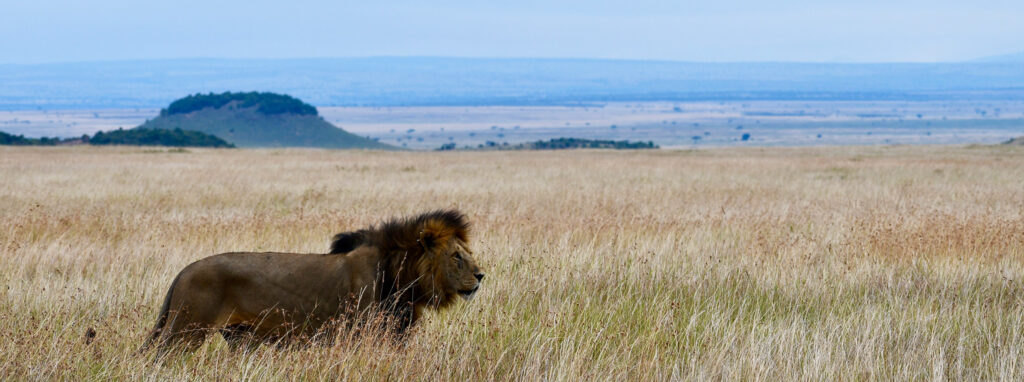
The national reserve’s diverse ecosystem has contributed to various animal species, most notably the “Big Five”: Lions, Leopards, Buffalos, Elephants, and Rhinos. Additional animals include Oribis, Hyenas, Giraffes, Gazelles, Hippopotamuses, Hartebeests, Zebras, Antelopes, Crocodiles, among others.
The Maasai Mara is accessible year-round, with the most advantageous period occurring during the green season when millions of both migratory and resident species inhabit the reserve.
Nature walks
The reserve, endowed by nature, offers further exploration opportunities during your visit to Maasai Mara, achievable via safari land cruisers or on foot. The reserve is under surveillance and maintained by the local community, so providing many opportunities for guests to enjoy leisurely walks both within the park and around the surrounding town.
Nature walks in Masai Mara are conducted by a game ranger armed with a firearm, utilizing less frequented pathways to observe wildlife such as elephants, giraffes, antelopes, buffaloes, and other grazers in proximity. This activity is highly enjoyable and promotes engagement during the trip, as participants are actively involved. Researchers predominantly favour this approach to enhance their understanding of various vegetation zones within the reserve, animal behaviors, the relationship between locals and the park, among other aspects.
Walking safaris offer a simple yet very rewarding means of experiencing the Maasai Mara, as participants traverse the terrain on foot with locals wearing traditional sandals crafted from car tyres, participating in the exhilaration of exploring the reserve in search of wildlife. One can observe the migration as far as the Mara River, provided one visits during the appropriate season.
Hot Air Balloon Expeditions
One of the remarkable experiences in Maasai Mara is observing its premier ecosystem from an aerial perspective like to that of an eagle. Three safari organisations conduct hot air balloon safaris in the Maasai Mara: Governors Camp, The Hot Air Balloon, which has a 100% safety record and is the oldest, and the Sky Ship Company.
The hot air balloon safari is a once-in-a-lifetime experience that is unforgettable. The initial sounds and vibrations can be intimidating, prompting most guests to sit down and cover their eyes as the balloon gradually ascends. With elevated heart rates, one experiences a tumultuous sensation as the balloon departs from the ground, leaving one feeling exhilarated yet powerless.
The safari commences early in the morning with a wake-up call for a light breakfast, followed by transportation to the launch site where you will meet the pilot for a briefing. Subsequently, you will enter the balloon basket and ascend as the sun rises. Our flight will last between one to two hours, contingent upon the day’s weather, allowing us to appreciate the avian perspective of the picturesque Great Rift Valley. We will closely observe the big cats, particularly during their hunts, as we accompany them in pursuit of their prey.
Our joy will surpass conception as we soar with the birds of the Maasai Mara, discovering the reserve’s depths from treetop heights or lower, providing a clear panoramic view and an optimal position for exceptional photographic chances from an airborne perspective.
Upon arrival, a toast will be made with a glass of wine in the bush, followed by a substantial meal, and ultimately, certificates of achievement will be awarded to all crew members on board. You will be collected by our driver-guide, who will conduct additional game drives to observe more wildlife from different perspectives before returning to our lodge for refreshments and lunch.
Scenic vista for a picnic
Maasai Mara is designated as a birding paradise, featuring over 450 bird species, including more than 45 kinds of raptors. The reserve is home to the largest bird on Earth, the Ostrich, also referred to as the “Maasai Ostrich.” The avian population is supported by the diverse ecosystems inside the reserve, including wide savannahs, riverbanks, rocky slopes, and the escarpments of the Great Rift Valley.
Birdwatchers appreciate the diverse Maasai avifauna, characterized by a variety of colors and sizes, prominently including Kenya’s savannah bird species observable within the reserve. The Maasai Mara boasts a remarkable diversity of raptors, with over 45 species inhabiting the park’s open savannah, providing birdwatchers the opportunity to engage in birding year-round.
The Maasai Mara boasts the highest number of bird species in Africa, surpassing even entire countries. It is through the Maasai Mara that Kenya received an award for setting a record as the only country in the world where one can observe 342 bird species within 24 hours in the confines of the Maasai Mara National Reserve.
Mara yearly hosts numerous migratory species from October to February, with the reserve attracting a significant influx of Palearctic migrants, swallows, terns, waders, and others. From June to July, the Mara River wetland is predominantly inhabited by weaver birds and bishops during their mating season.
Other prevalent avian species include the Rosy-throated Longclaw, Magpie Shrike, Ostrich, Long-tailed Cormorant, Little Bittern, Cattle Egret, Rufous-billed Heron, Great Egret, Grey Heron, Hamerkop, Marabou Stork, Yellow-billed Stork, Hadeda Ibis, Sacred Ibis, Rüppell’s Vulture, Egyptian Vulture, African Fish Eagle, Tawny Eagle, Kori Bustard, Secretary Bird, Sooty Chat, and Usambiro Barbet; the enumeration is extensive.
The extensive variety of habitats in Maasai Mara fosters a remarkable diversity of species, enhancing the quality of your birding experience.
Cultural Interactions
One of the most distinctive aspects of Masai Mara, in contrast to other parks and reserves, is its management by the local community. The Maasai people coexist harmoniously with the wildlife, which has yielded benefits for both the locals and visitors, who can engage in a diverse array of activities, particularly those focused on learning about the culture of the Maasai.
The Maasai culture is one of the most remarkable cultures in Africa, characterised by their distinct lifestyles. As pastoralists who herd animals in a mobile manner, they possess a distinctive culture that is unparalleled globally. This community has resided close and around the reserve for over one hundred years, maintaining steadfast traditions, norms, and practices despite the frequent presence of visitors from many parts of the contemporary world; they have adhered to their traditions.
The Maasai hamlet has approximately 50 traditional dwellings encircling expansive cow inclosures, embodying the authentic Maasai lifestyle. They own numerous community projects that enable them to capitalise on tourism while fostering a sustainable lifestyle inside a clean environment.
Cultural safaris or visits to the Maasai community constitute some of the most vibrant and engaging activities in the Masai Mara that should not be overlooked. These experiences include their traditional dance performances, the distinctive method of milking indigenous cows, the process of obtaining fresh blood from animals, cooking, constructing their mud houses, and numerous other dynamic activities.
Community engagement is a fundamental principle for sustainable tourism in Africa, exemplified by the Maasai people, who consistently receive accolades in this domain. Let us advocate for sustainable tourism by promoting village or community tours.
Horseback Safaris
The Maasai Mara is one of the few reserves and parks in Africa where horseback riding is conducted as an activity. Historically utilized by early explorers due to the absence of vehicles, horseback riding remains a preferred choice for many guests during game drives, despite the availability of safari vans and Land Cruisers. This practice has gained considerable popularity in the Maasai Mara.
It provides an unobstructed opportunity to explore the area while encountering various creatures, all without deviating from the path, simply relishing the refreshing breath of nature. During the migration, the experience is exceptional as you are accompanied by a highly experienced game ranger, allowing for closer encounters with the animals, even to the point of stroking their backs.
Observing the Wildebeest Migration
Travelling to Africa! Many enquire about what to see, how to reach it, and when to visit. Africa is an excellent continent for experiencing authentic wildlife safaris; it is not as costly as many expect, making it accessible to all socioeconomic strata of visitors. The activities in Masai Mara are incomplete without mentioning the yearly wildebeest migration, which occurs between the Serengeti in Tanzania and the Maasai Mara National Reserve in Kenya.
These extraordinary moments of excitement are far more memorable when experienced firsthand rather than through reading or viewing documentaries. The migration occurs between July and October, during which millions of animals traverse from the Serengeti to the Maasai Mara for breeding and to seek fresh pastures. They subsequently migrate back, resulting in this phenomenon occurring biannually, though the timing may extend into early November depending on rainfall patterns, as they follow the seasonal rains.
During this period, it is essential to reserve your accommodations well in advance to ensure proximity to a suitable lodge in the area, allowing ample time to appreciate the natural spectacle of the migration, featuring millions of wildebeest and thousands of zebras competing against a few formidable crocodiles and lions along the Mara River. The score is consistently low, typically ranging from one or two to zero, due to the players’ extensive expertise and the season’s deficiencies.
The event attracts a diverse array of predators not only near the river, but the primary activity in Masai Mara during this time is the wildebeest migration, as they arrive to greet their visitors and neighbours in the Maasai Mara homeland. Your responsibility is to arrive early and depart late in the evening, bringing all necessary provisions to sustain you throughout the day.