 info@gorillatrekkinginafrica.com
 +256 787505601
Gulu City in Northern Uganda
Initially, Gulu District was a subdivision of Acholi District until being established as an independent district. The Acholi was bifurcated, resulting in the formation of Gulu District and Kitgum District in West Acholi. During the colonial period, the northern region of Uganda was significantly less developed than other areas, resulting in many local individuals being conscripted into the police and military, with some participating in the First and Second World Wars. Subsequently, numerous Rwandan, Congolese, and Sudanese refugees were encouraged to relocate and establish themselves in the region. Joseph Kony established the Lord’s Resistance Army, which progressively became more aggressive in Gulu City and its surrounding towns. Numerous children participated in nighttime safety initiatives throughout the city. In 1996, the Ugandan government exerted considerable effort to establish peace and security in the region, resulting in the successful defeat of the Lord’s Resistance Army, which subsequently withdrew; however, many lives were lost. The economic activities of Gulu mostly involve agriculture, with a focus on food crops such as sesame, potatoes, sunflower, cassava, beans, and groundnuts, with cash crops including cotton, tobacco, coffee, and sorghum. Gulu is a developed town equipped with contemporary amenities, including banks such as Stanbic Bank, Bank of Uganda, Centenary Bank, foreign exchange bureaux, educational institutions, and healthcare services.
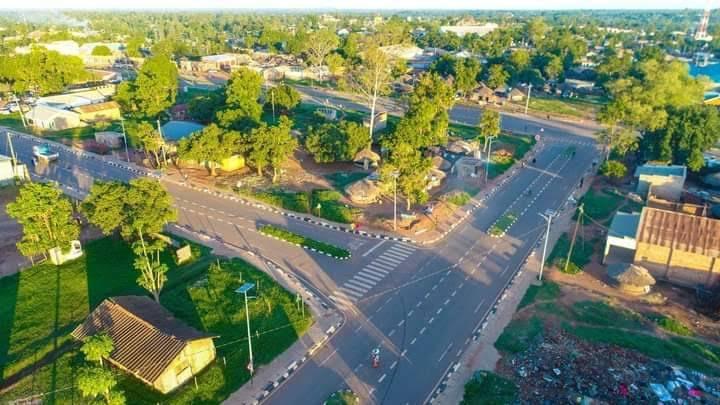
Discover Gulu City
Gulu City, located in Northern Uganda, is a dynamic urban centre with a profound historical and cultural heritage. The city is located roughly 340 kilometres (211 miles) north of Kampala, the capital. The city experiences a tropical savannah environment, characterised by two distinct rainy seasons and two dry seasons.
Gulu possesses a convoluted past, having been impacted by the Lord’s Resistance Army (LRA) rebellion throughout the late 1990s and early 2000s. Nonetheless, the city has seen considerable advancement in reconstruction and recovery.
Gulu city boasts numerous attractions, including but not limited to:
Gulu Museum: A museum that exhibits the history and culture of the region.
The Kampala-Gulu Highway is a picturesque route that traverses multiple communities and provides breathtaking vistas of the rural landscape.
Gulu Market: A vibrant marketplace offering local goods, cuisine, and memorabilia.
Pece War Memorial place: A commemorative place honouring the victims of the LRA insurgency.
Acholi Cultural Village: A cultural hub exhibiting the traditions and practices of the Acholi community.
Gulu City serves as a significant economic centre in northern Uganda, characterised by an expanding economy propelled by agriculture, commerce, and services. The city possesses a comparatively advanced infrastructure, comprising:
Gulu Airport: A domestic airport offering flights to Kampala and many locations inside Uganda.
The road network: Gulu is linked to Kampala and other significant towns in Uganda with a system of paved roadways.
Healthcare: Gulu possesses multiple hospitals and healthcare establishments, notably the Gulu Regional Referral Hospital.
Education: The city hosts multiple institutions, colleges, and schools, notably Gulu University.
Gulu City is regarded as secure, with lower crime rates in comparison to other major cities in Uganda. Visitors should exercise standard precautions to ensure their safety, including: refraining from travelling alone at night, utilising reputable taxi services or ride-hailing applications, securing valuables, remaining vigilant against pickpocketing, and avoiding the display of wealth (e.g., expensive jewellery or watches).
The city possesses a profound cultural heritage, predominantly comprised of individuals from the Acholi ethnic group. The population of Gulu City is segmented into various divisions, namely Bar Dege, Laroo, Layibi, and Pece. The city exhibits a notably elevated population growth rate, averaging 3.4% annually.
The primary ethnic groups in Gulu City are:
– Acholi: The preeminent ethnic community in the city, recognised for their profound cultural legacy and traditions.
The Langi are a notable ethnic community in the city, recognised for their agricultural expertise and cultural traditions.
– Additional ethnic groups: Comprising the Luo, Alur, and Madi, among others.
The predominant languages spoken in Gulu City are Luo, English, and Swahili. A multitude of residents converses in additional native languages, such as Acholi and Langi. Gulu City is a dynamic and multifaceted metropolitan hub, characterized by a profound cultural legacy and a robust communal identity.
Here are some interesting facts about Gulu for anyone intending to visit.
As of 2020, Gulu City’s population is roughly 150,306 individuals.
The predominant languages in Gulu City are Luo, English, and Swahili.
Gulu City exhibits a tropical savannah climate, characterised by two distinct rainy seasons and two dry seasons.
The economy of Gulu City is propelled by agriculture, commerce, and services. The primary crops cultivated in the Gulu region are maize, cassava, and sweet potatoes. Gulu City hosts multiple agricultural research facilities, notably the National Agricultural Research Organisation (NARO).
Cattle husbandry is a crucial economic endeavour in the Gulu region, with numerous inhabitants raising cattle for dairy, meat, and hides.
The Gulu Market is a vibrant marketplace offering local handicrafts, cuisine, and souvenirs.
The city boasts a dynamic music and dance culture, featuring numerous local performers and ensembles that present both traditional and contemporary music.