 info@gorillatrekkinginafrica.com
 +256 787505601
Gorillas locations
Gorillas locations, Are you contemplating a vacation to Africa to observe mountain gorillas in their natural habitat and conducting online research? What are the principal gorilla trekking locations in Africa? Gorilla Trekking in Africa clarifies the best destinations for observing gorillas in their natural habitat. Gorilla trekking in Africa is a once-in-a-lifetime event that draws numerous people throughout their visit to the continent. Notwithstanding the substantial expenses, duration, and inconvenience associated with arranging and undertaking the trek through the jungle to observe these endangered primates in their native habitat, the experience of watching gorillas remains unparalleled.
Gorilla trekking is a distinctive and sought-after wildlife experience in Africa, providing visitors the opportunity to witness these magnificent primates in their native environments. The principal gorilla trekking sites in Africa comprise:
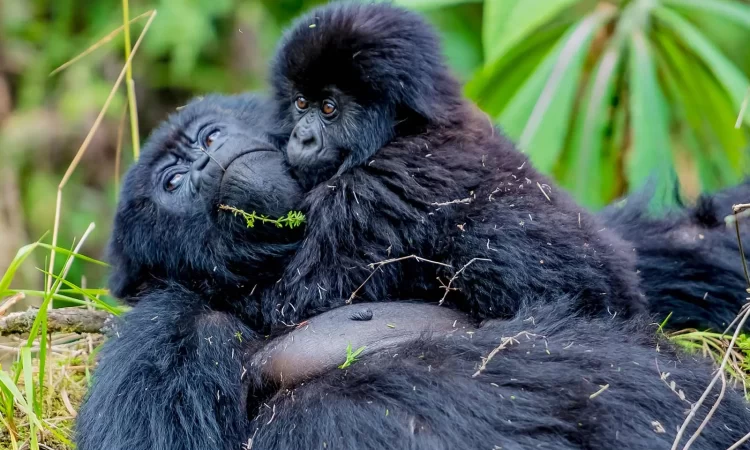
Locations for Gorilla trekking in 2026-2027
Gorillas locations in Uganda
Uganda offers two locations for observing mountain gorillas: Bwindi Impenetrable National Park and Mgahinga National Park. All these gorilla safari locations are situated in the southwestern region of Uganda.
Bwindi Impenetrable National Park
Bwindi Impenetrable National Park is an ancient forest in Uganda, thought to have endured the harsh conditions of the Ice Age that impacted Africa. Bwindi Forest has existed for around 25,000 years, supported by a lengthy history of inhabitants, including mountain gorillas, which are believed to have accumulated over the years.
Gorilla safaris constitute the primary activity in Bwindi Impenetrable National Park, offering opportunities for gorilla trekking or gorilla habituation experiences. Bwindi was partitioned into four sectors: Buhoma, Ruhija, Rushaga, and Nkuringo, each associated with specific gorilla families. Gorilla hiking licenses for Bwindi Forest are allocated based on specific regions.
It is advisable to secure lodging in or near the vicinity of the gorilla permit location in Bwindi to avoid traveling in darkness to attend the briefing in a different region.
Bwindi Forest is home to several primates, including olive baboons, vervet monkeys, grey-cheeked mangabeys, blue monkeys, L’hoest monkeys, and black-and-white colobus monkeys, among others. Over 350 bird species, including Albertine Rift endemics, have been documented as residents of Bwindi Forest.
Accommodations at Bwindi Impenetrable National Park include Gorilla Forest Camp, Clouds Lodge, Engage Lodge, Nkuringo Gorilla Lodge, Nshongi Camp, Bwindi Backpackers’ Camp, and Ruhija Gorilla Lodge.
Mgahinga National Park
Mgahinga National Park, located in the southwestern most region of Uganda, is the country’s smallest national park and serves as a habitat for the endangered mountain gorillas. The Nyakagezi gorilla family is currently the sole gorilla family accessible to the public in this park. Mgahinga National Park’s headquarters is located at Ntebeko, where the majority of the park’s administrative activities are conducted.
In addition to the mountain gorillas, Mgahinga National Park houses the golden monkeys, who are among the endangered primates globally. It is often humorously asserted that silver converges with gold at Mgahinga National Park. Other primates inhabiting Mgahinga woodland include black and white colobus, vervet monkeys, grey-cheeked mangabeys, among others.
Mgahinga National Park’s geography consists of three mountains: Mount Gahinga, Mount Muhavura, and Mount Sabyinyo. Mountain gorillas typically inhabit the slopes of these highlands, necessitating a tough climb for travelers to reach them.
Mgahinga National Park is home to around 115 bird species, including endemics of the Albertine Rift. Accommodations at Mgahinga National Park: Gahinga Lodge, Traveller’s Inn

Gorillas locations in Rwanda
Volcanoes National Park
Gorilla trekking safaris in Rwanda occur at Volcanoes National Park, which currently has 12 gorilla trekking families, including Umubano, Amahoro, Hirwa, Susa, Karisimbi, among others. The topography of Volcanoes National Park is far steeper than those of other gorilla safari locations.
The Volcanoes National Park headquarters is located at the ORTPN, where briefings occur prior to commencing the gorilla trekking safari in the park. The tourists are assigned to various gorilla families following a briefing based on characteristics that are difficult to quantify.
In addition to mountain gorillas, Volcanoes National Park hosts several primates, including black and white colobus, blue monkeys, grey-cheeked mangabeys, and red-tailed monkeys, among others. Over 200 bird species, including Albertine Rift endemics, have been documented as residents of Volcanoes Forest.
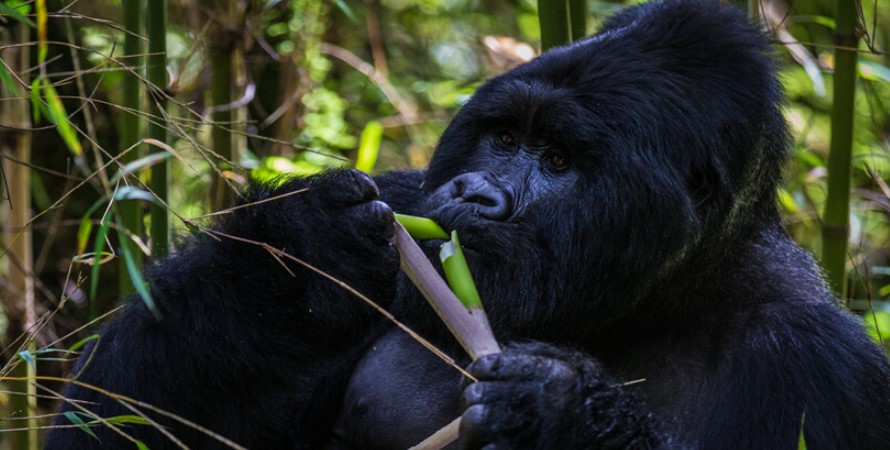
Gorillas locations in D. R.Congo
Virunga National Park
Virunga National Park houses mountain gorillas, whereas Kahuzi Biega National Park is inhabited by lowland gorillas. This park is located in the eastern region of the Democratic Republic of Congo; nevertheless, due to the prevailing insecurity in the area, the conservation of these gorillas has encountered numerous obstacles. Currently, around six mountain gorilla families are accessible to the public: the Lulengo, Rugendo, Munyaga, Humba, Kabirizi, and Mapuwa gorilla groups.
Kahuzi-Biega National Park
Kahuzi Biega National Park hosts several lowland gorilla trekking families, including Nganwa, Chimanuka, Mpungwe, Bonnianai, among others. Be attentive to other intriguing woodland inhabitants, including many monkeys and different bird species, among others.
What is gorilla trekking in Africa?
Gorilla trekking entails traversing forests and navigating steep terrain, dense flora, and crossing rivers and swamps in pursuit of gorillas. This endeavor is demanding and necessitates physical fitness at the time of the trek. Gorilla trekking provides an opportunity to observe gorillas in their native habitat for one hour in Rwanda, Uganda, and Congo. Travelers seeking extended interaction with gorillas in their native habitat may choose to visit Bwindi Forest for the Gorilla Habituation experience, which provides a four-hour exposure with the gorillas.
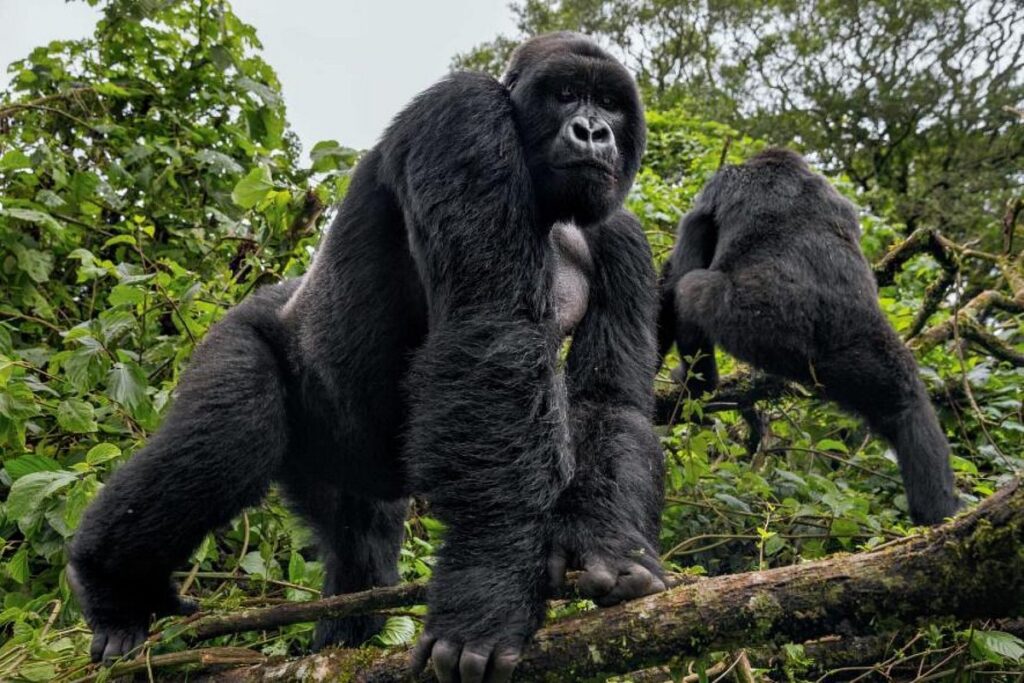
When is the best time to reserve gorilla safaris in Africa for the years 2026 to 2027?
The optimal period for booking gorilla safaris is year-round; nevertheless, the majority of travelers favor the dry season, often from June to September and December to January. The forests in the Virunga region are predominantly humid throughout the year due to limited sunlight penetration through the deep canopy.
The Virunga region possesses a network of rivers that occasionally flood, resulting in the ground being saturated most of the time. Tourists must don waterproof trekking boots to navigate the dense, overgrown, and entangled foliage on the ground.
The demand for gorilla permits in these three nations is elevated during peak season, while availability is limited as a conservation strategy. It is advisable and prudent to secure the requisite gorilla permits in advance to avoid last-minute anxiety. Gorilla permits, particularly in Uganda and Rwanda, are sold in installments and must be supplemented as stipulated by the rules to avoid disappointment upon arrival for gorilla safaris in these nations.
The wet season should not be overlooked while organizing gorilla safaris in the Virunga region. Regardless of the season, ensure you observe the gorillas. In the wet season, gorillas predominantly inhabit the trees or slopes, necessitating preparation for hiking when required.
Timely arrange additional logistics essential to Uganda safaris to ensure a comprehensive selection of possibilities upon arrival. The need for logistics, such as lodging and transportation, typically increases during the peak season.
What is the Cost of Gorilla Permits in Uganda
From July 1, 2024, to June 30, 2026, the Gorilla permit in Uganda costs $800 for foreign non-residents, $700 for residents, $500 for other Africans, and $80 for East African citizens (Uganda, Rwanda, Tanzania, Kenya, Burundi, and South Sudan). This permit allows for a one-hour encounter with the mountain gorillas in Bwindi Impenetrable Forest National Park or Mgahinga Gorilla National Park. Gorilla trekking in Uganda offers the opportunity to engage in the Gorilla habituation experience, exclusively available in Bwindi Forest. A Gorilla habituation permit, priced at $1500 per person, allows for a four-hour encounter with semi-habituated mountain gorillas, guided by trackers and researchers, in contrast to the one-hour duration of standard trekking. Gorilla permits in Uganda can be acquired directly by reserving them from the Uganda Wildlife Authority or via a reputable tour operator like as Gorilla Trekking in Africa.
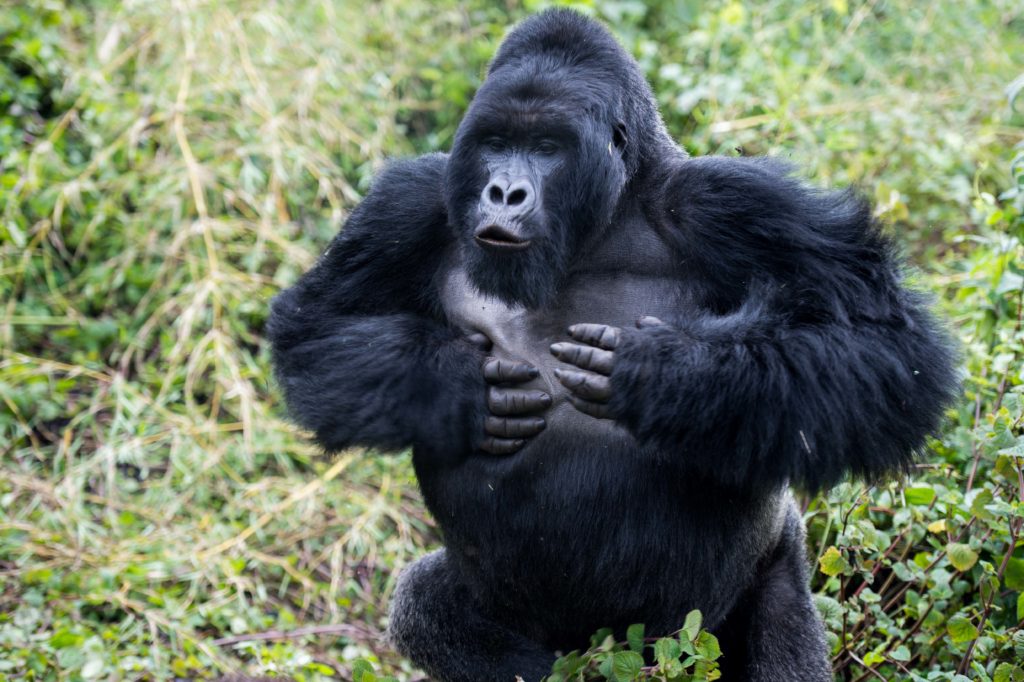
What is the cost of Gorilla Permits in Rwanda
The Gorilla permit in Rwanda costs $1,500 per person per trek for foreign non-residents, $500 per person for foreign residents, and $200 for East African citizens (Uganda, Rwanda, Tanzania, Kenya, Burundi, and South Sudan), allowing for a one-hour encounter with the mountain gorillas in Volcanoes National Park. Rwanda hosts 12 gorilla families, providing 96 gorilla permits daily for trekking in Volcanoes National Park. Gorilla permits in Rwanda can be obtained directly by reserving them with the Rwanda Development Board or via a reputable tour operator like as Gorilla Trekking In Africa
What is the Cost of Gorilla Permit In Congo
Gorilla tracking in the Congo occurs in Virunga National Park for Mountain Gorillas and Kahuzi-Biega National Park for Lowland Gorillas. A gorilla permit in Virunga National Park is priced at $400 per individual per trek during the peak season, which spans from mid-December to mid-March and from June to October. In contrast, the fee is $200 per person every trek during the low season, occurring from mid-March to mid-May and from mid-October to mid-December annually. The cost of a gorilla permit in Kahuzi Beiga National Park is $400 for foreign non-residents, $200 for East African residents, and $20 for national inhabitants. Gorilla permits in Congo can be obtained directly by reserving them through Virunga National Park or via a reputable tour operator such as Gorilla Trekking in Africa
When reserving your gorilla permit, it is crucial to understand that the permit fee does not encompass lodging, airfare, ground transportation, food, or additional charges. You should obtain further specifics regarding the package from your tour operator.
Uganda is one of the premier destinations for gorilla viewing in Africa; it is safer for travelers than Congo and more economical for gorilla trekking than Rwanda.
Is The Visit To See The Gorillas Worth The Time And Money
Gorilla safaris in Africa rank among the premier adventures available, although the restrictions on the number of licenses issued to the public hinder many from partaking in this experience. Both mountain and lowland gorillas are endangered, resulting in a limited number of global sites that accommodate them. Approaching within few meters of a gorilla family is a dream realized for numerous travelers.
Acquiring gorilla permits from Uganda, Rwanda, or the Democratic Republic of Congo is a method to aid in the protection of these endangered primates. Despite significant advancements in gorilla conservation efforts, additional help remains necessary.
Visiting the gorillas enhances the link between humans and gorillas, allowing more individuals to acknowledge the significance of gorilla existence in their environment. The local populace typically earns a livelihood by serving as porters for tourists on gorilla safaris, hence community sensitization is conducted through these possibilities.
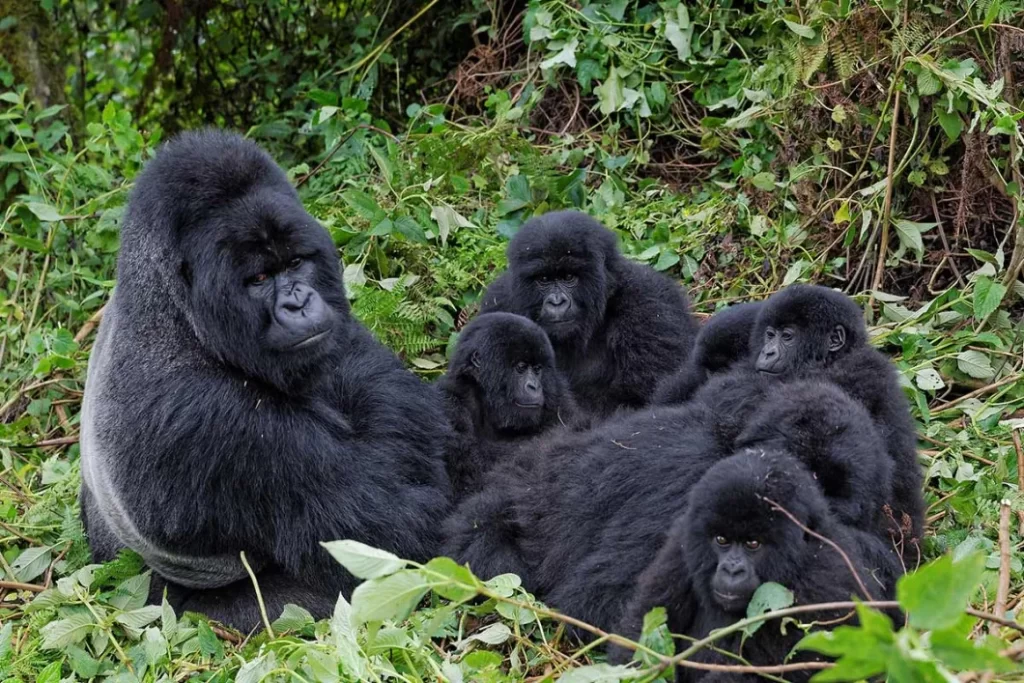
Are gorillas hazardous to encounter?
In their natural habitat, gorillas exhibit a tranquil demeanor, although they may charge when agitated. Despite inhabiting the forest, they are not perilous primates. Prior to public access, mountain gorillas undergo habituation for an indeterminate duration to ensure their readiness. Gorilla habituation is a procedure conducted by researchers to acclimate wild gorillas to human presence while preserving their natural behavior. This procedure may require two years or more, contingent upon the speed of their adoption.
If you observe unusual behavior among the gorillas during the journey, remain calm, since escalating the situation may be detrimental. Await the ranger guide to ascertain the cause of the issue. Prepare to adhere to the new directives provided by the ranger guide to mitigate the situation, as you have one hour to observe fully habituated gorillas and four hours with semi-habituated gorillas. Contact us for further information.