 info@gorillatrekkinginafrica.com
 +256 787505601
Buffalo Springs National Game Reserve
Buffalo Springs National Game Reserve is a highly rewarding safari destination in Kenya, renowned for animal viewing. It is situated in Isiolo County, Northern Kenya, inside the Eastern Province. Buffalo Springs Game Reserve is located south of Samburu National Reserve, across the Ewaso Ngiro River, the primary water source for the entire ecosystem. The reserve derives its name from the “Buffalo Springs,” an oasis of clear water at its western end, formed by an underground stream originating from Mount Kenya.
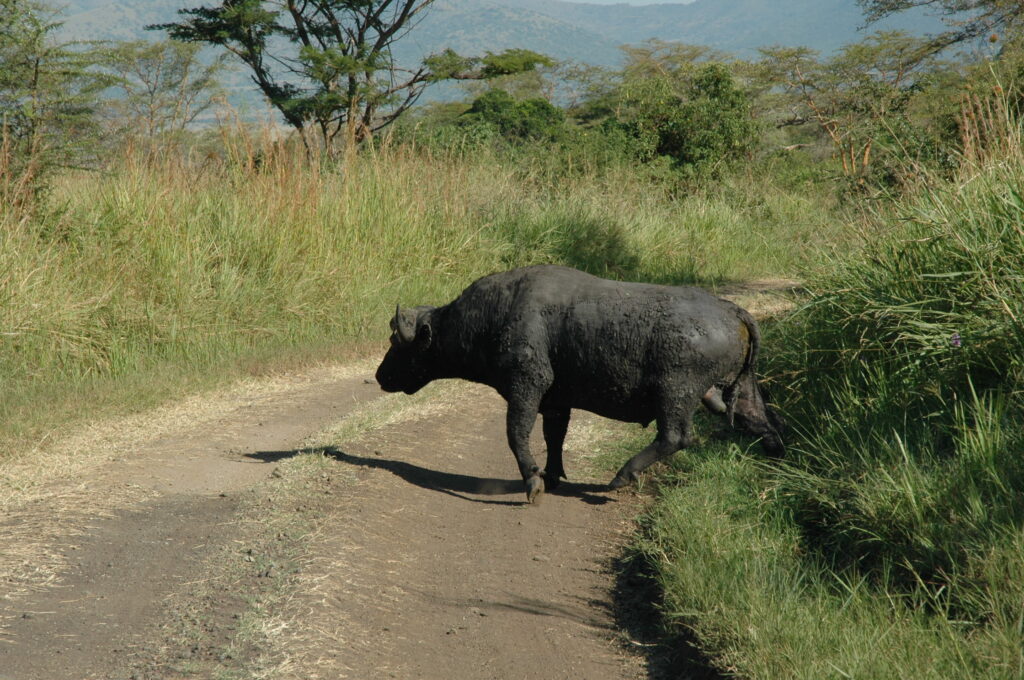
Buffalo Springs Game Reserve has 131 square kilometers, characterized by a terrain of undulating Rowland plains formed from ancient lava flows, volcanic soils of olivine basalt, and the Ewaso Nyiro River. Along the Ewaso Nyiro River, there exists a slender strip of doum palms, riparian woods, and grasslands.
Buffalo Springs National Reserve was established as a protected area in 1948 primarily to save the ecological system, including animals, vegetation, and physical characteristics such as the Buffalo Springs.
Attractions for tourists in Buffalo Springs National Game Reserve
Fauna
Buffalo Springs National Game Reserve hosts a diverse array of fauna, serving as a significant tourist attraction due to the high concentration of wildlife. Consequently, this reserve is regarded among the premier sites for wildlife safaris in Kenya. Fauna in Buffalo Springs Game Reserve reside in the woody regions adjacent to the Ewaso Nyiro River, including riverine forests and savannah grasslands.
The fauna of Buffalo Springs National Game Reserve comprises buffaloes, impalas, Burchell’s zebras, wild dogs, waterbucks, hyenas, elephants, cheetahs, greater and lesser kudus, leopards, lions, elands, giraffes, Grant’s gazelles, reticulated giraffes, beisa oryxes, gerenuk antelopes, Grevy’s zebras, among others. A trip of the Buffalo Springs Game Reserve in Kenya offers the chance to observe these creatures.
Birds
Buffalo Springs Game Reserve is a premier destination for birding safaris in Kenya, hosting 390 avian species, including notable varieties such as the Acacia tit, Ashy cisticola, African swifts, the Somali ostrich—larger than the common ostrich and distinguished by its indigo legs and blue neck—and the striking cobalt-blue breasted vulturine guinea fowl.
Additional avian species in Buffalo Springs Game Reserve are the Abyssinian ground hornbill, Bare-eyed thrush, and African palm swift. Ashy Cisticola Bare-eyed thrush Black-bellied sunbird, Black-capped social weaver. Bristle-crowned starling. Brown-tailed rock chat. Chestnut weaver, Chestnut-headed sparrow-lark, Donaldson-Smith’s sparrow-weaver with Egyptian vulture Fischer’s starling Golden pipit. Golden-breasted starling. Falco rupicoloides, Grey wren-warbler. Hunter’s sunbird Lanner Falcon, Mariqua Sunbird, Northern Brownbul Palm-nut vulture Pink-breasted lark. Pygmy Batis Red-bellied parrot, Red-necked falcon, Red-winged lark. Reichenow’s seedeater Rosy-patched bush-shrike. Rufous chatterer Secretary bird. Melodious bush lark, Somali bee-eater. Spotted palm-thrush Von der Decken’s hornbill Vulturine Guineafowl, White-headed Mousebird, Yellow-vented Eremomela, among others
Vegetation
Buffalo Springs Buffalo Springs is exceptionally endowed with distinctive flora species, primarily influenced by the Ewaso Nyiro River. The fauna species comprise a limited strip of riverine woods adjacent to the Ewaso Ngiro, Doum Palm, Acacia elatior, dispersed grasses and shrubs, alkaline grasslands interspersed with sporadic swamps and seepages, desert rose with pink blossoms, and Salvadora persica.
Salvadora persica, commonly known as the toothbrush tree or mustard tree, is referred to as Mswaki in Swahili and Sokotu in the Samburu language. This tree is a little specimen or shrub with a distorted trunk, reaching a height of 6 to 7 meters. For over a century, it has served as a natural toothbrush, and its fibrous branches have been recognized by the World Health Organization for their application in oral hygiene.
Ewaso Nyiro River
The Ewaso Nyiro River is the most captivating feature of the Buffalo Springs Game Reserve and a prime location for observing wildlife and avifauna during Kenya Wildlife tours in this reserve. The Ewaso Nyiro River derives its name from the Samburu term “Ewaso,” which translates to “the river of brown or muddy water.” It is the largest and least seasonal river in northern Kenya, serving as a constant water source for the ecology of Buffalo Springs Game Reserve.
The Ewaso Nyiro River features riverfront grasses, dense acacia, and doum palm forests along its banks, attracting a diverse array of fauna, including crocodiles, buffaloes, impalas, hippos, and several avian species such as saddle-billed storks.
Buffalo Springs
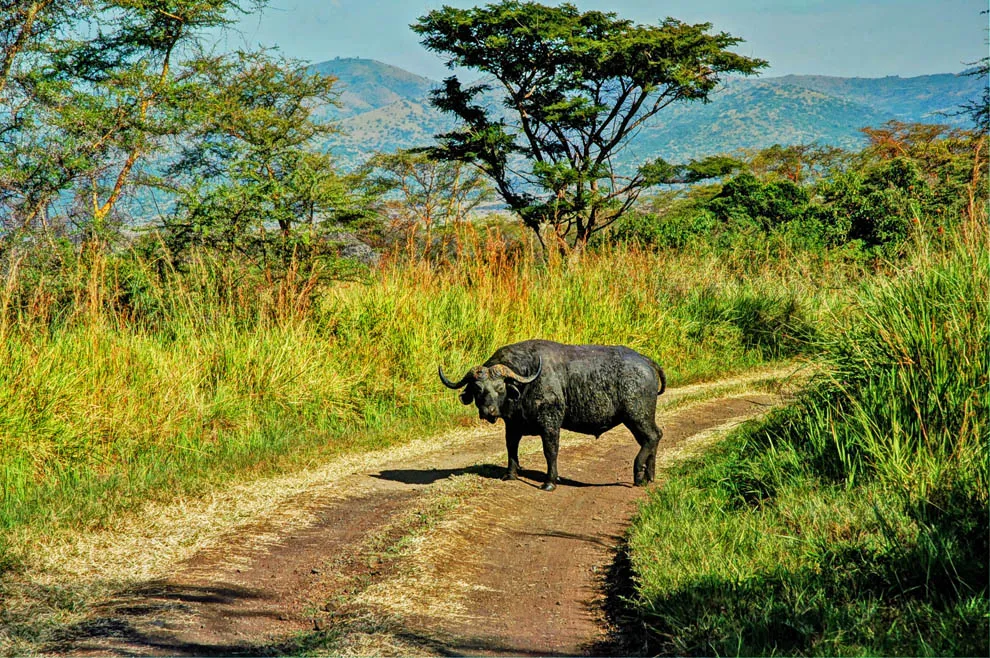
Buffalo Springs is an essential destination within Buffalo Springs National Park during a Kenya safari; these springs are the origin of the name for Buffalo Springs Game Reserve and a notable feature of the reserve. Buffalo Springs comprises three springs; two are enclosed by walls, while the third emerges into the plain, creating a little marshy waterhole that flows into the Ewaso Nyiro River.
One of the enclosed springs was a natural bathing area where travelers could swim; however, this is now restricted. The other spring serves as a water supply for Archer’s Post, a nearby small town. Infrequently Buffalo
Buffalo springs are populated by crocodiles and various predators, including wild dogs, cheetahs, lions, and leopards, rendering it an exceptional destination for wildlife observation.
Things to do in Buffalo Springs National Game Reserve
Safari excursions
Buffalo Springs National Reserve is a prominent national park in Kenya, renowned for wildlife viewing safaris. Game viewing in this remarkable site is conducted by game drives in specialized 4×4 vehicles featuring open windows and pop-up roofs. Game drives are available in the morning, afternoon, and evening. As you traverse the arid terrain of Buffalo Springs National Park, you will experience an unforgettable Kenyan wildlife tour, encountering numerous species such as large herds of elephants, lions, Burchell’s zebras, Grevy’s zebras, wild dogs, waterbucks, impalas, hyenas, cheetahs, greater and lesser kudus, leopards, elands, giraffes, Grant’s gazelles, reticulated giraffes, Beisa oryxes, gerenuk antelopes, and many others.
Wildlife in Buffalo Springs National Park is optimally observed along the banks of the Ewaso Ngiro River, where substantial herds of elephants can be seen bathing in the muddy waters, prides of lions lie in wait for their prey, and Nile crocodiles are also present.
Due to the semi-arid climatic conditions of Buffalo Springs Game Reserve, game drives are favorable year-round; however, optimal game viewing occurs during the dry season from June to October.
Walking safaris
A safari in Kenya’s Buffalo Springs National Game Reserve is incomplete without participating in guided walking safaris, which provide a leisurely yet exhilarating exploration of several areas inside the reserve. During this safari, you are accompanied by a guide, and this experience serves to assess the physical capabilities of the travelers. As you traverse various trails within the reserve, you will encounter diverse wildlife, including lions and Nile crocodiles, particularly along the banks of the Ewaso Nyiro River, as well as numerous avian species such as the African palm swift, Ashy cisticola, Bare-eyed thrush, Black-bellied sunbird, Black-capped social weaver, Bristle-crowned starling, Brown-tailed rock chat, Chestnut weaver, among others.
Bird observation
Buffalo Springs National Game Reserve is an ideal place for birding safaris in Kenya, hosting a substantial diversity of avian life with over 390 bird species, including some endemic to Northeast African arid regions. Birdwatching in Buffalo Springs Game Reserve provides an opportunity for ornithologists to observe numerous avian species, including the African palm swift, Ashy cisticola, Bare-eyed thrush, Black-bellied sunbird, Black-capped social weaver, Bristle-crowned starling, Brown-tailed rock chat, Chestnut weaver, Chestnut-headed sparrow lark, Donaldson-Smith’s sparrow-weaver, Egyptian vulture, Fischer’s starling, Golden pipit, Golden-breasted starling, Greater kestrel, among others. Buffalo Springs National Game Reserve is an exceptional place for birdwatching in Kenya; so, as an avian enthusiast, you should not miss the opportunity to visit this remarkable reserve.
Cultural expedition
Buffalo Springs Game Reserve adjoins the residential communities of the Samburu local populace, which are frequented during a cultural safari in Buffalo Springs National Reserve. The Samburu people are notably hospitable, and engaging with them provides an opportunity to gain insights into their lives and appreciate their culture. While visiting the Samburu villages, you will gain insights into cultural practices, including spear throwing, goat milking, crafting, and enjoy performances of traditional dances and dramas.
Directions to Buffalo Springs National Game Reserve
Buffalo Springs National Game Reserve is situated 15 kilometers southeast of Nairobi and is an accessible safari location in Kenya, reachable by both road and air from Nairobi and Mombasa.
Buffalo Springs Game Reserve may be reached by car from Nairobi via Nanyuki on a paved road to Isiolo, followed by a 22-kilometer journey on a gravel road leading to the reserve’s main entrance gate. Scheduled flights operate from Nairobi’s Wilson Airport to Buffalo Springs Airstrip, which services the reserve.
Accommodation options in Buffalo Springs National Game Reserve
Buffalo Springs Game Reserve features a diverse array of hotels and camps that provide lodging and essential amenities for travelers on their safari in Buffalo Springs National Game Reserve. Accommodation at Buffalo Springs Game Reserve is classified into luxury, mid-range, and budget categories, including Samburu Simba Lodge, Ashnil Samburu Camp, Lion King Bush Camp, Samburu Sopa Lodge, Sarova Shaba Game Lodge, Elephant Bedroom Camp, Samburu Game Lodge, among others.