 info@gorillatrekkinginafrica.com
 +256 787505601
Best time to visit Lake Nakuru National park
Best time to visit Lake Nakuru National park, Lake Nakuru National Park is an appealing place for an African safari, encompassing activities such as bird watching, animal viewing, and sightseeing. The park boasts exquisite features and fauna that enchant its visitors.
Lake Nakuru National Park is situated in Kenya’s Great Rift Valley and possesses a distinctive environment that renders the park ideal for visitation throughout the year. The park, like other regions in Kenya, experiences two distinct weather seasons: the rainy season and the dry season, each occurring briefly throughout the year.
The brief wet seasons occur from April to June and from October to December, whereas the brief dry seasons span from July to September and January to March. Lake Nakuru National Park exhibits a dry semi-humid climate, resulting in moderate temperatures that are neither too hot nor cold throughout the year. This indicates that it applies during both the rainy and dry seasons. The park’s climate will be conducive to a safari at all times.
Nonetheless, the park’s distinctive climate does not diminish the existence of optimal and suboptimal periods for visiting Lake Nakuru National Park.
The months most frequented by tourists in Lake Nakuru National Park are January, February, March, June, July, August, September, and October, as these represent the driest periods of the year, making park visits more rewarding and pleasurable. During these months, the park’s grass is shorter, facilitating visibility of the animals. The driving routes are drier, resulting in less vehicular issues. Most diurnal animals roam the park freely, reducing the time required to observe them, while nocturnal creatures are located in areas within close proximity to your sight. Furthermore, if you are considering camping and picnicking, these months are optimal due to limited precipitation, resulting in fewer or no disruptions to your experience.
April, May, November, and December are the least favored months for tourist visits due to their high rainfall, sometimes referred to as the rainy months. The rainfall during these months significantly impacts some activities available on your safari, leading many tourists to perceive it as a squandered experience.
Nonetheless, while the rains may influence certain safari activities, Lake Nakuru National Park remains mostly unaffected due to its predominantly semi-arid environment, resulting in moderate precipitation even during the rainy seasons. Lake Nakuru National Park is a walled reserve, preventing animals from exiting even during the rainy seasons, allowing for continued visibility of wildlife. Additionally, the park features a well-developed road network, ensuring that vehicular navigation remains manageable despite inclement weather.
The wet months are characterized by an increased presence of birds in the lake and parklands due to the plentiful food supply in the environment; this period coincides with the migration of avian species to the park. If birdwatching is your primary motive for visiting the park, the wet seasons or the conclusion of the rainy seasons may be an opportune time for your visit. The flourishing vegetation during the rainy seasons is very pleasing and enhances your tour experience.
Although March, June, and September are regarded as dry months, they may occasionally experience mild rainfall; therefore, tourists should take this into account when planning their vacation to Lake Nakuru National Park.
The best time to visit Lake Nakuru National Park is contingent upon the activities you wish to engage in, namely those that are preferred during dry conditions versus those that are favored during wet conditions.
Lake Nakuru National Park is an essential destination for both residents and tourists seeking premier birdwatching and wildlife observation. Lake Nakuru National Park is situated in central Kenya, approximately 3 to 4 hours from Nairobi, the capital of Kenya. The park is accessible for visitation and exploration within a single day, rendering it a particularly handy choice for a day safari.
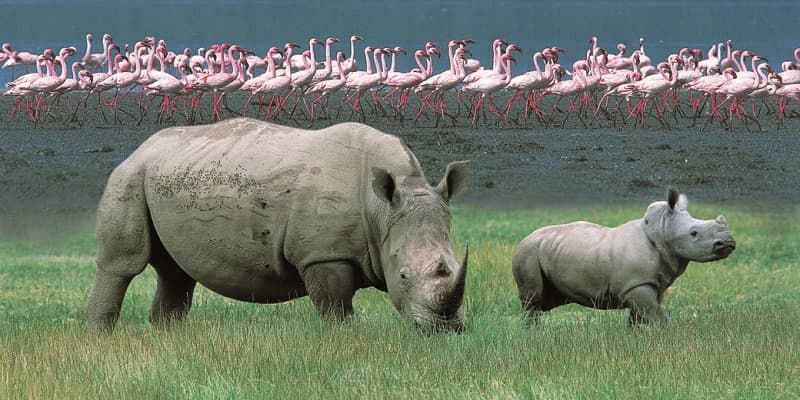
Lake Nakuru National Park features approximately 450 bird species inhabiting Lake Nakuru and its surrounding parklands, as well as rhinos and Rothschild’s giraffes within the rhino sanctuary, alongside more than 50 mammal species residing within the park’s confines.
Lake Nakuru National Park is a visually appealing location characterized by many beautiful ridges that provide excellent opportunities for sightseeing, camping, picnicking, and photography, among other activities.
Things to do in Lake Nakuru National Park
Activities Conducted at Lake Nakuru National Park, Kenya: Lake Nakuru National Park was established in 1961. The National Park is situated in central Kenya, approximately 140 km (90 miles) north-west of Nairobi, within the Nakuru district of the Rift Valley Province.
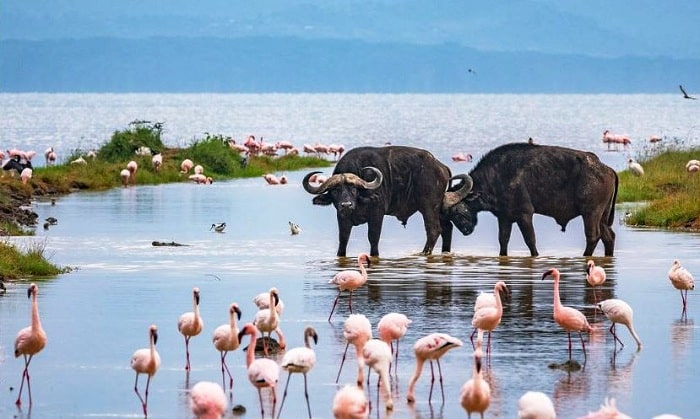
Lake Nakuru is renowned for its avian diversity, hosting 500 species of birds, among a variety of wildlife including lions, impalas, buffalo, waterbucks, and Rothschild giraffes. These are favoured by savannah grasslands, together with the presence of algae that attracts a substantial quantity of flamingos.
Bird watching in Lake Nakuru national park.
Lake Nakuru is an exceptional avian attraction, boasting over 500 documented species. The carbonated beverage Lake Nakuru is a premier avian destination, hosting a diverse array of bird species, including groups of pelicans and flamingos. The optimal location for avian observation is the southern extremity of Lake Nakuru, where one can discern several species of birds. This activity is optimally conducted during the dry season, as the majority of bird species migrate during the wet season. The prime periods are from June to October and from December to March.
Wildlife sighting in Lake Nakuru National Park.
Game viewing is optimally conducted in Lake Nakuru National Park, particularly for observing common species like as buffalo, rhinoceros, leopard, and lion. Game watching is most optimal from January to March and July to December, as the dry conditions during these months prevent muddy paths.
Camping in Lake Nakuru National Park.
Camping is an exhilarating endeavor that enables one to slumber beneath the open sky in the wilderness, facilitating direct engagement with nature. Lake Nakuru National Park, a premier camping destination in Kenya, offers campers more than mere accommodation under the stars. Visitors can appreciate the park’s distinctive vegetation, experience the semi-humid climate, and, if fortunate, observe various animals in close proximity. Lake Nakuru National Park features seven operational camping sites distributed across its northern and southern regions. Campers can anticipate cool nighttime temperatures, stunning sky views, and magnificent vistas of concentrated flamingos, which resemble a pink blanket adorning the surface of the lake, alongside picturesque scenery of the surrounding park.
Picnicking at Lake Nakuru National Park.
Picnicking at Lake Nakuru National Park is permissible at any time throughout the year; however, the most favorable periods are the dry months, as low rainfall ensures that your picnic will not be disrupted by rain. The arid months are June, July, September, October, January, and February. The picnic areas are elevated above the park’s ground level, allowing for wonderful vistas of the park, including its birds, animals, and surrounding landscape. The following are popular picnic sites:
Baboon Cliff is a picnic area located on the western shores of Lake Nakuru in the northwestern region. Elevated on a cliff, it offers excellent opportunities for sightseeing, birdwatching, and observing baboons, which are frequently present in the vicinity.
Lion Cliff is located on the northeastern beaches of Lake Nakuru, providing distant views of the lake as well as captivating vistas of the surrounding landscape and wildlife, particularly lions.
The Out of Africa viewpoint is located on the southwestern shores of Lake Nakuru, offering the most prominent views of the lake and its surrounding park.
The optimal hours for a picnic are between 10 AM and 5 PM. The weather can be serene, neither hot nor excessively sunny, and not very cloudy, ideal for a period of rejuvenation and relaxation on the elevated ridges.