 info@gorillatrekkinginafrica.com
 +256 787505601
Best time to visit Lake Naivasha national park
Best time to visit Lake Naivasha national park – Lake Naivasha is a year-round destination for visitors. The Best time to visit Lake Naivasha national park is from June to October. During those months, it is summer and will be hot; yet, it remains the optimal time to visit.
Lake Naivasha undergoes two arid seasons and two pluvial seasons. The extended, temperate dry season transpires from July to October, succeeded by a brief rainy season in November and December. January and February constitute the brief hot-dry season, while April through June represents the extended rainy season; nevertheless, the onset and cessation of rainfall often commence around late March and early July, respectively.
Understanding these seasons is crucial for planning your optimal visit to Naivasha, since the presence or lack of rainfall influences vegetation growth, visibility, grazing availability, water levels, and wildlife behavior. During periods of ample foliage and water sources, such as the extended rainy season, animals exhibit more dispersion. In the dry season, water and vegetation are limited, prompting animals to gather around the few available waterholes. This conduct impacts your observation of wildlife at Lake Naivasha.
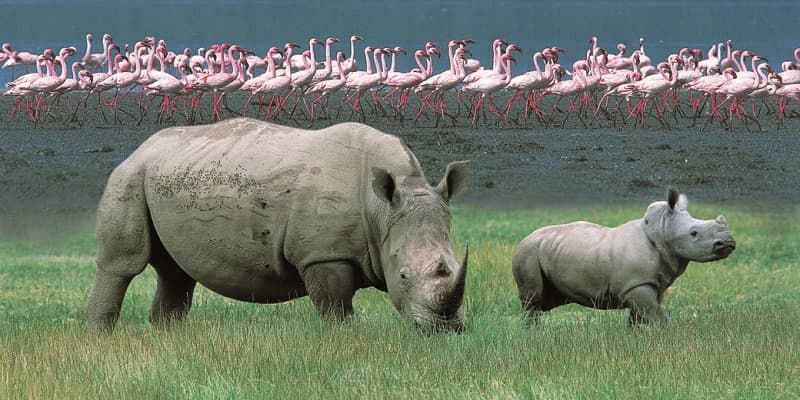
The extended dry season and prolonged rainy season possess both benefits and drawbacks. Wildlife observation is more probable during the extended, cool-dry season, and the absence of precipitation ensures that roads and trails are well-maintained for your Lake Naivasha safari endeavors. The vegetation, however, may be less bright and lush than during the wet season. Finally, the dry season aligns with focused wildlife activity and summer vacations for European and American families, resulting in an influx of tourists to Lake Naivasha during this period. The optimal period to visit Lake Naivasha in Kenya is during the extended dry season, particularly when paired with a safari to Masai Mara to observe the Great Wildebeest Migration from August to October.
The onset of the prolonged rainy season from April to June provides essential moisture and transforms the environment into a picturesque tableau of lush vegetation. The wildlife is less concentrated; yet, the extended rainy season aligns with one of the most remarkable occurrences in the plains and woods of Naivasha — the birth of a new generation of animals, particularly antelopes such as impalas. The behaviors exhibited throughout this period represent an exhilarating amalgamation of close attachment between mother and offspring, alongside the suspense regarding which infants will endure the adversities of a demanding environment. Predators consistently seek out the vulnerable and juvenile, resulting in several young animals succumbing to predatory attacks, harsh climatic circumstances, and their inability to endure the initial days in the Kenyan wilderness.
The low or green season predominantly occurs in April and May, sometimes encompassing the majority of June. If you seek a tranquil vacation in Lake Naivasha in East Africa, characterized by the rejuvenating splendor of nature, these months may be the ideal time to arrange your visit. Accommodations are available at discounted pricing; nevertheless, logistical expenses, conservation fees, activities, guiding services, and similar costs remain same year-round. Timing is a crucial factor when organizing your safari holiday in Kenya with Great Adventure Safaris, since specific festive periods, including as Christmas, New Year’s, and Easter, attract a surge of local and international guests to Lake Naivasha.
Visiting Lake Naivasha National Park in Dry Season
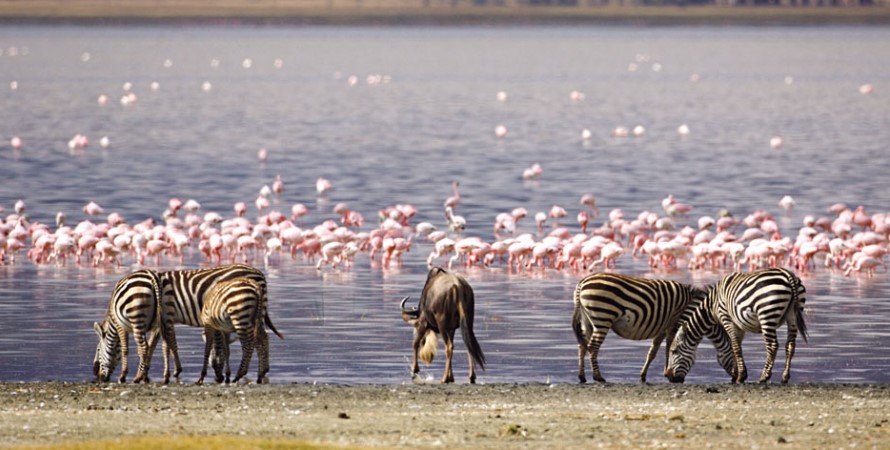
The arid season is the optimal period to visit Lake Naivasha National Park. In the dry season, water and vegetation are scarce, prompting animals to congregate around the limited waterholes. This behavior influences your wildlife exploration with African Sanctuary in Lake Naivasha, as fauna may be either more elusive or readily observable, resulting in animals being either widely spread or concentrated in specific areas.
The animals congregate around the scarce remaining waterholes during the arid season, when both vegetation and water are deficient. This behavior affects your wildlife-focused vacation at Lake Naivasha with us as fauna may be either more challenging to observe or more readily available, resulting in either animals dispersed across a wider area or a concentration of species in a single locale.
Both the protracted dry season and the extended wet season present advantages and disadvantages. The extended cool-dry season is optimal for wildlife observation, and because to minimal rainfall, the roads and trails are in excellent condition for your Lake Naivasha exploring activities. Nonetheless, the vegetation may lack the vibrancy and richness observed during rainfall.
Visiting Lake Naivasha National Park in Rainy Season
The low or green season generally spans from April to May, but it may even continue into much of June. The optimal months for planning your trip to Lake Naivasha in East Africa, if you desire a tranquil vacation amidst pristine nature, may be during this period. The wet season is the optimal time for avian enthusiasts and budget-conscious travelers to visit Lake Naivasha National Park.
This season presents several obstacles throughout your journey, including muddy roads, particularly in the park, which might turn treacherous and perhaps disrupt your travel route. Accidents during your journey may occur due to rainfall, particularly when navigating hills and muddy roads in the Kenyan environment, as well as the dispersal of wild animals.
This occurs because the majority of the area’s pastures are cultivated and accessible, allowing these animals to access water and forage at will, thereby disrupting activities such as game drives. Additionally, flooding of the lake results from rainfall that elevates the water levels in both the lake and the rivers that feed into Lake Naivasha.
Accommodation prices have fallen, although logistical expenses, conservation fees, activities, and guide services remain stable year-round.
Nonetheless, both the protracted dry season and the extended wet season present advantages and disadvantages. The extended cool-dry season is optimal for wildlife observation, and because to minimal rainfall, the roads and trails are in excellent condition for your Lake Naivasha exploring activities. Nevertheless, the greenery may lack the vibrancy and abundance characteristic of rainy conditions.
Animals in Lake Naivasha National Park
The optimal period to visit Lake Naivasha National Park for a wildlife drive is during the dry season, since most animals congregate near water sources in search of sustenance. A variety of animals inhabit Lake Naivasha National Park, including:
Hippopotamuses: These are the second largest terrestrial mammals following elephants. Hippopotamuses are violent and unpredictable creatures that predominantly inhabit aquatic environments. Hippopotamuses are the predominant mammals in Lake Naivasha National Park, with a population exceeding 400 individuals in Lake Naivasha. These can be observed throughout the boat excursion.
Buffaloes: These are among the Big Five animals, enormous, cow-like herbivores. Buffaloes are typically observed covered in mud to eliminate ticks. These will be prevalent throughout the park and during the game drive.
Giraffes: These are the largest ruminants on the planet, distinguished by their exceptionally elongated legs and necks. Giraffes are among the several creatures observable during a visit to Lake Naivasha National Park.
Zebras: These are herbivores characterized by their black-and-white striped pelage. Zebras are essential to observe while visiting Lake Naivasha National Park.
Flamingos in Lake Naivasha National Park
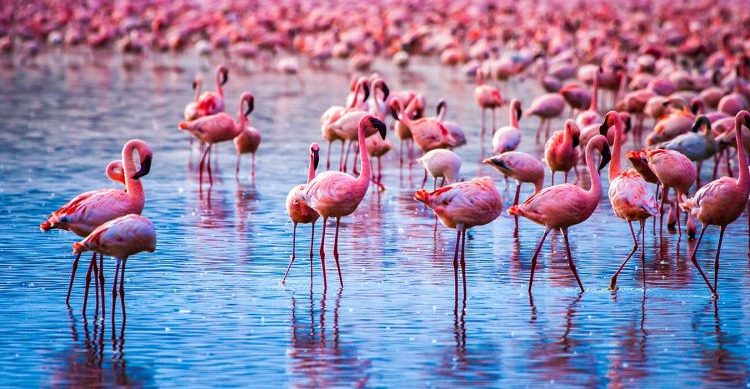
Birdwatching is one of the pastimes available in Lake Naivasha National Park, and flamingos are a required sight. The most prevalent avian species in Lake Naivasha National Park are as follows. These are located along the lake’s shoreline, with the optimal time for observation occurring during the wet season. Other avian occupants of Lake Naivasha include kingfishers, African Jacanas, ducks, and Mourning Collared Doves, among others.
Things To Do In Lake Naivasha National Park
1. Boat Cruise: A very favored activity in Lake Naivasha is boat safaris. The most efficient method to approach the hippos and flamingos in the lake is to venture directly into it via jet ski. Zebras, wildebeests, and giraffes may be observed when gazing toward the beach. The typical boat safari on Lake Naivasha endures for approximately one hour, and due to the lake’s vastness, you will not be disturbed by the noise of other vessels.
2. Bird Watching: This is an essential activity at Lake Naivasha National Park. Lake Naivasha is a premier birdwatching destination in Kenya, hosting over 400 species. Birdwatching at Lake Naivasha is possible year-round, however the optimal period for this activity is during the wet season. The park hosts various avian species, including flamingos, African jacanas, and kingfishers, among others. It also attracts migratory birds from Europe in winter.
3. Appreciate the magnificent Crater Lake Game Sanctuary. The Crater Lake Game Sanctuary is located on the lake’s opposite side. This small reserve is an excellent destination for hiking and houses giraffes, zebras, and over 150 species of birds. The walking pathways within the refuge traverse the crater’s rim, offering stunning vistas. Night game drives at Crater Lake provide an exceptional opportunity to observe elusive wildlife such as leopards, aardvarks, caracals, and various others.
4. Hiking Longnot National Park. Lake Naivasha is around 20 kilometers from Longonot National Park, with a driving duration of roughly 45 minutes. The park derives its name from the stratovolcano Mount Longonot, which rises to an elevation of 2,776 meters. The inactive volcano may be ascended in 4-5 hours, and the peak provides stunning vistas. The walk is not especially physically demanding, notwithstanding its duration. Upon completing the trek in the morning, you may have a delightful boat trip or a game drive in the afternoon.
5. Visiting Crescent Island: Located on the eastern shore of the lake, near the town of Naivasha, Crescent Island derives its name from its crescent-like configuration. This region contains the preponderance of the lake’s accommodation options. A game reserve is situated on Crescent Island. The 1.5–3-hour trips feature intimate encounters with the resident giraffes and zebras. Crescent Island, a prominent attraction in the Lake Naivasha region, was the primary filming venue for the 1985 romantic film “Out of Africa.”
How to get to Lake Naivasha National Park
Lake Naivasha National Park is situated in the northern region of Nairobi, approximately 60 miles away. Various routes may be utilized depending on the mode of transportation.
1. By road: Utilize the old Naivasha road, which will require around two hours and twenty minutes to reach your destination.
2. By air: You will board an aircraft from Nairobi Wilson airfield to Naivasha, which will take around 15 minutes. The aircraft consistently departs each afternoon.
Accommodations Facilities in Lake Naivasha National Park
Lake Naivasha boasts exceptional hotel options, including budget-friendly, mid-range duplexes, and high-end premium lodgings, all providing a glimpse of a great stay in exquisite rooms.
According to the quality of housing, established guidelines, service, cuisine, accessibility of terrestrial and aerial transit, and proximity to premier natural, cultural, and historical sites in Lake Naivasha.
I recommend accommodations for your travel through the jungle to Lake Naivasha, categorized by price range.
If you have a limited budget, the optimal time to visit Lake Naivasha is during the wet season, as it is regarded as the low season, resulting in reduced lodging expenses.
Loldia House and Chui Lodge provide our guests with unparalleled sophistication and personalized services. Loldia Lodge, situated on the shores of Lake Naivasha, is encompassed by 6,500 acres of magnificent farmland. Nine en-suite rooms in the primary residence maintain the aesthetic of the initial settlers. Guest cottages are offered for honeymooners, couples, and families seeking further isolation, along with amenities such as fireplaces, additional bedrooms, and stunning views of the lake and Mount Longonot.
Chui Lodge, situated near Lake Naivasha, is encompassed by an 18,000-acre nature sanctuary. Eight distinct cottages offer vistas of the sanctuary and the Great Rift Valley, immersing you in a serene atmosphere adorned with locally crafted furniture and artwork. Hippo Point & Dodo’s Tower, a distinctive Tier 1 alternative, evokes the inviting ambiance of an Elizabethan rural estate.
Kiangazi House and Kiboko Luxury Camp. Kiangazi House is situated within the Oserian Wildlife Sanctuary, along the passage between Lake Naivasha and Hell’s Gate National Park.
Kiboko Luxury Camp. I recommend this for a typical camping holiday at Lake Naivasha. The camp provides a genuine wilderness experience with merely eight tents designed for solo tourists, couples, and small families.
The fundamental and cozy guest accommodations at Lake Naivasha Simba Lodge and Elsamere are favored by cost-conscious patrons. The former lodge comprises 70 guest rooms, several of which provide lake views, outdoor bathrooms, private courtyards, and other distinctive attributes.
The comfortable Olerai House. The serene ambiance of both hotels swiftly induces relaxation, and the amiable personnel ensures a sense of comfort akin to home.
Frequently Asked Questions
1. What is the best activity to engage in at Lake Naivasha?
The activities available at Lake Naivasha, such as boat cruises, cycling at Hell’s Gate, and nature hikes beside zebras, warthogs, and antelopes, depend on the tourist’s preferences.
2. What is the climate of Lake Naivasha?
The district’s average annual temperature is 20.09°C (68.16°F), which is 2.41% lower than the national average of Kenya. Naivasha gets approximately 237.34 wet days (65.02% of the time) and receives an annual precipitation of 127.08 millimeters (5.0 inches). Annual average precipitation.
3What is the Park entry fee to Lake Naivasha?
Access to Lake Naivasha incurs no entrance fees. Lake Naivasha is accessible daily from 7 am to 6 pm. The journey to Lake Naivasha, located 60 miles north of Nairobi, requires around two hours and twenty minutes via the A104 and Old Naivasha Road.
Final Analysis
Best time to visit Lake Naivasha national park, Lake Naivasha is an exceptional National Park that can be visited year-round globally. Owing to the occurrence of a twofold maximum of precipitation and the presence of both wet and dry seasons, it is feasible to visit at any desired period. Nonetheless, I would advise traveling during the dry season for optimal activities such as game drives.