 info@gorillatrekkinginafrica.com
 +256 787505601
Baobab Trees
The Baobab trees in Tarangire National Park: The baobab, Tanzania’s national tree, is most notably distinguished by its inverted appearance. They are indigenous to the African continent, and you would not want to miss the opportunity to observe them.
- Baobabs rank among the largest trees globally and often exceed lifespans of 1,500 years.
- Baobabs can attain heights of 16 to 82 feet and diameters of 33 to 46 feet, however their dimensions significantly vary by region and are affected by the volume of water held in the trunk.
- Baobabs are often termed “upside-down trees” due to the appearance of their branches resembling roots.
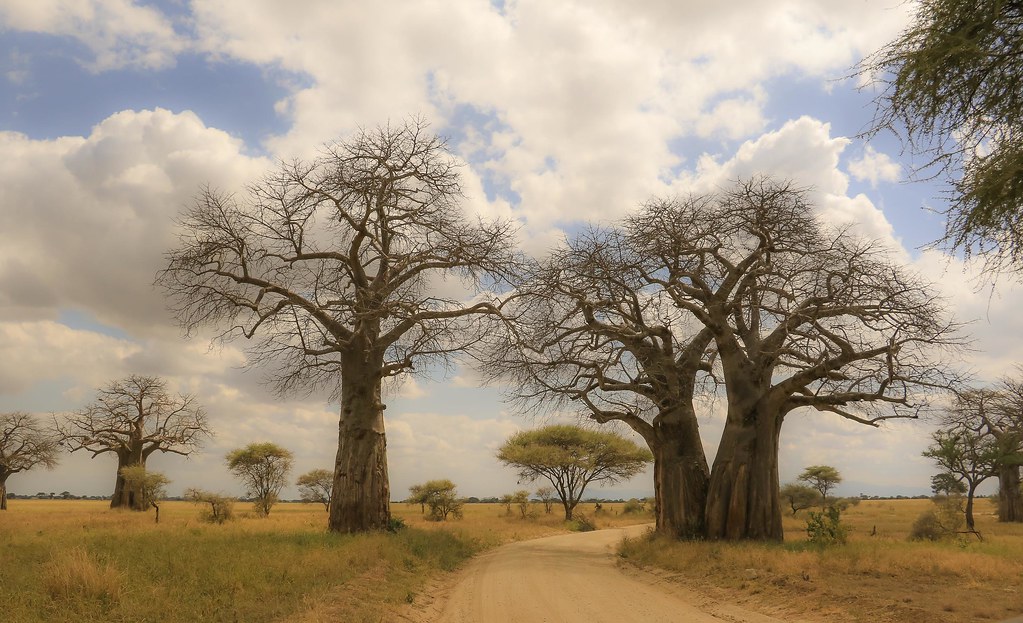
The baobab, Tanzania’s national tree, is most well recognized for its inverted appearance. They are indigenous to the African continent, and their observation is highly recommended. The primary attraction of Tarangire National Park has shifted to the baobab trees, frequently observed by numerous visitors that come to explore this remarkable national park. Baobab trees are seen in the savannah plains of Tarangire National Park in northern Tanzania. The baobab trees of Tarangire National Park are sometimes termed the “trees of life” and are characterized as “giant, bulbous, and ancient.” The baobab trees in Tarangire National Park are prominent against the park’s landscape and are observable by any tourists engaging in any safari activities.
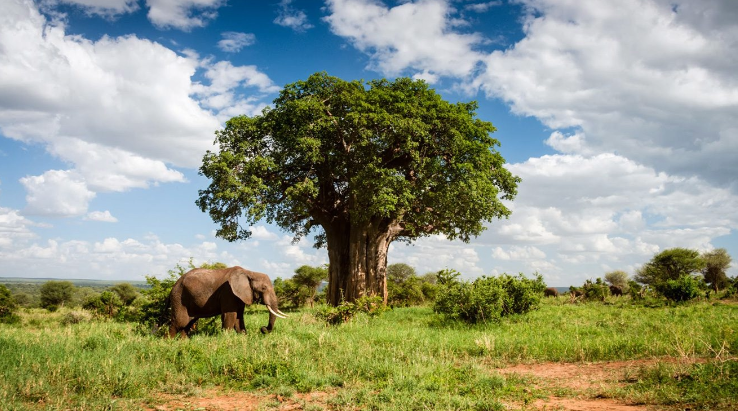
The baobab trees in Tarangire National Park retain significant moisture in their roots, which many species, especially elephants, utilize throughout the dry season. Tarangire National Park, known for possessing the greatest elephant population in Tanzania and all of Africa, is home to numerous elephants. Tarangire National Park harbors the second-largest elephant population globally. Baobab trees, which provide habitat for many wildlife, including mongooses and buffaloes, are frequently observed by visitors during game drives in Tarangire National Park.
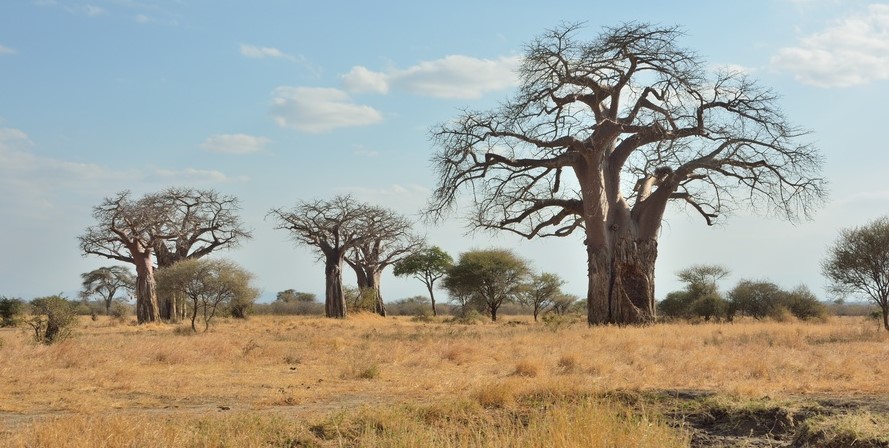
Tarangire possesses the most diverse array of flora of all parks in northern Tanzania. One distinct remark we have specifically noted is to the colossal African baobab tree. An African baobab tree can attain a trunk height of 30 meters (100 ft). The age at which these trees attain maturity is likewise atypical. One baobab tree was estimated to be 1,275 years old, yet it was not located near Tarangire. Thus, witnessing a baobab tree presents a genuinely singular experience. The presence of diverse acacia tree species indicates that you are likely in Africa.
Communities residing around Tarangire National Park have utilized baobab trees, namely their leaves and bark, as a source of herbal medicine. Tree seeds are crucial since they supply sustenance for the species inhabiting the area. Elephants utilize baobab trees to sharpen their trunks, a behavior believed to sustain the ecosystem’s equilibrium, as other wildlife can simultaneously access and consume the trees.
Tarangire National Park in Tanzania is a renowned destination for animal observation, attracting people globally. The park draws people interested in examining diverse animal habitats, including savannah grassland, acacia forest, marshes, and rivers.
Baobab Tree: A Genuine tree of Life in Many Aspects
The baobab is esteemed in Tanzania as a “tree of life.” Their robust roots retain a remarkable quantity of liquid. The trees entice fauna in the arid season. The formidable elephant approaches the baobab tree to consume the bark for its moisture and minerals.
Despite its sturdy roots and substantial surface, much of the baobab is hollow. This is beneficial as the “tree of life” hosts a diverse array of species, including bats, felines, bees, serpents, and mongooses. The colossal tree resembles an apartment complex in certain aspects, housing a diverse array of inhabitants. Owls, parrots, and woodpeckers are among the avian species that construct their nests in the higher sections of baobabs.
Shop, Pharmacist and Meteorologist as well
The baobab serves as both a pharmacy and a convenience store, in addition to functioning as an apartment structure. Remarkably, cream of tartar is derived from the blossoms, and monkeys are fond of the fruit of this plant. Furthermore, leaves are pulverized and utilized in medication and meteorology. Baobab leaves emerge in anticipation of impending rains, a crucial insight for Tanzanian farmers. Fruit and flowers emerge subsequent to the leaves.
Baobabs are selective for their habitat, thriving exclusively at altitudes ranging from sea level to 1100 meters; thus, they are absent from regions such as the Serengeti. Take the opportunity to appreciate the tree specimens at Tarangire National Park or other locations in Tanzania, and request your driver-guide to elaborate on the unique traits of each.
Accommodation Options in Tarangire National Park
Choosing accommodation for a safari is a crucial aspect of vacation planning. Tarangire National Park has a variety of hotels, encompassing deluxe, moderate, and economical options for visitors.
Whistling Thistle Camp, Planet Stop, and Country Hold Up are examples of cheap accommodations. The luxurious accommodations include the Tarangire Sopa Lodge, Maweninga, Sanctuary Swala Camp, Nimali Tarangire, Tarangire Trees Lodge, Lemala Tarangire, and several others. Tarangire National Park offers a variety of mid-range hotels, including Twiga Lodge, Tarangire Roika Lodge, Tarangire Osupuko Lodge, Kirurumu Tarangire Lodge, Tarangire Safari Lodge, Tarangire Stream Camp, and numerous other options.
How to get to Tarangire National Park
Visitors may access Tarangire National Park. Utilizing diverse modalities, such as aerial or terrestrial transport, to engage in an array of activities. Aerial transport: Numerous airstrips facilitate access to Tarangire National Park via plane, notably the Tarangire airstrip for chartered and domestic flights to the location. Traveling by car from Arusha to Tarangire National Park is feasible.
The majestic baobab tree is prevalent in Tanzania, with Tarangire National Park providing some of the most exceptional vistas. This wonderful, varied park, located three hours’ drive west of Arusha, is included in several itineraries of All Tanzania Safaris or may be easily incorporated into a customized safari. Contact us, and our exceptional customer service team will aid you in organizing a safari that meets your specific needs and creates enduring memories.
Conclusion
Tarangire, the sixth-largest national park in Tanzania, encompasses around 2,850 square kilometers. Numerous animals assemble in the park during the arid season as it offers refuge when water is limited in other areas. The area boasts an abundance of avian diversity, with more than 500 species documented. Tarangire is distinguished not just for its substantial elephant populations and the iconic baobab tree but also for its diverse environments, encompassing grasslands, marshes, riverine forests, and rocky hilltop vegetation that draw a multitude of wildlife. The amalgamation of these diverse environments guarantees an indelible Safari experience for the tourist.